
The story of the Hawaiian Islands is a saga of incredible human ingenuity, unparalleled navigational skill, and eventually, the profound impact of global discovery. While many associate the exploration of this idyllic archipelago with Captain James Cook in the late 18th century, the true pioneers arrived centuries earlier, embarking on voyages of discovery that remain among the most astonishing feats in human history. Their journey not only shaped the unique culture and identity of Hawaii but also laid the foundation for the vibrant destination it is today, drawing travelers from across the globe to experience its rich heritage, breathtaking natural beauty, and unparalleled hospitality.

To understand who truly explored Hawaii, we must look back thousands of years, to a time when intrepid seafarers navigated vast stretches of the Pacific Ocean using only the stars, currents, and winds as their guides. These were the Polynesians, master navigators whose legacy of exploration echoes in every ripple of the ocean and every gentle sway of a palm tree across the islands. Their pioneering spirit set the stage for subsequent encounters and transformed a cluster of volcanic islands into a thriving civilization, a testament to resilience, adaptation, and a deep connection to the natural world.
The Original Navigators: Polynesian Voyagers
The first explorers of Hawaii were the ancient Polynesians, who embarked on epic journeys across the Pacific Ocean between 300 and 800 CE. Originating from Southeast Asia, these incredible seafarers gradually migrated eastward, populating islands across what is now known as the Polynesian Triangle — an immense area stretching from New Zealand in the southwest to Easter Island in the southeast, and Hawaii to the north. Their exploration was not accidental but a deliberate, well-planned quest for new lands, driven by population pressures, resource needs, or perhaps simply an insatiable curiosity about what lay beyond the horizon.
These voyages represent some of the most extraordinary achievements in human history, far predating European oceanic exploration. Unlike the later European ships, Polynesian vessels were double-hulled canoes, often massive in scale, capable of carrying dozens of people, plants, and animals necessary to establish new settlements. These magnificent canoes, some over 80 feet long, were marvels of engineering, designed for both speed and stability over thousands of miles of open ocean.
The Epic Journey to the Hawaiian Islands
The journey to the Hawaiian Islands was particularly challenging, requiring exceptional navigational skills. Scholars believe the initial waves of Polynesian settlers came from the Marquesas Islands, followed by later migrations from Tahiti. These ancient mariners navigated without compasses or sextants, relying instead on a profound understanding of the natural world. They observed the rising and setting points of specific stars, the direction of ocean swells, the flight patterns of birds, and the subtle changes in wind and cloud formations to guide them across vast, seemingly empty expanses of water. This intricate system of knowledge, passed down through generations, allowed them to pinpoint tiny specks of land in the immense Pacific.
The scale of this feat is difficult to overstate. Imagine setting sail into the unknown, with only your ancestral knowledge and the wisdom of the natural world to lead you, knowing that a miscalculation could mean perishing at sea. Yet, they not only reached Hawaii but established thriving communities, demonstrating unparalleled courage and a deep commitment to exploration. The legacy of these voyagers is honored today by groups like the Polynesian Voyaging Society, which famously sails the replica canoe Hokuleʻa using traditional navigation methods, proving the feasibility and genius of their ancestors’ methods. For travelers seeking authentic “experiences” in Hawaii, learning about these ancient voyages offers a profound connection to the islands’ original explorers and their “local culture.”
Establishing a Thriving Culture: Early Hawaiian Life
Upon arrival, the Polynesians found a pristine environment ripe for settlement. They brought with them “canoe plants” such as taro, breadfruit, sweet potato, and ti, along with animals like pigs, chickens, and dogs. These resources formed the foundation of the distinct Hawaiian culture that flourished for centuries, untouched by external influences. They developed sophisticated agricultural practices, including intricate irrigation systems for taro cultivation, and sustainable fishing techniques.
Society was organized hierarchically, led by aliʻi (chiefs) who governed with spiritual authority. The kapu system, a complex set of laws and taboos, maintained social order and ensured the sustainable use of resources. Art forms like hula, chant, and carving blossomed, expressing the deep spiritual connection the people had with their land, or ʻāina. This rich “local culture” created a harmonious existence, where life revolved around family (ʻohana), community, and reverence for nature.
Today, visitors to Hawaii can experience remnants of this ancient way of life through “tourism” activities such as visiting cultural centers, attending a traditional luau to sample dishes like kalua pig and poi, or exploring historical “landmarks” like ancient temples (heiau). The profound ingenuity and deep spiritual understanding of these early inhabitants form the bedrock of Hawaiian identity, offering travelers unique “experiences” that go beyond mere sightseeing. Understanding this original exploration is crucial to appreciating the soul of the islands as a “destination.”
The European Arrival: Captain James Cook’s Expedition
Centuries after the Polynesians had settled and thrived in the Hawaiian Islands, another explorer, this time from a different world entirely, stumbled upon the archipelago. Captain James Cook, a British explorer renowned for his extensive voyages in the Pacific, became the first European to officially encounter the islands. His arrival marked a pivotal moment in Hawaiian history, ushering in an era of profound change, both beneficial and destructive.
Accidental Discovery and Initial Encounters
On January 18, 1778, while on his third voyage of exploration, Captain Cook’s ships, HMS Resolution and HMS Discovery, sighted the islands of Oahu and Kauai. He initially named them the “Sandwich Islands” in honor of his patron, John Montagu, 4th Earl of Sandwich. Cook’s mission was to search for the Northwest Passage and to map unknown territories, and his encounter with Hawaii was entirely unplanned, a stark contrast to the deliberate voyaging of the Polynesians.
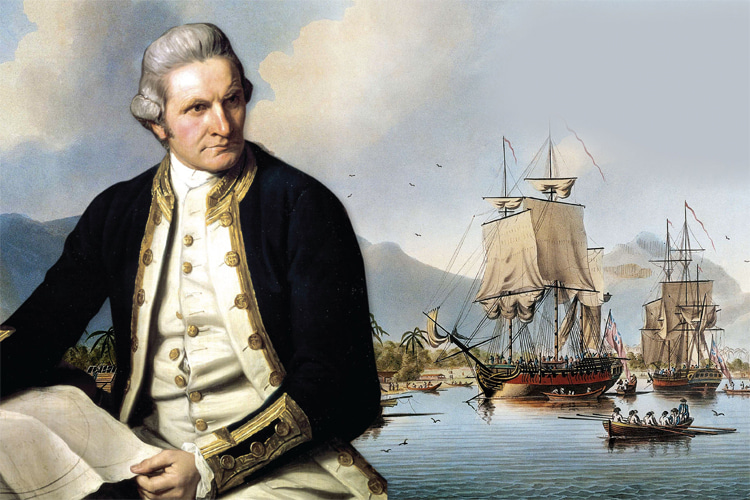
The initial interactions between Cook’s crew and the Hawaiians were largely peaceful and marked by curiosity from both sides. The Hawaiians, who had never seen Europeans or their technology, were particularly fascinated by the ships and iron tools. Some accounts suggest that Cook was initially perceived as a manifestation of Lono, the Hawaiian god of fertility and peace, due to his arrival during the Makahiki festival dedicated to Lono. This perception, however, proved to be temporary and ultimately contributed to the tragic turn of events.
After sailing to the North Pacific, Cook returned to the Hawaiian Islands in November 1778, spending several weeks exploring and resupplying. He then made his final visit to Kealakekua Bay on the Big Island (also known as the Island of Hawaii) in January 1779. It was here, after a series of misunderstandings and escalating tensions, that Captain Cook was killed by Hawaiians on February 14, 1779. This dramatic event underscores the complexities and inherent dangers of cross-cultural encounters during the age of exploration, serving as a powerful historical “landmark” in the annals of global discovery.
The Lasting Impact of European Contact
Despite the tragic end to Cook’s life, his discovery profoundly altered the trajectory of Hawaiian history. His reports opened the islands to the outside world, leading to increased contact with European and American traders, missionaries, and whalers. This contact brought both new opportunities and devastating challenges. While new goods, technologies, and ideas flowed into the islands, so did foreign diseases, to which the Hawaiians had no immunity. The population plummeted dramatically in the decades following Cook’s arrival, a tragic consequence of global interconnectedness.
The introduction of Western weaponry also played a significant role in the consolidation of power under King Kamehameha I, who, using foreign military aid and strategy, successfully unified the islands into a single kingdom by 1810. This marked the end of centuries of independent chiefdoms and the beginning of the Hawaiian Kingdom, a sovereign nation that would eventually be annexed by the United States in 1898.
Today, “tourism” in Hawaii often explores this period, with “landmarks” like the Captain Cook monument at Kealakekua Bay and various museums offering insights into the transformation of the islands. Visitors can delve into this rich history, understanding how European contact fundamentally reshaped the “local culture” and political landscape, offering a unique “experience” that blends historical reflection with the islands’ natural beauty.
Hawaii Today: A Legacy of Exploration and a Paradise for Travelers
From the ancient Polynesian voyagers to the fateful arrival of Captain James Cook, the story of who explored Hawaii is a multifaceted narrative. It’s a tale of remarkable human perseverance, cultural exchange, and the inevitable evolution of a unique island paradise. Today, Hawaii stands as a testament to this incredible history, offering “destinations” and “experiences” that cater to every kind of traveler, all while preserving the vibrant “local culture” shaped by millennia of exploration and adaptation.
For modern explorers, Hawaii is more than just a beautiful vacation spot; it’s an opportunity to connect with a living history and a thriving culture. The “tourism” industry here is deeply interwoven with its past, allowing visitors to engage with the spirit of discovery that has defined these islands for centuries.
Experiencing Hawaiian Culture and Natural Wonders
The legacy of exploration manifests itself in the diverse “attractions” and “experiences” Hawaii offers. On Oahu, visitors can explore the bustling city of Honolulu, relax on the iconic Waikiki Beach, or pay respects at historical “landmarks” like Pearl Harbor, a poignant reminder of the islands’ later strategic importance. The Polynesian Cultural Center provides an immersive “experience” into the traditional ways of various Pacific island nations, including the early Hawaiians.
On Maui, the journey to the summit of Haleakala National Park offers breathtaking sunrises, an almost spiritual encounter with nature that evokes the awe felt by early navigators. Kauai, the Garden Isle, boasts the dramatic cliffs of the Na Pali Coast, accessible by boat or hike, showcasing the pristine beauty that captivated the first settlers. The Big Island, or Island of Hawaii, is home to Hawaii Volcanoes National Park, where visitors can witness the raw, powerful forces of creation that continue to shape the islands, a dynamic “landmark” that is literally still growing.
Beyond these grand “destinations,” smaller, more intimate “experiences” abound. Learning to surf, the sport of Hawaiian royalty; enjoying a traditional luau with hula performances and delicious local “food” like fresh poke and Kona coffee; or simply exploring the lush botanical gardens and waterfalls – these all offer a taste of the island lifestyle shaped by centuries of cultural evolution. “Guides” and “tips” for exploring these facets are readily available, ensuring visitors can delve deep into the heart of Hawaii.

Planning Your Hawaiian Escape: Accommodation and Lifestyle Choices
For those inspired by the spirit of exploration, planning a trip to Hawaii involves choosing the right “accommodation” and “lifestyle” to match their travel dreams. The islands offer an incredible array of “hotels” and resorts, from opulent “luxury travel” suites with oceanfront views to charming “apartments” perfect for a “long-term stay” or “budget travel.” Many “resorts” offer extensive “amenities” like spas, golf courses, and private beach access, catering to those seeking a pampered escape.
Families can find numerous “family trips” friendly resorts with kids’ clubs and activities, while “business stays” are well-supported by hotels in Honolulu offering conference facilities. Independent travelers might opt for “villas” or vacation rentals, providing a more localized “experience.” “Booking” platforms and “comparison” sites make it easy to find the perfect spot, complete with “reviews” from fellow travelers. Whether you’re seeking adventure, relaxation, cultural immersion, or simply a breathtaking backdrop for your next escape, Hawaii has an option for every preference.
Ultimately, the story of “Who Explored Hawaii?” is a story of human connection to the earth and sea. It’s a narrative that begins with the incredible foresight and skill of the Polynesian navigators and continues through the profound changes brought by European contact. Today, this rich history invites new generations of travelers to become their own explorers, discovering the enduring beauty and vibrant spirit of these remarkable islands, a truly unforgettable “destination” for any “lifestyle.”
LifeOutOfTheBox is a participant in the Amazon Services LLC Associates Program, an affiliate advertising program designed to provide a means for sites to earn advertising fees by advertising and linking to Amazon.com. Amazon, the Amazon logo, AmazonSupply, and the AmazonSupply logo are trademarks of Amazon.com, Inc. or its affiliates. As an Amazon Associate we earn affiliate commissions from qualifying purchases.