
The bustling metropolis of Chicago, a global hub of finance, culture, and architecture, owes its very beginnings to an often-overlooked and enigmatic figure: Jean Baptiste Point du Sable. While many might associate Chicago’s rise with industrial magnates or the Great Fire, the true narrative of its origin stretches back to the late 18th century, a testament to the perseverance and foresight of this pioneering Black settler. His story is not just an essential piece of Chicago’s history but a significant chapter in the broader tapestry of American development, revealing a complex interplay of trade, indigenous relations, and frontier life.
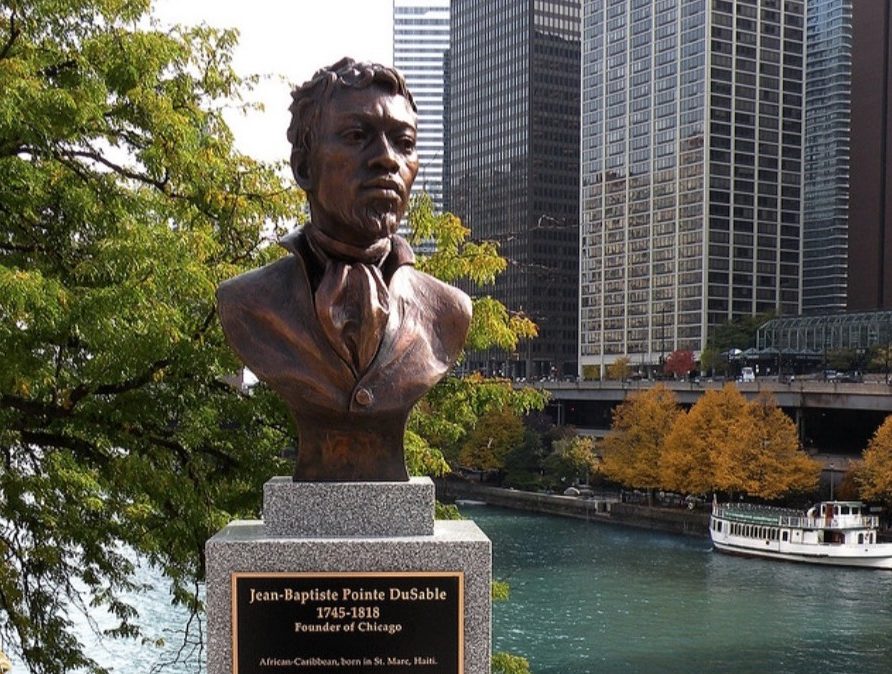
The Enigmatic Founder: Jean Baptiste Point du Sable
The identity of Chicago’s first non-native resident and founder of its initial permanent settlement is historically attributed to Jean Baptiste Point du Sable. Born likely around 1745 in Saint-Marc, Haiti, his heritage was a mix of African and French. While precise details about his early life are scarce, historical accounts suggest he was well-educated, spoke multiple languages, including French, Spanish, and several Native American dialects, and possessed a shrewd understanding of commerce and frontier diplomacy. These attributes would prove invaluable in establishing a successful enterprise in an untamed wilderness.
Early Life and Origins
Du Sable’s journey to the Great Lakes region is believed to have begun in the 1770s, making his way through New Orleans and up the Mississippi River. He was known to have established trade relations with various Native American tribes, particularly the Potawatomi people, with whom he forged strong alliances. This early period of his life was characterized by mobility and an astute ability to navigate the complex social and economic landscape of the American frontier. His mixed heritage likely provided him with a unique perspective and a crucial advantage in bridging cultural divides between European traders and indigenous communities. Records indicate he may have worked as a fur trapper and trader in various locations before settling permanently at the mouth of the Chicago River.
Establishing the First Settlement
Around 1779, Jean Baptiste Point du Sable established his home and trading post on the north bank of the Chicago River, near what is now Pioneer Court in downtown Chicago. This wasn’t merely a temporary camp; it was a substantial settlement designed for long-term habitation and commerce. His property included a farmhouse, a smokehouse, a dairy, a mill, a bakehouse, and various outbuildings. He cultivated crops and raised livestock, demonstrating a commitment to creating a self-sufficient community in a frontier environment. This robust establishment effectively marked the birth of Chicago as a permanent, non-native settlement.
Chicago’s Genesis: A Strategic Location
The choice of location for Du Sable’s settlement was far from arbitrary; it was a strategic decision that capitalized on the unique geographical advantages of the area. The site at the mouth of the Chicago River, where it flowed into Lake Michigan, was a natural nexus for trade and transportation. This advantageous position would be the primary driver of Chicago’s eventual growth into a major urban center.
The Chicago River and Great Lakes Trade
The confluence of the Chicago River and Lake Michigan provided an unparalleled logistical advantage. The river offered access to the interior waterways of the continent, including a portage route to the Mississippi River basin, while Lake Michigan opened up the vast network of the Great Lakes to the east. This made Du Sable’s settlement a vital transshipment point for furs from the interior, destined for markets in Detroit, Montreal, and beyond. In return, European goods like textiles, tools, and spirits flowed into the region, facilitated by Du Sable’s trading post. His astute understanding of these trade routes and his ability to mediate between various groups were crucial to the success of his venture.
Indigenous Inhabitants and Early European Encounters

Long before Du Sable’s arrival, the land that would become Chicago was home to various Native American tribes, primarily the Potawatomi, Miami, and Illinois nations. These indigenous peoples had utilized the area for centuries, recognizing its ecological richness and strategic location. The term “Chicagoua” or “Checagou” itself is believed to derive from a Native American word, possibly referring to wild leeks or onions that grew abundantly along the riverbanks, or perhaps signifying “great” or “powerful.” Early European explorers and missionaries had passed through the area, notably Father Jacques Marquette and Louis Jolliet in 1673, who recognized the potential for a canal connecting the Great Lakes to the Mississippi. However, it was Du Sable who transformed this recognized potential into a permanent, functioning settlement, laying the groundwork for future development.
Du Sable’s Legacy and Departure
Jean Baptiste Point du Sable’s period in Chicago spanned roughly two decades, during which he established a thriving economic hub. His legacy is not just the physical settlement but also the demonstration of a successful, multi-ethnic community on the frontier, navigating complex relationships with indigenous populations and distant European powers.
The Trading Post Flourishes
Under Du Sable’s proprietorship, the Chicago trading post flourished. It served as a critical intermediary for the fur trade, exchanging goods between French, British, and American traders and various Native American tribes. His reputation for fairness and his fluency in indigenous languages were instrumental in fostering peaceful and productive relationships, minimizing conflicts that were common in other frontier regions. He was not just a trader but a respected community leader, providing vital services and a stable presence in an otherwise volatile landscape. The success of his enterprise underscored the viability of the location for future expansion.
Subsequent Owners and Development
In 1800, Jean Baptiste Point du Sable sold his entire Chicago property to Jean La Lime, a French trader, for 6,000 livres. The reasons for his departure are not entirely clear, but some historians suggest he may have sought a more settled life, moving to St. Charles, Missouri, where he owned land and was involved in other ventures. After La Lime, the property was acquired by John Kinzie in 1804. Kinzie, often mistakenly referred to as Chicago’s first resident for many years, significantly benefited from the well-established infrastructure and trade networks that Du Sable had created. The site continued to be a focal point for trade and by 1803, the United States government established Fort Dearborn near Du Sable’s original settlement, further cementing the area’s strategic importance and foreshadowing its rapid development in the decades to come.
Recognizing a Pioneer: Modern Day Tributes
For many years, Jean Baptiste Point du Sable’s pivotal role in Chicago’s founding was largely overlooked or minimized in historical accounts, with credit often erroneously given to later settlers. However, in recent decades, there has been a concerted effort to acknowledge and celebrate his contributions, ensuring his rightful place in the city’s foundational narrative.
Historical Significance and Commemoration
The recognition of Jean Baptiste Point du Sable as the founder of Chicago is a crucial step in presenting a more accurate and inclusive history of the city. His story challenges conventional narratives of westward expansion, highlighting the contributions of people of African descent and the complex, multicultural nature of early American frontiers. Various initiatives and landmarks in Chicago now honor his legacy. The Du Sable Museum of African American History, founded in 1961, stands as a prominent institution dedicated to celebrating Black history and culture, bearing his name. Additionally, a beautiful bronze statue of Du Sable and his wife, Kitihawa, stands on the Magnificent Mile, a powerful symbol of his foundational role.

Visiting Du Sable’s Chicago Today
While Du Sable’s original settlement no longer stands, its spirit and location are integral to modern Chicago. Visitors interested in understanding the city’s origins can explore the area near the Michigan Avenue Bridge and Pioneer Court, where interpretive markers and the aforementioned statue commemorate his pivotal establishment. The Du Sable Bridge, formerly the Michigan Avenue Bridge, was officially renamed in his honor in 2010, marking a significant milestone in public recognition. Exploring these sites offers a tangible connection to the humble beginnings of one of the world’s great cities and a tribute to the entrepreneur who dared to build a permanent home in the wilderness at the crossroads of a continent. Understanding who founded Chicago is not just a historical fact; it is an appreciation of the foresight, resilience, and multicultural spirit that defined its inception and continues to shape its identity today.
LifeOutOfTheBox is a participant in the Amazon Services LLC Associates Program, an affiliate advertising program designed to provide a means for sites to earn advertising fees by advertising and linking to Amazon.com. Amazon, the Amazon logo, AmazonSupply, and the AmazonSupply logo are trademarks of Amazon.com, Inc. or its affiliates. As an Amazon Associate we earn affiliate commissions from qualifying purchases.