
The question of legal rights and responsibilities within a family unit is a cornerstone of societal structure, particularly in a state as distinct as Texas. When considering the rights afforded to a spouse versus those of a child, the legal landscape can appear complex, especially when navigating familial disputes, estate planning, or situations involving care and support. While both relationships are foundational, the specific legal entitlements and obligations differ significantly based on age, marital status, and the nature of the legal issue at hand. This exploration delves into the nuances of these rights within the Texas legal framework, focusing on key areas such as inheritance, medical decision-making, financial support, and general protections.

Inheritance Rights: A Tale of Two Relationships
One of the most significant areas where legal rights are clearly delineated is in the realm of inheritance. When an individual passes away, their assets are distributed according to their will or, in its absence, by the state’s intestacy laws. In Texas, both a surviving spouse and children hold specific inheritance rights, but these are often prioritized and structured differently.
The Surviving Spouse’s Entitlement
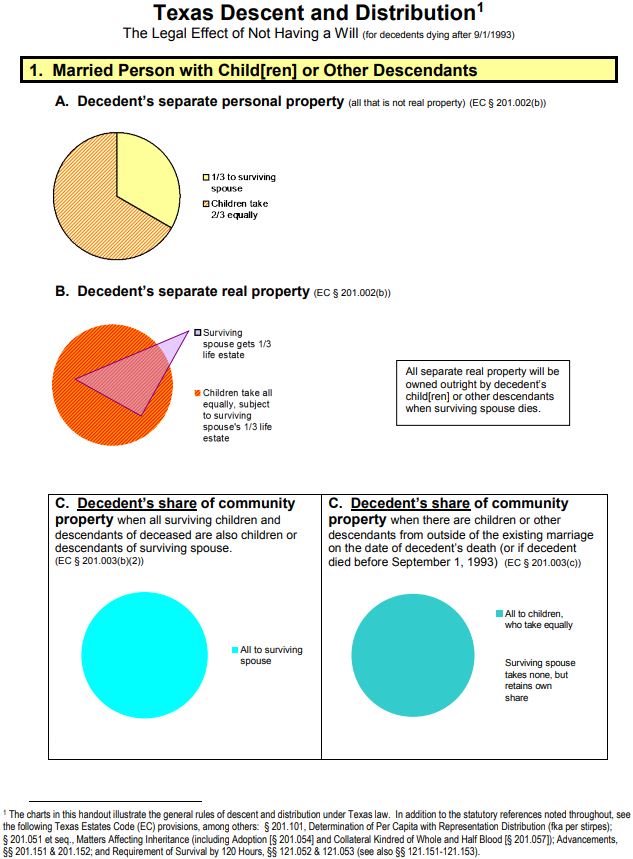
The surviving spouse in Texas generally holds a prominent position in inheritance. If the deceased passed away intestate (without a will), Texas community property laws play a crucial role. Community property includes assets acquired by either spouse during the marriage, with some exceptions for separate property (gifts, inheritance, or property owned before marriage). A surviving spouse typically inherits the deceased’s share of the community property, and depending on whether there are surviving children, they may also inherit some or all of the deceased’s separate property.
For instance, if a married individual dies without a will and is survived by a spouse and children, the surviving spouse typically inherits:
- All of the deceased’s share of the community property.
- One-third of the deceased’s separate personal property.
- A life estate in one-third of the deceased’s separate real property (meaning they can use and benefit from it for their lifetime, but it ultimately passes to heirs).
If the deceased is survived only by a spouse and no children, the surviving spouse inherits all of the community property and all of the separate property. This demonstrates a strong legal recognition of the marital union and the spouse’s ongoing role in the family’s financial well-being.
Children’s Inheritance Rights
Children, whether biological or adopted, also have vested inheritance rights in Texas. If a parent dies intestate, their children are entitled to a share of the estate. The distribution to children is typically as follows:
- If the deceased is survived by a spouse and children, the children will inherit the remaining portion of the separate property not awarded to the spouse (two-thirds of the personal property and the remainder of the real property after the spouse’s life estate).
- If the deceased is survived by children but no spouse, the children inherit the entire estate, divided equally among them.
- If a child predeceases the parent, their share typically passes to their own children (the parent’s grandchildren), unless specified otherwise.
It’s important to note that these are statutory rights designed to ensure that children are provided for. However, these rights can be altered or diminished through a valid will. A parent can, for example, choose to leave a smaller portion or even nothing to a particular child, provided the will is properly executed and legally sound. The law generally upholds the testator’s wishes unless there are grounds for challenging the will, such as lack of testamentary capacity or undue influence.
Medical Decision-Making: Guardianship and Autonomy
When it comes to medical decisions, the rights of spouses and children are tied to different principles: the spouse’s right to act as a surrogate decision-maker and the child’s evolving autonomy and the need for parental or guardian consent.
Spouse as Surrogate Decision-Maker
In Texas, a surviving spouse is often recognized as a primary surrogate decision-maker for an incapacitated spouse. This means that if one spouse becomes unable to make their own medical decisions due to illness or injury, the other spouse generally has the legal authority to consent to or refuse medical treatment on their behalf. This right is rooted in the marital relationship and the presumption that spouses are best positioned to understand and advocate for each other’s wishes.
This authority can be superseded if the incapacitated individual previously designated another person as their medical power of attorney or if there are specific court orders in place. However, in the absence of such directives, the spouse’s right to make these critical decisions is paramount.
Children’s Medical Rights and Responsibilities
For children, their medical rights and the authority of others to make decisions on their behalf depend heavily on their age.
Minor Children
Under the age of 18, children are generally considered minors and lack the legal capacity to make their own medical decisions. Their parents or legal guardians hold this right and responsibility. Parents have the authority to consent to necessary medical care, including routine check-ups, vaccinations, and treatments for illnesses or injuries. They also have the responsibility to ensure their child receives adequate medical attention.
In situations where parents disagree on a medical decision for a minor, or if the parents are unable to make decisions (e.g., due to incapacitation or death), a court may appoint a guardian to make those decisions. In rare, extreme cases, where parents are deemed unfit or their actions endanger the child’s health, the state can intervene.
Emancipated Minors and Adult Children
In Texas, a minor can become “emancipated” by court order, which grants them the legal rights and responsibilities of an adult, including the ability to make their own medical decisions. This typically requires demonstrating financial independence and maturity.
Once a child reaches the age of 18, they are legally considered an adult with full autonomy over their medical care. At this point, their rights are equal to any other adult’s, and they can make their own decisions, appoint their own medical power of attorney, and are no longer subject to parental control regarding healthcare choices.
However, adult children may still play a role in their parents’ care, especially if the parent becomes incapacitated and has not appointed a surrogate decision-maker. In such cases, Texas law establishes a hierarchy of individuals who can act as a medical power of attorney, often including adult children after a spouse.
Financial Support and Obligations
The legal obligations for financial support also differ significantly between spouses and children.
Spousal Support and Alimony
In Texas, spousal support, often referred to as alimony, is not automatically granted in every divorce. It is typically awarded based on specific circumstances, such as the length of the marriage, the financial resources of each spouse, and the earning capacity of the spouse seeking support. The purpose is to provide financial assistance to a spouse who may be unable to support themselves after a divorce, especially if they have been out of the workforce for an extended period to care for a family.
In cases of divorce, the court aims to achieve a just and fair division of the marital estate, and spousal support is an additional mechanism to address economic disparities.
Child Support
Child support, on the other hand, is a fundamental obligation in Texas and is legally mandated for any child under the age of 18, or still in high school, or if the child has a disability and is unable to support themselves. Both parents have a legal duty to support their children financially. The amount of child support is typically calculated based on guidelines that consider the net monthly income of the non-custodial parent and the number of children being supported.
The purpose of child support is to ensure that the child’s needs for housing, food, clothing, medical care, and education are met, regardless of the parents’ marital status or living arrangements. Courts take child support obligations very seriously, and failure to comply can result in significant legal consequences, including wage garnishment, suspension of driver’s licenses, and even jail time.
General Protections and Rights
Beyond inheritance, medical decisions, and financial support, spouses and children are afforded certain general legal protections within the Texas system.
Spouse’s Protections
Spouses have rights related to marital property, which, as mentioned, includes community property. In the event of a spouse’s death, the surviving spouse has rights to inherit a portion of the estate. Furthermore, spouses are generally protected from certain types of financial exploitation by each other, and in cases of domestic violence, both spouses have access to legal protections such as restraining orders. The marital relationship itself is recognized as a partnership that carries legal rights and responsibilities.
Children’s Rights and Protections
Children, particularly minors, are a protected class under the law. They have the right to be free from abuse and neglect. Texas has robust laws and agencies, such as the Department of Family and Protective Services, dedicated to protecting children. If a child is in a situation of abuse or neglect, the state has the authority to intervene and remove the child from a dangerous environment and place them with relatives or in foster care.
Children also have the right to education and healthcare, as previously discussed. Their vulnerability necessitates a higher degree of legal protection, ensuring their well-being and development are prioritized.
Conclusion: A Framework of Interdependent Rights
In summary, while both spouses and children hold significant legal rights in Texas, the nature and application of these rights are distinct. A spouse’s rights are often tied to the marital partnership, focusing on shared property, emotional and financial support within the marriage, and continued care after a spouse’s death or incapacitation. Children’s rights, particularly for minors, are centered on protection, sustenance, and their development into independent adults, with legal frameworks designed to ensure their basic needs are met and they are safeguarded from harm.
Understanding these distinctions is crucial for individuals and families navigating legal matters in Texas. Whether planning an estate, facing a medical crisis, or considering family law matters, recognizing the specific rights afforded to spouses versus children is fundamental to making informed decisions and ensuring legal protections are properly applied. The Texas legal system strives to balance the rights of all family members, ensuring that the bonds of marriage and kinship are respected and protected under the law.
LifeOutOfTheBox is a participant in the Amazon Services LLC Associates Program, an affiliate advertising program designed to provide a means for sites to earn advertising fees by advertising and linking to Amazon.com. Amazon, the Amazon logo, AmazonSupply, and the AmazonSupply logo are trademarks of Amazon.com, Inc. or its affiliates. As an Amazon Associate we earn affiliate commissions from qualifying purchases.