
The history of Florida is a complex tapestry of indigenous sovereignty, European imperial ambition, and geopolitical maneuvering. Long before it became the 27th state of the United States in 1845, this peninsula was a coveted prize for the world’s most powerful empires. From the ancient civilizations that engineered massive shell mounds to the Spanish explorers who named the land after flowers, the ownership of Florida has shifted through several distinct eras. To understand who owned Florida before the American flag flew over its shores, one must look at the landmarks and archaeological sites that still stand as silent witnesses to these transitions.
The Indigenous Sovereigns: Thousands of Years of First Ownership
Before any European set foot on the sandy shores of North America, Florida was home to a diverse array of powerful indigenous nations. These were not merely nomadic tribes but sophisticated societies with complex political structures, extensive trade networks, and impressive architectural capabilities.
The Calusa and the Shell Cities of the Southwest
In the southwest, along the Gulf of Mexico, the Calusa people established a formidable maritime empire. Known as the “Shell Indians,” they engineered vast islands and canal systems out of discarded shells. Today, Mound Key Archaeological State Park stands as a landmark of their dominance. This site was the capital of the Calusa kingdom, where they controlled the southern tip of the peninsula and successfully resisted initial Spanish incursions for decades.
The Timucua and the Apalachee
The northern regions were governed by the Timucua and the Apalachee. The Timucua occupied a large portion of the northeast and central Florida, living in fortified villages and practicing advanced agriculture. Meanwhile, the Apalachee controlled the fertile lands of the Panhandle, centered around what is now Tallahassee. Their legacy is preserved at the Crystal River Archaeological State Park, a ceremonial center that served various indigenous groups for over 1,600 years. These nations were the true original owners of the land, maintaining sovereignty until the biological and military onslaught of the colonial era began to erode their power.
The First Spanish Period: 1513–1763
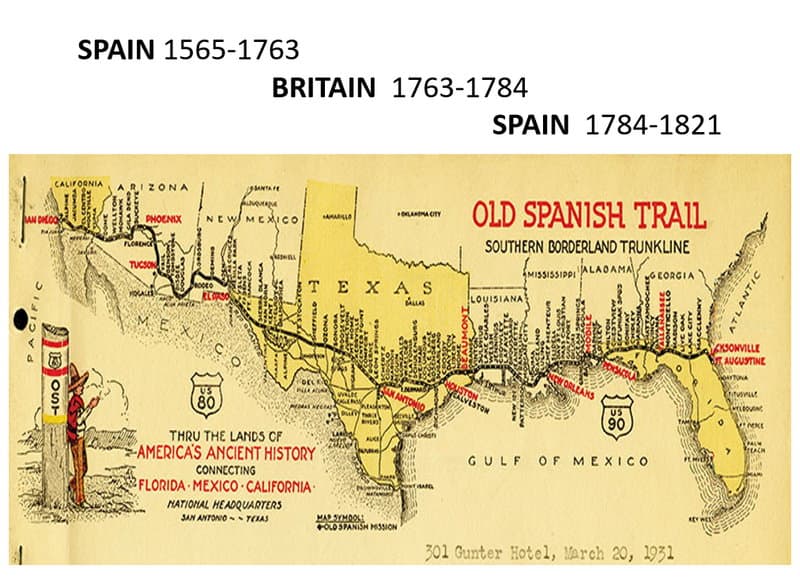
Spain was the first European power to lay claim to the peninsula. This era began with the legendary voyage of Juan Ponce de León in 1513. Searching for new lands and resources, he arrived during the Easter season, which the Spanish called Pascua Florida (the Feast of Flowers), giving the land its permanent name.
The Founding of St. Augustine
While several explorers, including Hernando de Soto, trekked through the interior, it wasn’t until 1565 that Spain established a permanent foothold. Pedro Menéndez de Avilés founded St. Augustine, which remains the oldest continuously inhabited European-established settlement in the contiguous United States. This city became the administrative heart of Spanish Florida.
The most iconic landmark of this era is the Castillo de San Marcos. Constructed of coquina—a rare sedimentary rock composed of shell fragments—this fortress proved indestructible against British sieges. Its unique architecture allowed the walls to absorb cannon fire rather than shattering, ensuring that Spain maintained control of the strategic Atlantic Ocean shipping lanes for nearly two centuries.
The Mission System and French Rivalry
Spain did not own the land in isolation. They faced stiff competition from France, which established Fort Caroline near present-day Jacksonville in 1564. The Spanish quickly destroyed the French colony to secure their monopoly. To cement their ownership, Spain established a network of religious missions, such as Mission San Luis in Tallahassee, which served as both religious centers and military outposts to manage the indigenous populations and guard against British encroachment from the north.
The British Interlude: 1763–1783
In a surprising turn of events resulting from the Seven Years’ War, Spain traded Florida to Great Britain in exchange for control of Havana, Cuba. This 20-year period of British ownership saw the peninsula divided into two separate colonies: East Florida (capital at St. Augustine) and West Florida (capital at Pensacola).
Development and Loyalty
Under British rule, Florida saw a significant increase in population and economic development. The British government offered land grants to attract settlers, leading to the creation of the New Smyrna Beach colony, founded by Andrew Turnbull. While the original thirteen colonies to the north were revolting against the crown during the American Revolution, the Floridas remained staunchly loyal to Great Britain.
Strategic Architecture in the Panhandle
Pensacola flourished during this time, serving as a vital port for the British Royal Navy. The British expanded the fortifications at Fort Barrancas, recognizing that ownership of Florida meant control over the Gulf of Mexico. However, the British tenure was short-lived. Following the Treaty of Paris in 1783, which ended the American Revolution, Florida was returned to Spain as a reward for their assistance to the American cause.
The Second Spanish Period and the Rise of the Seminole: 1783–1821
The second era of Spanish ownership was marked by a weakened empire and the rise of a new indigenous power: the Seminole people. This group was formed from remnants of the Creek nation and other displaced tribes, along with formerly enslaved Africans who found refuge in Florida.
A Haven for Freedom
One of the most significant landmarks of this period is Fort Mose Historic State Park. Located just north of St. Augustine, Fort Mose was the first legally sanctioned free African settlement in what is now the United States. The Spanish government offered freedom to enslaved people from the British colonies if they converted to Catholicism and pledged loyalty to the Spanish crown. This policy made Florida a beacon of hope for those seeking escape from the plantations of Georgia and South Carolina.
The Inevitable Cession
By the early 19th century, Spain was struggling to maintain its vast colonial empire. The United States, fueled by the philosophy of Manifest Destiny, viewed Florida as a necessary addition to its territory. Border disputes and the First Seminole War, led by Andrew Jackson, put immense pressure on Spanish authorities.
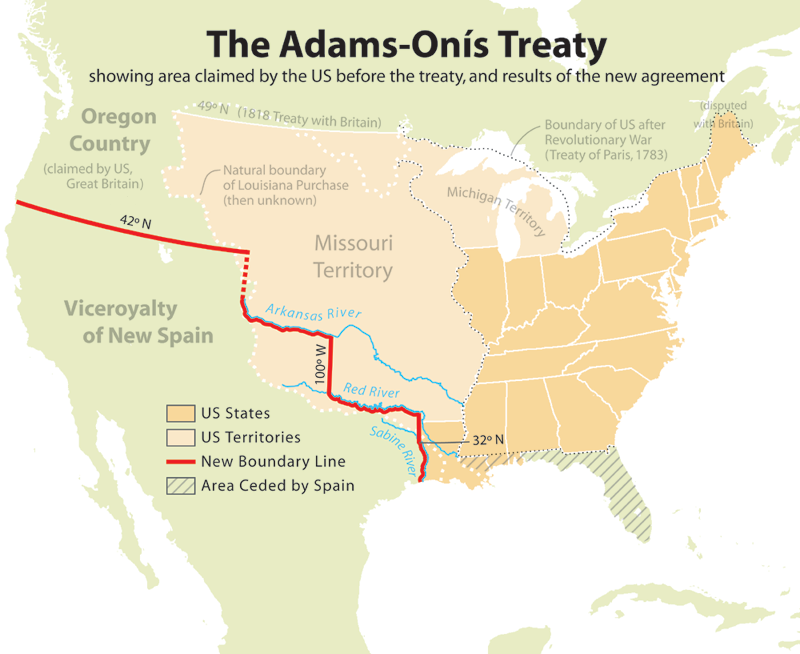
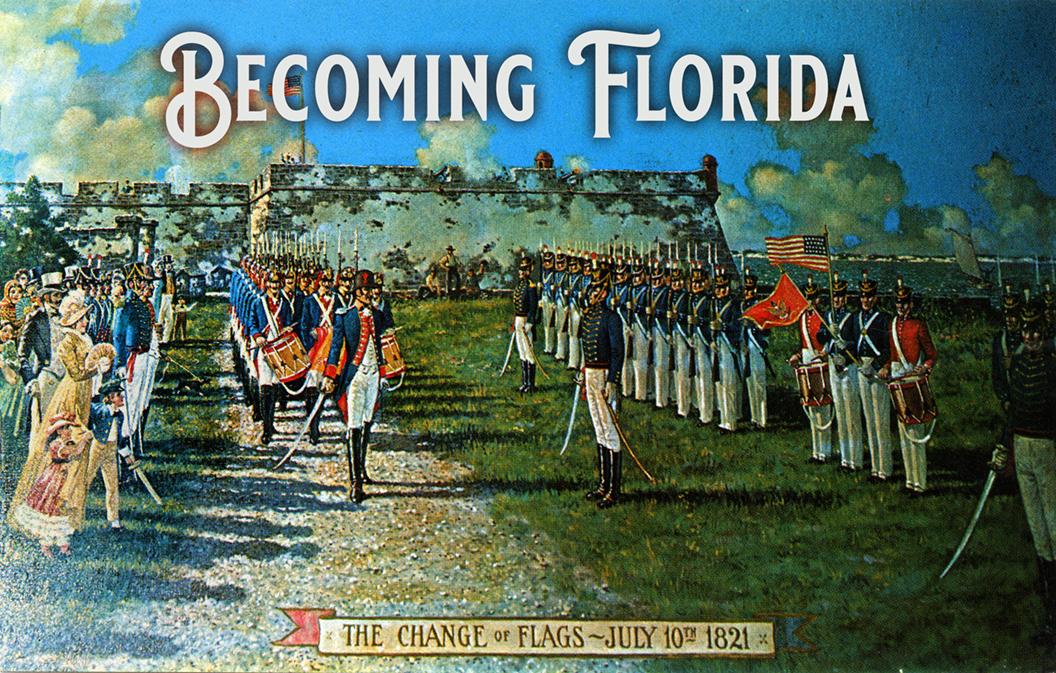
The tension culminated in the Adams-Onís Treaty of 1819 (ratified in 1821). In this agreement, Spain officially ceded Florida to the United States in exchange for the settlement of $5 million in claims and the United States renouncing claims to parts of Texas.
Landmarks of a Transitional Land
The remnants of these various owners can still be explored through Florida’s most famous landmarks. Each site offers a glimpse into the lifestyle, architecture, and values of the people who once called this land their own.
Fort Matanzas National Monument
Built by the Spanish in 1742, Fort Matanzas National Monument guarded the southern approach to St. Augustine. The name “Matanzas” translates to “Slaughters,” referring to the 1565 execution of French Huguenots by Spanish forces—a grim reminder of the violent struggles for ownership. The fort is a masterpiece of colonial military engineering, using local materials to create a sustainable defense against foreign navies.
San Marcos de Apalache Historic State Park
Located at the confluence of the St. Marks River and the Wakulla River, San Marcos de Apalache Historic State Park is a site where ownership changed hands multiple times. Initially a Spanish fort, it was later occupied by the British, then returned to Spain, and eventually seized by Andrew Jackson during his 1818 campaign. The layers of stone and earthwork here represent the physical accumulation of Florida’s colonial history.
The Legacy of the Everglades
While empires fought over coastal forts and fertile northern plains, the Everglades remained a bastion of indigenous resistance. The Seminole and Miccosukee tribes utilized the “River of Grass” as a natural fortress. This vast wetland was never truly “owned” by the European powers in the sense of total control. Instead, it became the heart of a culture that refused to be relocated during the Indian Removal Act era. Today, the Everglades stand as a natural landmark of enduring sovereignty.
From the shell mounds of the Calusa to the coquina walls of St. Augustine, the story of who owned Florida is one of constant flux. Spain, France, and Great Britain all left their mark on the landscape, but the indigenous roots of the land run deepest of all. Understanding these layers of history enriches any visit to the Sunshine State, turning every lighthouse, fort, and park into a page of a grand, historical epic.
LifeOutOfTheBox is a participant in the Amazon Services LLC Associates Program, an affiliate advertising program designed to provide a means for sites to earn advertising fees by advertising and linking to Amazon.com. Amazon, the Amazon logo, AmazonSupply, and the AmazonSupply logo are trademarks of Amazon.com, Inc. or its affiliates. As an Amazon Associate we earn affiliate commissions from qualifying purchases.