
The archipelago of Hawaii stands as one of the most culturally significant and historically complex chains of islands in the Pacific. Long before it became the 50th state of the United States, these islands were home to a sophisticated, self-governing nation with a lineage tracing back over a thousand years. To understand the history of this breathtaking destination is to understand a legacy of navigation, sovereignty, and profound transformation.
The Ancestral Voyagers and the Rise of the Kingdom
The story of Hawaii begins with the arrival of Polynesian voyagers, who navigated thousands of miles of open ocean using the stars, currents, and wildlife as their guides. These master navigators arrived from the Marquesas Islands and later Tahiti, establishing a culture deeply rooted in the land and sea. For centuries, the islands functioned as independent chiefdoms, each governed by an Aliʻi, or high chief.
The Unification Under Kamehameha
The disparate chiefdoms were finally united at the turn of the 19th century by Kamehameha the Great. Born on the Big Island, Kamehameha utilized superior weaponry and strategic alliances with Westerners to consolidate power. By 1810, he had officially established the Kingdom of Hawaii, a sovereign monarchy recognized by the international community, including Great Britain, France, and the United States.
The Kingdom was a sophisticated entity, characterized by a complex social hierarchy governed by the kapu system—a series of laws and religious prohibitions—and a deep spiritual connection to the gods, particularly Pele, the goddess of fire and volcanoes, who is said to reside within the craters of Kilauea.
The Arrival of Foreign Influence and Global Diplomacy
As the 19th century progressed, the strategic location of the Hawaiian Islands in the center of the Pacific Ocean drew the attention of global powers. The islands became a critical hub for the whaling industry, merchant shipping, and eventually, the burgeoning sugar plantation economy. This influx of foreign sailors, traders, and missionaries fundamentally altered the landscape of the archipelago.
Missionaries and the Constitutional Monarchy
The arrival of Christian missionaries in 1820 brought about rapid changes, including the introduction of a written language, the transition to a constitutional monarchy, and the adoption of Western-style governance. Under rulers like Kamehameha III, Hawaii drafted its first constitution in 1840. The nation sought to maintain its independence by engaging in diplomacy, signing treaties of friendship, and ensuring that Hawaii remained a sovereign entity recognized by the global superpowers of the era.

The Overthrow and the Transition to Territory
The late 19th century was marked by increasing friction between the Hawaiian monarchy and the powerful American sugar interests that had come to dominate the economy. As these business magnates gained influence, they sought to dismantle the absolute power of the throne to protect their economic interests.
The Final Years of the Monarchy
The tension culminated in 1893, when a group of American businessmen, supported by United States Marines, orchestrated a coup against Queen Liliuokalani. The Queen, in a bid to prevent bloodshed and the loss of life among her people, surrendered her authority under protest, hoping that the American government would eventually rectify the injustice. Despite her efforts, the monarchy was abolished, and a provisional government was established.
Following the Spanish-American War, the geopolitical value of Pearl Harbor as a naval base led the United States to formally annex the islands in 1898. Hawaii transitioned from an independent kingdom to a territory, and finally, in 1959, to statehood.
Preserving the Legacy of a Sovereign Nation
Today, visitors to the islands can explore the enduring history of the Kingdom through various landmarks and cultural experiences. Understanding that Hawaii was once an independent nation adds a layer of depth to the experience of visiting historic sites such as Iolani Palace, the only royal palace on American soil.

Cultural Landmarks and Historic Sites
- Iolani Palace: Located in Honolulu, this site serves as a poignant reminder of the royal lineage that once governed the archipelago.
- Bishop Museum: A premier institution for studying the history, artifacts, and genealogy of the native people of Hawaii.
- Puuhonua o Honaunau National Historical Park: A sacred site on the Island of Hawaii that illustrates the ancient laws of refuge and the spiritual life of the ancestors.
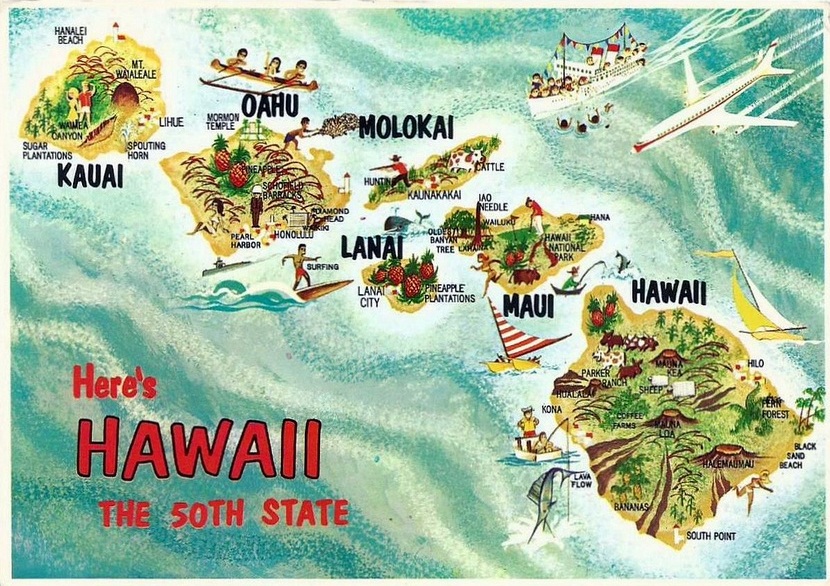
The history of Hawaii is not merely a chronicle of transition from monarchy to statehood; it is a story of resilience. The native language, traditions of the hula, and the ancient practice of malama aina—caring for the land—continue to define the identity of the islands. For the modern traveler, acknowledging the history of who owned the land before the American flag was raised is essential to showing respect for the local culture and the deep heritage that lives on in the people of Oahu, Maui, Kauai, and beyond.
The islands offer more than just pristine beaches and volcanic landscapes; they offer a window into a past where a unique Polynesian civilization thrived under its own royal line. By visiting the museums, historical parks, and cultural centers, one gains a clearer picture of the complex, often turbulent, but ultimately enduring legacy of the Hawaiian nation. As one traverses the diverse terrain of Molokai or the lush cliffs of the Na Pali Coast, the echoes of the Kingdom remain present in the spirit and the stories of the land, serving as a reminder that the true heart of these islands remains rooted in its original, independent identity.
LifeOutOfTheBox is a participant in the Amazon Services LLC Associates Program, an affiliate advertising program designed to provide a means for sites to earn advertising fees by advertising and linking to Amazon.com. Amazon, the Amazon logo, AmazonSupply, and the AmazonSupply logo are trademarks of Amazon.com, Inc. or its affiliates. As an Amazon Associate we earn affiliate commissions from qualifying purchases.