
The islands of Hawaii, a breathtaking archipelago in the heart of the Pacific Ocean, are renowned for their stunning natural beauty, vibrant culture, and rich history. While often associated with American statehood, Hawaii‘s story is far more complex, stretching back centuries before its annexation by the United States. To truly understand the allure of these islands, one must delve into the fascinating narrative of their original inhabitants and the sovereign nation that flourished there for generations.
For millennia, the Hawaiian Islands were a thriving, independent kingdom, governed by a sophisticated system of social, political, and spiritual structures. The concept of “ownership” in the Western sense, as private property, was foreign to the ancient Hawaiians. Instead, the islands were considered a sacred trust, managed and cared for by the reigning monarch for the benefit of the people and the land. This deeply rooted connection to the ‘āina (land) shaped every aspect of life, from agriculture and fishing to art and religion.
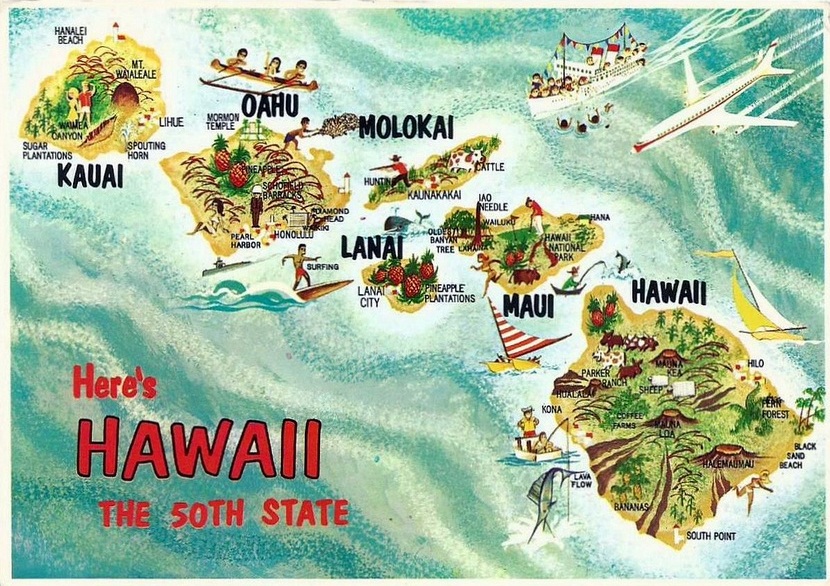
The journey of the first Polynesians to these remote islands is a testament to incredible seafaring skill and courage. These intrepid explorers, likely arriving in several waves between 300 and 800 AD, navigated vast distances using only the stars, ocean currents, and their intimate knowledge of nature. They brought with them the plants and animals essential for survival, laying the foundation for Hawaiian society and culture. Over centuries, these settlers developed a unique identity, characterized by a complex social hierarchy, a rich oral tradition of storytelling and chants, and a profound spiritual connection to the natural world.
The Rise of the Hawaiian Kingdom
The establishment of a unified Hawaiian Kingdom marked a pivotal moment in the islands’ history. Prior to the late 18th century, Hawaii was comprised of several independent chiefdoms, often engaged in inter-island conflicts. This changed dramatically with the rise of Kamehameha I, a formidable warrior and visionary leader. Through strategic alliances, military prowess, and a shrewd understanding of political maneuvering, Kamehameha I succeeded in uniting the islands under his rule by 1810, establishing the Kingdom of Hawaii.
A Unified Nation and its Governance
The Kingdom of Hawaii was not merely a collection of islands; it was a sovereign nation with its own laws, a functioning government, and diplomatic relations with other countries. The monarchy, a hereditary system, played a central role in governance. Kamehameha I and his successors, including Kamehameha III and Kamehameha IV, implemented significant reforms that modernized the kingdom and adapted it to the changing global landscape.
Under Kamehameha III, for instance, the kingdom adopted its first written constitution in 1840. This constitution established a system of elected representatives, a judiciary, and a division of powers, reflecting a growing awareness of Western governmental structures. The concept of Mālama Aina, the stewardship of the land, remained a core principle, but it was now integrated within a framework of national sovereignty. The Hawaiian people developed a strong sense of national identity, and the Kingdom became a respected entity on the international stage.
The monarchs of Hawaii were not absolute rulers but were expected to govern according to established customs and the will of the people, albeit through a complex system of chiefly consultation and societal norms. Royal decrees (Kānāwai) were issued, and the land was managed through a kapu system (taboo) that governed resource allocation and social conduct. The spiritual and political realms were deeply intertwined, with the aliʻi (chiefs and royalty) acting as intermediaries between the gods and the people.

Encounters with the West and Shifting Power Dynamics
The arrival of European explorers in the late 18th century, beginning with Captain James Cook in 1778, marked the beginning of a new era for Hawaii. Initially, these encounters were characterized by curiosity and trade, but over time, the influence of foreign powers, particularly European nations and the United States, began to grow. This growing foreign presence introduced new technologies, diseases that decimated the Hawaiian population, and economic interests that would eventually challenge the kingdom’s sovereignty.
The Impact of Foreign Influence and Trade
As Hawaii opened its doors to international trade, it became a vital stopover point for whaling ships and merchant vessels crossing the Pacific. This led to significant economic development, with the cultivation of sugarcane and pineapple becoming major industries. However, these economic opportunities also attracted foreign investors and businessmen who began to exert considerable political and economic influence. Missionaries from the United States also arrived in large numbers, bringing with them Christian religious beliefs and American educational systems, which further shaped Hawaiian society and culture.
The Hawaiian monarchs attempted to navigate these complex foreign relations, seeking to maintain their independence while engaging in international commerce. They sent diplomatic missions to Europe and the United States, seeking recognition of their sovereignty and favorable trade agreements. Despite these efforts, the strategic importance of Hawaii for trade routes and naval power became increasingly apparent to American interests.
The Overthrow and Annexation
The latter half of the 19th century saw increasing pressure from American businessmen and politicians who sought to expand United States influence in the Pacific. This culminated in the illegal overthrow of the Hawaiian Kingdom on January 17, 1893. A group of predominantly American and European businessmen, with the support of the United States Minister to Hawaii, John L. Stevens, and U.S. Marines from the USS Boston, deposed Queen Liliʻuokalani, the reigning monarch.

The Illegitimate Seizure of Power
The overthrow was a clear violation of international law and the rights of the sovereign Hawaiian Kingdom. Queen Liliʻuokalani protested vigorously, appealing to the United States government to restore her throne and uphold the sanctity of treaties. However, political forces within the United States, driven by economic ambitions and a desire for territorial expansion, ultimately led to the annexation of Hawaii in 1898, transforming it into a U.S. territory.
This act of annexation was deeply resented by the Hawaiian people, who continued to advocate for self-determination and the restoration of their nation. The legacy of this period continues to resonate today, with ongoing movements seeking justice and recognition for the injustices committed against the Hawaiian Kingdom. Understanding this history is crucial for anyone visiting Hawaii, offering a deeper appreciation for the resilience of its people and the enduring spirit of their homeland. The narrative of who owned Hawaii before the United States is not just a historical footnote; it is a living testament to a proud and independent nation that deserves to be remembered and respected.
LifeOutOfTheBox is a participant in the Amazon Services LLC Associates Program, an affiliate advertising program designed to provide a means for sites to earn advertising fees by advertising and linking to Amazon.com. Amazon, the Amazon logo, AmazonSupply, and the AmazonSupply logo are trademarks of Amazon.com, Inc. or its affiliates. As an Amazon Associate we earn affiliate commissions from qualifying purchases.