
Chicago, the bustling metropolis on the shores of Lake Michigan, is a world-class destination renowned for its stunning architecture, vibrant arts scene, diverse culinary landscape, and friendly Midwestern charm. Millions of visitors flock to the Windy City each year to explore its iconic landmarks, immerse themselves in its rich history, and experience its unique urban lifestyle. From strolling through Millennium Park to admiring the masterpieces at the Art Institute of Chicago, or enjoying a deep-dish pizza, there’s no shortage of unforgettable experiences.
However, like any major city, navigating Chicago comes with its logistical considerations, and one question frequently arises for those planning to drive: “Who owns Chicago parking meters?” This seemingly simple query unravels a fascinating and often controversial story, impacting not just residents but also every traveler, tourist, and business visitor coming to the city. Understanding the intricate details behind Chicago’s parking meter system is crucial for a smooth and enjoyable visit, affecting everything from your travel budget to your choice of accommodation. This article delves into the history, implications, and practical advice surrounding this unique aspect of Chicago’s urban landscape, offering insights vital for any seasoned or aspiring traveler.
The Story Behind the Streets: Chicago’s Parking Meter Privatization
To answer the question of who owns Chicago’s parking meters, we must journey back to 2008, a year marked by significant global economic turmoil. It was against this backdrop that the city of Chicago embarked on a deal that would forever change the way visitors and residents parked their cars. This decision, aimed at shoring up the city’s finances, remains one of the most debated municipal transactions in recent United States history.
A Controversial Concession: The 2008 Deal
In December 2008, under the administration of then-Mayor Richard M. Daley, the City Council approved a groundbreaking, yet highly contentious, 75-year lease agreement for nearly all of Chicago’s 36,000 on-street parking meters. The city received an upfront payment of approximately $1.15 billion. At the time, proponents argued that this influx of cash was a necessary measure to address a looming budget deficit and avoid tax increases during a severe economic recession. The money was earmarked for various city initiatives, including balancing the budget, funding public services, and building a “rainy day” fund.
However, critics quickly emerged, questioning the wisdom of privatizing a valuable public asset for such a long duration and whether the city had truly received fair market value for its meters. Many argued that the deal was rushed, lacking sufficient public debate and transparency. Over the subsequent years, as parking rates soared and the new management implemented stricter enforcement, public outcry grew, turning the parking meter deal into a symbol of controversial public asset privatization. For travelers, this historical context explains why parking in Chicago can feel distinctly different—and often more expensive—than in many other major American cities.
Meet the Owners: Chicago Parking Meters LLC
The entity that now owns and operates Chicago’s parking meters is Chicago Parking Meters LLC (CPM). This private consortium is primarily led by Morgan Stanley, a global financial services firm, which holds the majority stake. Other partners in the consortium have included investment entities such as the Abu Dhabi Investment Authority, a sovereign wealth fund.
CPM is responsible for the full management, maintenance, and operation of the parking meter system. This includes everything from setting rates (within the parameters of the lease agreement), maintaining the meter technology, and collecting revenue, to enforcing parking regulations. The profitability for CPM comes from the revenue generated by the meters, which has significantly increased since the privatization due to rate hikes and extended operating hours.
For visitors, understanding that a private entity, rather than the city itself, controls the parking meters helps to explain the business-first approach to parking management. While the city receives a small percentage of annual revenue from the meters after the initial payment, the vast majority of the profits from parking fees now flow into private hands. This model has had a profound impact on the cost of urban travel and the daily lifestyle of residents and local businesses, shaping how people choose to move around and interact with the city’s vibrant attractions.
Navigating Chicago Parking: What Travelers Need to Know
For those planning a trip to Chicago, whether for leisure or business, understanding the intricacies of the parking meter system is not just an academic exercise—it’s a practical necessity. The privatization deal has tangible effects on your travel budget, your accommodation choices, and your overall experience of the city.
The Impact on Visitors and Local Tourism

One of the most immediate impacts of the parking meter deal for visitors is the cost. Parking rates in popular areas of Chicago, such as The Loop, River North, and near major landmarks like Millennium Park or the Magnificent Mile, are among the highest in the United States. These high rates, coupled with extended hours of operation (often until 10 PM or midnight, and even on Sundays in many areas), mean that parking costs can quickly accumulate, becoming a significant portion of a traveler’s budget.
For a family visiting the Field Museum, Shedd Aquarium, and Adler Planetarium on the Museum Campus, or a couple exploring the vibrant nightlife in Lincoln Park, these costs can add up quickly. This can influence decisions such as how long they stay at an attraction, where they choose to dine, or even their preferred mode of transportation.
The increase in parking costs has also indirectly affected local tourism and businesses. Some visitors might opt to drive less, or even choose other destinations, if parking becomes too prohibitive. For hotels and other accommodation providers, the parking situation has become a crucial element of their offering. Many hotels in downtown Chicago offer valet parking, but these services often come with a premium price tag, sometimes exceeding $60-$70 per night, further impacting a traveler’s overall expenditure. For those seeking budget travel options, understanding these costs upfront is essential.
Strategies for Stress-Free Parking
Despite the challenges, a visit to Chicago can still be enjoyable and manageable for drivers with proper planning. Here are some strategies for stress-free parking:
- Embrace Public Transportation: Chicago’s public transportation system, the CTA (Chicago Transit Authority), is extensive and efficient. The ‘L’ train and bus network can take you to virtually any attraction in the city, from O’Hare International Airport to Navy Pier. Consider purchasing a Ventra Card for easy tap-and-go access. This is often the most cost-effective and convenient way to explore the city, especially for long days of sightseeing.
- Utilize Parking Apps: Services like SpotHero and ParkWhiz are invaluable tools. These apps allow you to find, compare, and reserve parking spots in garages and lots across the city, often at discounted rates compared to drive-up prices. Booking in advance can save both money and the frustration of searching for a spot.
- Consider Your Accommodation: When booking your accommodation in Chicago, factor in parking. Many hotels offer parking, but inquire about the daily rates. Sometimes, staying slightly outside the immediate downtown core, in neighborhoods with more residential parking or cheaper garage options, and then commuting via public transport, can be a more economical choice. Some extended-stay apartments or villas might offer inclusive parking.
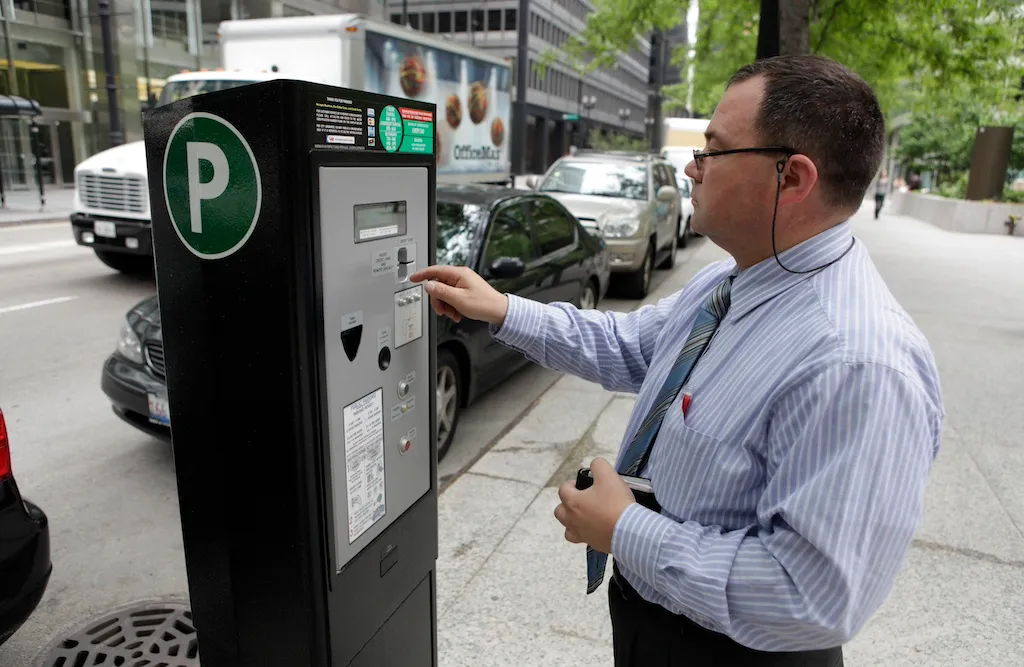
- Understand Meter Rules: If you do opt for street parking, pay close attention to the signage. Rates vary significantly by location and time of day. Most meters are equipped with “Pay & Display” machines, requiring you to enter your zone number, pay, and place the receipt on your dashboard. Some operate via mobile apps. Always double-check operating hours and restrictions, as violations can lead to hefty fines and towing.
- Look for Free Parking Opportunities: While scarce, some residential areas further from the city center might offer free street parking, particularly on Sundays or after certain hours. However, these spots fill up quickly and often come with strict time limits or permit requirements, making them less reliable for tourists. Grant Park, for instance, has several large underground garages that, while not free, offer structured parking near major attractions.
By being informed and strategic, visitors can minimize parking-related stress and fully enjoy the vibrant offerings of Chicago.
Beyond the Meters: The Broader Implications for Chicago’s Urban Landscape and Lifestyle
The story of Chicago’s parking meters extends beyond mere logistics and costs; it delves into fundamental questions about urban governance, public assets, and the long-term character of a world-class city. This landmark deal has left an indelible mark on Chicago’s financial future and continues to shape its urban fabric.
The Debate: Public Assets vs. Private Efficiency
The privatization of Chicago’s parking meters ignited a fierce debate that continues to resonate today. On one side, advocates for privatization often cite the potential for increased efficiency, better technology, and a dedicated revenue stream managed by experts. They argue that private companies are better equipped to handle the complexities of infrastructure management, free from the bureaucratic constraints often faced by municipal governments. The initial $1.15 billion payment provided a crucial financial lifeline to the city during a challenging economic period, allowing it to address immediate budgetary concerns without raising taxes.
On the other side, critics contend that essential public assets, like parking infrastructure, should remain under public control. They argue that leasing such assets for extended periods represents a shortsighted sacrifice of long-term revenue for short-term gains. The significant profits reaped by Chicago Parking Meters LLC, largely derived from increased rates and extended hours, are seen by many as a loss of potential revenue for the city that could have been reinvested in public services, infrastructure improvements, or to directly benefit residents. The debate touches upon the very essence of urban lifestyle, questioning whether core municipal services should be subject to market forces and profit motives. For travelers, this debate underscores the reality that the cost of visiting and exploring a city can be significantly influenced by past financial decisions made by its leadership.
A Landmark Decision’s Legacy
The legacy of the 2008 parking meter deal is complex and multifaceted. Financially, subsequent administrations, including those of Mayor Rahm Emanuel, Mayor Lori Lightfoot, and current Mayor Brandon Johnson, have had to grapple with the long-term implications, including potential missed revenue opportunities and the inability to use parking meter policy as a flexible tool for urban planning or traffic management. For instance, the city cannot easily adjust meter rates to encourage public transit use or reduce congestion in specific areas without negotiating with CPM.
Beyond finances, the deal has become a cautionary tale for other cities considering similar privatizations of public assets. It highlights the importance of thorough due diligence, public engagement, and transparent negotiation processes when dealing with long-term concessions. For Illinois, and Chicago specifically, it has shaped discussions around urban development, tourism strategy, and economic policy.
From a traveler’s perspective, this means that while Chicago offers an unparalleled array of attractions and experiences, the practicalities of getting around, especially by car, require a level of awareness that might not be necessary in other destinations. The high cost of parking is not merely an inconvenience; it is a direct consequence of a pivotal moment in the city’s history, reflecting a broader shift in how urban services are managed and funded.
In conclusion, the question “Who owns Chicago parking meters?” reveals a story far richer than a simple answer of “a private company.” It’s a narrative woven into the economic fabric of the city, impacting its residents, its businesses, and every visitor planning a memorable trip. While parking in Chicago demands careful planning, it should not deter anyone from experiencing the vibrant culture and breathtaking landmarks this incredible city has to offer. With smart strategies, from utilizing public transit to leveraging parking apps, your focus can remain on enjoying the unparalleled tourism and lifestyle experiences that make Chicago a truly unforgettable destination.
LifeOutOfTheBox is a participant in the Amazon Services LLC Associates Program, an affiliate advertising program designed to provide a means for sites to earn advertising fees by advertising and linking to Amazon.com. Amazon, the Amazon logo, AmazonSupply, and the AmazonSupply logo are trademarks of Amazon.com, Inc. or its affiliates. As an Amazon Associate we earn affiliate commissions from qualifying purchases.