
For many enthusiasts of mountain travel, the name Vail Resorts is synonymous with premier skiing, snowboarding, and unparalleled alpine experiences. From the iconic slopes of Colorado to far-flung destinations in Australia and Switzerland, this company has woven itself into the fabric of global tourism. But who exactly owns this sprawling empire that dictates the winter lifestyle for millions? The answer is more complex than a single individual or family; Vail Resorts is a publicly traded company, meaning its ownership is distributed among countless shareholders worldwide.
Traded on the New York Stock Exchange under the ticker symbol MTN, Vail Resorts’ ownership resides with its investors. These include large institutional investors such as mutual funds, hedge funds, and pension funds, as well as individual retail investors who believe in the company’s vision and performance. This public ownership structure allows for transparency, broad access to investment, and a governance model overseen by a board of directors accountable to these shareholders. Understanding this structure is crucial to appreciating how Vail Resorts operates, makes decisions, and continues to expand its formidable presence in the hospitality and recreation sectors. It’s a corporate behemoth that has redefined the mountain resort landscape, turning seasonal attractions into year-round destination resorts with comprehensive accommodation, dining, and retail offerings.

The Evolution of a Mountain Empire: From a Single Peak to Global Dominance
The story of Vail Resorts is one of ambitious vision and strategic expansion, transforming from a singular ski resort into a multinational powerhouse. Its origins trace back to 1962 with the founding of Vail Mountain in Colorado by Earl Eaton and Pete Seibert. What began as a dream to create an American ski destination rivaling the best of Europe blossomed into an enterprise that would redefine mountain tourism for generations.
The company’s significant growth spurt began in the late 20th and early 21st centuries. Under various leadership teams, Vail Resorts embarked on an aggressive acquisition strategy, steadily adding iconic resorts to its portfolio. This wasn’t merely about owning more mountains; it was about creating an integrated network of premier destinations that could offer diverse experiences to a broad customer base. Each acquisition brought not just new terrain but also unique local cultures, infrastructures, and communities into the Vail Resorts fold. The strategy aimed to leverage economies of scale, enhance brand recognition, and provide unparalleled value through unified offerings like the Epic Pass.
Key Milestones in Expansion
The trajectory of Vail Resorts can be marked by several landmark acquisitions that solidified its position as the industry leader. In its early days, the company naturally expanded its footprint within Colorado, acquiring neighboring gems such as Beaver Creek, Breckenridge, and Keystone. These acquisitions laid the groundwork for a robust regional presence, creating a cluster of world-class resorts within a manageable distance.
The true turning point for global dominance came with expansions beyond the Rockies.
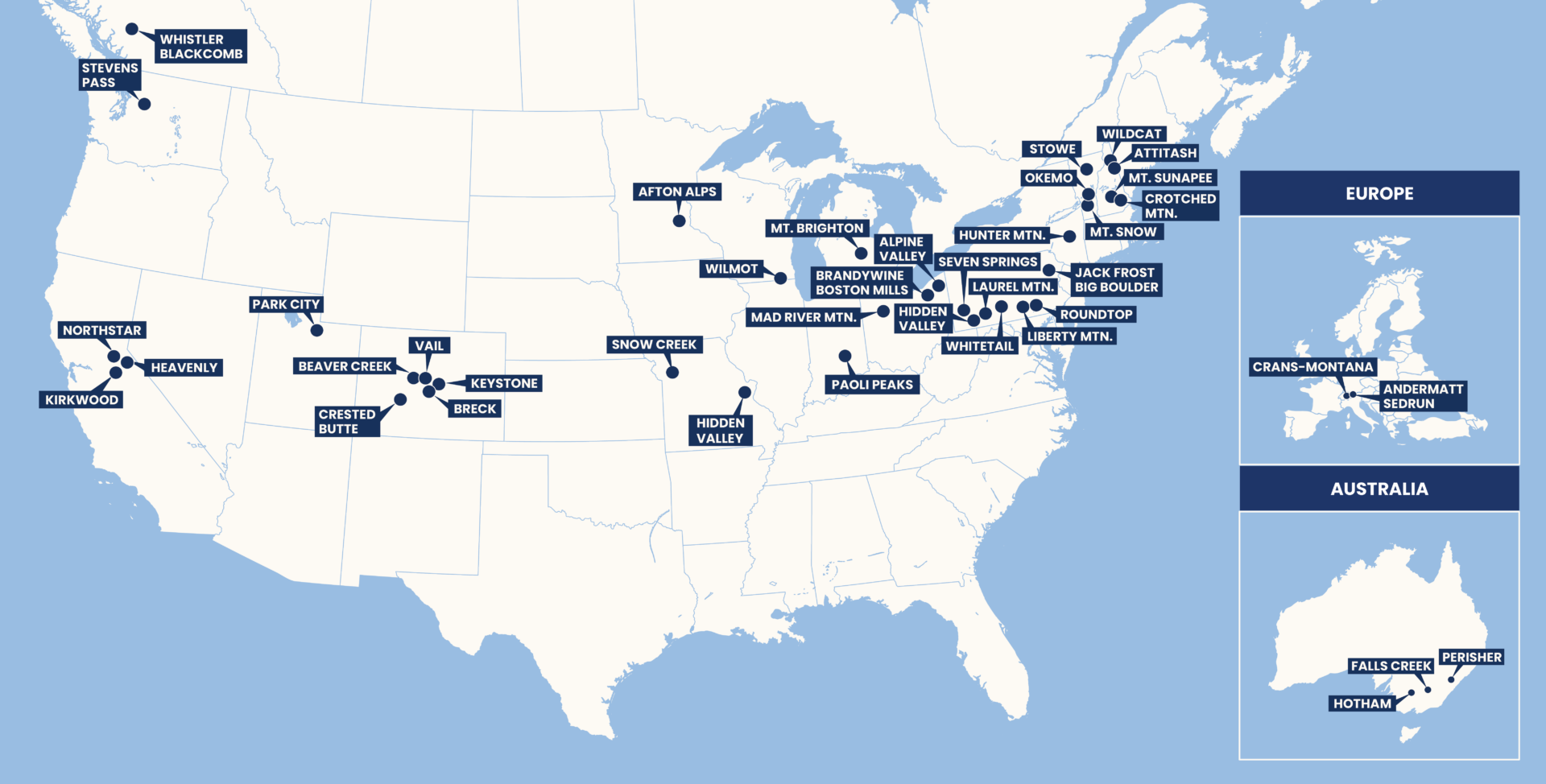
- North America Dominance: Significant acquisitions included Park City Mountain Resort in Utah, transforming it into the largest ski resort in the United States. On the West Coast, the additions of Heavenly, Kirkwood, and Northstar California in California cemented its presence in the Lake Tahoe region. The acquisition of Whistler Blackcomb in British Columbia, Canada, in 2016, was particularly monumental, bringing North America’s largest and most famous ski resort under the Vail Resorts umbrella. This not only expanded its geographical reach but also significantly boosted its international appeal.
- East Coast and Midwest Growth: The company strategically moved into the Eastern United States, acquiring renowned Vermont resorts like Stowe Mountain Resort and later, a portfolio of Peak Resorts properties, including Mount Snow, Okemo Mountain Resort, and Sunapee in New Hampshire. Further expansion included Seven Springs Mountain Resort, Hidden Valley Resort, and Laurel Mountain in Pennsylvania, and Hunter Mountain in New York. Even in the Midwest, Vail Resorts acquired regional favorites like Wilmot Mountain in Wisconsin, Afton Alps in Minnesota, and Alpine Valley in Ohio, Boston Mills in Ohio, Brandywine in Ohio, Mad River Mountain in Ohio, Paoli Peaks in Indiana, and Hidden Valley Ski Resort in Missouri. The addition of Stevens Pass in Washington further diversified its geographic footprint.
- International Footprint: Vail Resorts’ vision extended beyond North America. The acquisition of Perisher in 2015 marked its entry into the Australian market, followed by Falls Creek and Hotham in 2019. More recently, the company expanded into Europe with a strategic partnership that led to a majority stake in Andermatt-Sedrun in Switzerland and an investment in Crans Montana. These moves highlight a clear strategy to be a global leader in mountain tourism, offering year-round experiences across multiple continents.
This aggressive yet calculated expansion has made Vail Resorts an undeniable force, influencing everything from local economies to global travel trends.
The Epic Pass Phenomenon: Revolutionizing Mountain Access and Loyalty
Perhaps no single product encapsulates Vail Resorts’ innovative approach to tourism and lifestyle better than the Epic Pass. Launched in 2008, this multi-resort ski pass was a game-changer, transforming the traditional model of purchasing individual lift tickets into an annual membership offering unlimited or restricted access to an ever-growing network of destinations.
The Epic Pass was a bold move that created a loyal customer base, encouraging skiers and riders to commit early in the season and providing them with an incentive to visit multiple Vail Resorts properties. It shifted revenue generation towards upfront sales, providing greater financial stability and predictability for the company. Moreover, it fostered a sense of community among pass holders, who became ambassadors for the “epic” experience.
The Value Proposition and Network Effect
The genius of the Epic Pass lies in its unparalleled value proposition. For a single price, travelers gain access to dozens of world-class resorts. This encourages long-term travel planning and repeat visits, effectively turning occasional visitors into devoted patrons. The various tiers of passes, such as the Epic Local Pass and the Epic Australia Pass, cater to different budgets and geographical needs, further broadening its appeal.
The Epic Pass also creates a powerful network effect. As more resorts are added to the portfolio, the value of the pass increases, attracting even more purchasers. This, in turn, drives more traffic to the resorts, boosting ancillary revenues from lodging, dining, retail, and ski school services. It’s a virtuous cycle that has cemented Vail Resorts’ position at the forefront of the mountain tourism industry and significantly influenced the way people plan their winter vacations. This innovative product has become a landmark in the modern travel industry, demonstrating how a creative approach to access can build immense brand loyalty and market share.
Beyond the Slopes: Vail Resorts’ Diversified Ecosystem
While ski resorts are at the core of Vail Resorts’ identity, the company’s business model extends far beyond just lift tickets. To maximize revenue and offer a complete destination experience, Vail Resorts has strategically diversified its operations, encompassing a wide array of hospitality, retail, and service ventures. This comprehensive ecosystem ensures that every aspect of a guest’s visit, from arrival to departure, falls within the company’s purview, enhancing convenience and capturing a larger share of traveler spending.

This diversification is a key reason for the company’s robust financial performance and its appeal to investors. It mitigates the seasonal risks inherent in a ski-centric business and caters to a broader spectrum of lifestyle preferences, from luxury travelers seeking premium accommodations to families looking for a complete vacation package.
Lodging and Real Estate Development
A significant portion of Vail Resorts’ non-ski revenue comes from its extensive lodging and real estate portfolio. The company owns and manages a variety of hotels, condominiums, and vacation rentals under brands like RockResorts, its luxury hospitality collection, and Destination Resorts. These accommodations range from lavish suites and full-service hotels with premium amenities to more family-friendly apartments and villas. By controlling a substantial portion of the lodging options at its resorts, Vail Resorts can ensure a consistent brand experience and capture bookings directly, often integrated with Epic Pass benefits and packages.
Beyond managing existing properties, the company is also involved in real estate development. This includes developing new resort communities, selling residential units, and investing in infrastructure projects that enhance the overall guest experience. These ventures not only contribute to profitability but also strengthen the appeal of their destinations as premier places for long-term stays, second homes, and luxury travel.
Retail, Dining, and Mountain Services
The mountain experience is incomplete without convenient access to gear, quality food, and essential services. Vail Resorts operates a vast network of retail shops, offering everything from high-end ski equipment and apparel to souvenirs and essentials. These shops, often strategically located within resort villages and on the mountain, cater to impulse buys and planned purchases alike.
Similarly, the company boasts an extensive portfolio of dining establishments, ranging from upscale restaurants offering gourmet cuisine to casual cafes and quick-service eateries. These venues not only serve the needs of hungry skiers and riders but also contribute significantly to the vibrant social atmosphere of each resort town, becoming integral to the local culture and post-ski activities.
Furthermore, Vail Resorts provides a wide array of mountain services, including ski and snowboard schools, equipment rental shops, and guided tours. These services are crucial for enhancing the guest experience, catering to all skill levels from beginners to advanced enthusiasts. By controlling these varied elements, Vail Resorts creates a seamless and comprehensive mountain vacation that encourages guests to spend more and return often. This multifaceted approach is a testament to its understanding of the modern traveler and its commitment to offering complete lifestyle experiences.
The Broader Impact on Tourism and Local Economies
The immense scale and operational model of Vail Resorts inevitably lead to a significant impact on both the broader tourism industry and the specific local economies where its resorts are situated. As a dominant player, the company influences travel trends, shapes consumer expectations, and plays a pivotal role in the economic well-being of mountain communities worldwide.
Economic Contributions and Employment
Vail Resorts is a major economic engine in the regions it operates. It directly employs tens of thousands of people globally, from lift operators and ski instructors to hotel staff, retail workers, and corporate professionals. These jobs provide stable livelihoods and contribute significantly to local employment rates. Beyond direct employment, the company’s operations create a ripple effect throughout local economies. Vendors, suppliers, contractors, and adjacent businesses all benefit from the substantial spending generated by Vail Resorts and its millions of visitors. Local restaurants, independent shops, and other service providers thrive on the influx of tourism driven by the resorts.
Furthermore, Vail Resorts contributes significantly to local tax bases through property taxes, sales taxes, and various local levies. These revenues support public services, infrastructure development, and community programs, making the company an integral part of the financial health of many mountain towns, essentially transforming these areas into prominent landmarks of winter tourism and vibrant destinations.
Shaping the Future of Mountain Tourism
The influence of Vail Resorts extends beyond immediate economic contributions to fundamentally shaping the future direction of mountain tourism. The success of the Epic Pass, for instance, has spurred other resort operators to develop similar multi-resort pass programs, intensifying competition and driving innovation across the industry. This has broadened consumer choices and, in many ways, made skiing more accessible to a wider demographic.
The company’s significant investments in infrastructure, snowmaking capabilities, and year-round attractions (like mountain biking parks and scenic gondola rides) are transforming seasonal winter destinations into vibrant, multi-season resorts. This shift promotes sustainable tourism models that reduce reliance on a single season and generate economic activity throughout the year, supporting a more stable lifestyle for local residents.
However, Vail Resorts’ dominance also presents challenges. Concerns are sometimes raised about the potential for corporatization to dilute local character, increase property values beyond the reach of local workers, and strain existing infrastructure in some communities. Balancing economic growth with environmental stewardship and community well-being remains a critical ongoing challenge for such a large operator. Despite these challenges, its proactive approach to sustainability initiatives, including ambitious goals for zero net emissions and zero waste, demonstrates a commitment to responsible tourism that aims to preserve these natural landmarks for future generations.
In conclusion, Vail Resorts is owned by its shareholders, making it a publicly accountable entity. Its journey from a single ski mountain to a global resort and hospitality leader is a testament to strategic vision, innovation, and a deep understanding of the modern traveler. Its influence permeates every aspect of mountain tourism, from the way people plan their vacations to the economic vitality of the communities it calls home, solidifying its place as a truly epic player in the world of travel and lifestyle.
LifeOutOfTheBox is a participant in the Amazon Services LLC Associates Program, an affiliate advertising program designed to provide a means for sites to earn advertising fees by advertising and linking to Amazon.com. Amazon, the Amazon logo, AmazonSupply, and the AmazonSupply logo are trademarks of Amazon.com, Inc. or its affiliates. As an Amazon Associate we earn affiliate commissions from qualifying purchases.