
Securing a piece of the Sunshine State is a dream for many, whether it is a high-rise condo overlooking South Beach or a sprawling family estate in Orlando. However, the lifestyle transition into Florida real estate involves navigating a unique set of regional customs and legal requirements. One of the most common questions for prospective homeowners and investors in the United States is: who pays for title insurance in Florida? Unlike many other states where the responsibility is uniform, Florida operates on a localized system that varies significantly from one county to the next.
Navigating the Florida Real Estate Landscape
For those looking to adopt the vibrant Florida lifestyle, understanding the closing process is essential. Title insurance is a critical component of any real estate transaction. It protects the buyer and the lender against financial loss sustained from defects in a title to a property. These defects could range from unpaid property taxes and fraud to undisclosed heirs or liens. In a state as large and diverse as Florida, where the market ranges from the bustling streets of Miami to the quiet shores of Sarasota, the “who pays” question is usually answered by local custom, but it is always subject to negotiation.
The Purpose of Title Insurance
In Florida, there are two primary types of title insurance: the Owner’s Policy and the Lender’s Policy. The Owner’s Policy protects the buyer’s investment in the property for as long as they or their heirs own the home. The Lender’s Policy, which is almost always required by financial institutions, protects the bank’s interest in the mortgage. For a lifestyle buyer moving to Tampa or Jacksonville, ensuring a clear title is the foundation of a secure investment.
The Role of the Closing Agent
Whether you are closing on a luxury villa in Boca Raton or a vacation home near Walt Disney World, a closing agent—typically a title company or an attorney—coordinates the transaction. This professional performs a title search to identify any “clouds” on the title. In many parts of Florida, the party who pays for the title insurance premium typically has the right to select the closing agent, which provides a level of control over the transaction’s timeline and communication.
The Regional Custom: A Tale of Two Coasts
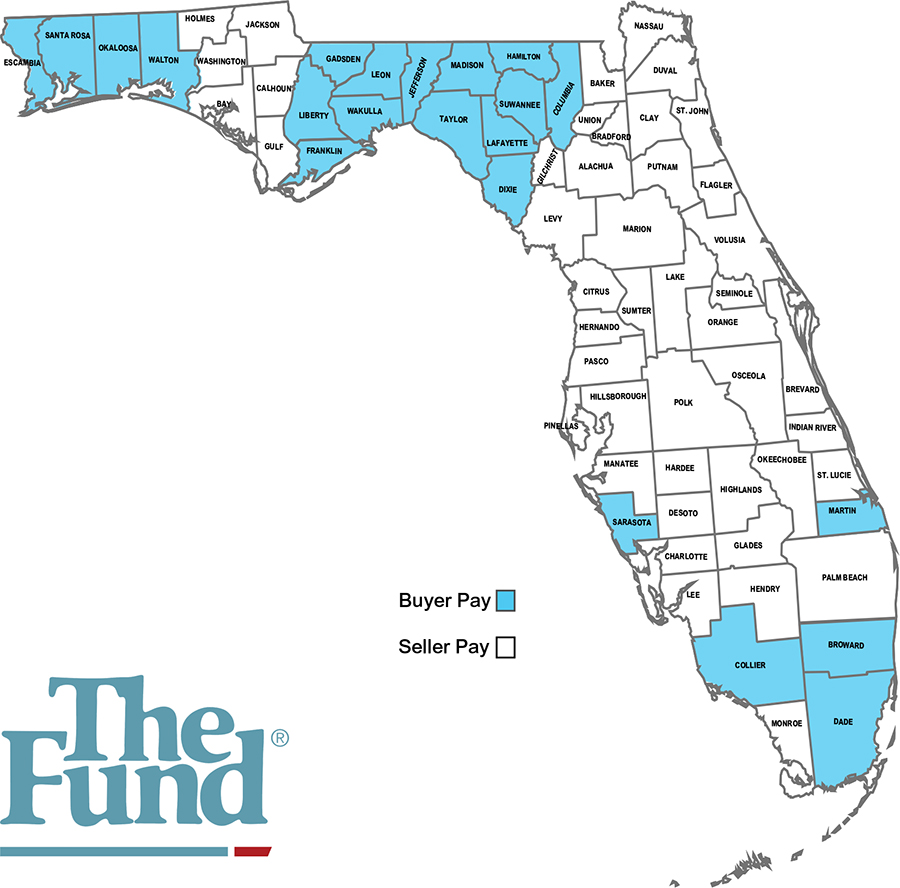
The most fascinating aspect of Florida real estate law is how the responsibility for title insurance premiums shifts based on geography. If you are moving from New York or California, this regional variation can be surprising. Generally, the state is split into “Seller-pay” and “Buyer-pay” counties.
Seller-Pay Counties
In the majority of Florida counties, it is customary for the seller to pay for the owner’s title insurance policy and choose the closing agent. This is the standard practice in places like Hillsborough County, Orange County, Pinellas County, and Duval County. If you are purchasing a home in St Petersburg or Tallahassee, you can usually expect the seller to cover this cost as a gesture of providing a clear and marketable title.
Buyer-Pay Counties (The South Florida Exception)
The lifestyle and business culture of South Florida differ from the rest of the state, and real estate customs follow suit. In Miami-Dade County and Broward County, it is customary for the buyer to pay for the title insurance and choose the closing agent. This is a significant distinction for those looking at condos in Fort Lauderdale or estates in Coral Gables. Interestingly, Palm Beach County often follows the rest of the state’s seller-pay custom, though Miami-Dade and Broward remain firmly in the buyer-pay camp.
Why Geography Matters
This divide often aligns with the historical development of the state. The bustling urban centers of Miami developed their own fast-paced market norms. For a buyer, paying for the title insurance in Miami-Dade means they have more control over the due diligence process. For a seller in Naples, paying for the insurance is seen as a standard cost of doing business to attract high-end lifestyle buyers.
Understanding Title Insurance Policies and Costs

While customs provide a starting point, the financial details are regulated at the state level. The Florida Department of Financial Services oversees the rates charged for title insurance. These are known as “promulgated rates,” meaning the minimum premium is set by law and is non-negotiable regardless of which title company you use.
Promulgated Rates
The cost of title insurance in Florida is based on the purchase price of the property. For example:
- Up to $100,000: $5.75 per thousand.
- Over $100,000: $5.00 per thousand.
If you are purchasing a $1 million beach house in Key West, the base premium for the owner’s policy would be approximately $5,075. While the premium itself is fixed, the “junk fees” or administrative fees charged by title companies can vary, so lifestyle buyers are encouraged to compare the total closing cost estimates.
Simultaneous Issue Rates
When a buyer is financing their home in Florida, they need both an Owner’s Policy and a Lender’s Policy. If both are purchased at the same time, the “Simultaneous Issue” rule applies. This allows the second policy (usually the Lender’s Policy) to be issued for a significantly reduced fee, often as low as $200. This is a major benefit for those relocating to The Villages or Clearwater who are balancing the costs of a new mortgage.
Re-issue Rates
If a seller has owned the property for a short period—typically less than three years—and has a prior title insurance policy, they may be eligible for a “re-issue rate.” This can provide a 40% discount on the premium. For investors frequently flipping luxury properties in Palm Beach, this is a vital piece of financial strategy.
The FR/BAR Contract and Closing Procedures
In Florida, the standard contract used in most residential transactions is the Florida Realtors/Florida Bar Residential Contract for Sale and Purchase, often abbreviated as the FR/BAR contract. This document is where the “who pays” question is officially answered.
Section 9 of the FR/BAR Contract
Section 9 of the contract explicitly deals with closing costs. It provides checkboxes for three main options regarding title insurance:
- The seller shall designate the closing agent and pay for the owner’s policy and search fees.
- The buyer shall designate the closing agent and pay for the owner’s policy and search fees.
- In Miami-Dade or Broward regional provisions, the buyer chooses and pays, or a specific split is agreed upon.
Negotiation is Always Possible
Even if you are buying in a “Seller-pay” county like Orange County, everything is negotiable. In a hot seller’s market, a buyer might offer to pay for the title insurance to make their offer more attractive. Conversely, in a buyer’s market in Daytona Beach, a buyer might insist that the seller cover all title-related expenses even if custom suggests otherwise.
The Lifestyle Implications of Property Ownership in Florida
Choosing to live in Florida is about more than just legal contracts; it is about embracing a unique environment. From the tropical climate of the Everglades to the white sands of the Gulf of Mexico, owning property here offers unparalleled lifestyle benefits. Understanding the logistics of title insurance is simply the first step in protecting that lifestyle.
Peace of Mind for the Long Term
Title insurance provides the peace of mind necessary to enjoy Florida living to the fullest. Imagine moving into a beautiful home in Venice only to find out months later that a previous owner failed to pay a contractor for the infinity pool. Without title insurance, you would be responsible for that debt. With a policy in place, the insurer handles the legal defense and the financial settlement.
Investment Protection
For those viewing Florida real estate as a business stay or a long-term investment, title insurance is non-negotiable. The state’s history of rapid development and land boom cycles means that older properties, particularly in historic areas of Pensacola or St Augustine, can have complex ownership chains. A robust title search and insurance policy ensure that your investment is secure against any historical discrepancies.

Final Thoughts on the Florida Market
Whether you are sipping coffee on a balcony in Brickell or watching the sunset over the Atlantic Ocean in Jupiter, the nuances of Florida real estate should not deter you. By knowing that the seller typically pays in Central Florida and the buyer typically pays in South Florida, you can enter negotiations with confidence. Title insurance is a small price to pay for the security of your piece of paradise in the United States.
LifeOutOfTheBox is a participant in the Amazon Services LLC Associates Program, an affiliate advertising program designed to provide a means for sites to earn advertising fees by advertising and linking to Amazon.com. Amazon, the Amazon logo, AmazonSupply, and the AmazonSupply logo are trademarks of Amazon.com, Inc. or its affiliates. As an Amazon Associate we earn affiliate commissions from qualifying purchases.