
The Siege of Boston, an pivotal early engagement of the American Revolution, concluded with a decisive victory for the nascent American forces. Far from a simple skirmish, this protracted standoff, lasting from April 19, 1775, to March 17, 1776, demonstrated the strategic prowess and unwavering resolve of the Patriots, laying critical groundwork for the eventual independence of the United States. For history enthusiasts and those keen to explore the birth of a nation, understanding this siege is paramount, with Boston itself serving as a living monument to these transformative events.
The Prelude to Conflict: Boston in 1775
In the spring of 1775, Boston was a powder keg, emblematic of the simmering tensions between the American colonies and Great Britain. For years, the city had been a hotbed of revolutionary sentiment, home to radical thinkers and the site of significant protests against British rule, such as the Boston Tea Party. Following the Battles of Lexington and Concord on April 19, which marked the true beginning of armed conflict, thousands of colonial militiamen from across New England converged around the city. Their objective was clear: contain the British garrison occupying Boston.

The city, situated on a peninsula, offered a formidable natural defense, further bolstered by the presence of the powerful British Army and navy. Under the command of General Thomas Gage, the British forces considered Boston an unassailable stronghold. However, the rapidly organizing colonial militias, though lacking formal training and supplies, effectively cut off land access to the city, transforming the initial containment into a full-scale siege. This period saw a tense standoff, with both sides consolidating positions and preparing for the inevitable confrontations that would define the early stages of the revolution. The strategic importance of controlling Boston, a key port and administrative center, made it a focal point for both British authority and colonial resistance, setting the stage for one of the most significant early victories for the American cause.
Key Battles and Strategic Maneuvers
While much of the siege was a war of attrition and positioning, two major engagements and one brilliant strategic move proved decisive in breaking the British hold on Boston. These events not only shaped the outcome of the siege but also provided critical lessons and morale boosts for the fledgling Continental Army.
The Battle of Bunker Hill
The Battle of Bunker Hill, fought on June 17, 1775, just two months into the siege, stands as one of the most iconic and bloody encounters of the American Revolution. Though historically misnamed, as most of the fighting took place on adjacent Breed’s Hill in Charlestown, the battle underscored the fierce determination of the colonial forces. The Patriots, under the command of Colonel William Prescott, fortified Breed’s Hill overnight, posing a direct threat to the British positions in Boston.
General Gage, viewing the colonial presence as an intolerable affront, ordered an immediate assault. Three frontal attacks were launched by the British, led by Major General William Howe. The colonial militiamen, famously urged “Don’t fire until you see the whites of their eyes,” inflicted devastating casualties on the advancing redcoats during the first two assaults. It was only on the third attempt, as the Patriots ran critically low on ammunition, that the British managed to overrun the fortifications.
Despite being a tactical victory for the British, who seized the ground, the cost was staggering: over 1,000 British casualties, including a disproportionate number of officers, compared to fewer than 450 American losses. The battle served as a stark realization for the British that defeating the colonists would be far from easy, and it provided a tremendous psychological victory for the Americans, proving they could stand their ground against a professional army. Today, the majestic Bunker Hill Monument stands as a towering tribute to the bravery and sacrifice of those who fought there.
The Fortification of Dorchester Heights

The decisive moment of the Siege of Boston arrived with the strategic fortification of Dorchester Heights, a range of hills overlooking Boston and its harbor from the south. This audacious plan was conceived and executed under the direction of George Washington, who had assumed command of the Continental Army in July 1775. Washington understood that breaking the stalemate required a move that would make Boston untenable for the British.
The critical element of this strategy was the transportation of heavy artillery from Fort Ticonderoga in northern New York, a feat of logistical genius masterminded by Colonel Henry Knox. Over the winter of 1775-1776, Knox led a grueling expedition, hauling 59 cannons and mortars weighing over 60 tons, using sledges pulled by oxen across hundreds of miles of frozen rivers and snow-covered terrain.
By early March 1776, the cannons were in position. On the night of March 4-5, under the cover of darkness and a diversionary bombardment, Washington’s troops worked tirelessly to construct formidable earthworks on Dorchester Heights. By dawn, the British awoke to find American batteries bristling with heavy artillery aimed directly at their ships in the harbor and their positions within the city. Howe, now commanding the British forces, recognized the precariousness of his situation. With his fleet vulnerable to bombardment and his troops exposed, Boston was no longer a safe haven. The threat was so severe that Howe reportedly exclaimed that the Americans had done more in one night than his whole army could have done in months.
The Evacuation and Patriot Victory
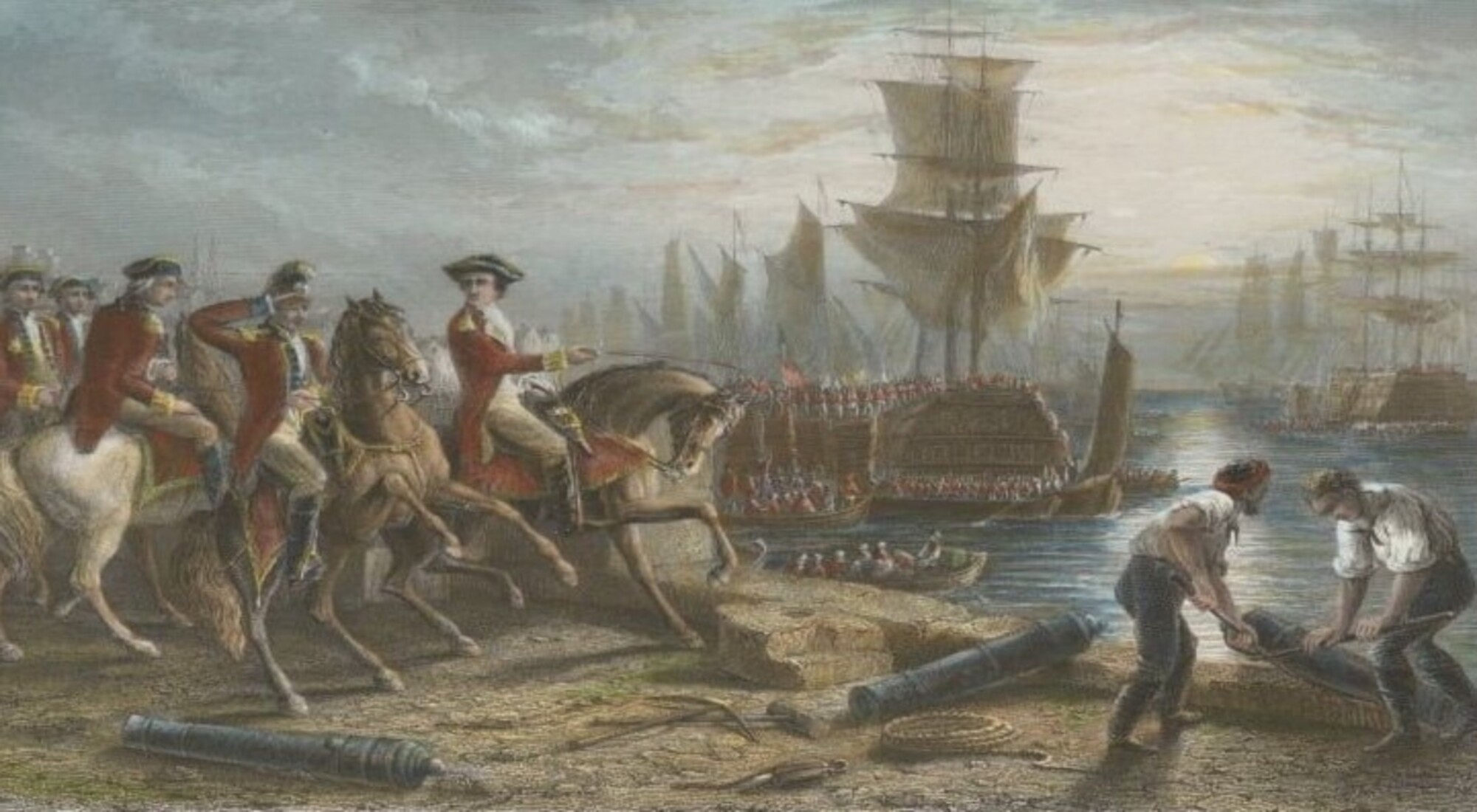
Faced with the undeniable threat from Dorchester Heights, General William Howe was left with an impossible choice: launch a costly frontal assault on the American positions, reminiscent of Bunker Hill but likely even more devastating, or evacuate Boston. Recognizing the futility of resistance, Howe opted for evacuation.
An unofficial agreement was reached between the two sides: the Americans would refrain from bombarding the city if the British departed peacefully, without setting fire to Boston. On March 17, 1776, a day now celebrated as Evacuation Day in Massachusetts, the British forces, accompanied by loyalist civilians, boarded ships and sailed out of Boston Harbor. Over 11,000 British soldiers and about 1,000 Loyalists departed, heading initially to Halifax, Nova Scotia.
As the last British ships disappeared from view, George Washington and his Continental Army marched triumphantly into Boston. The victory was immense, not only securing the city for the Patriots but also serving as a monumental morale boost throughout the colonies. It demonstrated that disciplined American forces, under capable leadership, could outmaneuver and defeat the formidable British military. This success emboldened the sentiment for independence, contributing significantly to the decision to declare independence just a few months later. The liberation of Boston marked the end of sustained British military occupation in the colonies until later in the war, giving the Continental Congress the confidence to move forward.
Enduring Legacy: Boston’s Revolutionary Landmarks Today
The Siege of Boston and the broader events of the American Revolution are not merely chapters in a history book; they are etched into the very fabric of Boston. The city stands as a living museum, preserving countless landmarks that invite visitors to walk in the footsteps of the Patriots and experience the profound history firsthand. Understanding “Who Won The Siege Of Boston?” truly means engaging with these sites.
The most iconic way to trace this revolutionary past is by following the Freedom Trail, a 2.5-mile red-lined path that winds through downtown Boston, connecting 16 historically significant sites. Among them are several that directly recall the siege:
- Bunker Hill Monument: A towering granite obelisk in Charlestown that commemorates the Battle of Bunker Hill. Visitors can climb to the top for panoramic views and reflect on the costly British victory that fueled American resolve.
- Old North Church: Famous for the “one if by land, and two if by sea” signal lanterns that warned of approaching British troops, precipitating Paul Revere’s ride. Its steeple remains a beacon of the city’s revolutionary spirit.
- Paul Revere House: The oldest house in downtown Boston, offering a glimpse into the life of the famous silversmith and Patriot who played a crucial role in warning the colonial militia before the battles of Lexington and Concord, events that initiated the Siege of Boston.
- Faneuil Hall: Known as the “Cradle of Liberty,” this historic marketplace and meeting hall was where revolutionaries like Samuel Adams and James Otis delivered fiery speeches against British rule, fostering the dissent that eventually led to the siege.
- Dorchester Heights National Historic Site: While perhaps less visually dramatic than Bunker Hill, this site offers stunning views of Boston Harbor and the city skyline. It is the hallowed ground where George Washington’s strategic placement of cannons ultimately forced the British evacuation, securing the Patriot victory. A monument and flagpole mark the location where the American flag was raised following the British departure.
These landmarks, meticulously preserved and interpreted, serve as powerful reminders of the sacrifices made and the ingenuity displayed during the Siege of Boston. They allow visitors to connect tangibly with the very beginnings of the United States and understand that the question of “Who Won The Siege Of Boston?” is answered not just in historical accounts, but in the enduring spirit of these hallowed grounds. The city’s commitment to preserving this legacy ensures that the stories of courage, resistance, and eventual triumph continue to inspire generations.
LifeOutOfTheBox is a participant in the Amazon Services LLC Associates Program, an affiliate advertising program designed to provide a means for sites to earn advertising fees by advertising and linking to Amazon.com. Amazon, the Amazon logo, AmazonSupply, and the AmazonSupply logo are trademarks of Amazon.com, Inc. or its affiliates. As an Amazon Associate we earn affiliate commissions from qualifying purchases.