
The annexation of Hawaii by the United States in 1898 remains a complex and controversial chapter in American history, deeply intertwined with economic ambitions, strategic military interests, and evolving political ideologies. While often presented as a benevolent act of expansion, a closer examination reveals a confluence of factors driven by powerful business interests, a burgeoning sense of American exceptionalism, and the shifting geopolitical landscape of the late 19th century. Understanding the motivations behind this pivotal event offers crucial insights into the development of both the United States and Hawaii as we know them today, impacting everything from tourism to the very identity of the islands.

The Economic Roots of Annexation: Sugar, Trade, and American Business
At the heart of the push for annexation lay the burgeoning sugar industry. For decades, American businessmen had invested heavily in Hawaii’s fertile lands, establishing large plantations that produced sugar for the American market. Initially, these planters benefited from favorable trade agreements, most notably the Reciprocity Treaty of 1875, which allowed Hawaiian sugar to enter the United States duty-free. This exemption was a significant boon, making Hawaiian sugar highly competitive. However, the agreement was not without its political strings, as it also granted the United States exclusive rights to Pearl Harbor for a naval base.
The repeal of the McKinley Tariff Act in 1890, which removed the duty-free status of Hawaiian sugar, sent shockwaves through the planter class. Suddenly, Hawaiian sugar faced a competitive disadvantage against sugar produced in the United States. This economic blow intensified the desire among these American landowners for full integration into the United States – a move that would eliminate tariffs and solidify their economic dominance. Figures like Sanford B. Dole, a prominent businessman and descendant of American missionaries, became vocal advocates for annexation, believing it was the only way to secure their investments and ensure the prosperity of the islands under American rule.
The economic argument was further bolstered by Hawaii’s strategic location in the Pacific. As trade routes expanded, particularly with the burgeoning markets in Asia, Hawaii became an increasingly valuable coaling station and port of call for ships. The control of such a strategic outpost was seen as crucial for projecting American power and influence in the Pacific, especially in the context of growing imperial rivalries with European powers like Great Britain and Germany.
The Overthrow of the Monarchy and the Rise of a Republic
The path to annexation was not a peaceful one. The Hawaiian monarchy, under Queen Liliuokalani, recognized the growing threat posed by American business interests and sought to reassert Hawaiian sovereignty and reduce the influence of foreign businessmen. In 1893, a group of primarily American and European businessmen, with the clandestine support of the United States minister to Hawaii, John L. Stevens, staged a coup d’état, overthrowing Queen Liliuokalani and her government. This act was met with condemnation by the Queen and many native Hawaiians.
Following the overthrow, a provisional government was established, led by Sanford B. Dole. This government then declared itself the Republic of Hawaii in 1894, with Dole as its president. The intention was clear: to pave the way for annexation by the United States. However, the initial attempts at annexation were met with resistance from President Grover Cleveland, who viewed the overthrow of the monarchy as an illegal act and refused to sanction it. He ordered an investigation, which confirmed the role of the United States in the coup, and advocated for the restoration of Queen Liliuokalani.
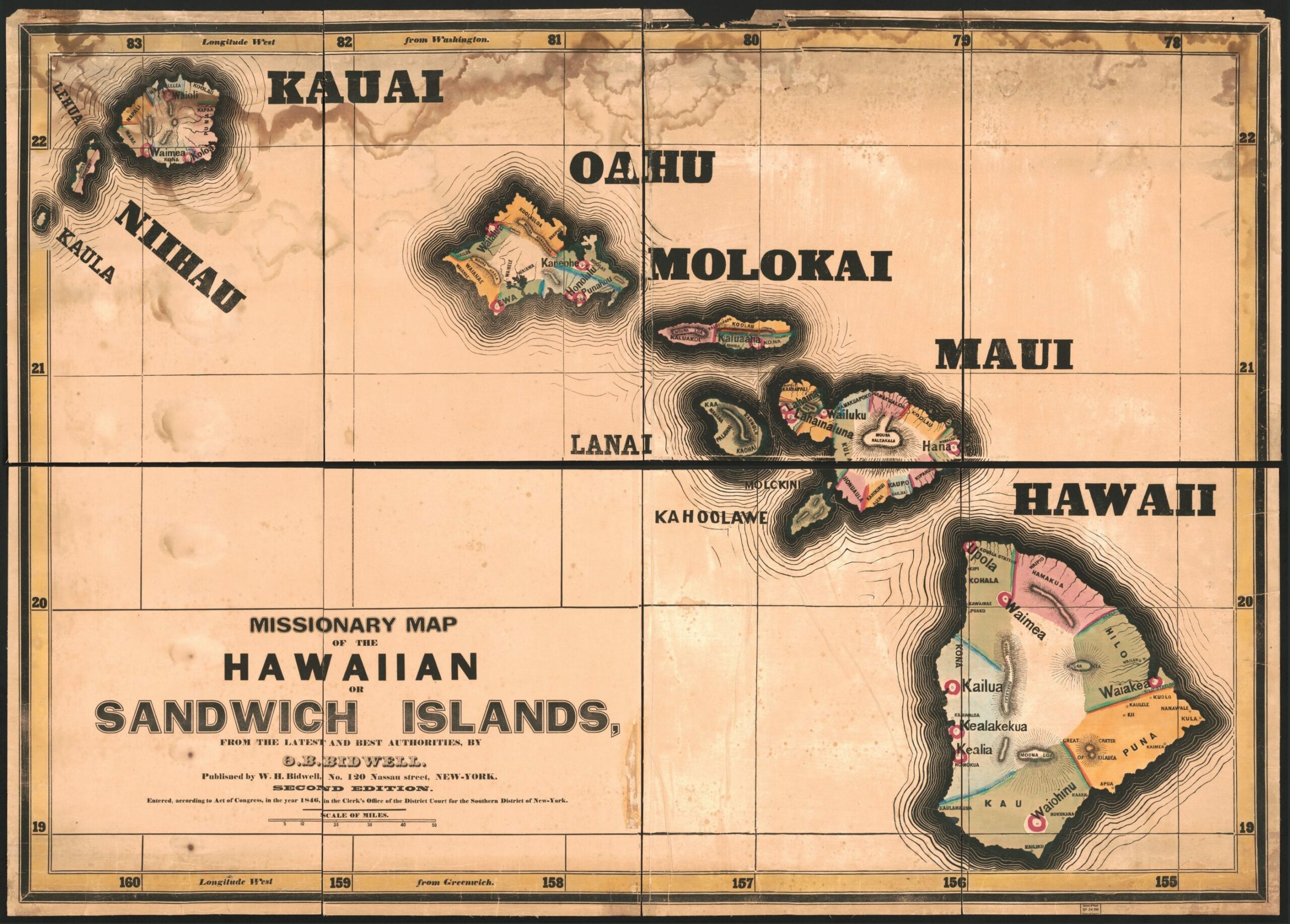
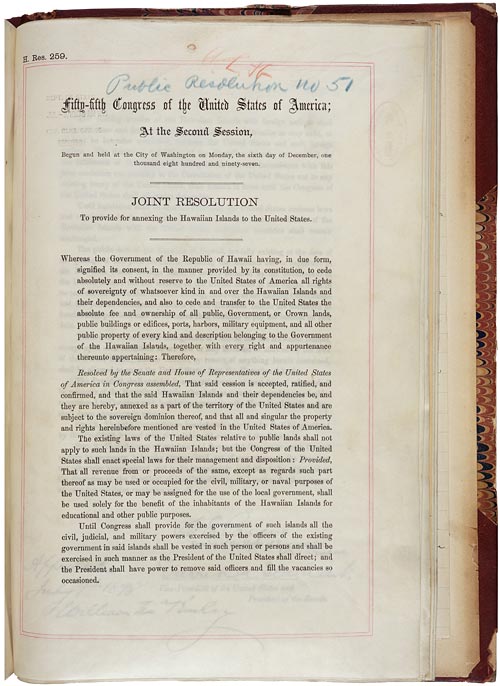
Despite Cleveland’s stance, the political climate in the United States was shifting. The rise of expansionist sentiment, fueled by Manifest Destiny and the growing perception of America as a world power, created a more favorable environment for annexation. The Spanish-American War in 1898, which highlighted the strategic importance of naval bases in the Pacific, provided the final impetus. With the war underway, the strategic value of Hawaii as a naval coaling station and a forward base for operations in the Philippines became undeniable. The annexation was pushed through Congress as a joint resolution, bypassing the need for a treaty and the accompanying constitutional debates.
Strategic Imperatives: Military Power and Pacific Dominance
The annexation of Hawaii was undeniably a strategic move for the United States. The islands’ central location in the Pacific Ocean made them an ideal stepping stone for trade and military operations. As mentioned earlier, the desire for a naval base at Pearl Harbor predated the overthrow of the monarchy. This deep-water harbor was recognized as a prime location for shipbuilding, repairs, and as a strategic point for projecting naval power across the vast Pacific.
The late 19th century was an era of intense geopolitical competition. Nations like Great Britain, France, and Germany were actively expanding their colonial empires and naval capabilities. For the United States, which was increasingly asserting itself on the global stage, controlling Hawaii meant denying it to potential rivals and securing a vital link in its own burgeoning Pacific empire. The acquisition of Hawaii was seen as a crucial step in the “navalists'” vision of a powerful American navy capable of defending American interests across the globe.
The Spanish-American War served as a catalyst, demonstrating the practical need for such a strategic outpost. American forces engaged in the Philippines relied heavily on supplies and support, making the control of Hawaii essential for logistical efficiency. The annexation allowed the United States to solidify its position in the Pacific, paving the way for further territorial acquisitions and establishing it as a major naval power. The establishment of a permanent military presence in Hawaii transformed the islands from an independent kingdom into a key strategic asset for the United States, a role it continues to play to this day.
The Impact on Hawaiian Culture and Identity
The annexation of Hawaii had profound and lasting consequences for the native Hawaiian people and their culture. The overthrow of the monarchy and the subsequent imposition of American laws and governance led to a significant erosion of Hawaiian sovereignty and self-determination. The Hawaiian language was suppressed in schools, traditional cultural practices were discouraged, and native Hawaiians found themselves marginalized in their own land.
The economic policies driven by the annexation further impacted native Hawaiians. While the sugar industry thrived, the benefits largely accrued to the American and European landowners. Native Hawaiians, who had traditionally subsisted on communal land ownership and sustainable agriculture, often found their lands taken or their traditional livelihoods undermined by the large-scale plantation system. This led to economic disenfranchisement and social upheaval for many.
Despite these challenges, the spirit of Hawaiian culture endured. Over time, there has been a resurgence of interest in preserving and revitalizing traditional Hawaiian language, arts, and customs. The rich history and unique cultural heritage of Hawaii continue to be a source of pride and identity for its people. Today, Hawaii is a popular tourist destination, attracting millions of visitors who come to experience its breathtaking natural beauty, from the iconic shores of Waikiki Beach to the volcanic landscapes of Hawaii Volcanoes National Park. Visitors can explore historical landmarks like Iolani Palace, the only royal palace in the United States, and immerse themselves in the vibrant local culture. However, the legacy of annexation remains a significant part of the islands’ story, reminding us of the complex interplay between economic forces, geopolitical ambitions, and the enduring resilience of indigenous cultures. The question of “Why Did America Annex Hawaii?” is not just a historical inquiry; it’s a lens through which to understand the ongoing journey of Hawaii and its relationship with the United States.
LifeOutOfTheBox is a participant in the Amazon Services LLC Associates Program, an affiliate advertising program designed to provide a means for sites to earn advertising fees by advertising and linking to Amazon.com. Amazon, the Amazon logo, AmazonSupply, and the AmazonSupply logo are trademarks of Amazon.com, Inc. or its affiliates. As an Amazon Associate we earn affiliate commissions from qualifying purchases.