
The story of how Hawaii became part of the United States is not merely a tale of tropical allure, but a complex narrative of geopolitical strategy, economic ambition, and the transformation of significant landmarks. To understand why North America looked toward this isolated archipelago in the Pacific Ocean, one must look beyond the pristine beaches and examine the historical sites that served as the backdrop for one of the most pivotal annexations in modern history. The acquisition of the islands was driven by a desire to control the “Crossroads of the Pacific,” ensuring that the burgeoning American empire had a foothold that could reach Asia and protect its western shores.
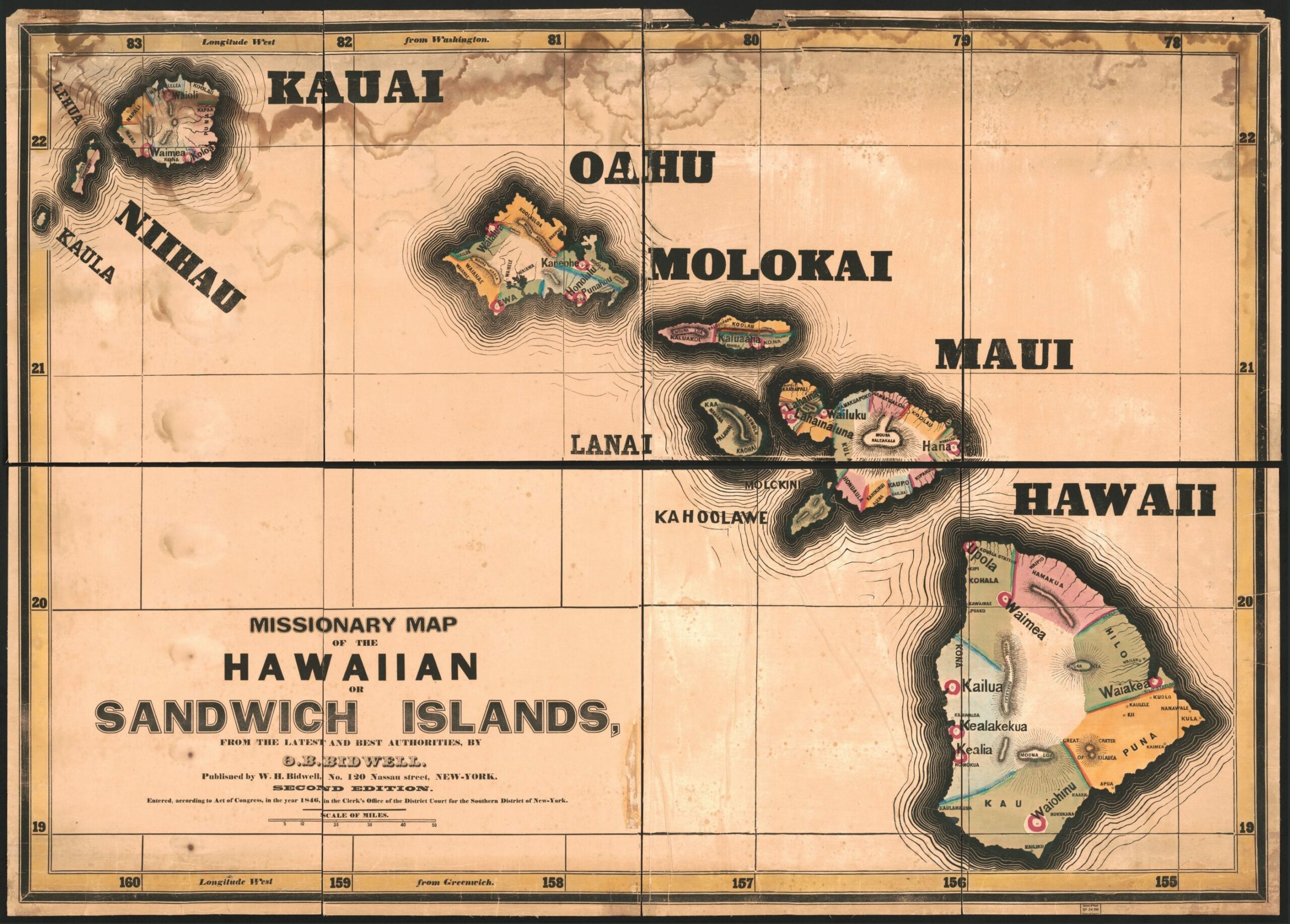
The Strategic Military Importance of the Pacific Crossroads
In the late 19th century, the global power structure was shifting toward naval dominance. For the United States, the islands of Hawaii represented the ultimate coaling station—a necessary mid-point for steamships traveling between San Francisco and markets in China or Japan. Without a friendly port in the central Pacific Ocean, American vessels were at the mercy of foreign powers and the physical limitations of fuel capacity.
Pearl Harbor: A Natural Naval Stronghold
Perhaps no landmark illustrates the American interest in the islands better than Pearl Harbor. Located on the island of Oahu, this natural lagoon was recognized early on by American naval surveyors as the finest deep-water harbor in the entire Pacific Ocean. Before it became a world-famous naval base, it was known to the native population as Pu’uloa.
The United States government sought exclusive rights to Pearl Harbor as early as the 1870s. By securing this landmark, the American military could establish a permanent presence that acted as a defensive shield for the West Coast while simultaneously serving as an offensive platform for interests in the Philippines and beyond. The harbor’s geography—a narrow entrance leading into vast, protected lochs—made it an impregnable sanctuary for the fleet, which was a primary motivator for the eventual annexation.
Diamond Head and the Defensive Landscape
The iconic silhouette of Diamond Head, or Le’ahi, served as more than just a navigational marker for sailors. As the United States moved toward formal control, this volcanic tuff cone was identified as a critical site for coastal defense. The landmark provides a panoramic view of the coastline of Honolulu and the approaches to Pearl Harbor.
Strategic planners realized that whoever controlled Diamond Head controlled the maritime traffic of the islands. This led to the eventual construction of Fort Ruger within the crater, integrating the natural beauty of Hawaii into a global network of American military fortifications. The desire to possess such natural defensive landmarks was a cornerstone of the expansionist policy known as Manifest Destiny.
Economic Interests and the Sugar Industry Landmarks
While military strategy provided the “why” for the government, the “why” for the private sector was rooted in the fertile volcanic soil of the islands. The rise of the sugar industry transformed the landscape of Hawaii, creating vast plantations that became landmarks of industrial agriculture.
The Reciprocity Treaty and Economic Integration
The relationship between Hawaii and the United States was cemented by the Reciprocity Treaty of 1875. This agreement allowed Hawaiian sugar to enter the American market tax-free, creating an economic boom that tied the islands’ prosperity directly to North America. This treaty was not just about trade; it was a tactical move to ensure that Hawaii did not seek similar protections from the British Empire or the French Empire.
As the sugar industry grew, the owners of these plantations—mostly descendants of American missionaries—became incredibly powerful. They established landmarks of commerce in Honolulu, such as the headquarters of the “Big Five” corporations. These companies controlled nearly every aspect of Hawaiian life, and their desire for a stable, tariff-free environment eventually led them to advocate for the total overthrow of the Hawaiian monarchy to ensure permanent American protection.
Irrigation Systems and the Re-engineering of Nature
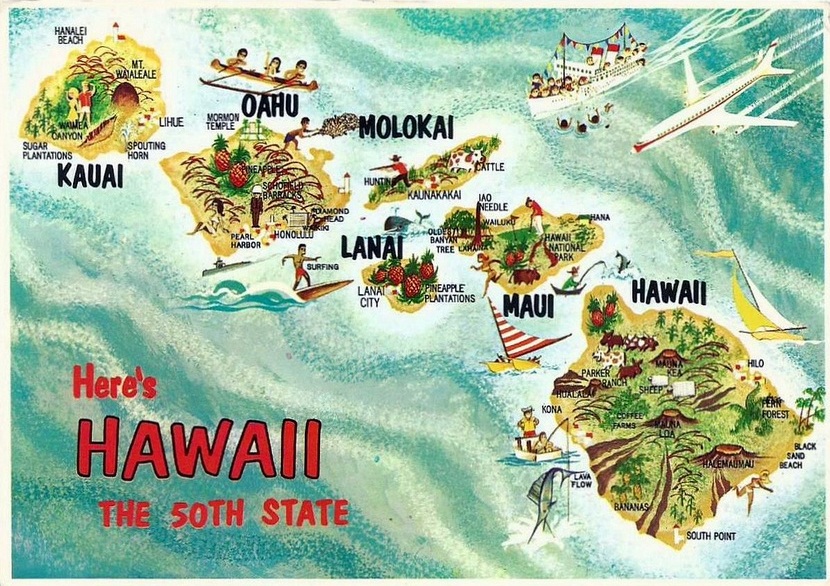
To support the massive sugar demand, the landscape was physically altered. The development of the Kohala Ditch and various artesian wells across Oahu are engineering landmarks that showcase the lengths to which American interests went to extract value from the land. These systems diverted water from the lush, windward sides of the islands to the dry, leeward plains where sugar thrived. This environmental transformation was a clear indicator that the United States viewed Hawaii not as a distant neighbor, but as a vital agricultural extension of its own economy.
Political Ambitions and the Annexation Landmarks
The transition from a sovereign kingdom to an American territory is written in the stones of Honolulu. The political landmarks of this era reflect the tension between the native monarchy and the American-backed provisional government.
Iolani Palace: The Site of Sovereignty and Overthrow
Iolani Palace stands as the only royal palace on American soil and remains one of the most significant historical landmarks in the world. Completed in 1882, it was the residence of King Kalakaua and later his sister, Queen Liliuokalani. The palace was a symbol of Hawaii as a modern, sovereign nation, complete with electricity and telephones before the White House.
However, in 1893, the palace became the site of a tragic turning point. A group of American and European businessmen, supported by U.S. Marines from the USS Boston, staged a coup d’état. The Queen was forced to step down to avoid bloodshed, and the palace was later used as the headquarters for the newly formed Republic of Hawaii. For those who wonder why America wanted Hawaii, the history of Iolani Palace provides a stark answer: it was about the displacement of local sovereignty to secure a permanent American outpost.
Washington Place and the Legacy of Resistance
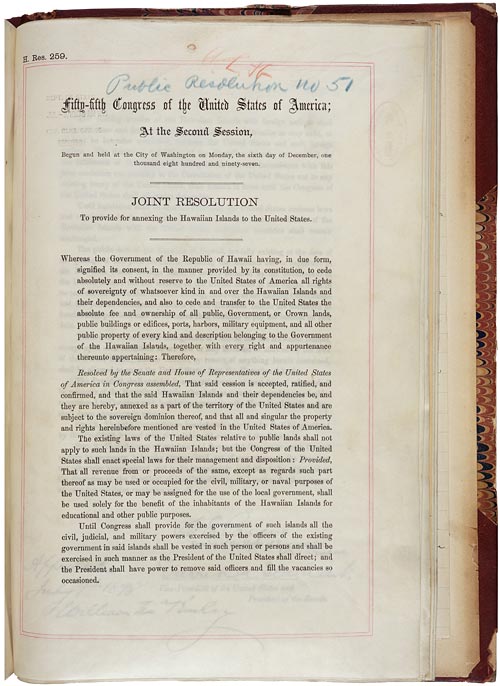
Located near the palace, Washington Place is another landmark deeply tied to this transition. Once the private home of Queen Liliuokalani, it served as a silent witness to her efforts to regain her kingdom’s independence. The United States interest in Hawaii was so firm that even when President Grover Cleveland initially opposed the annexation, citing the illegality of the overthrow, the momentum of American expansionism was too great to stop. By the time the Spanish-American War broke out, the strategic necessity of the islands became the final justification for the Newlands Resolution, which formally annexed Hawaii in 1898.
The Influence of Geography and Natural Landmarks
The sheer natural magnificence of the islands also played a role in the American desire for possession. Beyond the military and economic factors, the unique geological features of Hawaii made it a crown jewel of the Pacific Ocean.
Mauna Loa and the Scientific Frontier
The massive shield volcanoes, such as Mauna Loa on the island of Hawaii (the Big Island), represented a new frontier for American science and exploration. The ability to study active volcanology and meteorology in the middle of the ocean was a significant draw for academic and government institutions. Landmarks like the Halemaumau Crater became points of fascination for early American tourists and scientists alike, further weaving the islands into the American cultural consciousness.
Punchbowl Crater: The National Memorial of the Pacific
In the years following the annexation and the eventual statehood, the United States further solidified its connection to the islands through the creation of the National Memorial Cemetery of the Pacific, located within the Punchbowl Crater. This landmark serves as a final resting place for thousands of American service members and stands as a testament to the heavy price paid to maintain the American presence in Hawaii. The transformation of a volcanic crater into a national shrine highlights how deeply the United States has integrated Hawaiian landmarks into its own national identity.
Conclusion: A Legacy Carved in Stone and Soil
The question of why America wanted Hawaii is answered through a combination of maritime necessity, agricultural wealth, and the opportunistic expansion of the late 19th century. From the tactical advantages of Pearl Harbor to the symbolic weight of Iolani Palace, the landmarks of the islands tell a story of a kingdom caught in the gears of a rising global superpower.
Today, as visitors walk through Waikiki or hike the trails of Diamond Head, the history of annexation remains an essential layer of the landscape. These landmarks are not just beautiful sites for photography; they are the physical manifestations of a geopolitical strategy that forever changed the course of history for both Hawaii and the United States. Understanding these sites is key to understanding the complex motivations that led a mainland nation to reach across the sea and claim an island chain as its own.
LifeOutOfTheBox is a participant in the Amazon Services LLC Associates Program, an affiliate advertising program designed to provide a means for sites to earn advertising fees by advertising and linking to Amazon.com. Amazon, the Amazon logo, AmazonSupply, and the AmazonSupply logo are trademarks of Amazon.com, Inc. or its affiliates. As an Amazon Associate we earn affiliate commissions from qualifying purchases.