
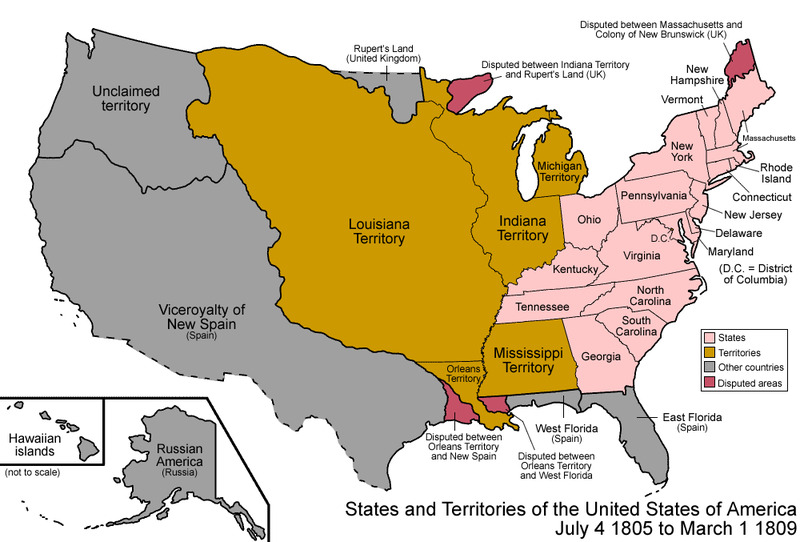
The Louisiana Purchase, a monumental land deal that doubled the size of the young United States, remains one of history’s most consequential transactions. In 1803, Napoleon Bonaparte, the ambitious First Consul of France, agreed to sell an immense territory stretching from the Mississippi River to the Rocky Mountains for a mere $15 million. This audacious sale, occurring at a pivotal moment in both French and American history, was not born out of a sudden philanthropic impulse but rather from a complex web of strategic considerations, financial necessities, and shifting geopolitical realities that Napoleon faced at the dawn of the 19th century. Understanding his motivations requires a deep dive into the turbulent political landscape of Europe, the precarious state of French colonial ambitions in the Americas, and Napoleon‘s own audacious vision for his empire.

The Precarious State of French Colonial Ambitions
In the late 18th and early 19th centuries, France harbored significant colonial aspirations in North America. The vast territory of Louisiana, named in honor of King Louis XIV, was a crown jewel of this ambition, encompassing a sprawling region rich in natural resources and strategic importance. However, France‘s grip on this vast expanse was far from secure.
The Aftermath of the Seven Years’ War
The Seven Years’ War (known as the French and Indian War in North America) had been a devastating blow to French colonial power. In 1763, France ceded Canada and its territories east of the Mississippi River to Great Britain. While France retained Louisiana west of the river, the loss of its northern territories significantly weakened its position and ability to defend its remaining holdings. The Spanish gained control of New Orleans and the western territories in a secret treaty, but France reacquired Louisiana in 1800 through the Treaty of San Ildefonso. This reacquisition, however, was more a formality than a strengthened presence. The infrastructure and administrative capacity to effectively govern and defend such a massive territory were largely absent.
The Haitian Revolution’s Shadow
A critical factor that profoundly impacted Napoleon‘s decision was the successful Haitian Revolution. France‘s most profitable colony, Saint-Domingue (modern-day Haiti), was a major producer of sugar and other valuable commodities, fueled by enslaved African labor. Napoleon had dispatched a massive expeditionary force under his brother-in-law, General Charles Leclerc, in 1802, with the explicit goal of reasserting French control, reinstating slavery, and securing the lucrative sugar trade. However, the Haitian rebels, led by figures like Toussaint Louverture, proved to be formidable opponents. The brutal fighting, coupled with a devastating outbreak of yellow fever that decimated the French forces, resulted in a catastrophic defeat for Napoleon. The loss of Saint-Domingue not only represented a significant economic setback but also signaled the insurmountable challenges France faced in maintaining its Caribbean empire, which was intricately linked to the prosperity and defense of Louisiana. Without a secure Caribbean base, Louisiana became increasingly difficult to supply, defend, and profit from.
The Growing Threat of Great Britain
As Napoleon consolidated his power in Europe, his primary objective became the subjugation of his perennial rival, Great Britain. He recognized that a prolonged conflict with the British was inevitable. Maintaining and defending Louisiana would require a substantial naval presence and significant military resources that Napoleon desperately needed to focus on his European campaigns. The British Royal Navy dominated the seas, and any attempt by France to project power into the Americas would be met with fierce resistance. Furthermore, Napoleon feared that if Great Britain were to declare war on France while France still held Louisiana, the British might seize the territory. Selling it to the United States, a neutral nation at the time, would at least prevent it from falling into British hands, a strategic consideration that weighed heavily on his mind.
Financial Pressures and Imperial Aspirations

Beyond the colonial quagmire, Napoleon‘s decision was also driven by pressing financial needs and his grander imperial ambitions in Europe.
Funding the Napoleonic Wars
Napoleon‘s reign was characterized by relentless warfare. The ongoing conflicts in Europe, particularly against coalitions of powers led by Great Britain and Austria, were enormously expensive. The French treasury was constantly strained, and Napoleon was always in search of funds to finance his military campaigns, build infrastructure, and maintain his imperial administration. The sale of Louisiana offered a substantial influx of cash that could be immediately deployed to bolster his war chest and support his ambitions on the continent. While the $15 million price tag might seem meager in modern terms, it was a significant sum for the time and represented a considerable financial boost for France.
Shifting Focus to Europe
Napoleon‘s ultimate ambition was not to recreate a vast overseas empire in the Americas, but rather to dominate Europe. He viewed Louisiana as a secondary concern, a distraction from his primary objective. The immense resources required to govern, defend, and develop the territory, coupled with the insurmountable challenges posed by the Haitian Revolution and British naval power, made it an untenable asset in his grand strategy. By divesting himself of Louisiana, Napoleon could shed a costly and problematic burden and reallocate his financial and military resources towards his more achievable and strategically vital goals in Europe. He believed that the sale would strengthen France‘s position in the Old World, allowing him to concentrate on forging a lasting French hegemony.
The American Opportunity and Livingston’s Diplomacy
While Napoleon‘s motivations were rooted in French interests and European geopolitics, the sale was ultimately enabled by the proactive diplomacy of the United States and the foresight of its negotiators.
The Need for New Orleans
The young United States, still finding its footing on the world stage, had a critical need to secure access to the Mississippi River and the port of New Orleans. This port was essential for the economic survival of the western territories, allowing farmers and merchants to transport their goods to market. The Spanish had been generally accommodating, but the transfer of Louisiana back to France in 1800 caused considerable anxiety in Washington D.C. President Thomas Jefferson feared that a powerful French presence on their western border would be a significant threat to American expansion and security. He initially dispatched James Monroe to Paris to negotiate the purchase of New Orleans and West Florida for a maximum of $2 million.
A Deal Beyond Expectations
When Monroe arrived in Paris, he found that the political situation had shifted dramatically. Napoleon, reeling from the setbacks in Haiti and facing renewed war with Britain, was more open to a complete sale than Jefferson had anticipated. The American negotiators, Robert Livingston and James Monroe, acting with remarkable initiative and skill, seized the opportunity. They negotiated not just for New Orleans, but for the entire Louisiana Territory. Napoleon, seeing the strategic advantages of a friendly and expanding United States as a counterweight to British power and recognizing the immense financial and military burden of holding Louisiana, agreed to the unprecedented sale. The Louisiana Purchase was a stroke of genius for American diplomacy and a pragmatic, albeit ultimately shortsighted, strategic decision for Napoleon. It freed France from a costly entanglement and provided the United States with the land and resources to become a continental power.
LifeOutOfTheBox is a participant in the Amazon Services LLC Associates Program, an affiliate advertising program designed to provide a means for sites to earn advertising fees by advertising and linking to Amazon.com. Amazon, the Amazon logo, AmazonSupply, and the AmazonSupply logo are trademarks of Amazon.com, Inc. or its affiliates. As an Amazon Associate we earn affiliate commissions from qualifying purchases.