
The story of the United States’ acquisition of the Hawaiian Islands is a complex tapestry woven with threads of economic ambition, strategic foresight, and political maneuvering. Far more than just a tropical paradise, Hawaii represented a crucial stepping stone for American power in the Pacific and a land of immense agricultural potential. To understand “why” the US wanted Hawaii, one must delve into the various historical currents that propelled this isolated kingdom into the American sphere of influence, ultimately leading to its annexation and eventual statehood.
A Strategic Gem in the Pacific: Early American Interests
The allure of Hawaii for the United States was not a sudden phenomenon but rather a gradual development spanning decades, rooted in the archipelago’s unique geographical position and its rich resources. From the early 19th century, Hawaii began to attract American attention, first through commerce and then through cultural and religious influence.
Whaling and Missionary Endeavors
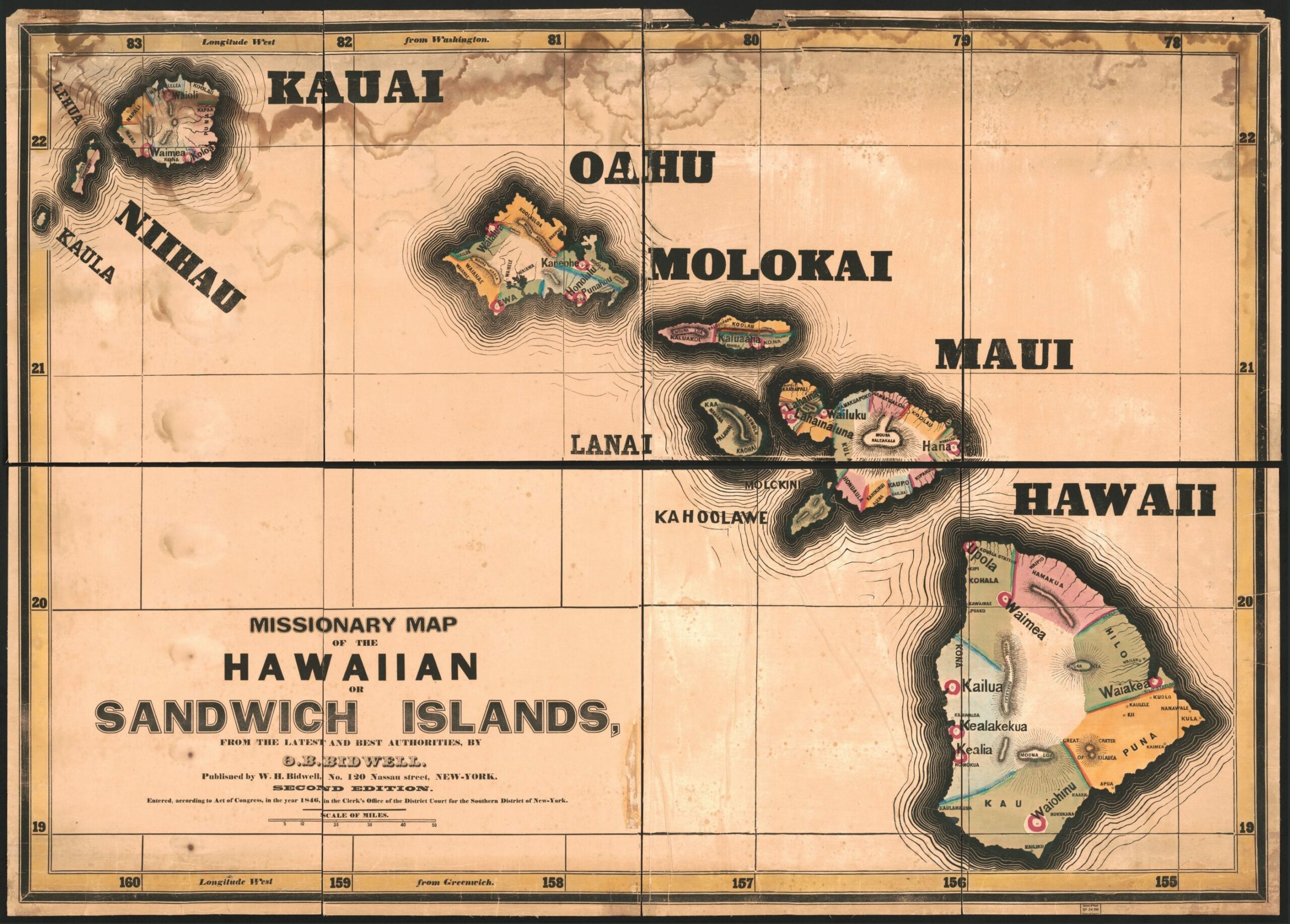
In the early 1800s, Hawaii emerged as a vital hub for the booming American whaling industry. Whaling ships, often out of New England, found the islands to be an ideal mid-Pacific stopover for provisioning, repairs, and rest. Major ports like Lahaina on Maui and Honolulu on Oahu became bustling centers of activity, drawing American merchants and sailors. This economic interaction laid the groundwork for a sustained American presence and influence. The whalers brought goods, trade, and a taste of American culture, but also disease and disruption to the native Hawaiian way of life.
Simultaneously, a different kind of American influence arrived: Protestant Christian missionaries. Beginning in 1820, these missionaries, primarily from the American Board of Commissioners for Foreign Missions, sought to convert the Hawaiian people to Christianity. They established churches, schools, and printing presses, significantly impacting Hawaiian society, culture, and governance. While their intentions were rooted in religious fervor, their efforts inadvertently intertwined American cultural and political ideals with the existing Hawaiian kingdom. Many missionary families eventually shed their religious calling to become prominent figures in the burgeoning Hawaiian economy, further cementing American ties. Their descendants would later play a critical role in the islands’ political future. The deep historical roots of these early encounters underscore the long-standing American engagement with the islands, transforming Hawaii from a distant outpost to a familiar domain for many Americans. Travelers today can still visit historic missionary sites and learn about their profound impact on Hawaiian culture and education, understanding that these were some of the very first forms of what could be considered early “tourism” or cultural exchange.
The Sugar Kingdom and Economic Dominance
The mid-19th century witnessed a transformative shift in Hawaii’s economy: the rise of sugar cultivation. American entrepreneurs, many of them descendants of the early missionaries, saw immense potential in Hawaii’s fertile volcanic soil and favorable climate for growing sugarcane. They established large-scale sugar plantations, importing thousands of laborers from China, Japan, the Philippines, and Portugal to work the fields. These plantations rapidly became the driving force of the Hawaiian economy, creating vast wealth for a select group of American and European businessmen, often referred to as the “Big Five” companies.
The economic power of these planters translated directly into political influence. They lobbied the US government for preferential trade agreements, culminating in the Reciprocity Treaty of 1875. This treaty allowed Hawaiian sugar to enter the US market duty-free, providing a massive boost to the industry, while also granting the United States exclusive access to Pearl Harbor as a naval coaling station. This concession was a critical moment, as it established a formal military link between the two nations and marked a significant step towards American dominance. The treaty created an undeniable economic dependency, essentially tethering Hawaii’s prosperity to the US market and strengthening the hand of American residents who favored annexation. Today, while many of the original plantations are gone, the legacy of this era is visible in Hawaii’s diverse population and the remnants of its agricultural past, which often become historical landmarks or part of cultural tours.
Geopolitical Ambition and Manifest Destiny
Beyond economic interests, the drive for American control over Hawaii was deeply intertwined with the burgeoning geopolitical ambitions of the United States in the late 19th century. The concept of Manifest Destiny, which had propelled westward expansion across the North American continent, began to look beyond its shores, viewing the Pacific as the next frontier for American influence and power.
The Lure of a Pacific Naval Base
Hawaii’s strategic location, often described as the “Crossroads of the Pacific,” was undeniably its most appealing asset from a military perspective. Situated roughly equidistant from North America, Asia, and Australia, the islands offered an unparalleled base for naval operations, trade protection, and power projection. As the US began to develop a more powerful and outward-looking navy, the need for coaling stations and deep-water ports in the Pacific became paramount.
Pearl Harbor on Oahu, with its natural deep harbor, was seen as the ideal location for such a facility. Naval strategists understood that control over Hawaii would allow the US Navy to project force across the entire Pacific Ocean, protecting American shipping lanes, facilitating trade with Asia, and safeguarding the anticipated future construction of a canal across Central America. The potential of Pearl Harbor was recognized early, even before its formal lease, making the islands a vital strategic chess piece in the grand game of global power. This vision wasn’t just about defense; it was about establishing the United States as a dominant world power, with Hawaii serving as its unsinkable aircraft carrier in the vast Pacific. Today, Pearl Harbor remains a crucial military installation and a poignant historical landmark that draws visitors from around the globe, eager to explore its museums and memorials.
Preventing European Expansion
Another significant geopolitical motivator was the fear that if the United States did not claim Hawaii, a rival European power would. Nations like Great Britain, France, and Germany also had imperial ambitions and maintained interests in the Pacific. The prospect of a hostile or competitive naval power controlling such a vital strategic location as Hawaii was unacceptable to American policymakers.
The informal extension of the Monroe Doctrine to the Pacific, preventing further European colonization in the Americas’ sphere of influence, played a role. American leaders believed that Hawaii was essential to securing the western approaches to the North American continent and maintaining regional hegemony. By acquiring Hawaii, the United States could effectively block any European power from establishing a dominant military presence in the central Pacific, thereby safeguarding its own security and expanding its global reach. This defensive posture, combined with offensive strategic goals, made the annexation of Hawaii seem like an imperative for many in Washington. The broader context of global power struggles in the late 19th century thus cast Hawaii as a prize worth securing, not just for its economic value but for its indispensable strategic importance.
The Overthrow of the Monarchy and Annexation
The growing American presence, both economic and strategic, inevitably created friction with the independent Hawaiian monarchy. The path to annexation was not smooth but involved a series of events that ultimately led to the overthrow of the kingdom and the establishment of a provisional government, paving the way for American control.
A Kingdom Under Siege: The Bayonet Constitution
The increasing influence of American and European businessmen, particularly sugar planters, began to erode the power of the Hawaiian monarchy. In 1887, a group of non-native Hawaiian and American residents, known as the Hawaiian League, orchestrated a coup against King Kalākaua. Under duress, and threatened by an armed militia, the King Kalākaua was forced to sign a new constitution, which became infamously known as the “Bayonet Constitution of 1887.”
This document drastically reduced the monarch’s power, stripping him of much of his authority and transferring it to the cabinet, which was largely controlled by annexationist Americans and Europeans. Crucially, it also disenfranchised most native Hawaiian and Asian voters by imposing property qualifications, while granting voting rights to non-Hawaiian residents who met certain criteria, effectively consolidating power in the hands of the wealthy planter class. The Bayonet Constitution was a pivotal moment, marking the beginning of the end for Hawaiian sovereignty and igniting intense resentment among the native Hawaiian population. It made the king a mere figurehead, setting the stage for future conflict and solidifying the annexationist movement’s grip on the islands’ political landscape. This contentious period is a vital part of Hawaii’s history, which is often reflected in current discussions about local culture and sovereignty.
Queen Liliʻuokalani and the Coup d’État
Upon King Kalākaua’s death in 1891, his sister, Queen Liliʻuokalani, ascended to the throne. A strong and determined ruler, she was deeply committed to restoring the rights of her people and the sovereignty of the Hawaiian kingdom. Her primary goal was to promulgate a new constitution that would abolish the Bayonet Constitution and restore power to the monarchy and native Hawaiians.
However, her efforts were met with fierce opposition from the powerful, American-backed annexationist faction, primarily composed of wealthy sugar planters and businessmen. Fearing that the Queen’s actions would undermine their economic and political dominance, this group, calling themselves the “Committee of Safety,” initiated a coup d’état in January 1893. With the implicit support of the US Minister to Hawaii, John L. Stevens, and the landing of US Marines from the USS Boston, the monarchy was overthrown. Queen Liliʻuokalani peacefully surrendered to avoid bloodshed, issuing a protest to the United States government and appealing for justice. This illegal overthrow of 1893 remains a deeply controversial event, viewed by many as an act of imperialistic aggression that unjustly ended an independent nation. The story of Queen Liliʻuokalani’s valiant, though ultimately unsuccessful, struggle for her people’s independence is a powerful narrative, remembered and honored in many of Hawaii’s cultural sites and historical discussions.
The Republic of Hawaii and Eventual Annexation
Following the overthrow, the Committee of Safety established a provisional government, which soon declared itself the Republic of Hawaii in 1894, with Sanford B. Dole, a prominent American lawyer and businessman, as its president. The immediate goal of this new republic was annexation by the United States.
However, annexation was not a foregone conclusion. US President Grover Cleveland was deeply troubled by the circumstances of the overthrow, deeming it an illegal act orchestrated by American interests. He withdrew the annexation treaty that had been submitted to the US Senate and even attempted to restore Queen Liliʻuokalani to her throne, though his efforts were ultimately unsuccessful due to the provisional government’s refusal to step down. The debate over annexation continued for several years in the US Congress, with strong anti-imperialist voices opposing the move.
The turning point came with the outbreak of the Spanish-American War in 1898. The war highlighted Hawaii’s immense strategic value as a coaling station and naval base for operations in the Pacific. With a surge of nationalist and expansionist sentiment, and the perceived military necessity, opponents of annexation were overcome. In July 1898, the US Congress passed the Newlands Resolution, formally annexing Hawaii as a US territory. Despite ongoing protests from native Hawaiians, the American flag was raised over the ʻIolani Palace, marking the official end of Hawaiian independence and the beginning of its journey as part of the United States. The legacy of this period is evident in many of Hawaii’s landmarks, from the palace itself to historical sites that tell the story of the monarchy’s final days.
Hawaii’s Enduring Legacy: From Territory to Statehood
The annexation of Hawaii in 1898 was not the end of its story, but rather a new chapter. For over 60 years, Hawaii existed as a US territory, undergoing significant social, economic, and cultural transformations that have shaped the vibrant state we know today.
Cultural Blending and Economic Growth
As a territory, Hawaii continued its economic development, primarily driven by sugar and pineapple plantations. This agricultural backbone necessitated continuous immigration, further diversifying the islands’ population. Laborers from Japan, Korea, the Philippines, and other nations flocked to Hawaii, creating a unique melting pot of cultures. This extensive immigration and intermarriage fostered a rich new Hawaiian culture, a distinct blend of indigenous traditions with Asian, European, and American influences. The pidgin language, unique cuisine, and community traditions are all living testaments to this blending.
Economically, the US connection provided stability and access to larger markets. However, the true economic boom that would transform Hawaii from an agricultural outpost to a global destination would come later, largely spurred by the rise of commercial aviation and the post-World War II tourism industry. The island’s strategic importance was tragically underscored during World War II with the attack on Pearl Harbor, an event that solidified Hawaii’s place in American consciousness and history. This period of territorial status was a crucible, forging the unique identity of modern Hawaii, preparing it for its eventual role as the 50th state. Visitors today can immerse themselves in this rich cultural tapestry by exploring local markets, historical sites, and diverse culinary experiences that reflect centuries of blending and adaptation.

A Modern Pacific Paradise
In 1959, after decades of advocacy and political maneuvering, Hawaii officially became the 50th state of the United States. This momentous occasion marked the culmination of a long and often contentious history. Today, Hawaii is celebrated globally as a premier travel destination, a true “Pacific Paradise.” Millions visit annually, drawn by its stunning natural beauty—volcanoes, pristine beaches, lush rainforests—and its unique, vibrant local culture.
The islands offer an incredible array of attractions, from the iconic surf breaks of Waikiki to the majestic cliffs of the Na Pali Coast on Kauai. Hotels range from luxurious resorts like the Grand Hyatt Kauai Resort & Spa to charming boutique accommodations, catering to diverse lifestyles and budgets. Tourists can explore historical landmarks such as ʻIolani Palace, the only royal palace on US soil, or reflect on history at the USS Arizona Memorial at Pearl Harbor. The modern experience of Hawaii is a rich tapestry of its complex past, where the beauty of its natural landscape converges with a living history shaped by centuries of global interaction. Understanding why the US wanted Hawaii provides a deeper appreciation for this extraordinary state, acknowledging both the beauty of its present and the depth of its historical journey.
LifeOutOfTheBox is a participant in the Amazon Services LLC Associates Program, an affiliate advertising program designed to provide a means for sites to earn advertising fees by advertising and linking to Amazon.com. Amazon, the Amazon logo, AmazonSupply, and the AmazonSupply logo are trademarks of Amazon.com, Inc. or its affiliates. As an Amazon Associate we earn affiliate commissions from qualifying purchases.