
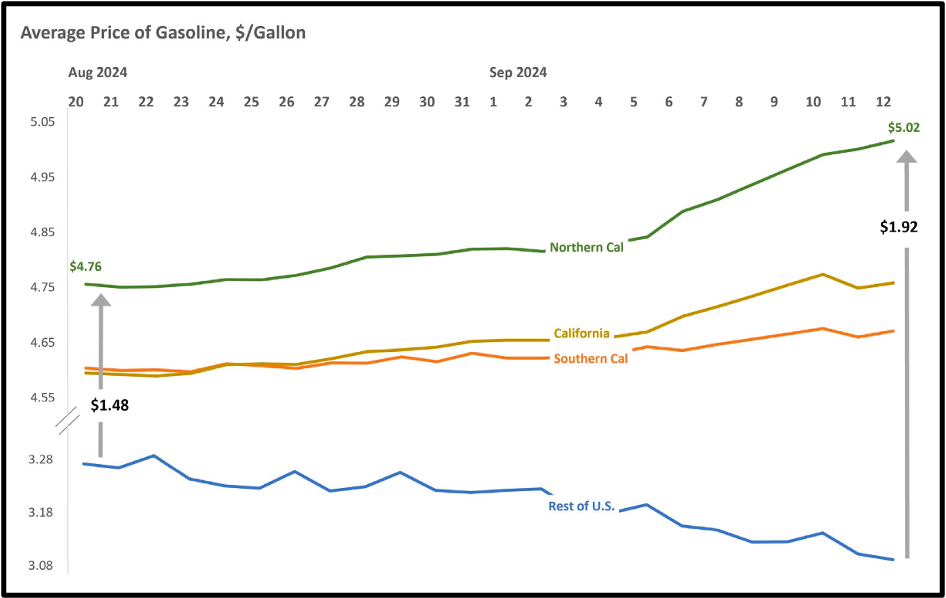
The allure of California—its sun-drenched beaches, majestic national parks, vibrant cities, and endless scenic drives—makes it a dream destination for a diverse array of travelers. From budget-conscious backpackers traversing the coast to luxury seekers exploring wine country, the Golden State offers an experience for every lifestyle. However, a persistent concern for many visitors and residents alike is the consistently elevated price of gasoline, often significantly higher than the national average. Understanding the multifaceted reasons behind California’s premium fuel costs is crucial for planning any trip, especially for those whose travel lifestyle heavily relies on road transport.

The Complex Web Behind California’s Fuel Costs
The reasons for California’s high gas prices are not singular but rather a convergence of unique environmental mandates, taxation policies, and market dynamics that distinguish it from other states. For any lifestyle traveler looking to budget effectively or understand the true cost of their journey, grasping these core elements is essential.
Unique Environmental Regulations
California boasts some of the most stringent environmental regulations in the world, particularly concerning fuel standards. The state mandates a special blend of gasoline, often referred to as “CARB gasoline” (California Air Resources Board), designed to reduce smog and air pollution. This unique formulation is required year-round, unlike other states that might switch blends seasonally. The challenges in producing, storing, and transporting this specific blend add a significant cost premium. Not all refineries are equipped to produce CARB-compliant gasoline, limiting supply and increasing the reliance on fewer facilities. This specialized production process inherently costs more than standard gasoline, a cost directly passed on to consumers at the pump. For those planning a road trip along the Pacific Coast Highway or an exploration of the Sierra Nevada mountains, factoring in this specialized fuel cost is paramount.
High Taxation and Fees
Beyond environmental regulations, California imposes some of the highest state-level gasoline taxes in the nation. These taxes include a base excise tax, a sales tax, and various fees aimed at funding transportation infrastructure projects and addressing climate change initiatives. For instance, the state’s cap-and-trade program, designed to limit greenhouse gas emissions, adds a per-gallon cost to fuel. These cumulative taxes and fees can add upwards of $1.00-$1.50 per gallon compared to the national average, making a substantial impact on the total fuel bill for any traveler. Whether you’re a family heading to Disneyland or a business traveler commuting between Los Angeles and San Francisco, these governmental surcharges are an unavoidable component of the cost of driving.
Refining Capacity and Market Dynamics
California’s isolated fuel market also plays a significant role. The state has limited pipeline connections to other states, meaning it largely relies on its own in-state refineries or imports via ship. Should any of California’s major refineries experience unexpected outages due to maintenance, fires, or other disruptions, the impact on supply can be immediate and severe, leading to sharp price spikes. The inability to easily import large quantities of gasoline from other regions quickly exacerbates any supply-demand imbalance. Furthermore, the global price of crude oil, as well as geopolitical events, commodity trading, and speculative market behavior, all exert influence. While these factors affect gas prices everywhere, their impact is often amplified in California due to the state’s unique market conditions and regulatory environment.
Impact on California Travel Lifestyles
Understanding the “why” behind California’s high gas prices is only half the battle; the other half involves analyzing its tangible effects on various travel lifestyles. Every type of traveler, from the spontaneous road-tripper to the meticulously planned family vacationer, must contend with these elevated costs.
Budget-Conscious Explorers and Road Trippers
For budget travelers and those whose primary mode of exploration is the classic California road trip, high gas prices present a direct challenge. A trip that might cost $200 in fuel in another state could easily exceed $300-$400 for the same distance in California. This can significantly eat into accommodation, food, and activity budgets. Road trippers venturing to destinations like Yosemite National Park or traversing the vast deserts near Palm Springs must account for these costs, potentially leading to shorter trips, fewer stops, or a shift towards more affordable lodging options to compensate. Budgeting for fuel becomes as critical as budgeting for lodging or dining experiences.
Luxury Travelers and Premium Experiences
While luxury travelers might seem less affected by per-gallon costs, high gas prices still influence their decisions, particularly regarding ground transportation. Opting for private car services, limousines, or rental exotic cars becomes a more expensive proposition. For those considering a self-driven luxury tour through Napa Valley‘s vineyards or along the scenic routes of Big Sur, the increased operational costs for high-end vehicles can add up substantially. It might lead to a preference for private air charters for shorter distances or more consolidated itineraries to minimize driving, even within the luxury segment. The overall perception of value for money in a premium travel experience can also be subtly impacted by these underlying costs.
Family Vacations and Group Travel
Families and groups traveling together often rely on larger vehicles—SUVs, minivans, or even RVs—to accommodate passengers and luggage. These vehicles, while convenient, typically have lower fuel efficiency. When combined with California’s high gas prices, the fuel expenditure for a family vacation to Universal Studios Hollywood or a group tour of Lake Tahoe can become a considerable portion of the overall trip budget. Parents planning school holiday trips need to factor in these escalating fuel costs, potentially leading them to choose destinations closer to home, carpool more frequently, or explore alternative modes of transport for portions of their journey.
Adapting Your California Travel Strategy
For all travel lifestyles impacted by California’s higher fuel costs, strategic planning and adaptable mindsets can help mitigate the financial burden without compromising the travel experience.
Embracing Public Transportation and Ride-Sharing
In major urban centers like San Francisco, Los Angeles, and San Diego, California offers extensive public transportation networks, including BART in the Bay Area, Metro Rail in Los Angeles, and efficient bus systems. Utilizing these services for city exploration can drastically reduce fuel consumption. Ride-sharing services like Uber and Lyft also offer viable alternatives for shorter distances or when public transport isn’t convenient, though costs can add up for longer rides. For a family visiting Santa Monica Pier or a solo traveler exploring the vibrant neighborhoods of Oakland, these options present a smart economic choice.
Exploring EV Rentals and Charging Infrastructure
As California leads the nation in electric vehicle adoption, the charging infrastructure is robust and continually expanding. Renting an electric vehicle (EV) for your trip can be a strategic move to bypass high gasoline prices entirely. While EV rental costs might sometimes be slightly higher, the savings on “fuel” can be significant, especially for longer journeys. Apps and in-car navigation systems make finding charging stations straightforward, with options ranging from free public chargers to paid fast-charging networks. This approach is becoming increasingly popular for eco-conscious travelers and those looking to future-proof their travel budget.
Optimizing Routes and Trip Planning
Careful route planning is paramount. Instead of aimlessly driving, create a detailed itinerary that minimizes backtracking and consolidates attractions within specific geographic areas. Utilize navigation apps that provide real-time traffic updates to avoid congestion, which can drastically increase fuel consumption. Consider splitting longer drives with overnight stays, not just for rest, but to break up fuel expenses. For instance, exploring the sights around Monterey and Carmel-by-the-Sea before heading further south along the Pacific Coast Highway can be more fuel-efficient than extensive day trips from a single base.
Local Exploration and Staycations
Another effective strategy for managing gas costs is to focus on localized travel or embrace the concept of a “staycation.” Instead of cross-state road trips, explore destinations within a shorter radius of your home or primary arrival airport. California is rich with diverse regions, each offering unique experiences. Dedicate more time to exploring a single city or region—be it the beaches of Orange County, the cultural gems of Sacramento, or the natural beauty of the Redwood National Park area—to minimize long-distance driving. This approach not only saves on fuel but also often allows for a deeper, more immersive travel experience.

Long-Term Outlook and Future Travel Trends
The trend of higher gas prices in California is likely to persist, driven by ongoing environmental commitments, infrastructure needs, and the state’s unique market dynamics. For travelers, this necessitates a more informed and adaptive approach to planning California adventures. The growing adoption of electric vehicles, the expansion of charging infrastructure, and continued investment in public transportation will offer increasingly viable alternatives to gasoline-powered travel. Future lifestyle travelers may find themselves prioritizing destinations accessible by train, opting for EV rentals, or planning more concentrated, immersive trips to minimize driving distances. Regardless of the chosen travel style, understanding the cost of fuel and integrating it into the planning process will remain a crucial element of a successful and enjoyable California experience.
LifeOutOfTheBox is a participant in the Amazon Services LLC Associates Program, an affiliate advertising program designed to provide a means for sites to earn advertising fees by advertising and linking to Amazon.com. Amazon, the Amazon logo, AmazonSupply, and the AmazonSupply logo are trademarks of Amazon.com, Inc. or its affiliates. As an Amazon Associate we earn affiliate commissions from qualifying purchases.