
The question of why Albany holds the esteemed title of the capital of New York State is one that sparks curiosity among many visitors and residents alike. Often overshadowed by the global metropolis of New York City, Albany’s significance as the political heart of one of the United States’ most influential states is deeply rooted in its rich history, strategic geography, and pivotal role in the nation’s formation. From its early days as a Dutch trading post to its emergence as a bustling colonial hub and ultimately, the seat of state government, Albany’s journey is a compelling narrative of ambition, strategic foresight, and enduring importance.

This article delves into the historical tapestry that led to Albany’s selection, exploring its unique geographical advantages, its pivotal moments in history, and what makes this vibrant city a fascinating destination for travelers today. Whether you’re a history buff, a political enthusiast, or simply seeking a unique travel experience, understanding Albany’s capital status unlocks a deeper appreciation for this often-underestimated gem of Upstate New York.
A City Forged in History: Albany’s Formative Years
To understand why Albany became the capital, one must first look back at its origins and early development. The city’s story began long before the concept of state capitals even existed, establishing itself as a vital settlement in the burgeoning New World.
Early Settlements and Strategic Importance
Albany’s roots trace back to 1614 when Dutch fur traders established Fort Nassau, a trading post near the confluence of the Hudson River and Mohawk River. This location was no accident; it sat at the nexus of lucrative trade routes, offering access to the vast interior populated by various Indigenous peoples, particularly the Iroquois Confederacy. The Dutch soon realized the strategic importance of this site, leading to the construction of Fort Orange in 1624, marking the first permanent European settlement in what would become New York.
Around Fort Orange, a bustling community known as Beverwijck (meaning “beaver district”) grew, driven by the lucrative beaver pelt trade. This early settlement, part of the larger colony of New Netherland, quickly became a vital economic and cultural outpost. Its inland location, while seemingly remote, provided a critical buffer against competing European powers like the French and British, and fostered unique diplomatic and trade relationships with Native American tribes, shaping the region’s geopolitical landscape.
The deep Hudson River allowed large ships to navigate far inland, making Albany a natural entrepôt for goods moving between the coast and the western frontier. This natural advantage cemented its status as a commercial hub, long before any formal political designation. The established infrastructure, the presence of a diverse population, and its strategic military significance would play a crucial role in its future.
From Dutch Colony to British Rule and Revolutionary Zeal
In 1664, the English seized New Netherland from the Dutch, renaming the colony and its primary settlements. Beverwijck was renamed Albany in honor of the Duke of Albany, who later became King James II. Under British rule, Albany continued to thrive as a trading center and military stronghold, particularly during conflicts like the French and Indian War. Its fortifications and strategic position made it a crucial base of operations for colonial forces, reinforcing its military importance within the expanding British Empire.
As tensions escalated between the American colonies and Great Britain, Albany found itself once again at the heart of pivotal events. During the American Revolution, the city’s strategic location along the Hudson River corridor was fiercely contested. It played a significant role in the Saratoga Campaign of 1777, often considered the turning point of the war, as it controlled access to the vital waterway and prevented British forces from dividing the rebellious colonies. The contributions of prominent Albany residents, such as General Philip Schuyler, underscore the city’s deep involvement in the fight for independence.
This long history of strategic importance, economic vitality, and political engagement positioned Albany as a mature and influential settlement by the time New York sought to establish a permanent seat of government after the war.
The Capital Decision: A Nexus of Politics and Pragmatism
Following the American Revolution, the newly independent New York State faced the critical task of establishing a stable and accessible seat for its burgeoning government. This decision was not made lightly and involved considerable debate among various competing cities.
Post-Revolutionary Landscape and Competing Claims
In the immediate aftermath of the war, the New York State Legislature convened in several different locations, including Kingston and Poughkeepsie, highlighting the need for a permanent capital. While New York City was undoubtedly the state’s largest and most prominent urban center, its geographical position at the extreme southern end of the state posed significant logistical challenges for representatives from the northern and western regions. Travel was arduous, and a capital in New York City would centralize power too heavily in one area, potentially alienating the growing populations Upstate New York.
The state needed a location that could be reached relatively easily by all its citizens, and more importantly, by its elected officials. The political climate also favored a more neutral ground, away from the intense commercial and social pressures of a major port city like New York City. There was a desire for a capital that reflected the geographic diversity and growing population distribution of the entire state, not just its financial hub.
Factors Favoring Albany

Albany emerged as the strongest contender due to a convergence of factors:
- Geographical Centrality: While not the exact geographic center of the modern state, in the late 18th century, Albany was considered relatively central to the populated areas of New York. Its position at the head of navigation on the Hudson River made it accessible by water from the south, and land routes connected it to the expanding settlements to the west and north. This strategic midpoint location allowed for easier travel and communication for legislators from various districts, fostering a sense of statewide representation.
- Established Infrastructure: Unlike many frontier towns, Albany already possessed a well-developed infrastructure, including roads, inns, and a stable population. It had a long history as a administrative and commercial center, meaning it could immediately accommodate the needs of a state government without extensive new construction or development. The presence of established institutions and experienced administrators from its colonial past further strengthened its appeal.
- Economic Vitality and Future Potential: Albany’s robust economy, fueled by trade and later amplified by the construction of the Erie Canal which terminated nearby, ensured a steady revenue stream and potential for continued growth. The visionaries of the time, like DeWitt Clinton, understood that connecting the Hudson River to the Great Lakes via the Erie Canal would transform New York into an economic powerhouse, and Albany was perfectly positioned to be its eastern gateway. This promise of future prosperity made Albany an attractive, forward-thinking choice for the capital.
- Political Influence and Stability: Over its long history, Albany had cultivated a stable political environment and a populace accustomed to self-governance. Influential families, like the Van Rensselaers and the Schuylers, wielded significant local and state power, advocating for Albany’s selection. Its established governance and social structure provided a reliable foundation for the new state government.
Ultimately, on January 19, 1797, the New York State Legislature officially designated Albany as the permanent capital. This decision solidified its role not just as a historical landmark but as the enduring center of political power for New York.
Albany Today: Beyond the Capital Status
Today, Albany is a vibrant city that beautifully blends its rich historical legacy with modern dynamism. For travelers, it offers a unique blend of government, culture, history, and natural beauty, making it an ideal destination for various types of trips, from historical tours to cultural explorations and even business stays.
Architectural Marvels and Historic Sites
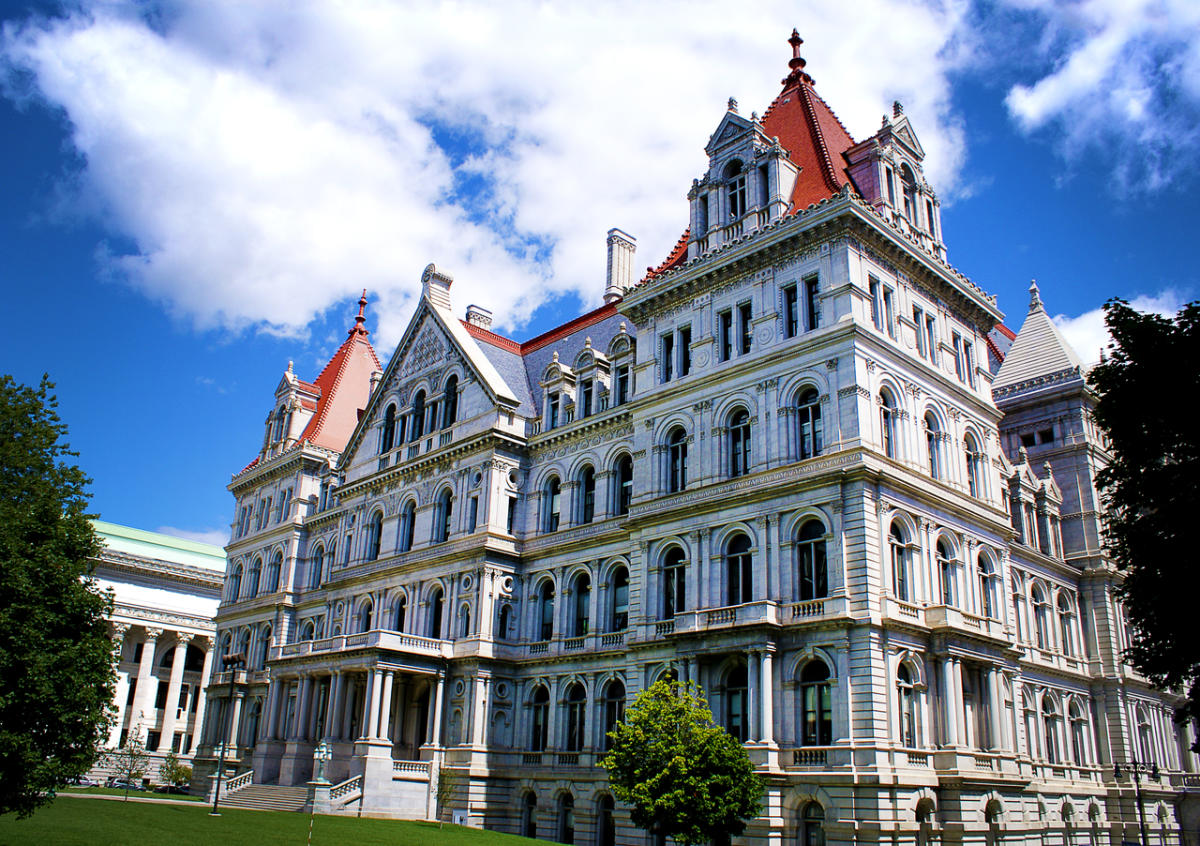
As the capital, Albany is home to some of the most impressive architectural landmarks in New York. The crown jewel is undoubtedly the New York State Capitol Building, an architectural masterpiece that took over 30 years and $25 million to build in the late 19th century. Its blend of Romanesque Revival and Renaissance Revival styles, intricate carvings, and the famous “Million Dollar Staircase” are a must-see for anyone visiting. Free guided tours offer a fascinating glimpse into state governance and the building’s intricate history.
Adjacent to the Capitol is the Empire State Plaza, a striking complex of government buildings designed in the 1960s by Nelson A. Rockefeller. Its modernist architecture, reflecting the “grand scale” of government, houses iconic structures like The Egg, a performing arts venue renowned for its unique shape and acoustics, and the New York State Museum, which showcases the state’s natural and cultural history through diverse exhibits, from prehistoric mastodons to the events of September 11th. These landmarks offer invaluable insights into the state’s governance, history, and artistic endeavors, appealing to anyone interested in landmarks and cultural experiences.
Beyond the grandeur of the Empire State Plaza, Albany’s past comes alive in its historic homes. The Schuyler Mansion State Historic Site, the Georgian-style home of General Philip Schuyler, offers a window into colonial life and the early republic. Similarly, Historic Cherry Hill, a well-preserved 18th-century home, provides a glimpse into over 200 years of family life and social change. The Albany Institute of History & Art further enriches this experience, featuring comprehensive collections spanning three centuries of Albany and the Hudson Valley’s art, history, and culture. For military history enthusiasts, the USS Slater, the last destroyer escort afloat in America, is docked on the Hudson River and open for tours.
Cultural Immersion and Culinary Delights
Albany’s cultural scene is as rich and diverse as its history. The city’s Downtown Albany and Lark Street neighborhoods are bustling with art galleries, boutique shops, and vibrant restaurants. Lark Street, often referred to as Albany’s “Greenwich Village,” is particularly known for its bohemian vibe, historic architecture, and diverse eateries, perfect for those looking for local culture and unique experiences.
The performing arts thrive here, with venues like The Egg and the historic Palace Theatre hosting a wide range of concerts, plays, and events throughout the year. Festivals celebrating everything from jazz to food and Tulip Fest (a nod to Albany’s Dutch heritage held in Washington Park) add a lively rhythm to the city’s calendar.
When it comes to culinary experiences, Albany offers everything from upscale dining establishments to cozy cafes and international cuisine. Visitors can explore farm-to-table restaurants showcasing Upstate New York’s bounty, enjoy craft breweries, or savor flavors from around the world. The Capital Region food scene is constantly evolving, offering delightful surprises for every palate.
Outdoor enthusiasts will also find plenty to do. Washington Park, a beautifully landscaped Victorian park, is an urban oasis for walking, jogging, and enjoying seasonal blooms. The Corning Preserve along the Hudson River offers scenic trails for walking and biking, providing stunning views of the city skyline and the river. For those willing to venture slightly further, John Boyd Thacher State Park provides breathtaking views of the Adirondack Mountains and Helderberg Escarpment with hiking trails and waterfalls.
Accommodation and Travel Tips for Your Albany Visit
Planning a trip to Albany is straightforward, with a range of accommodation options to suit every budget and lifestyle. For those seeking luxury travel, downtown hotels like the Renaissance Albany Hotel or the Hilton Albany offer elegant suites, top-tier amenities, and convenient access to government buildings and attractions. These properties often cater to business stays and offer comprehensive services, including conference facilities and fine dining.
Budget travel options are also abundant, with several reputable hotels such as the Fairfield Inn & Suites Albany Downtown providing comfortable rooms and essential amenities at competitive prices. For longer stays or a more home-like experience, various apartments and vacation rentals can be found, particularly around the historic Center Square and Washington Park Historic District, allowing visitors to immerse themselves in local living. When booking accommodation, it’s advisable to check reviews and compare options to find the best fit for your travel style and preferences.
Getting to Albany is convenient, whether by car, train (via Amtrak at the Albany-Rensselaer Station), or air (via Albany International Airport). Once in the city, many attractions in the downtown area are within walking distance, particularly around the Empire State Plaza and Capitol Park. Public transportation, ride-sharing services, and rental cars are readily available for exploring further afield or venturing into nearby areas like Saratoga Springs or Lake George for additional tourism and attractions.
For those interested in local culture, consider timing your visit with one of Albany’s many annual festivals. The Tulip Fest in May is a particular highlight, showcasing thousands of vibrant tulips, live music, and family-friendly activities. Exploring the historic neighborhoods, with their distinctive Dutch Colonial architecture and charming streetscapes, offers a pleasant way to spend an afternoon. Don’t forget to sample local delicacies and engage with the friendly residents to truly experience the city’s unique charm.
In conclusion, Albany’s status as the capital of New York is a testament to its deep historical roots, strategic geographical advantages, and enduring political significance. It is a city where every street corner tells a story, and every landmark whispers tales of a pivotal past. Beyond its governmental role, Albany offers a rich tapestry of cultural experiences, architectural wonders, and natural beauty, making it a compelling destination for any traveler seeking to explore the heart of New York State. Whether you’re planning a weekend getaway or a longer exploration, Albany promises an enriching and memorable journey.
LifeOutOfTheBox is a participant in the Amazon Services LLC Associates Program, an affiliate advertising program designed to provide a means for sites to earn advertising fees by advertising and linking to Amazon.com. Amazon, the Amazon logo, AmazonSupply, and the AmazonSupply logo are trademarks of Amazon.com, Inc. or its affiliates. As an Amazon Associate we earn affiliate commissions from qualifying purchases.