
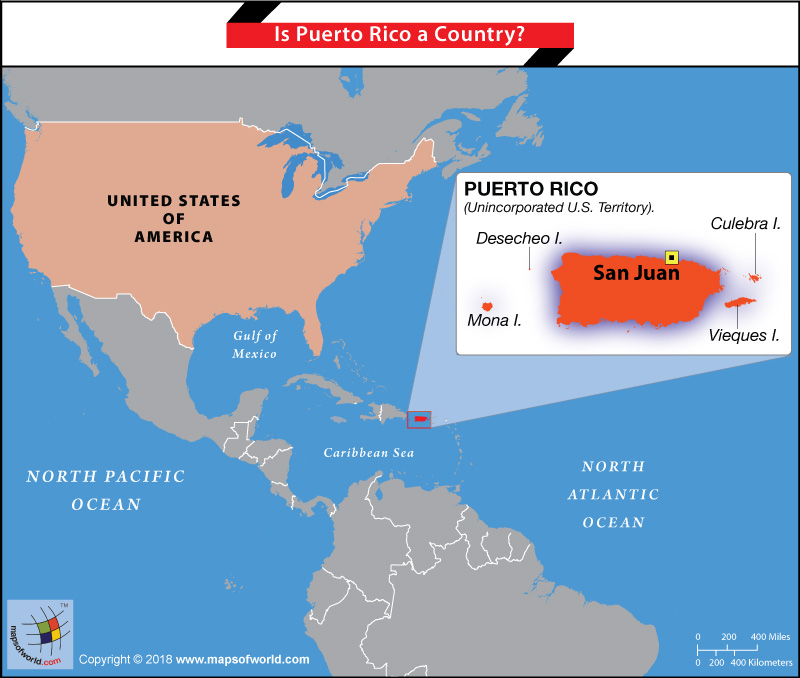
Puerto Rico, a vibrant island in the Caribbean, holds a unique and often misunderstood status within the geopolitical landscape of the United States. It is not a state, nor is it an independent nation, but rather an unincorporated territory of the United States. This designation carries significant implications for its residents, its governance, and its relationship with the mainland. Understanding the historical trajectory and legal underpinnings of this status is crucial to appreciating the complexities of Puerto Rico’s present and future.
The Genesis of Territorial Status: A Post-War Acquisition
The journey of Puerto Rico to its current status began in the aftermath of the Spanish-American War. In 1898, the United States defeated Spain, and as part of the treaty that concluded the war, Spain ceded Cuba, Guam, and Puerto Rico to the United States. This marked a pivotal moment, ushering in a new era of American influence and governance over these islands. Initially, the U.S. military governed Puerto Rico, but this was soon followed by the establishment of civilian rule.

The Foraker Act of 1900
The Foraker Act, also known as the Organic Act of 1900, was the first major legislative act by the United States Congress to establish a formal framework for governing Puerto Rico. This act declared Puerto Rico an “unincorporated territory” of the United States. This distinction was significant. It meant that the U.S. Constitution did not automatically apply in full to the island, and Congress retained ultimate authority over its affairs. The act established a civilian government, with a governor appointed by the U.S. President, an executive council, and an elected House of Delegates. However, Puerto Ricans were not granted full U.S. citizenship at this point; they were instead considered citizens of Puerto Rico.
The Jones-Shafroth Act of 1917
A quarter-century later, the Jones-Shafroth Act of 1917, often referred to as the second Organic Act, brought about more substantial changes. Most notably, it granted Puerto Ricans U.S. citizenship. This was a momentous development, aligning their status with that of citizens in the mainland United States. However, the act also reinforced the territorial status, meaning that while Puerto Ricans were now U.S. citizens, they did not have the same rights as citizens residing in the 50 states. They could not vote in U.S. presidential elections, and they had no voting representation in Congress. This created a curious dichotomy: citizens of the United States who were subject to U.S. laws but lacked full political participation.
The Concept of “Unincorporated Territory”
The legal distinction between “incorporated” and “unincorporated” territories is central to understanding Puerto Rico’s status. The Supreme Court of the United States has, through a series of decisions, elaborated on these distinctions.
Insular Cases
The Insular Cases, a group of U.S. Supreme Court decisions decided in the early 20th century (following the acquisition of territories from Spain), established the precedent that territories acquired by the United States were not automatically incorporated into the United States. The Court held that constitutional rights are not necessarily automatically extended to inhabitants of unincorporated territories. This legal doctrine has profoundly shaped the relationship between the U.S. and territories like Puerto Rico, the U.S. Virgin Islands, and Guam. These rulings essentially created a framework where the U.S. Congress could decide which constitutional provisions, if any, would apply to these territories.
Congressional Authority
Under the territorial clause of the U.S. Constitution (Article IV, Section 3, Clause 2), Congress has the plenary power to govern and legislate over U.S. territories. This means that Congress can pass laws that affect Puerto Rico, and it has done so extensively. While Puerto Rico has its own locally elected government and constitution, its ultimate sovereignty rests with the U.S. Congress. This power has been exercised in various ways, from establishing federal agencies on the island to dictating economic policies and even intervening in local governance.
Implications for Residents and Governance
The territorial status of Puerto Rico has tangible and far-reaching consequences for its more than 3 million residents.
Citizenship and Rights
As mentioned, Puerto Ricans are U.S. citizens. They can travel freely between the island and the mainland without passports, serve in the U.S. military, and receive U.S. Social Security benefits. However, they face limitations. They cannot vote in U.S. presidential elections, and their non-voting representative in the House of Representatives, the Resident Commissioner, cannot vote on the final passage of legislation. This lack of full political representation is a constant source of debate and frustration for many on the island.
Economic and Fiscal Relationship
The economic relationship between Puerto Rico and the United States is complex and often contentious. Puerto Rico is subject to U.S. federal laws, including the minimum wage, trade regulations, and tax laws. However, it is exempt from certain federal taxes, such as federal income tax on income earned by residents within the island. This has contributed to a unique economic environment. For a period, tax incentives in Puerto Rico, particularly under Section 936 of the Internal Revenue Code, attracted significant manufacturing investment. However, the repeal of Section 936 in the late 1990s had a substantial negative impact on the island’s economy.
Furthermore, Puerto Rico has its own local tax system, but federal decisions can significantly influence its fiscal health. The island has faced severe economic challenges, including a prolonged recession and a significant debt crisis that led to a federal oversight board being established to manage its finances.
Social Services and Federal Programs
Puerto Rico receives federal funding for various programs, including Medicare, Medicaid, and SNAP (formerly food stamps). However, the level of funding often falls short of what is provided to the states, exacerbating disparities in access to healthcare and social services. This has been a point of significant advocacy for equal treatment for Puerto Rican residents.
The Ongoing Debate: Statehood, Independence, or Enhanced Territorial Status
The question of Puerto Rico’s political future has been a persistent and often divisive issue. Throughout its history, various aspirations for self-determination have emerged, with three main options dominating the discourse: statehood, independence, and an enhanced form of territorial status.
Statehood
Proponents of statehood argue that it would provide Puerto Rico with full political equality, including voting representation in Congress and the right to vote in presidential elections. They believe statehood would stimulate economic growth through increased federal investment and access to federal programs. Referendums on Puerto Rico’s status have been held periodically, with statehood often receiving significant support, though the results and their interpretation have been subject to debate.
Independence
A segment of the Puerto Rican population advocates for full independence from the United States. They argue that Puerto Rico is a distinct nation with its own culture and identity and that true self-determination can only be achieved through sovereignty. Independence advocates often point to the historical and cultural ties to Latin America and the desire to forge unique international relations.
Enhanced Territorial Status or Commonwealth
Another option is to maintain the territorial status but with significant enhancements to Puerto Rico’s autonomy and a clearer definition of its relationship with the U.S. This could involve greater local control over finances, a more equitable distribution of federal funds, or a compact of free association similar to that of the Marshall Islands or the Federated States of Micronesia. The current “Commonwealth” status, as envisioned by the U.S. Department of Justice in the 1950s, is seen by some as a form of self-governance within the territorial framework, but its precise legal definition and practical implications remain subjects of discussion.
Conclusion: A Continuous Evolution
The question of why Puerto Rico is a United States territory is not a static one but rather a reflection of a dynamic and evolving historical process. From its cession by Spain to the landmark Supreme Court decisions and legislative acts, the island’s status has been shaped by a complex interplay of geopolitical forces, legal interpretations, and the aspirations of its people. The unincorporated territorial status, while granting U.S. citizenship, has also imposed limitations on political representation and economic autonomy. As Puerto Rico continues to navigate its relationship with the United States, the debate over its ultimate political destiny remains a central and ongoing conversation, influencing its cultural identity, economic development, and the daily lives of its citizens. The future of Puerto Rico’s status will undoubtedly be a significant chapter in the ongoing narrative of U.S. territorial policy and the pursuit of self-determination.
LifeOutOfTheBox is a participant in the Amazon Services LLC Associates Program, an affiliate advertising program designed to provide a means for sites to earn advertising fees by advertising and linking to Amazon.com. Amazon, the Amazon logo, AmazonSupply, and the AmazonSupply logo are trademarks of Amazon.com, Inc. or its affiliates. As an Amazon Associate we earn affiliate commissions from qualifying purchases.