
The vibrant tapestry of Alabama culture is rich with history, unique traditions, and fervent loyalties. For anyone visiting the state, particularly those with even a passing interest in sports, one emblem stands out with undeniable prominence: the mighty elephant. While the sports teams of the University of Alabama are famously known as the Crimson Tide, their beloved mascot, Big Al, is unequivocally an elephant. This curious divergence often sparks questions from tourists and newcomers alike, who quickly discover that understanding the elephant’s origin is key to unlocking a deeper appreciation for Alabama’s local culture, its sporting heritage, and the fierce pride of its people.

The story of how an elephant came to symbolize the Crimson Tide is not one born of ancient legends or deliberate marketing campaigns. Instead, it’s a charming anecdote from the annals of college football history, a spontaneous remark that, over time, transformed into one of the most recognizable and enduring mascots in all of American sports. This journey from a fleeting observation to an iconic cultural figure offers a fascinating glimpse into the organic evolution of local identity and tradition, making it an essential piece of knowledge for any visitor seeking to truly immerse themselves in the spirit of Alabama.
The Unconventional Origin Story: Not So Much a Tide, More an Elephant
The genesis of the University of Alabama’s elephant mascot traces back to an ordinary football game, yet it was a moment that etched itself permanently into the state’s cultural narrative. Unlike many mascots meticulously designed to reflect a team’s name or regional characteristics, the elephant’s adoption was purely accidental, born from the vivid imagination of a sportswriter.
A Comment from a Sportswriter
The year was 1930, a pivotal season for the University of Alabama’s football program. On October 4th, Alabama was set to play against Ole Miss in Tuscaloosa. A sportswriter from the Atlanta Journal, Everett Strupper, was on hand to cover the game. As the Alabama team thundered onto the field, a sight so imposing it left a lasting impression, Strupper’s eyes widened. What he saw wasn’t just a group of football players; it was a seemingly unstoppable force.
In his game recap, Strupper famously wrote about the Alabama team’s formidable presence: “At the end of the quarter, the earth started to tremble, there was a distant rumble that grew with every second, and suddenly, out of the mist—big, grey elephants appeared.” He went on to describe the players as “Big Elephants,” noting their immense size and power as they crushed their opponents. The description resonated with fans and other media members, perfectly capturing the overwhelming dominance of the team. This casual, yet impactful, observation marked the first unofficial link between the University of Alabama and the elephant.
The 1930 Season and Its Impact
The 1930 football season was indeed remarkable for the Crimson Tide. Under the leadership of Coach Frank Thomas, the team went undefeated, finishing with a perfect 10-0 record and securing a national championship. Their powerful style of play, characterized by a dominant offensive line and a stout defense, consistently overwhelmed adversaries. The imagery of “big elephants” charging down the field perfectly encapsulated their relentless, heavy-footed, and unstoppable momentum.
The nickname, once uttered, quickly gained traction, especially among the student body and fervent fan base. It was a testament to the team’s strength and an easy, memorable way to describe their on-field prowess. The descriptive power of Strupper’s analogy was undeniable; it gave the fans a tangible, mighty beast to associate with their beloved team, distinct from the more abstract “Crimson Tide” moniker which originated from a 1907 game against Auburn when the field turned crimson with mud during a hard-fought contest. The success of the 1930 team cemented the elephant’s association, turning a casual comment into a budding tradition that would only grow stronger with each passing decade.
Bear Bryant’s Role (or lack thereof, initially)
While the legendary coach Bear Bryant is indelibly linked with the University of Alabama’s football dynasty, it’s important to note that the elephant mascot predates his iconic tenure. Bear Bryant became the head coach of the Crimson Tide in 1958, nearly three decades after the “Big Elephants” comment. By the time Bryant arrived, the elephant nickname was already a well-established part of Alabama’s football lexicon.
However, Bryant, with his astute understanding of team spirit and fan engagement, embraced and further popularized the elephant imagery. He understood the power of tradition and how deeply the symbol resonated with the fanbase. During his era, the elephant transitioned from a mere nickname to a more formalized mascot, solidifying its place in the heart of Alabama football culture. Thus, while not its originator, Bear Bryant played a crucial role in nurturing and elevating the elephant to the iconic status it holds today.
From Sideline Comment to Cultural Icon
The journey of the elephant from a sportswriter’s colorful description to a central pillar of Alabama identity is a fascinating example of how local culture can evolve. What began as an unofficial nickname gradually gained traction, becoming an integral part of fan lore before manifesting physically and symbolically throughout the University of Alabama and the broader state.
The Rise of “Big Al”
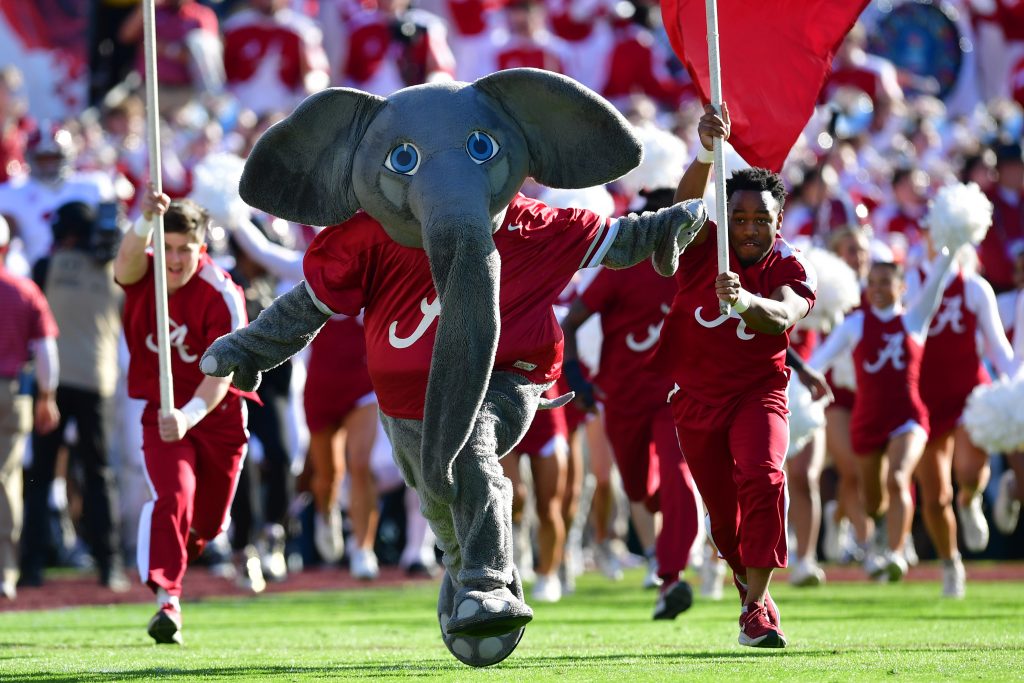
For many years after 1930, the elephant remained an unofficial nickname and a popular chant among fans. It wasn’t until much later that the physical representation of the mascot, Big Al, came into being. The idea for a costumed elephant mascot first took root in the late 1950s and early 1960s. After several attempts at various live animal mascots (including a black bear at one point), the University of Alabama finally introduced a costumed elephant mascot during the 1960 season.
Big Al made his official debut at the 1960 Sugar Bowl, marking a significant milestone in the mascot’s evolution. Initially, the costume was rather rudimentary, but over the years, it developed into the beloved, friendly, and imposing figure seen today. Big Al quickly became a staple at games, rallies, and public appearances, bringing the “elephant” imagery to life in a tangible and endearing way. His presence allowed younger fans to connect with the tradition and provided a charismatic symbol for the team that transcended mere verbal association.
Integration into Campus Life
The elephant motif has permeated every aspect of life at the University of Alabama and well beyond the athletic fields. Walking across the Tuscaloosa campus, visitors will encounter numerous statues and artistic renderings of elephants. From the formidable bronze elephant welcoming visitors to the Mal Moore Athletic Facility to smaller, playful sculptures scattered around, the elephant is omnipresent. The university’s official merchandise, from t-shirts to coffee mugs, proudly displays elephant logos alongside the “A” or Crimson Tide script.
This deep integration reflects how deeply rooted the mascot is in the institution’s identity and the local culture. It’s not just a symbol for the football team; it’s a symbol for the university itself, representing its history, its values, and its community. Fan traditions, such as the famous “Rammer Jammer Yellow Hammer” cheer, often incorporate references to the elephant, further weaving it into the fabric of shared experiences and collective memory. The elephant has become a unifying emblem, transcending sports to represent the spirit of Alabama itself.
The Enduring Mystery of the “Crimson Tide” Name
It’s worth noting that while the elephant is the beloved mascot, the teams are still officially known as the Crimson Tide. This dual identity is another intriguing facet of Alabama’s local culture. The “Crimson Tide” moniker originated from a 1907 football game between Alabama and Auburn, when a newspaper editor, Henry P. Snow, described the muddy field, stained crimson from rain and blood, and the charging Alabama players as a “crimson tide.”

Thus, the “Crimson Tide” name speaks to a specific historical event and a more abstract, powerful force of nature. The elephant, however, provides a tangible, relatable, and imposing figure to embody that force. The two names, though separate in origin, work in tandem to create a comprehensive and formidable identity. For tourists, understanding this distinction adds another layer of appreciation for the richness of Alabama’s sports history and cultural narratives, demonstrating how different elements can converge to form a unique local identity.
The Elephant’s Symbolism in Alabama’s Cultural Tapestry
The enduring popularity of the elephant mascot is not just a quirk of history; it’s deeply rooted in the powerful symbolism it conveys. The characteristics of an elephant—strength, resilience, wisdom, and loyalty—mirror the very ideals cherished by the University of Alabama and its passionate fanbase. This profound connection ensures the elephant remains an essential part of Alabama’s cultural identity.
Strength, Power, and Resilience
The initial observation of the 1930 team as “Big Elephants” was entirely about their on-field dominance. Elephants are known for their immense physical strength, their ability to move with unstoppable force, and their incredible resilience. These traits perfectly align with the philosophy and historical success of the Alabama football program. The Crimson Tide is renowned for its powerful offensive and defensive lines, its ability to run over opponents, and its unwavering resolve in the face of adversity.
For fans, the elephant symbolizes the unwavering strength and tenacity they expect from their team. It represents a program that consistently competes at the highest level, overcoming challenges and maintaining a standard of excellence. This symbolism resonates deeply with the local populace, particularly in a state where football is not just a sport but a significant cultural institution. The elephant, therefore, is more than just a mascot; it’s a manifestation of collective pride, ambition, and an enduring belief in victory.
Community and Tradition
Beyond raw power, the elephant also represents community and tradition, two cornerstones of Alabama’s local culture. Elephants are social animals, known for their strong family bonds and herd mentality. This mirrors the tight-knit community of Alabama fans, alumni, and residents who share an unbreakable bond through their allegiance to the Crimson Tide. Game days in Tuscaloosa are not just sporting events; they are massive community gatherings, fostering a sense of belonging and shared identity.
The mascot acts as a rallying point, a common symbol that unites generations of fans. From grandparents who remember the early days of the elephant nickname to young children seeing Big Al for the first time, the elephant is a thread that connects past, present, and future traditions. For tourists, observing this deep communal connection, often expressed through elephant-themed paraphernalia and enthusiastic chants, offers an authentic glimpse into the unique social fabric of the state.
Economic and Social Impact
The pervasive presence of the elephant mascot, and the football culture it epitomizes, also has a significant economic and social impact on Alabama. Game days, particularly those hosted in Tuscaloosa at Bryant-Denny Stadium, transform the city into a bustling hub of activity. Hotels, restaurants, and local businesses thrive, catering to thousands of visitors who flock to witness the Crimson Tide in action.
The sale of elephant-themed merchandise, from jerseys to garden flags, contributes substantially to the local economy and reinforces brand loyalty. Socially, the mascot provides a non-political, unifying force, bringing people together from diverse backgrounds to celebrate a shared passion. For tourists, participating in or even just observing this vibrant game day culture, with the elephant at its heart, offers an unparalleled authentic experience of Alabama life and its defining cultural elements.
Experiencing the Elephant Culture as a Tourist
For tourists visiting Alabama, understanding the elephant mascot isn’t just a historical footnote; it’s an invitation to engage with a vibrant local culture. There are numerous ways to immerse oneself in this unique aspect of the state’s identity, offering memorable experiences and deeper insights into what makes Alabama tick.
Game Day Immersion
The ultimate way to experience Alabama’s elephant culture is to attend a Crimson Tide football game in Tuscaloosa. On game day, the entire city transforms into a festival of crimson and white. The air crackles with excitement, the smell of barbecue fills the streets, and thousands of fans, many adorned with elephant logos, gather for pre-game tailgating. Witnessing the “Walk of Champions” as the players arrive at Bryant-Denny Stadium is an electrifying experience.
Inside the stadium, the atmosphere is unparalleled. Chants of “Roll Tide!” echo through the stands, and the appearance of Big Al, riding in on a golf cart or dancing on the sidelines, ignites the crowd. For a tourist, this provides not just a sporting event but a full cultural immersion, demonstrating the passion, tradition, and community spirit that the elephant mascot embodies. It’s an activity that vividly brings the origins of the mascot to life.
Exploring the Campus
Even outside of football season, the University of Alabama campus in Tuscaloosa offers plenty to explore for those interested in the elephant lore. A self-guided tour of the campus will reveal the numerous elephant statues and art installations that celebrate the mascot. The Paul W. Bryant Museum is a must-visit, housing an extensive collection of memorabilia, trophies, and exhibits detailing the rich history of Alabama football, including the origins and evolution of the elephant mascot.
The museum provides a deeper historical context, explaining how the early teams earned their powerful nickname and how coaches like Bear Bryant solidified its place. It’s an insightful activity that allows visitors to trace the narrative from a casual observation to a deeply cherished symbol, offering a comprehensive understanding of this unique piece of local culture.
Souvenirs and Local Pride
No visit to Alabama would be complete without taking home a piece of its iconic elephant culture. Shops around Tuscaloosa and throughout the state offer an astounding array of elephant-themed souvenirs. From plush toys of Big Al to elegant elephant jewelry, clothing, and home decor, there’s something for every taste. These souvenirs are more than just trinkets; they are tangible representations of local pride and a unique cultural identity.
For tourists, purchasing an elephant-themed item is a way to commemorate their visit and take a piece of Alabama’s distinctive character with them. It’s a tip for travelers to engage with the local economy and embrace the symbolic connection to a legacy of strength, tradition, and unwavering community spirit. The omnipresence of the elephant in local commerce further underscores its indelible mark on the state’s cultural landscape.
The story of “Why Is The Mascot For Alabama An Elephant?” is far more than just a whimsical tale. It’s a profound narrative woven into the very fabric of Alabama’s local culture, originating from a moment of spontaneous awe and evolving into a symbol of unparalleled strength, community, and tradition. For any tourist, delving into this history provides invaluable insight into the passion that defines the state and offers a unique lens through which to appreciate its vibrant identity. The elephant, truly, is the heart of the Crimson Tide, a powerful emblem of Alabama spirit that continues to capture imaginations and ignite loyalties.
LifeOutOfTheBox is a participant in the Amazon Services LLC Associates Program, an affiliate advertising program designed to provide a means for sites to earn advertising fees by advertising and linking to Amazon.com. Amazon, the Amazon logo, AmazonSupply, and the AmazonSupply logo are trademarks of Amazon.com, Inc. or its affiliates. As an Amazon Associate we earn affiliate commissions from qualifying purchases.