
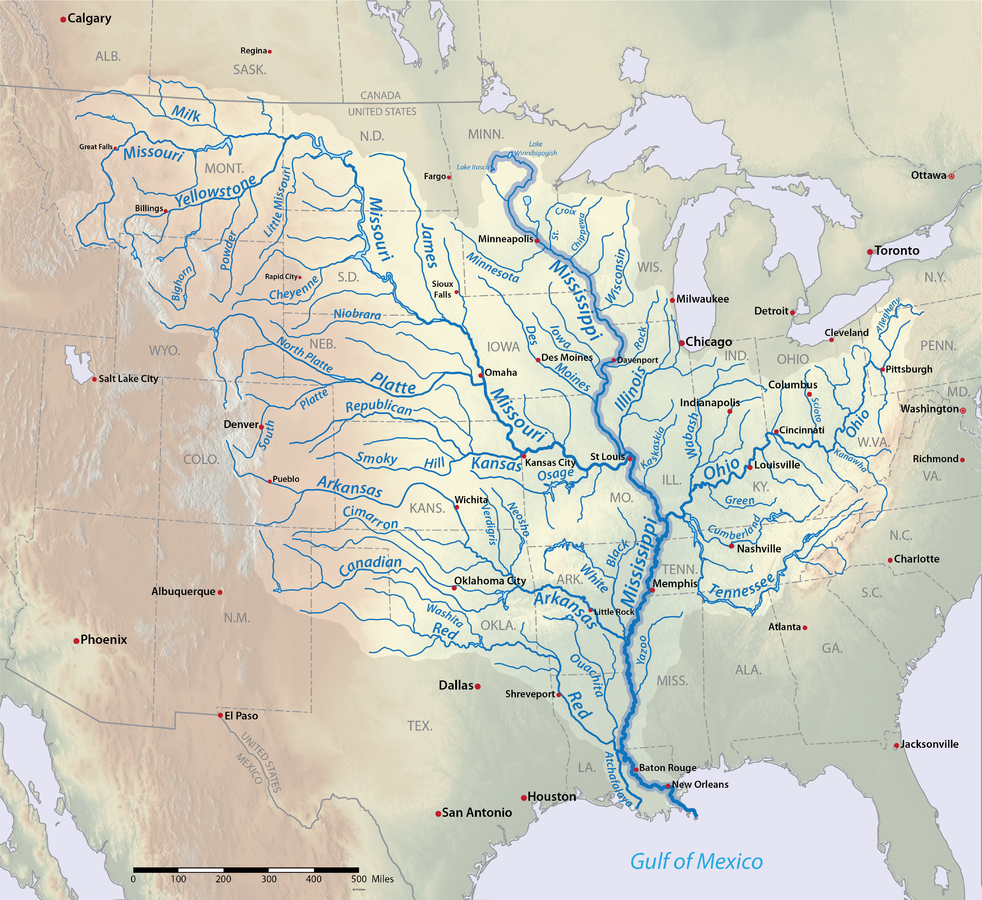
The Mississippi River is more than just a waterway; it is an epic natural monument, a pulsating artery that has shaped the history, ecology, and culture of the United States. From its humble beginnings as a small spring in Lake Itasca, Minnesota, it embarks on a meandering journey of approximately 2,340 miles, collecting the waters of 31 states and two Canadian provinces before dramatically emptying into the Gulf of Mexico in Louisiana. Its sheer scale, historical resonance, and ongoing significance make it an indispensable landmark, a testament to both nature’s power and humanity’s enduring connection to the environment. Understanding its importance is to grasp a fundamental piece of the American story itself.
A Lifeline Through the Heart of America
The Mississippi River’s physical presence and natural characteristics establish it as a landmark of profound ecological and geographical importance. It serves as a central spine for the North American continent, dictating landscapes, climates, and ecosystems across an immense swath of land.
Geological Marvel and Natural Bounty
Geologically, the Mississippi River is a marvel, carving and defining the vast alluvial plain that bears its name. Its drainage basin, the third largest in the world, covers over 1.2 million square miles, or about 40% of the continental United States. This colossal system is fed by an intricate network of tributaries, including major rivers like the Missouri, Ohio, and Arkansas Rivers, each contributing to its immense flow and sediment load. Over millennia, the river’s powerful currents have deposited rich silt, creating some of the most fertile agricultural lands on Earth, particularly in the Mississippi Delta. The dynamic nature of the river, with its floods and meanders, has continuously reshaped the landscape, creating oxbow lakes, bayous, and sandbars that are unique geological features. The scale of this natural process is staggering, making the river itself a living, breathing geological exhibit.
Ecological Corridor and Biodiversity Hotspot
Beyond its geological impact, the Mississippi River system is an unparalleled ecological corridor and a biodiversity hotspot. It supports an astonishing array of flora and fauna, serving as a critical habitat for hundreds of species of fish, birds, mammals, and reptiles. Its vast wetlands, including the extensive floodplains and backwater lakes, act as vital nurseries for many aquatic species and provide essential resting and feeding grounds for migratory birds traversing the Mississippi Flyway. Over 60% of all North American bird species utilize this flyway during their annual migrations, making the river indispensable for continental bird populations. Species like the American Alligator, Paddlefish, and numerous mussel species thrive within its ecosystems. The diverse habitats, from northern forests to southern cypress swamps, underscore the river’s role as a major natural landmark that sustains life on an immense scale.
Shaping History and Human Civilization
The Mississippi River’s importance extends far beyond its natural attributes; it has been a crucible for human civilization and a pivotal force in the development of the United States. Its waters and banks have witnessed millennia of human stories, from indigenous cultures to European exploration and the birth of a nation.
Indigenous Roots and Early Exploration
For thousands of years before European arrival, the banks of the Mississippi River were home to numerous sophisticated Native American cultures. Tribes such as the Choctaw, Chickasaw, Quapaw, and Sioux thrived along its course, relying on its abundant resources for sustenance, transportation, and spiritual practices. The river was their highway, providing access to trade routes and connecting diverse communities. Monumental sites like Cahokia Mounds near modern-day St. Louis, Illinois, stand as powerful testaments to the complex societies that flourished along its floodplains.
The arrival of European explorers marked a new chapter. Hernando de Soto was the first European to document seeing the river in 1541, near present-day Memphis, Tennessee. Later, in the late 17th century, French explorers like Jacques Marquette and Louis Joliet meticulously charted parts of the river, followed by René-Robert Cavelier, Sieur de La Salle, who claimed the entire river basin for France in 1682, naming it “Louisiana” after King Louis XIV. These explorations laid the groundwork for European colonization and geopolitical struggles over control of this vital waterway.
Gateway to American Expansion and Commerce
The Mississippi River’s strategic importance truly blossomed with the growth of the United States. Its control was a pivotal issue leading to the Louisiana Purchase in 1803, arguably the greatest land deal in history, which doubled the size of the nascent nation and secured American access to the entire river. This acquisition, orchestrated by President Thomas Jefferson, solidified the river’s role as the primary artery for westward expansion and commerce.
In the 19th century, the era of steamboats transformed the river into a bustling highway. Goods from the vast interior—cotton, timber, furs, grains—flowed downriver to major ports like New Orleans, while manufactured goods and people moved upstream. River towns like St. Louis, Vicksburg, and Natchez flourished, becoming centers of trade, culture, and innovation. The river was not just a transportation route; it was the engine of economic growth, connecting disparate regions and forging a national identity. Even during the Civil War, control of the Mississippi was deemed critical, with President Abraham Lincoln famously calling it the “spinal column of the rebellion.” Its capture by Union forces significantly crippled the Confederacy.
Economic Engine and Modern-Day Artery
Even in the age of railroads, highways, and air travel, the Mississippi River remains an indispensable economic engine, vital for agriculture, industry, and the energy needs of the United States. It continues to be a landmark of immense functional importance in the modern world.
Agricultural Powerhouse
The fertile soils of the Mississippi River basin, particularly in the Mississippi Delta region, are some of the most productive agricultural lands globally. The nutrient-rich sediment deposited by the river over millennia creates ideal conditions for cultivating a vast array of crops. This region is a major producer of corn, soybeans, wheat, cotton, and rice, feeding not only the United States but also contributing significantly to global food supplies. The river itself provides irrigation water for these extensive farms, ensuring their productivity. The agricultural output supported by the Mississippi basin is a cornerstone of the American economy, making the river a silent partner in countless meals consumed daily around the world.
Crucial for Trade and Industry
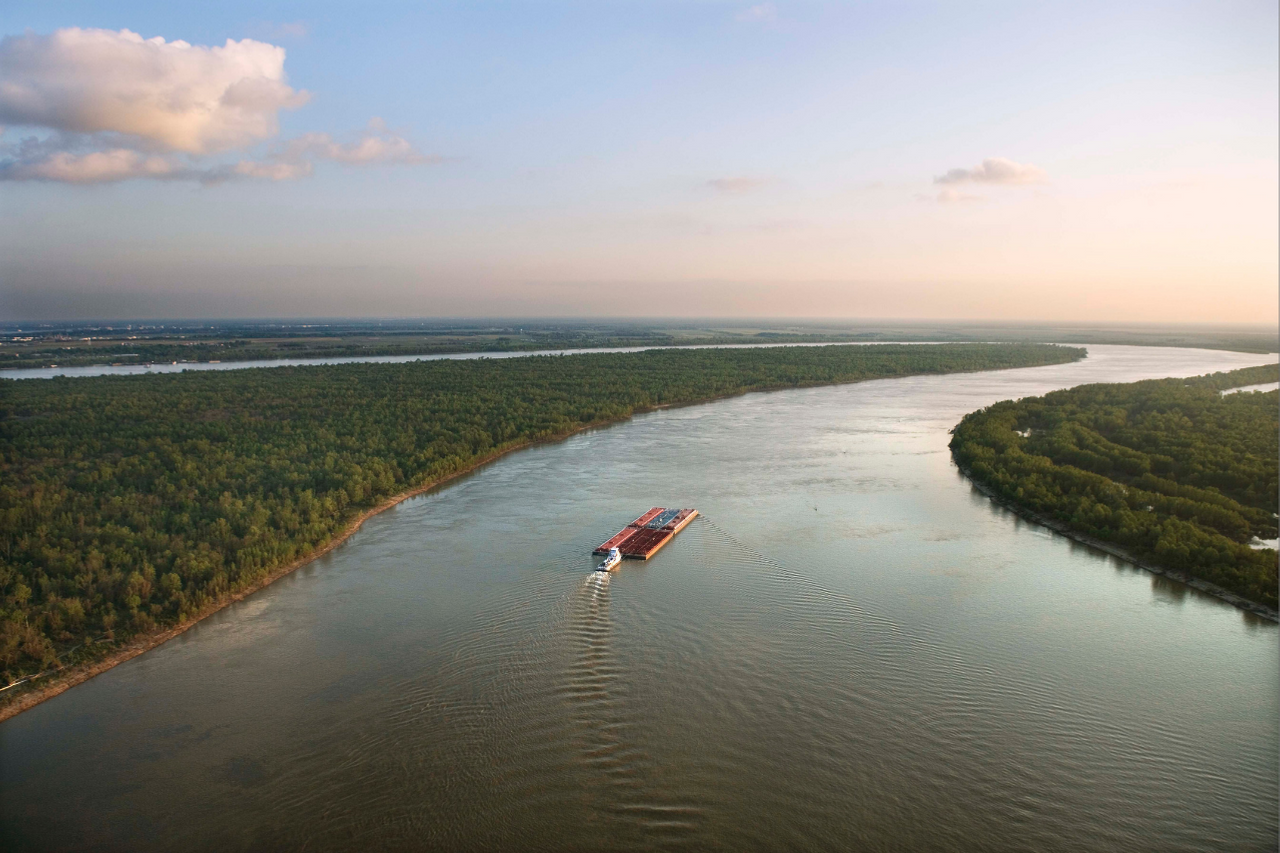
The Mississippi River system remains a vital commercial waterway, facilitating the movement of colossal amounts of cargo. It is one of the world’s busiest inland navigation systems, handling approximately 500 million tons of freight annually. Barges, often lashed together into powerful tows, efficiently transport bulk commodities such as grain, coal, petroleum products, chemicals, and construction materials at a fraction of the cost of rail or road transport. Major ports along the river, including New Orleans, Baton Rouge, St. Louis, and Memphis, serve as critical hubs for domestic and international trade, connecting the heartland of America to global markets. The logistical advantages offered by the river are irreplaceable for many industries, underscoring its enduring economic importance as a national landmark.
Water Resources and Energy Generation
Beyond transport, the Mississippi River is a crucial source of freshwater for millions of people and industries. Numerous cities and towns along its banks rely on the river for drinking water, industrial processes, and wastewater assimilation. Its waters are also used extensively for irrigation, supporting the agricultural sector mentioned earlier. Furthermore, some sections of the Mississippi and its tributaries are harnessed for hydroelectric power generation, contributing to the nation’s energy supply. While not as dominant in hydroelectricity as some mountain rivers, the collective power generated throughout its basin is significant, further cementing its multifaceted role as an economic and utility landmark.
Cultural Icon and Inspiration
The Mississippi River has transcended its physical and economic roles to become a profound cultural icon, deeply embedded in the American psyche. Its majestic flow has inspired generations of artists, writers, and musicians, shaping narratives and reflections on American identity.
Literary and Musical Muse
Few natural landmarks have so profoundly influenced American literature as the Mississippi River. Mark Twain, arguably its most famous chronicler, immortalized the river in his classic works like “The Adventures of Tom Sawyer” and “Adventures of Huckleberry Finn.” His vivid descriptions of river life, steamboat pilots, and the diverse characters who populated its banks created enduring images that define a significant part of American literary heritage. The river often serves as a metaphor for freedom, journey, and the complexities of human nature.
The Mississippi also forms the geographical and spiritual cradle of American music, particularly the blues. Originating in the Mississippi Delta region, the blues sprang from the experiences of African American laborers in the fertile, yet challenging, river valley. Its mournful melodies and raw lyrics reflected the hardships and hopes of a people, eventually influencing jazz, rock and roll, and countless other genres. The river’s influence can be heard in the works of legendary musicians like B.B. King, Muddy Waters, and Robert Johnson, solidifying its place as a landmark of profound musical inspiration.
A Symbol of American Identity
The Mississippi River embodies many facets of American identity. It represents perseverance, with its unstoppable flow from source to sea; adventure, as a pathway for exploration and discovery; and the melting pot, bringing together diverse cultures and economies along its course. It is a symbol of both unity and division, having served as a border and a battleground, yet ultimately connecting the vast expanses of the nation. For many, the river represents the spirit of the American frontier, a constant reminder of the country’s origins and its continuous evolution. Its enduring presence as a landmark offers a sense of stability and historical continuity in a rapidly changing world.
Tourism and Recreation
While the “Travel” category is separate, the Mississippi River as a landmark inherently draws visitors interested in its history, beauty, and recreational opportunities. People are drawn to its scenic overlooks, historic river towns, and the opportunity to experience its grandeur. From paddlewheel boat tours in New Orleans to fishing and birdwatching in its northern reaches, the river offers a tangible connection to the natural and cultural history of the United States. Its iconic status makes it a destination for those seeking to explore a vital piece of American heritage and marvel at its natural majesty.
Challenges and Conservation
Despite its immense importance, the Mississippi River faces significant challenges in the modern era, underscoring the critical need for its ongoing preservation and protection as a national landmark.
Environmental Concerns
The extensive human activities along the Mississippi River have taken a toll on its ecosystem. Pollution from agricultural runoff (nitrogen and phosphorus), industrial discharges, and urban wastewater contributes to diminished water quality. This pollution leads to phenomena like the “dead zone” in the Gulf of Mexico at the river’s mouth, where nutrient overload causes massive algal blooms, depleting oxygen and harming marine life. Habitat loss and fragmentation due to river engineering projects, such as dams, levees, and channelization, have also impacted native species and altered natural hydrological processes. Invasive species further threaten the delicate balance of its ecosystems, posing a continuous challenge to its ecological health.
Ongoing Preservation Efforts
Recognizing the multifaceted importance of this landmark, numerous organizations, government agencies, and communities are engaged in extensive efforts to conserve and restore the Mississippi River system. These initiatives include projects to reduce nutrient pollution, restore wetlands, manage floodplains more sustainably, and protect critical habitats for endangered species. Collaborative approaches involving multiple states and stakeholders are essential for addressing the complex issues facing such a vast and interconnected system. Ensuring the health of the Mississippi River is not just an environmental imperative but a commitment to preserving a landmark that is integral to the nation’s well-being and identity for future generations.
In conclusion, the Mississippi River is far more than a geographical feature; it is a monumental landmark that intertwines with the very fabric of the United States. Its importance spans from shaping geological landscapes and sustaining unparalleled biodiversity to fueling economic prosperity, defining historical narratives, and inspiring cultural masterpieces. From its ancient indigenous roots to its modern role as a critical artery for trade and a symbol of American spirit, the Mississippi embodies a rich tapestry of nature, history, and human endeavor. Its continued vitality is crucial, not just for the environment and economy, but as a perpetual reminder of America’s grand and intricate story.
LifeOutOfTheBox is a participant in the Amazon Services LLC Associates Program, an affiliate advertising program designed to provide a means for sites to earn advertising fees by advertising and linking to Amazon.com. Amazon, the Amazon logo, AmazonSupply, and the AmazonSupply logo are trademarks of Amazon.com, Inc. or its affiliates. As an Amazon Associate we earn affiliate commissions from qualifying purchases.