
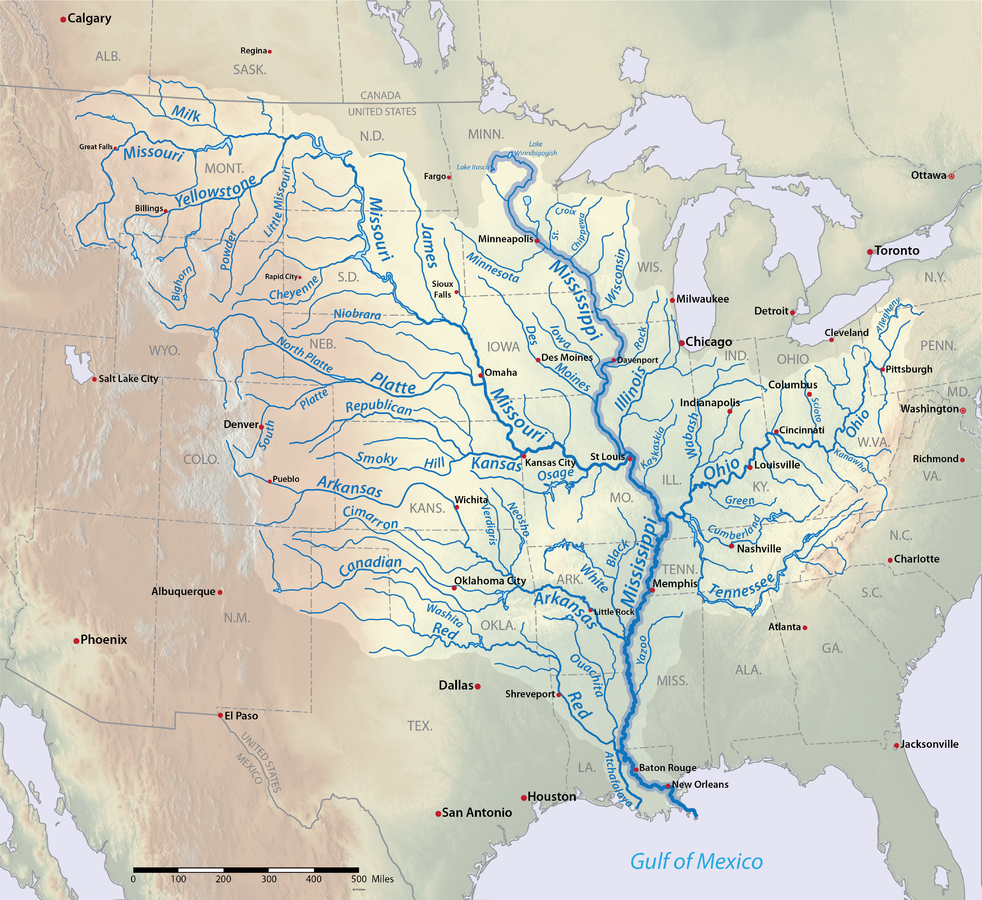
The Mississippi River, a colossal artery carving its way through the heartland of the United States, is far more than just a waterway. It is a monumental landmark, a living testament to the nation’s history, a vital economic engine, and an ecological marvel. Spanning over 2,300 miles from its source at Lake Itasca in Minnesota to its delta in the Gulf of Mexico, the Mississippi drains all or part of 32 U.S. states and two Canadian provinces. Its immense watershed, the fourth largest in the world, covers approximately 41% of the contiguous United States. This incredible scope alone hints at its profound significance, but to truly understand its importance, one must delve into its multifaceted roles across history, economy, ecology, and culture. As a defining natural landmark, the Mississippi River has shaped the very fabric of the nation, influencing settlement patterns, facilitating trade, inspiring art, and sustaining countless species. Its story is inextricably linked with the American narrative, reflecting both triumphs and challenges, and continues to be a cornerstone of the country’s identity.
A Lifeline of Commerce and Trade
From the earliest days of exploration to the sophisticated logistics of modern commerce, the Mississippi River has served as an indispensable transportation artery, fueling economic growth and connecting diverse regions of the United States. Its broad, navigable channel allowed for the efficient movement of goods and people, playing a pivotal role in the nation’s development.
Historical Transportation Artery
The historical significance of the Mississippi River as a trade route dates back thousands of years to Native American civilizations that utilized its currents for travel and exchange. With the arrival of European explorers and settlers, its importance surged dramatically. French explorers, such as René-Robert Cavelier, Sieur de La Salle, claimed the entire river basin for France in 1682, recognizing its strategic value for trade and territorial expansion. Early settlements like New Orleans, founded in 1718, quickly grew into crucial port cities, handling goods from the vast interior of the continent.
The advent of the steamboat in the 19th century revolutionized river travel. These iconic vessels transformed the Mississippi into a bustling highway, enabling rapid and efficient transport of agricultural products like cotton and corn, timber, and manufactured goods between upstream communities and the port of New Orleans. Cities such as St. Louis, Memphis, and Vicksburg flourished as commercial hubs along its banks, their economies intrinsically linked to the river’s flow. The river connected the nascent industries of the Midwest with the bustling international trade routes accessible through the Gulf of Mexico, effectively serving as the economic backbone for a rapidly expanding nation.
Modern Economic Engine
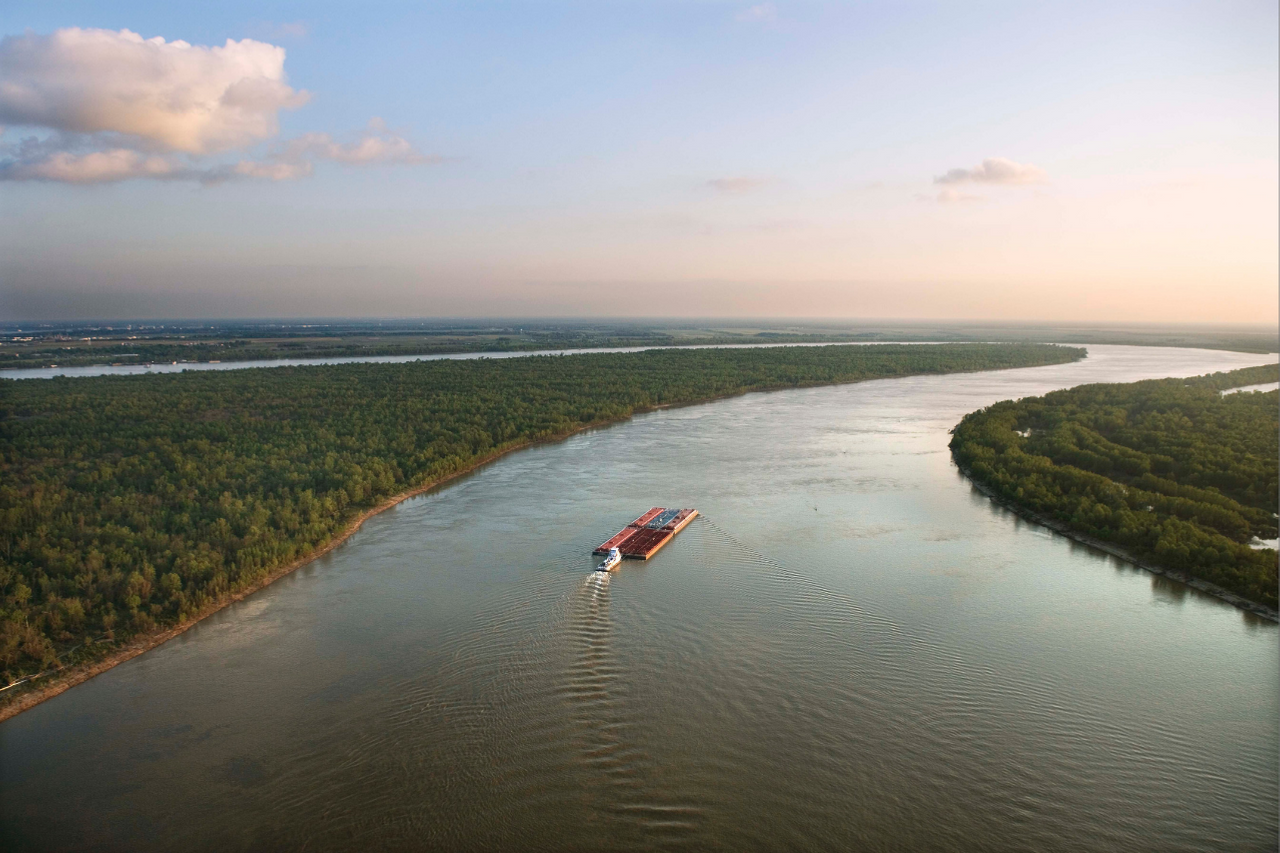
Even in the age of railroads and interstate highways, the Mississippi River remains a powerhouse of modern commerce. It constitutes one of the largest and most vital inland navigation systems in the world. Enormous towboats push fleets of barges, each capable of carrying the equivalent cargo of many trucks or train cars, efficiently transporting massive quantities of bulk commodities. This barge traffic is crucial for the United States’ economy.
The river transports an estimated 500 million tons of cargo annually, including over 60% of the nation’s grain exports, significant portions of petroleum, coal, steel, chemicals, and building materials. The low cost of river transport compared to other modes makes American agricultural and industrial products more competitive on global markets. Major ports along the Mississippi, particularly the Port of New Orleans, continue to be among the busiest in the world, facilitating billions of dollars in trade. The river’s network of locks and dams, maintained by the U.S. Army Corps of Engineers, ensures navigability throughout much of its length, highlighting the continuous investment in preserving this economic lifeline.
Shaping History and Culture
Beyond its economic functions, the Mississippi River has played an unparalleled role in shaping the historical trajectory and cultural identity of the United States. It has been a stage for exploration, a catalyst for territorial expansion, and a wellspring of unique American cultures and art forms.
Exploration and Expansion
The Mississippi’s vastness and strategic location made it a focal point for colonial powers vying for control of North America. Its discovery by Hernando de Soto in 1541 for Spain, and later extensive exploration by French fur traders and missionaries, underscored its potential. The desire to control the river and its fertile valley was a primary driver behind the Louisiana Purchase in 1803, arguably the single most important land acquisition in U.S. history. This monumental deal, orchestrated by President Thomas Jefferson, doubled the size of the young nation and granted it full control over the entire Mississippi River and its tributaries.
The Louisiana Purchase opened the floodgates for westward expansion. The Mississippi became the gateway for pioneers and settlers venturing into the largely unexplored western territories. The river served as a natural boundary, a defensive line, and a launchpad for further exploration, shaping the geopolitical landscape of the continent and contributing fundamentally to the manifest destiny ideology that propelled the United States across the continent.
Cultural Tapestry
The cultures that developed along the banks of the Mississippi River are as diverse and rich as its waters are long. For millennia, various Native American tribes, including the Choctaw, Chickasaw, Quapaw, and Dakota, built complex societies deeply integrated with the river’s rhythms. Their mound-building civilizations, like Cahokia near present-day St. Louis, represent a sophisticated understanding of the river’s resources and power.
Later, the blend of French, Spanish, African, and Anglo-American influences along the lower Mississippi created unique cultural expressions, most notably in Louisiana with its distinctive Creole and Cajun traditions, food, and music. The hardship and resilience of communities along the river also gave birth to iconic American art forms. The Blues music of the Mississippi Delta, with its deep roots in African American experiences, profoundly influenced popular music worldwide, from jazz to rock and roll.
The river has also captivated the imaginations of countless writers, none more famously than Mark Twain. His seminal works, such as “The Adventures of Tom Sawyer” and “Adventures of Huckleberry Finn,” immortalized the Mississippi as a character in itself, a symbol of freedom, adventure, and the soul of America. The narratives woven around the river have become integral to the national literary canon and collective memory.
Ecological and Environmental Significance
As a natural landmark, the Mississippi River is not only a conduit for human activity but also a cornerstone of ecological health, supporting an astounding array of biodiversity and providing essential natural resources to millions.
Biodiversity Hotspot
The diverse habitats along the Mississippi River and its floodplain make it one of the most biologically productive ecosystems in North America. Its waters and riparian zones support over 120 species of fish, including paddlefish, sturgeon, and the iconic catfish. The extensive wetlands, forests, and oxbow lakes of its floodplain are critical breeding grounds and nurseries for amphibians, reptiles, and mammals, including deer, bobcats, and otters.
Perhaps most significantly, the Mississippi River is a superhighway for migratory birds. The Mississippi Flyway, one of four major migratory bird routes in North America, channels an estimated 40% of the continent’s migratory waterfowl and 60% of all North American birds through its corridor. This makes the river’s health paramount for global avian populations, impacting species that breed in the Arctic and winter in the Caribbean or South America. The river’s unique ecological role underscores its importance not just to the United States but to the broader global ecosystem.
Water Resources and Agriculture
The Mississippi River is an invaluable source of fresh water for agriculture, industry, and municipal use. The fertile soils of the Mississippi River Basin, enriched by centuries of sediment deposition, form one of the most productive agricultural regions on Earth. The vast corn, soybean, and wheat fields of the Midwest rely heavily on the river and its tributaries for irrigation, earning the region the moniker “America’s breadbasket.”
Millions of Americans also depend on the Mississippi for their drinking water. Major cities like St. Louis, Memphis, and New Orleans draw directly from the river, highlighting its critical role in sustaining human populations and urban development. Its extensive network also facilitates hydropower generation, further contributing to the nation’s energy supply.
Challenges and Conservation
Despite its immense value, the Mississippi River faces significant environmental challenges, underscoring the urgent need for conservation efforts. Pollution from agricultural runoff, industrial discharge, and urban wastewater has impacted water quality throughout the basin. The cumulative effect of nutrient pollution, particularly nitrogen and phosphorus, from the vast agricultural lands drains into the Gulf of Mexico, creating a massive “dead zone” where oxygen levels are too low to support most marine life.
Additionally, the river’s natural hydrology has been extensively engineered with levees, dams, and channelization for flood control and navigation. While these modifications have provided economic benefits, they have also altered natural floodplains, reduced wetland habitats, and disrupted sediment flow to the delta, contributing to land loss in Louisiana. Conservation groups, government agencies, and local communities are actively engaged in restoring habitats, improving water quality, and developing sustainable management practices to protect this irreplaceable landmark for future generations.
A Symbol of National Identity
Ultimately, the Mississippi River transcends its practical functions to become a profound symbol of American national identity, embodying the spirit of exploration, resilience, and connection that defines the United States.
Geographical Unifier
Running north to south, the Mississippi River acts as a powerful geographical unifier, connecting disparate regions of the United States. It links the agricultural heartland of the Midwest with the industrial North and the vibrant cultures of the South. It once marked the frontier but now serves as a central axis, binding together states and communities from diverse landscapes and traditions under a common waterway. This natural connection fostered interdependence and a shared sense of purpose, helping to forge a cohesive national identity from a collection of distinct regions.

Enduring Legacy
The Mississippi River is woven into the very fabric of American consciousness. It appears in countless songs, poems, films, and historical accounts, representing freedom, opportunity, hardship, and the relentless flow of time. It embodies the nation’s journey from a nascent republic to a global power, having witnessed pivotal moments in American history, from the Civil War to the Industrial Revolution.
As an enduring landmark, the Mississippi River continues to inspire and challenge. Its majesty and immense power remind us of nature’s grandeur, while its ongoing environmental struggles highlight the delicate balance between human progress and ecological preservation. The river is a constant presence, a liquid monument that has shaped the land, the people, and the soul of the United States, solidifying its place as one of the most important and recognizable natural landmarks in the world.
LifeOutOfTheBox is a participant in the Amazon Services LLC Associates Program, an affiliate advertising program designed to provide a means for sites to earn advertising fees by advertising and linking to Amazon.com. Amazon, the Amazon logo, AmazonSupply, and the AmazonSupply logo are trademarks of Amazon.com, Inc. or its affiliates. As an Amazon Associate we earn affiliate commissions from qualifying purchases.