
When travelers first arrive in New Orleans, their expectations are often dominated by images of Bourbon Street, jazz clubs, and the culinary decadence of the French Quarter. Yet, rising prominently above the Warehouse District is an institution that seems, at first glance, to defy the city’s festive reputation: The National World War II Museum. It is a sprawling, immersive monument to the greatest conflict in human history. Many visitors find themselves asking: why here? Why did the United States choose a city synonymous with Mardi Gras and humidity to house its definitive tribute to the global fight for freedom?
The Higgins Boat Legacy: A Local Invention That Changed the War
The primary reason for the museum’s existence in this specific Louisiana city is a man named Andrew Higgins. During the interwar period, Higgins operated a small boat-building company in the city, specializing in shallow-draft vessels designed to navigate the marshy, difficult bayous of the Mississippi River delta.
Innovation in the Bayou
Higgins understood that to traverse the shallow waters of the south, he needed boats that were light, maneuverable, and capable of landing on mudflats without becoming stuck. When the military began planning for amphibious invasions, they struggled to find a vessel that could carry troops onto beaches without requiring a deep-water pier.
The Turning Point of the Conflict
Higgins adapted his designs to create the Higgins Boat, or the LCVP (Landing Craft, Vehicle, Personnel). These vessels became the backbone of the Allied assault. Dwight D. Eisenhower, the Supreme Allied Commander, famously credited Higgins with winning the war, noting that without his craft, the Normandy landings would have been impossible. Because this technological revolution originated in the shipyards of New Orleans, the city became the natural home for the museum dedicated to the men and women who utilized these machines to turn the tide.
Preserving the “Greatest Generation”
The museum was originally established in 2000 as The National D-Day Museum. The choice of location was deeply personal and strategic, rooted in the desire to preserve the memories of those who served. By the time the museum was conceived, the veterans of World War II were aging, and the need to record their oral histories became a matter of urgency.
Connecting History to the Local Fabric
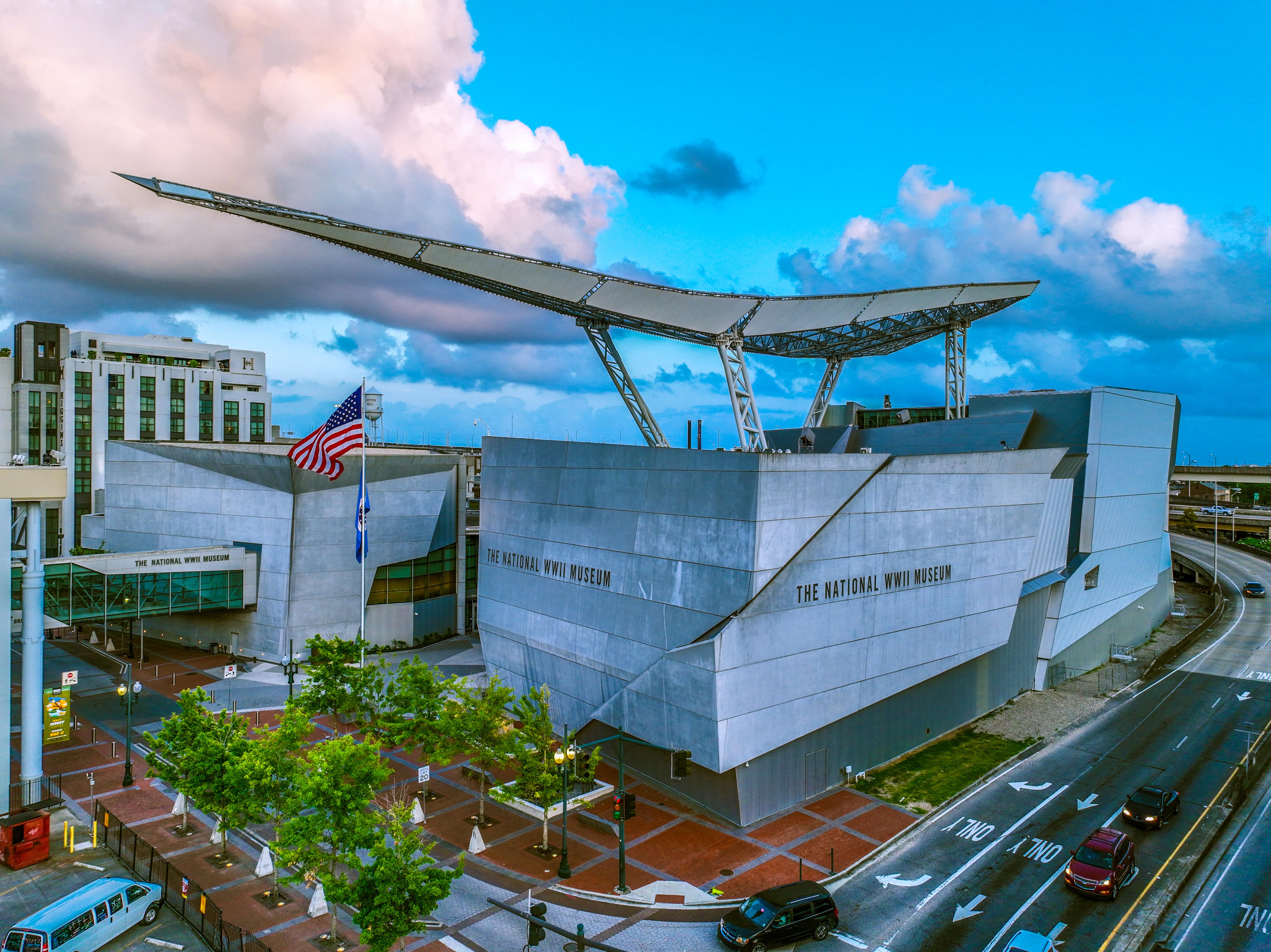
The New Orleans site was selected to honor the local workforce—thousands of laborers, many of whom were women and minorities—who built the landing craft that carried Allied troops into history. The museum serves not just as a repository of artifacts, but as a living bridge between the wartime efforts on the home front and the reality of the front lines.
Expansion into a Global Narrative
Over the decades, the museum expanded far beyond its original scope. Today, it covers the entirety of the European Theater and the Pacific Theater, evolving into the official world war museum of the United States. Its location in New Orleans now serves a logistical purpose as well: the city’s robust tourism infrastructure makes it an accessible destination for millions of domestic and international visitors who want to learn about this pivotal era.
The Museum as an Architectural and Cultural Landmark
The National World War II Museum has grown into a multi-building campus, transforming the landscape of the city’s Warehouse District. The architecture itself reflects the gravity of the subject matter while integrating into the vibrant life of the surrounding urban environment.
A Beacon of Education and Remembrance
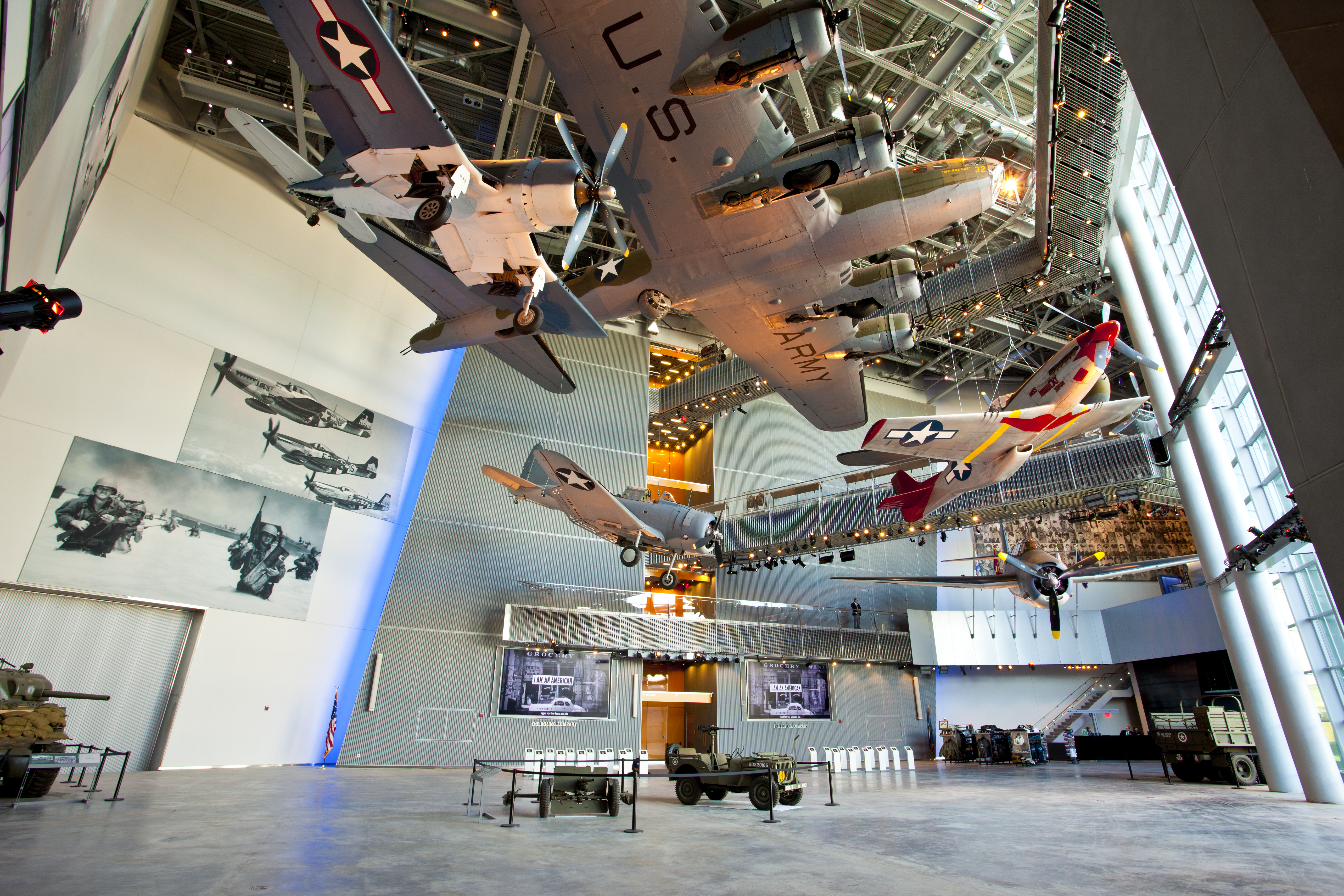
The complex includes the Solomon Victory Theater, home to the 4D experience “Beyond All Boundaries,” and the US Freedom Pavilion: The Boeing Center, which houses massive aircraft suspended from the ceiling. These displays bring the scale of the conflict into clear focus. The decision to place such a significant landmark here has arguably revitalized the area, creating a cultural corridor that encourages visitors to step out of the French Quarter and into a space of historical reflection.
Why the Location Matters Today
By placing the museum in a city known for its resilience—a city that has faced its own share of catastrophic challenges—the institution gains a unique resonance. The narrative of the World War II generation is one of endurance and reconstruction, themes that mirror the history and spirit of New Orleans itself. Visitors often find that the juxtaposition of the city’s celebratory, joyful atmosphere with the somber, profound history held within the museum walls makes for a deeply impactful travel experience. It reminds travelers that history is not just something to be read in textbooks; it is a living thing, shaped by the innovations of ordinary people in local shipyards, and preserved in the heart of the places they called home.
A Must-Visit Destination
For anyone visiting Louisiana, the museum is more than an attraction—it is an essential stop. It challenges the visitor to look past the surface of the city and engage with the global impact of the American experience. From the Higgins Boat display that grounds the history in local industrial genius to the expansive galleries documenting the liberation of Europe and the island-hopping campaigns in the Pacific, the museum provides a comprehensive perspective that is hard to find anywhere else.

The Lasting Impact
The fact that this world-class institution calls New Orleans home is a testament to the city’s enduring role in American history. It ensures that the stories of the Greatest Generation are not confined to a coastal capital or an academic setting but are shared with a diverse audience of travelers who come to the Big Easy in search of culture, flavor, and connection. The museum stands as a beacon of education, drawing millions to understand the sacrifice and ingenuity that defined a century. When you stand in the shadow of a B-17 Flying Fortress, the history becomes tangible, personal, and profoundly moving—solidifying why this World War II memorial is perfectly placed in this vibrant city.
LifeOutOfTheBox is a participant in the Amazon Services LLC Associates Program, an affiliate advertising program designed to provide a means for sites to earn advertising fees by advertising and linking to Amazon.com. Amazon, the Amazon logo, AmazonSupply, and the AmazonSupply logo are trademarks of Amazon.com, Inc. or its affiliates. As an Amazon Associate we earn affiliate commissions from qualifying purchases.