
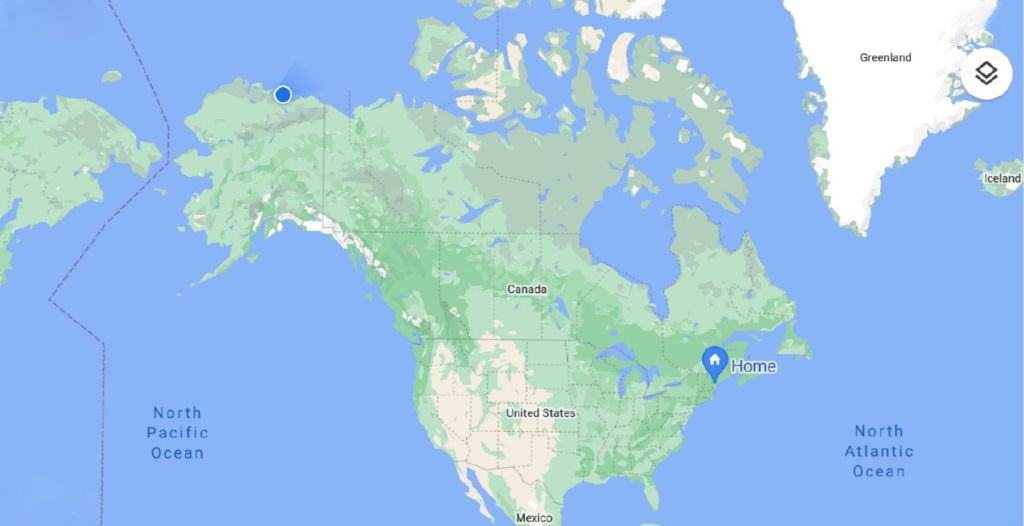
The vast, wild expanse of Alaska holds a certain mystique, a land of towering mountains, shimmering glaciers, and unparalleled wildlife. Its northern neighbor, Canada, shares a similar rugged beauty and a long, often intertwined history. Given this geographical proximity and shared frontier spirit, the question naturally arises: why isn’t Alaska a part of Canada? The answer lies not in a single event, but in a complex tapestry of geopolitical decisions, historical circumstances, and economic realities stretching back centuries.
The Shifting Sands of Sovereignty: From Russian Fur Traders to American Purchase
The story of Alaska’s sovereignty begins not with Canada, but with Russia. For over a century, Russian fur traders and explorers navigated the icy waters and dense forests of the territory, establishing small settlements and engaging in the lucrative sea otter trade. However, by the mid-19th century, Russia found itself financially strained and increasingly concerned about British influence in the region, particularly after the Crimean War.

The Alaskan Purchase: A Strategic Move by the United States
The United States, under the vision of Secretary of State William H. Seward, saw an opportunity. Seward, a staunch expansionist, believed in extending American influence and securing strategic assets in the Pacific. Negotiations with Russia began in earnest, culminating in the signing of the Alaska Purchase Treaty on March 30, 1867. The price tag was a seemingly modest $7.2 million, or about two cents per acre – a sum that earned the acquisition the derisive nickname “Seward’s Folly” by some detractors who viewed the territory as a frozen, uninhabited wasteland.
The purchase was a strategic masterstroke for several reasons. It removed a potential source of conflict with Russia and prevented any European power from gaining a foothold on the Pacific coast of North America. Furthermore, the vast, untapped resources of Alaska, including timber, minerals, and fisheries, were seen as a significant long-term investment. The United States officially took possession of Alaska on October 18, 1867, marking a pivotal moment in the territorial development of North America.
The Unfolding of the Canadian Pacific Northwest
Meanwhile, the development of Western Canada was also underway. The British Columbia colony, which would later form the basis of the province of British Columbia, was established in 1858, largely in response to the gold rushes in the region. The desire to consolidate British interests and create a transcontinental railway connecting the East and West coasts became a driving force for Canadian Confederation, which officially occurred in 1867, the same year as the Alaska Purchase.
Early Border Delimitations and Disagreements
The establishment of a clear border between the newly acquired Alaskan Purchase and the developing Canadian territories was a complex undertaking. Early treaties and surveys, particularly the Treaty of 1825 between Great Britain and Russia, had attempted to define the boundaries, but these were often vague and open to interpretation. The southern border, separating Alaska from British Columbia, proved to be a particular point of contention.
The discovery of gold in the Yukon in the late 19th century intensified these border disputes. Both the United States and Canada claimed jurisdiction over vital port towns and passages, such as the Chilkoot Pass and the White Pass, which were crucial for accessing the goldfields. These disagreements led to the formation of the Alaska Boundary Tribunal in 1903, which ultimately resolved many of the outstanding territorial claims, largely in favor of the United States, solidifying the current border.
The Allure of Distinct National Identities
Beyond the historical and geopolitical factors, the distinct national identities of the United States and Canada played a significant role in the separation of Alaska. Both nations developed along different paths, influenced by their colonial histories, political systems, and cultural values.
Divergent Paths of Development and Governance
From its inception, the United States was forged through revolution and a strong emphasis on individual liberty and democratic ideals. This ethos permeated its expansionist policies, including the acquisition of Alaska. Canada, on the other hand, evolved from a British dominion, maintaining closer ties to the monarchy and developing a more parliamentary system of governance with a focus on multiculturalism and peace, order, and good governance.
These divergent paths meant that when the question of Alaska’s future was being decided, the two nations were already distinct entities with established national narratives. The idea of Alaska integrating into the already vast and rapidly expanding United States aligned with American ambitions. Conversely, there was no significant movement or political will within Canada to acquire or absorb such a remote and resource-intensive territory at that time.
Economic Realities and Resource Management
The economic considerations surrounding Alaska also contributed to its separate destiny. The United States, with its burgeoning industrial base and expanding markets, was better positioned to exploit the immense natural resources of Alaska, including minerals like gold and later oil, as well as its rich fishing grounds.
Canada, while rich in its own natural resources, was a younger nation with its own developmental priorities. The logistical challenges and financial investments required to develop and manage a territory as large and remote as Alaska would have been a significant undertaking for the Canadian government in the late 19th and early 20th centuries. The economic trajectory and strategic interests of the United States were simply more aligned with the development and governance of Alaska.
Modern Connections and Distinct Futures
Today, Alaska and its Canadian neighbors share a unique relationship. The vast boreal forests and arctic landscapes create a shared ecological heritage, and cross-border tourism and trade are common. Visitors often travel between the two regions, experiencing the complementary wonders of the North. For example, cruise ship passengers might embark from Vancouver, Canada, and sail north to explore the fjords and wildlife of Alaska, including iconic sights like the Mendenhall Glacier or the Denali National Park and Preserve.
Cultural Exchange and Shared Wilderness
The cultural exchange between Alaska and Canada is evident in many ways, from shared Indigenous traditions to the rugged individualism that characterizes life in the North. Both regions attract adventurers and nature enthusiasts seeking the raw beauty of the wilderness, whether it’s hiking in Banff National Park in Canada or exploring the remote Alaskan coastline.

A Testament to Geopolitical Decisions
Ultimately, the question of why Alaska isn’t part of Canada is a testament to a series of critical geopolitical decisions made by past leaders. The foresight of William H. Seward, the complex negotiations with Russia, the establishment of clear territorial boundaries, and the divergent national trajectories of the United States and Canada all contributed to the current geopolitical map. While the two nations share a continent and many similarities, Alaska remains a distinctly American frontier, a vast and untamed territory that continues to capture the imagination of travelers and adventurers worldwide. The story of its separation is a fascinating chapter in the history of North American development and a reminder of how historical circumstances and strategic choices shape the world we inhabit.
LifeOutOfTheBox is a participant in the Amazon Services LLC Associates Program, an affiliate advertising program designed to provide a means for sites to earn advertising fees by advertising and linking to Amazon.com. Amazon, the Amazon logo, AmazonSupply, and the AmazonSupply logo are trademarks of Amazon.com, Inc. or its affiliates. As an Amazon Associate we earn affiliate commissions from qualifying purchases.