
Nevada stands as a unique anomaly within the United States, a state where a specific form of sex work, known as prostitution, is legally regulated and permitted in licensed brothels. This legal status is not a recent development but a deeply ingrained aspect of Nevada’s history and its approach to social and economic policy. Understanding why prostitution is legal in Nevada requires delving into its historical context, the legal framework that governs it, and the socio-economic arguments that have sustained its existence. This exploration reveals a complex tapestry woven from the state’s frontier past, pragmatic governance, and a distinctive libertarian ethos that distinguishes it from the rest of the nation.

Historical Roots of Legalized Prostitution in Nevada
The legalization of prostitution in Nevada is intrinsically linked to the state’s development as a frontier territory and later as a state. The harsh realities of early Nevada, characterized by vast, sparsely populated areas, a predominantly male workforce in mining and ranching, and a desire to maintain social order, laid the groundwork for a pragmatic approach to sex work.
Frontier Pragmatism and Social Control
In the 19th century, as Nevada transitioned from a mining boomtown to a more established territory, authorities grappled with the presence of unregulated sex workers. The prevailing sentiment was not one of moral condemnation but of practical management. The aim was to contain the activity, prevent it from spilling into residential areas, and minimize associated crime and public health risks. Early attempts at regulation often involved rudimentary licensing and health checks, a far cry from today’s sophisticated system but indicative of a desire to exert some control over a persistent social phenomenon. The absence of established social institutions and a strong central government meant that local solutions, often driven by economic necessity and the desire for a semblance of order, were prioritized. This pragmatic approach, prioritizing order and containment over outright prohibition, became a foundational element of Nevada’s unique regulatory stance.
The Influence of Gaming and Tourism
As Nevada‘s economy evolved, particularly with the rise of the gaming industry in cities like Reno and later Las Vegas, the provision of entertainment and leisure activities for visitors became paramount. Prostitution, within a controlled environment, was seen by some as another facet of this entertainment landscape, contributing to the overall allure and economic vitality of the state. While gaming and prostitution are distinct industries, their historical development in Nevada has often been intertwined, with both benefiting from the state’s laissez-faire approach to certain industries and its focus on attracting tourism and economic investment. The early twentieth century saw the formalization of some of these practices, with counties being granted the authority to regulate or prohibit brothels within their jurisdictions. This paved the way for the structured system that exists today.
The Legal Framework Governing Prostitution in Nevada
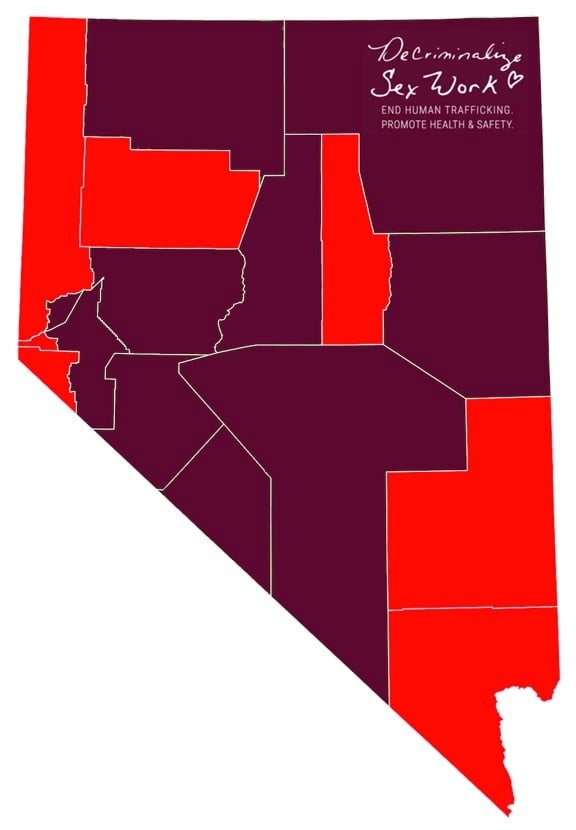
The legality of prostitution in Nevada is not absolute. It is crucial to understand that it is legal only in licensed brothels within specific counties. The Nevada Supreme Court, in the 1940s, upheld the legality of regulated prostitution, solidifying the legal basis for its continued existence. This decision created a patchwork of legal and illegal jurisdictions across the state, a situation that persists to this day.
County-Level Regulation and Prohibition
Nevada‘s prostitution laws are primarily governed at the county level. This means that while it is legal in some counties, other counties have opted to prohibit it entirely. The majority of Nevada‘s population resides in counties where prostitution is illegal, including the heavily populated areas of Clark County (home to Las Vegas) and Washoe County (home to Reno). The counties where legal brothels operate are typically more rural and have historically relied on this industry as a significant source of revenue. These counties enact their own ordinances that dictate the licensing, operation, and health requirements for brothels and the sex workers within them. This decentralized approach reflects Nevada‘s broader tradition of local control and individual liberty.

Licensing and Health Requirements
For a brothel to operate legally in Nevada, it must obtain a license from the relevant county. These licenses are subject to stringent regulations, which typically include:
- Zoning Restrictions: Brothels must often be located in designated areas, separate from residential neighborhoods and schools.
- Health Examinations: Prostitutes are required to undergo regular health check-ups, including mandatory testing for sexually transmitted infections (STIs). These checks are designed to protect both the workers and their clients.
- Operational Standards: Brothels must adhere to specific operational standards related to hygiene, security, and record-keeping.
The regulatory framework aims to create a controlled environment, distinct from the dangers associated with illegal and unregulated sex work found elsewhere. The emphasis is on transparency, public health, and minimizing potential harm.
Socio-Economic Arguments for Legalization
The continued legality of prostitution in Nevada is supported by a range of socio-economic arguments that have shaped public and political opinion over time. These arguments often center on the principles of liberty, economic benefit, and harm reduction.
Individual Liberty and Bodily Autonomy
A core philosophical argument supporting regulated prostitution in Nevada is rooted in the principle of individual liberty and bodily autonomy. Proponents argue that consenting adults should have the right to engage in consensual sexual activities, including those for compensation, without state interference. This perspective aligns with Nevada‘s general reputation for a more libertarian approach to personal freedoms compared to other states. The argument posits that the state should not dictate how individuals choose to earn a living, provided it does not directly harm others.
Economic Contributions and Taxation
Legalized and regulated prostitution contributes significantly to the economies of the counties where it is permitted. Brothels generate revenue through licensing fees and taxes, which can be substantial for smaller counties. This revenue can then be reinvested in local services such as roads, schools, and law enforcement. Furthermore, the industry creates jobs, not only for the sex workers themselves but also for support staff, security personnel, and management. By bringing this activity into the open, the state can tax it, creating a revenue stream that would otherwise be lost to the underground economy. This economic benefit is a pragmatic consideration that has helped to maintain the industry’s legal status.
Harm Reduction and Public Health
One of the most compelling arguments for regulated prostitution is its potential for harm reduction. By bringing sex work into licensed establishments, authorities can implement health and safety protocols that are impossible to enforce in illegal settings. Regular health checks, as mentioned earlier, are a critical component of this. Furthermore, regulated brothels can provide a safer working environment for prostitutes, reducing their vulnerability to exploitation, violence, and human trafficking. The legal framework allows for greater oversight and intervention by law enforcement and health officials, potentially mitigating the risks associated with this often-stigmatized profession. This approach prioritizes the well-being of the individuals involved and the community at large.
In conclusion, the legality of prostitution in Nevada is a product of its unique historical trajectory, a deliberate legal framework at the county level, and a set of enduring socio-economic arguments. It represents a pragmatic approach to a complex social issue, prioritizing regulation, public health, and individual liberty in specific, controlled environments within the Silver State.
LifeOutOfTheBox is a participant in the Amazon Services LLC Associates Program, an affiliate advertising program designed to provide a means for sites to earn advertising fees by advertising and linking to Amazon.com. Amazon, the Amazon logo, AmazonSupply, and the AmazonSupply logo are trademarks of Amazon.com, Inc. or its affiliates. As an Amazon Associate we earn affiliate commissions from qualifying purchases.