
The Louisiana Purchase stands as one of the most transformative events in the history of the United States. In 1803, the young republic acquired approximately 828,000 square miles of territory from France, effectively doubling the size of the nation overnight. While modern history often views this as a masterstroke of diplomacy and expansionism, the deal was mired in intense controversy at the time. From constitutional crises and political infighting to moral debates over slavery and the rights of indigenous populations, the acquisition of this vast landscape—stretching from the Mississippi River to the Rocky Mountains—was anything but a simple transaction.
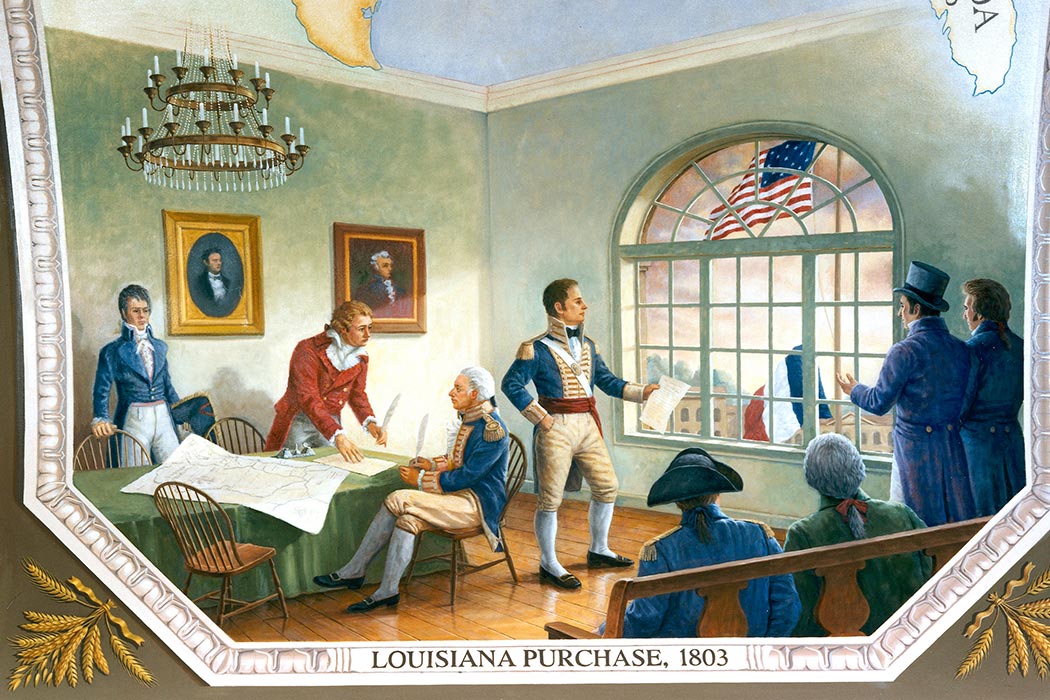
Understanding why this landmark event was so contentious requires a deep dive into the geopolitical climate of the early 19th century and the internal struggles of a nation still finding its footing on the global stage.
The Geopolitical Landscape of North America in 1803
At the dawn of the 19th century, North America was a patchwork of colonial interests. The United States was a relatively small collection of states clinging to the Atlantic coast, while the interior was claimed by Spain and France. The controversy began not with the purchase itself, but with the sudden shift in European control over the territory.
The French Ambition and the Haitian Revolution
For years, the territory of Louisiana had been under Spanish control. However, in 1800, through the secret Treaty of San Ildefonso, France, led by Napoleon Bonaparte, regained the land. Napoleon envisioned a new French empire in the Americas, centered around the profitable sugar colonies of the Caribbean. The linchpin of this plan was Saint-Domingue, known today as Haiti.
However, a massive slave revolt in Haiti led by Toussaint Louverture decimated French forces. The loss of Saint-Domingue, combined with the looming threat of renewed war with Great Britain, made the Louisiana territory a liability for Napoleon. He needed cash to fund his European wars more than he needed a distant wilderness. This sudden willingness to sell caught the United States by surprise and ignited a firestorm of debate in Washington DC.
The Strategic Importance of New Orleans
The primary motivation for the United States to enter negotiations was not the acquisition of the entire Great Plains, but specifically the city of New Orleans. As the gateway to the Gulf of Mexico, New Orleans was vital for American farmers in the Ohio River Valley. Without access to the port, trade was stifled.
When Thomas Jefferson sent envoys to Paris, they were authorized only to buy New Orleans and parts of the Florida panhandle. When the French offered the entirety of the territory for $15 million, the American ministers, Robert Livingston and James Monroe, faced a dilemma: exceed their authority and change the course of history, or let the deal of a lifetime slip away.
Constitutional Dilemmas and Presidential Power
The most immediate controversy surrounding the Louisiana Purchase was legal. Thomas Jefferson, a man who built his political reputation on the principle of “strict constructionism,” found himself in a profound ideological trap.
Thomas Jefferson’s Strict Constructionist Conflict
Jefferson and his Democratic-Republican party had long argued that the federal government could only exercise powers explicitly granted to it by the Constitution of the United States. Nowhere in that document did it state that the President or Congress had the authority to purchase foreign land.
Jefferson was privately tormented by this. He initially considered proposing a constitutional amendment to authorize the purchase, but he feared that Napoleon might withdraw the offer during the months it would take to ratify such an amendment. Ultimately, Jefferson set aside his principles, viewing the purchase as a “fugitive occurrence” that required immediate action for the greater good of the republic. Critics, however, were quick to label him a hypocrite, arguing that he was expanding executive power in the very way he had previously condemned.
The Federalists’ Opposition and the Balance of Power
The Federalist Party, centered primarily in New England, was the most vocal opponent of the deal. Their concerns were not merely legal; they were existential. They feared that the addition of vast western lands would dilute the political power of the established Eastern states.
Federalists argued that the United States was already large enough and that the new territory would be governed by “backwoodsmen” who did not share the mercantile and industrial interests of the North. Some even suggested that the purchase was a plot by Jefferson to create a permanent Democratic-Republican majority by adding more agrarian states to the Union. This tension between the North and the emerging West became a recurring theme in American politics for the next century.

Societal and Territorial Implications
Beyond the halls of Congress and the White House, the Louisiana Purchase introduced profound societal questions that the young nation was not yet prepared to answer. The expansion of the borders forced a confrontation with the most divisive issue in American history: slavery.
The Expansion of Slavery and the Missouri Compromise
At the time of the purchase, the United States was already beginning to fracture over the institution of slavery. The acquisition of Louisiana added fuel to the fire. Would these new lands be “free soil” or “slave soil”? The French and Spanish had already established slavery in regions like New Orleans and Missouri, and the inhabitants expected their “property” rights to be respected.
The controversy over slavery in the new territory would eventually lead to the Missouri Compromise of 1820, a temporary fix that only delayed the inevitable conflict. The Louisiana Purchase ensured that slavery would not remain a regional issue but would become a national crisis that would culminate in the American Civil War.
Impact on Indigenous Sovereignty and Culture
Perhaps the most overlooked controversy in the traditional narrative of 1803 is the fact that France did not actually “own” the majority of the land they sold. They sold the “right of preemption”—the exclusive right to negotiate with and eventually displace the Native American tribes living there.
The territory was home to hundreds of sovereign nations, including the Osage, Sioux, Cheyenne, and Comanche. To these peoples, the “purchase” was an irrelevant treaty between two distant European powers. However, for the United States, it provided a legal veneer for westward expansion, which would lead to decades of broken treaties, forced removals, and the eventual destruction of traditional ways of life across the Great Plains.
Economic Burdens and Future Uncertainty
The price tag of $15 million—roughly $350 million in today’s currency—was a staggering sum for a country that was still struggling to pay off debts from the Revolutionary War. The economic controversy centered on whether the land was worth the risk of national bankruptcy.
Financing the Fifteen Million Dollar Transaction
To pay for the land, the United States had to borrow heavily from banks in London and Amsterdam. This was particularly ironic, as the money paid to Napoleon was immediately used to fund his war efforts against Great Britain. American tax dollars were essentially subsidizing the very European conflicts the United States sought to avoid.
Many critics in the United States argued that the country had bought a “vast wilderness” that would yield no economic return for generations. They questioned the wisdom of spending millions on unmapped territory when the current states still required significant infrastructure development.
The Fear of Disunity in a Growing Republic
There was also a pervasive fear that a republic could only function effectively if it remained small. Thinkers of the time, influenced by classical history, believed that as a nation grew too large, it would inevitably collapse into tyranny or split into separate, warring confederacies.
The Louisiana Purchase included land that would eventually become the states of Arkansas, Iowa, Kansas, Nebraska, and Oklahoma, among others. Opponents argued that the United States could not possibly govern such a vast distance from Washington DC. They worried that the people living in the far reaches of the Missouri River would feel no loyalty to the central government and would eventually seek independence or align themselves with Spain or Mexico.

A Legacy of Complexity
The controversy of the Louisiana Purchase reminds us that history is rarely as straightforward as it appears in textbooks. While the deal is now celebrated as a landmark achievement that paved the way for the United States to become a global power, it was born out of political desperation, constitutional compromise, and deep-seated social fears.
The acquisition of the territory transformed the United States from a coastal experiment into a continental empire. It opened the door to the Lewis and Clark Expedition and the eventual settlement of the West, but it also sowed the seeds of the nation’s greatest internal conflict. As we look back on the Louisiana Purchase, it remains a symbol of both the grand ambitions and the profound contradictions of the American story. By examining the controversies of 1803, we gain a better understanding of the complex foundations upon which the modern United States was built.
LifeOutOfTheBox is a participant in the Amazon Services LLC Associates Program, an affiliate advertising program designed to provide a means for sites to earn advertising fees by advertising and linking to Amazon.com. Amazon, the Amazon logo, AmazonSupply, and the AmazonSupply logo are trademarks of Amazon.com, Inc. or its affiliates. As an Amazon Associate we earn affiliate commissions from qualifying purchases.