
Understanding and navigating the process of applying for California State Disability Insurance (SDI) can seem daunting, especially when you are dealing with the stress of a medical condition or personal emergency. This guide aims to demystify the application process, providing a clear, step-by-step approach to ensure you can access the benefits you are entitled to. California’s SDI program offers crucial financial support to workers who are unable to perform their regular job duties due to a non-work-related illness, injury, or pregnancy. It is a vital safety net for residents across the state, from the bustling streets of Los Angeles to the scenic coastlines of San Diego.
Understanding California State Disability Insurance (SDI)
California’s SDI program is a cornerstone of the state’s social safety net, providing temporary financial assistance to eligible workers. It is funded entirely by employee payroll deductions, meaning that most employees in California who pay into the system are eligible for benefits when they meet specific criteria. The program is administered by the Employment Development Department (EDD).
Eligibility Requirements
To be eligible for SDI benefits, you must meet several key requirements:
- Covered Employment: You must have earned a minimum amount of wages during your “base period,” which is a specific 12-month period used to calculate your benefit amount. The EDD uses your reported earnings from the previous 12-18 months to determine your eligibility and benefit rate.
- Medical Condition: You must have a medical condition that prevents you from performing your regular work. This can include physical illnesses, mental health conditions, and pregnancy-related disabilities. The condition must be certified by a licensed medical professional.
- Not Work-Related: The disability must not be caused by your employment. If your condition is work-related, you would typically file a workers’ compensation claim instead.
- Residency: You must be a resident of California or working for an employer covered by California law.
- Reduced Work Capacity: You must be unable to do your usual job duties. You cannot receive SDI benefits if you are able to perform some type of work, even if it’s not your regular job.
Types of Benefits
The SDI program provides several types of benefits:
- Disability Insurance (DI): This is the core benefit, providing temporary wage replacement for non-work-related illnesses or injuries.
- Paid Family Leave (PFL): This benefit allows eligible workers to take time off to bond with a new child (within one year of birth, adoption, or foster care placement), care for a seriously ill family member, or participate in a qualifying military exigency. PFL is often administered concurrently with DI but has its own distinct application process.
- Pregnancy Disability Leave (PDL): While pregnancy itself is not a standalone condition for PFL, it is a covered condition under DI. Pregnancy-related disabilities, including recovery from childbirth, are eligible for DI benefits.
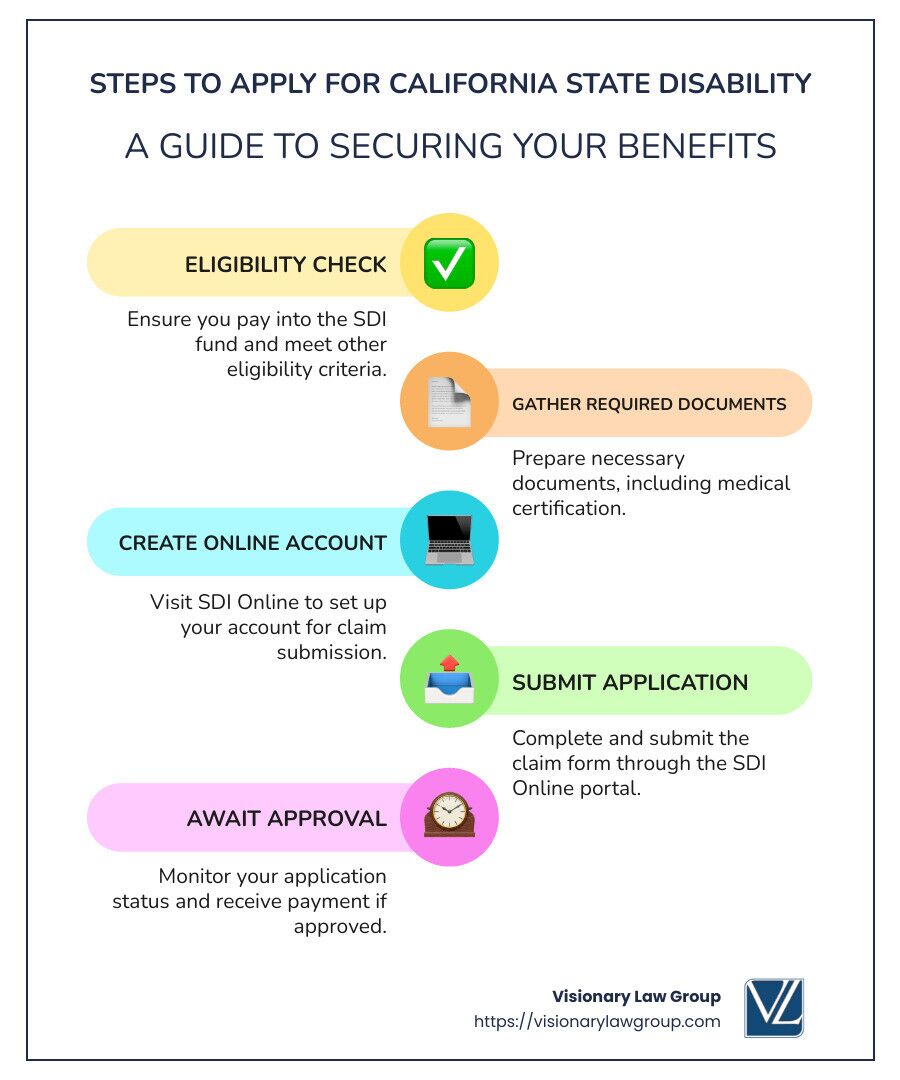
The Application Process: Step-by-Step
Applying for SDI involves several distinct stages. It’s crucial to be thorough and accurate in your submissions to avoid delays or denials.
Step 1: Obtain a Claim Form
There are two primary ways to obtain a claim form:
- Online: The most efficient method is to download the claim form from the Employment Development Department website. You can find the necessary forms under the “Forms” section. The primary form for disability claims is the DE 2501, “Claim for Disability Benefits.”
- Mail: You can also request a claim form by mail from the EDD. However, this method typically involves longer processing times.
Step 2: Complete Your Portion of the Claim Form
Once you have the claim form, you will need to complete your section. This typically involves providing:
- Personal Information: Your name, Social Security number, address, and contact details.
- Employment History: Details about your most recent employer, including their name, address, and your last day worked.
- Medical Information: A description of your condition and the dates you became unable to work.
- Certification: You will need to certify the accuracy of the information you provide.
It is imperative to fill out this section accurately and completely. Any missing or incorrect information can lead to delays in processing your claim.
Step 3: Have Your Physician or Practitioner Complete Their Certification

This is a critical part of the application. Your claim is not complete without the certification from your treating physician, surgeon, chiropractor, dentist, psychologist, or other licensed healthcare provider. This section of the form (usually on the reverse side or a separate section) requires the medical professional to:
- Diagnose the Condition: Provide the medical diagnosis of your disability.
- Certify Incapacity: Confirm that you are medically unable to perform your regular work duties.
- Specify Dates: Indicate the date your disability began and the expected duration of your inability to work.
- Provide Medical Records (if necessary): In some cases, the EDD may request additional medical records to support your claim.
Important Note for Medical Professionals: Ensure the physician or practitioner you visit is licensed in California and eligible to certify SDI claims. They must have your consent to release medical information to the EDD.
Step 4: Submit Your Claim Form
After both you and your medical provider have completed their respective sections, you must submit the claim form to the EDD.
- Mailing Address: The mailing address for submitting claims is clearly indicated on the claim form itself. It is generally recommended to send your completed claim form via certified mail with return receipt requested, so you have proof of delivery.
- Filing Deadline: You should submit your claim as soon as possible after your disability begins. While the EDD generally accepts claims filed within 49 days of the start of your disability, there are provisions for filing late claims if you can show good cause. Do not delay in submitting your paperwork.
Step 5: The EDD Reviews Your Claim
Once the EDD receives your completed claim form, they will review it to determine your eligibility. This process typically involves:
- Verification of Wages: The EDD will verify your reported wages during the base period to ensure you meet the earnings requirement.
- Review of Medical Certification: They will assess the certification provided by your medical provider.
- Contacting Employers (if necessary): In some instances, the EDD may contact your employer to confirm details about your last day of work or your job duties.
- Issuance of a Notice of Determination: After reviewing your claim, the EDD will send you a Notice of Determination. This notice will inform you whether your claim has been approved or denied, and if approved, it will state your weekly benefit amount and the duration for which you are eligible.
Step 6: Receiving Payments
If your claim is approved, the EDD will begin issuing payments.
- Payment Schedule: Payments are typically issued on a bi-weekly basis, after an initial one-week waiting period for which no benefits are paid.
- Payment Method: Payments are usually issued via direct deposit or by check. You can typically select your preferred payment method when you file your claim or update your information later.
- Continued Claims: To continue receiving benefits, you will need to file continued certifications with the EDD. These forms ask you to report any work you performed and confirm that your disability continues. Failure to file continued claims on time can result in a delay or interruption of your benefits.
Navigating Potential Challenges and Next Steps
While the SDI application process is designed to be straightforward, challenges can arise. Being prepared for them can help you navigate the system more effectively.
Denied Claims
If your claim is denied, you have the right to appeal the decision. The Notice of Determination will include instructions on how to file an appeal. You typically have a limited timeframe to submit your appeal, so it’s important to act promptly. An appeal may involve providing additional medical documentation, attending a hearing, or presenting further evidence to support your case.
Delays in Processing
Delays can occur for various reasons, such as incomplete forms, missing medical information, or high claim volumes. If you experience significant delays, it’s advisable to contact the EDD directly for an update on your claim status. Keep records of all your correspondence with the EDD.

Other Resources
- Employment Development Department Website: The EDD website is an invaluable resource for forms, publications, FAQs, and contact information.
- Legal Assistance: If you are facing complex issues with your claim or have been denied and are considering an appeal, seeking legal advice from an attorney specializing in disability law or employment law may be beneficial.
- Community Support: Various community organizations and legal aid societies in California may offer assistance or guidance to individuals navigating the SDI application process.
Applying for California State Disability Insurance requires diligence and attention to detail. By understanding the eligibility criteria, following the application steps carefully, and being prepared to address potential challenges, you can increase your chances of a smooth and successful claim, ensuring you receive the financial support you need during a difficult time. Remember, the SDI program is a vital support system, and knowing how to access it is crucial for your financial well-being.
LifeOutOfTheBox is a participant in the Amazon Services LLC Associates Program, an affiliate advertising program designed to provide a means for sites to earn advertising fees by advertising and linking to Amazon.com. Amazon, the Amazon logo, AmazonSupply, and the AmazonSupply logo are trademarks of Amazon.com, Inc. or its affiliates. As an Amazon Associate we earn affiliate commissions from qualifying purchases.