
Navigating the evolving landscape of identification requirements for travel and access to federal facilities can be a significant concern for residents across the United States. In Colorado, like many other states, the introduction of the REAL ID Act has prompted questions about the validity and functionality of state-issued driver’s licenses and identification cards. Understanding whether your Colorado license meets these new federal standards is crucial for ensuring smooth travel experiences and seamless entry into secure locations. This guide aims to demystify the REAL ID requirements for Coloradans, outlining what constitutes a REAL ID-compliant license and how to obtain one if yours does not yet meet the standard.

Understanding the REAL ID Act
The REAL ID Act of 2005 was enacted by Congress in response to the September 11th terrorist attacks. Its primary objective is to establish minimum security standards for state-issued driver’s licenses and identification cards, which are commonly used for boarding federally regulated commercial aircraft, entering federal facilities, and, eventually, for entering nuclear power plants. The Department of Homeland Security (DHS) is responsible for enforcing these standards.
The Act mandates that states must verify the identity and lawful status of individuals applying for driver’s licenses and ID cards. This includes requiring a more rigorous documentation process than was previously common. States that comply with these standards issue “REAL ID-compliant” licenses and ID cards. Those that do not comply, or choose not to participate, issue licenses and ID cards that are marked as “Not for Federal Identification.”
Key Provisions of the REAL ID Act
The REAL ID Act sets forth several key provisions that states must adhere to for their licenses to be deemed compliant. These include:
- Identity Verification: Applicants must provide proof of identity, date of birth, and lawful status in the United States. This typically involves original or certified documents.
- Social Security Number Verification: Proof of an individual’s Social Security number is required.
- Residency Verification: Two documents proving an applicant’s physical address in Colorado are necessary.
- Security Features: Licenses and ID cards must incorporate enhanced security features to prevent counterfeiting and tampering. This includes things like microprinting, holographic images, and other sophisticated design elements.
- Data Security: States must maintain a database of all issued driver’s licenses and identification cards, ensuring that these records are secure and can be accessed by authorized personnel.
The ultimate goal of these provisions is to create a more secure and standardized system of identification that can be reliably used for federal purposes. It’s important to note that the REAL ID Act does not require individuals to obtain a REAL ID-compliant license; it simply dictates which forms of identification will be accepted for specific federal purposes.
How to Identify a REAL ID-Compliant Colorado License
Distinguishing between a REAL ID-compliant Colorado license and a standard one is straightforward once you know what to look for. The Colorado Division of Motor Vehicles (DMV) has implemented specific markings and design elements to differentiate between the two.
If your Colorado driver’s license or identification card is REAL ID-compliant, it will feature a gold star in the upper right-hand corner. This star is a universal symbol indicating that the card meets the federal security and identification standards set forth by the REAL ID Act.
What the Gold Star Signifies
The presence of the gold star on your Colorado license means that when you present it for boarding a commercial aircraft or entering a federal facility, it will be accepted without question for these purposes. It signifies that you have undergone the enhanced verification process required by the REAL ID Act, and your identity and lawful status have been thoroughly confirmed.
Conversely, if your Colorado license does not have the gold star, it is not REAL ID-compliant. While it remains a valid form of identification for many everyday purposes, such as driving, conducting financial transactions, or purchasing age-restricted items, it will not be accepted for federal identification purposes after the enforcement deadline. You will need to present an alternative form of federal identification, such as a U.S. passport or a U.S. passport card, for these specific activities.
Common Misconceptions
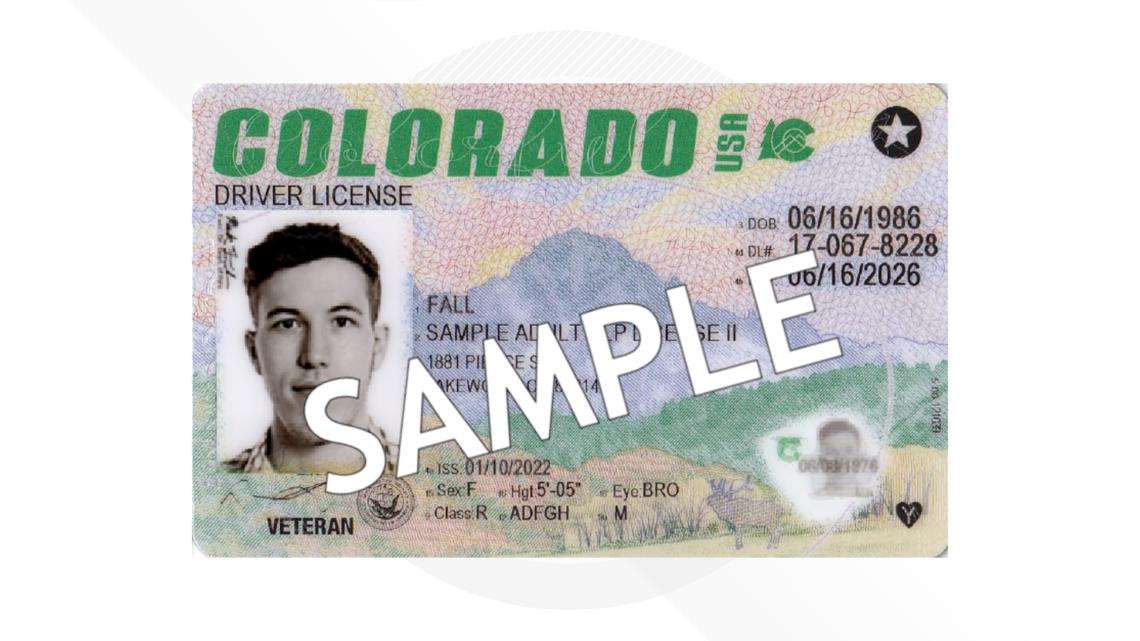
It is a common misconception that a REAL ID is a completely new type of license. In reality, it is simply a designation for a standard Colorado driver’s license or identification card that meets enhanced federal security requirements. The physical appearance of the card will be similar to your current license, with the addition of the gold star signifying its compliance. Furthermore, the REAL ID Act does not change the legal requirements for driving in Colorado.
Obtaining a REAL ID-Compliant License in Colorado
If your current Colorado license does not have the gold star, or if you are obtaining a new license or ID card and wish for it to be REAL ID-compliant, you will need to visit a Colorado DMV office. The process involves presenting specific documentation to prove your identity, lawful status, Social Security number, and residency.
The initial rollout of REAL ID in Colorado began in 2017, and the state has been working to transition residents to compliant cards. However, many Coloradans may still hold older, non-compliant licenses. It is advisable to check your license’s compliance well in advance of any upcoming deadlines to avoid travel disruptions.
Required Documentation
To apply for a REAL ID-compliant license or ID card in Colorado, you must bring specific documents to your appointment. It is highly recommended to gather all necessary paperwork beforehand to ensure a smooth application process. The required documents generally fall into these categories:
- Proof of Identity: This typically includes an original or certified copy of your birth certificate or a valid U.S. passport.
- Proof of Social Security Number: This can be a Social Security card, W-2 form, or other official documentation displaying your full Social Security number.
- Proof of Lawful Presence: If you are not a U.S. citizen, you will need to provide documentation of your lawful status in the United States, such as a valid visa or immigration documents.
- Proof of Colorado Residency (Two Documents): These documents must show your current residential address in Colorado and can include utility bills, bank statements, lease agreements, or pay stubs. All documents must be originals or certified copies.
The Application Process
When you visit a Colorado DMV office for your REAL ID application, you will first present your required documents to a clerk. They will verify the authenticity of your paperwork and enter your information into the system. You will then have your photograph taken and, if applying for a driver’s license, you will likely need to pass a vision test. In some cases, a knowledge test or driving test may also be required, especially if you are applying for a new license or upgrading from a state ID.
The fee for a REAL ID-compliant license or ID card is the same as the fee for a standard license or ID card. Once your application is processed and approved, your new REAL ID-compliant license will be mailed to you, typically within a few weeks.
Travel and Federal Facility Access After the Deadline
The enforcement deadline for REAL ID has been extended multiple times. As of May 7, 2025, all individuals aged 18 and older will need to present a REAL ID-compliant driver’s license or identification card, or another acceptable form of identification, to board federally regulated commercial aircraft and to enter certain federal facilities.
This means that if your Colorado license does not have the gold star, you will need to present an alternative form of federal identification for these purposes. Acceptable alternatives include:
- A U.S. passport
- A U.S. passport card
- A Department of Homeland Security trusted traveler cards (such as Global Entry, NEXUS, or SENTRI)
- A U.S. Department of Defense ID, including an ID for active duty military, their dependents, and all U.S. military reservists and active duty U.S. military dependents with access to a U.S. military base
- A Permanent Resident Card
- A U.S. Citizenship and Immigration Services Employment Authorization Card (Form I-766)
- A federally recognized, tribal-issued photo identification
- A card issued by a federally recognized tribe in the United States
- A U.S. Citizenship and Immigration Services Employment Authorization card or an Alien Relative Card (Form I-551)
- A foreign government-issued passport
- An Enhanced Driver’s License (EDL) issued by Washington, Michigan, Minnesota, New York, or Vermont

Planning Your Travel
For frequent travelers, obtaining a REAL ID-compliant Colorado license offers the most convenience. It eliminates the need to carry an additional form of federal identification solely for air travel or access to federal buildings. If you have a U.S. passport, you can continue to use it for these purposes, but having a REAL ID driver’s license simplifies your day-to-day identification needs.
It is wise to check the status of your Colorado license and, if necessary, initiate the process of obtaining a REAL ID well in advance of the enforcement deadline. The Colorado DMV website offers detailed information, lists of required documents, and options for scheduling appointments online, which can help streamline the process and ensure you are prepared for the upcoming changes in identification requirements. The transition to REAL ID is a national initiative aimed at enhancing security, and understanding your license’s status is a key step in navigating these new standards.
LifeOutOfTheBox is a participant in the Amazon Services LLC Associates Program, an affiliate advertising program designed to provide a means for sites to earn advertising fees by advertising and linking to Amazon.com. Amazon, the Amazon logo, AmazonSupply, and the AmazonSupply logo are trademarks of Amazon.com, Inc. or its affiliates. As an Amazon Associate we earn affiliate commissions from qualifying purchases.