
California’s Cottage Food Operations (CFOs) allow individuals to produce certain food items in their home kitchens and sell them directly to consumers. This initiative fosters entrepreneurship, supports local economies, and provides consumers with unique, artisanal food products. Obtaining a cottage food permit in California involves understanding the specific regulations, identifying eligible food products, and navigating the application process. This guide aims to demystify the process, offering a clear roadmap for aspiring cottage food entrepreneurs in the Golden State.
Understanding California’s Cottage Food Laws
California’s CFO law, primarily governed by the California Department of Public Health (CDPH) and enforced at the local level by county health departments, sets forth the framework for home-based food businesses. The fundamental principle is to permit the sale of “non-potentially hazardous foods,” which are items that do not require refrigeration to remain safe from bacterial growth. This allows individuals to leverage their culinary skills without the overhead of a commercial kitchen, provided they adhere to strict safety and labeling requirements.
Key Definitions and Eligibility
To begin, it’s crucial to understand what constitutes a Cottage Food Operation in California.
What is a Cottage Food Operation?
A CFO is a legally recognized home-based business that prepares and sells specific types of food products directly to consumers. These operations are subject to registration or permitting by the local environmental health agency.
What Foods Are Allowed?
The cornerstone of CFO eligibility lies in the types of food products. Generally, these include:
- Baked Goods: Breads, cookies, cakes, pastries, muffins, and similar items not requiring refrigeration.
- Confections: Candies, chocolates, toffees, and similar items.
- Dried Fruits and Vegetables: Dehydrated produce.
- Jams, Jellies, and Preserves: Fruit-based spreads with adequate sugar content and proper pH levels.
- Granola and Cereal Blends: Dry mixes.
- Spices and Spice Mixes: Dried herbs and blended spices.
- Nuts and Nut Mixes: Roasted or dried nuts.
- Popcorn and Popcorn Mixes: Kernels and flavored popcorn.
- Vinegar: Fermented or infused vinegars.
- Certain Specialty Items: This can include things like pasta, vegetable chips, and sugar cookies, all subject to specific preparation and ingredient guidelines to ensure they remain non-potentially hazardous.
Crucially, foods that require refrigeration, such as cheesecakes, cream-filled pastries, dairy-based products (like yogurt or cheese), and anything containing meat or seafood, are not permitted under the CFO law.
What Foods Are Prohibited?
The list of prohibited foods is as important as the allowed list. Any food that is considered “potentially hazardous” is strictly forbidden. This includes:
- Any food that requires refrigeration to prevent bacterial growth.
- Any food containing meat, poultry, fish, shellfish, or dairy products (with limited exceptions for certain dry mixes containing these items).
- Cut leafy greens.
- Cut melons.
- Treated eggs.
- Raw sprouts.
- Any food with a pH of 4.6 or higher and a water activity of 0.85 or higher.
Legal and Operational Requirements
Beyond product type, CFOs must comply with several legal and operational mandates to ensure consumer safety and business legitimacy.
Business Registration and Zoning
Before applying for a permit, you must ensure your home is zoned for a home-based business. Some cities or counties may have specific zoning ordinances that could restrict CFOs. It is advisable to check with your local planning department.
Annual Sales Limit
California law places an annual gross sales limit for CFOs. Currently, this limit is $75,000 per year. If your business exceeds this threshold, you will likely need to move to a commercial kitchen.
Facility Requirements
While CFOs operate from home kitchens, certain standards must be met. This includes maintaining a clean and sanitary environment, preventing interference with regular family activities, and ensuring pets are not present in the kitchen during food preparation. Some counties may require a separate sink for handwashing and dishwashing.
Labeling Requirements
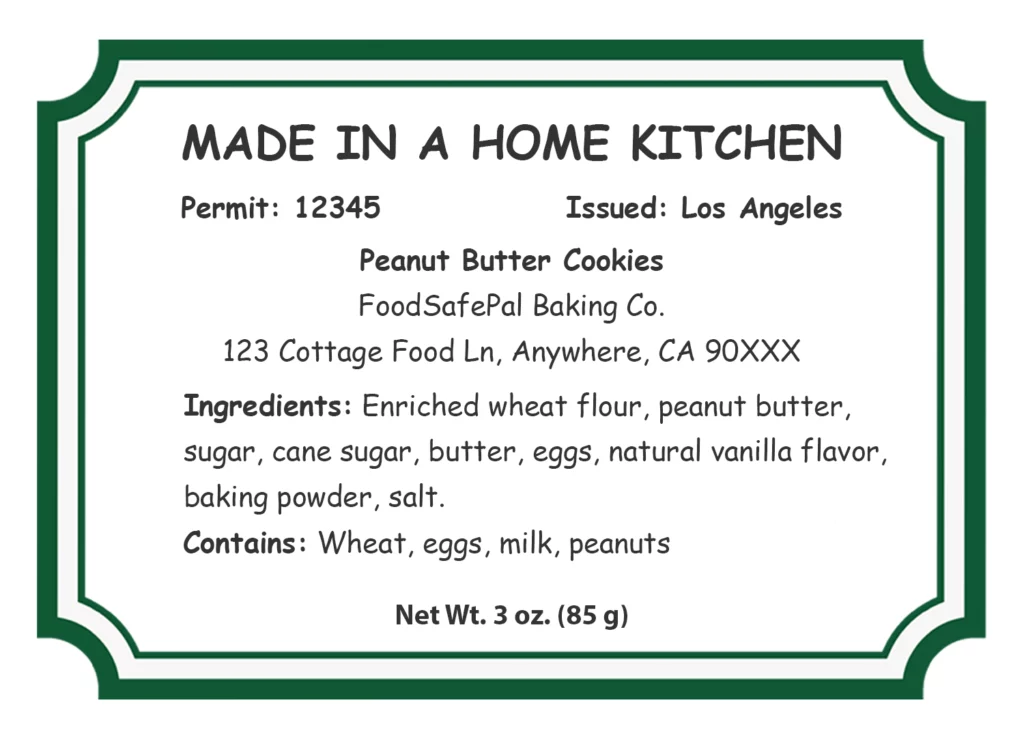
Accurate and comprehensive labeling is paramount for CFO products. Labels must include:
- The name and address of the CFO.
- The name of the food product.
- A list of ingredients in descending order by weight.
- The net quantity of the product.
- Allergen information (e.g., “Contains wheat, eggs, milk, soy, peanuts, tree nuts”).
- A statement indicating that the product was made in a home kitchen not subject to regular government inspection. This statement is critical: “Made in a cottage food operation that is not subject to inter-county inspection.”
- Nutritional information (if any nutritional claims are made).
The Application Process: Step-by-Step
Navigating the application process is typically managed at the county level. While the core requirements are statewide, each county health department may have slightly different procedures and forms.
Step 1: Identify Your Local Health Department
The first and most crucial step is to determine which county health department has jurisdiction over your residence. You can usually find this information on your county’s official government website. Search for terms like “Environmental Health,” “Public Health,” or “Cottage Food Permit.”
Step 2: Review Your County’s Specific Guidelines
Once you’ve identified your local health department, thoroughly review their specific guidelines for Cottage Food Operations. Many counties provide detailed checklists and application packets online. Pay close attention to any local variations in requirements, such as specific training requirements or additional inspections.
Step 3: Complete the CFO Application Form
You will need to fill out a formal application form provided by your county health department. This form will typically ask for:
- Your personal information (name, address, contact details).
- The name and address of your cottage food operation.
- A detailed description of the food products you intend to produce and sell.
- Information about your home kitchen, including its layout and any equipment used for food preparation.
- Details about your planned sales channels (e.g., farmers’ markets, direct sales, online sales).
Step 4: Prepare Your Business Plan and Product Documentation

While not always explicitly required in the initial application, having a basic business plan is highly recommended. This should outline your products, target market, pricing, and sales strategy. You will also need to have detailed recipes and preparation methods for each product, as these will be reviewed for compliance with CFO regulations, particularly concerning ingredient safety and handling.
Step 5: Submit Your Application and Pay Fees
Once your application is complete, you will submit it to your local health department, along with the required application fee. These fees vary by county but generally range from $100 to $300 or more.
Step 6: Home Kitchen Inspection (If Required)
Depending on your county and the types of products you intend to make, a home kitchen inspection may be required. During the inspection, a health official will assess your kitchen for compliance with sanitation standards, proper storage of ingredients and finished products, and the absence of any conditions that could compromise food safety. The inspector will verify that your kitchen meets the requirements for a CFO.
Step 7: Receive Your Permit or Registration
Upon successful completion of the application process and any required inspections, your county health department will issue your Cottage Food Operation permit or registration. This document should be displayed prominently at your place of business (your home, if you have direct sales on-site) and must be renewed annually.
Selling Your Cottage Food Products
With your permit in hand, you can now legally sell your creations. However, there are still important rules to follow regarding sales and distribution.
Approved Sales Channels
California CFOs can sell their products through various channels, but the key is direct sales to consumers. These typically include:
- Farmers’ Markets: A very popular venue for CFOs.
- Direct Sales: Selling from your home (if allowed by local zoning and your permit), at festivals, or through your own website.
- Online Sales: Selling directly to consumers via your own website or authorized online platforms, provided delivery or shipping meets specific safety requirements (e.g., for non-perishable items).
- Farm Stands: Selling produce and related items directly from a farm.
- Special Events: Such as craft fairs and community gatherings.
Important Note: Sales through wholesale channels to other businesses (like retail stores or restaurants) are generally not permitted under the CFO law unless the CFO has a specific agreement with the retailer for direct delivery and the retailer is informed that the product is made in a CFO. Indirect sales, such as through a distributor, are prohibited.
Record Keeping
Maintaining accurate records is essential for any business, and CFOs are no exception. Keep meticulous records of:
- All sales transactions.
- Ingredients purchased.
- Production dates for each batch.
- Customer complaints or feedback.
These records are important for tracking your sales against the annual limit, managing inventory, and demonstrating compliance during any potential future inquiries.
Food Safety Training
While not always a prerequisite for the initial permit in every county, completing a food safety certification course (such as ServSafe) is highly recommended and may be required by some local health departments. This training provides valuable knowledge on safe food handling practices, preventing cross-contamination, and understanding potential foodborne illnesses, which is critical for protecting your customers and your business reputation.
Maintaining Compliance and Growing Your Business
Obtaining a permit is the first step; maintaining compliance and exploring growth opportunities are ongoing processes for a successful cottage food business.
Annual Renewals and Re-inspections
Your CFO permit will need to be renewed annually. This typically involves submitting a renewal application and fee. Depending on your county, a re-inspection of your home kitchen might be part of the renewal process to ensure continued compliance with food safety standards. Stay informed about your renewal deadlines to avoid lapses in your operating permit.
Expanding Your Product Line
As your business grows and you become more familiar with the regulations, you might consider expanding your product line. Always ensure any new products you wish to offer are still classified as “non-potentially hazardous” and comply with all California CFO regulations. If you are considering products that might fall into a gray area, it’s best to consult with your local health department before introducing them.
Moving Beyond Cottage Food Operations
If your business achieves significant success and begins to exceed the annual sales limit or you wish to expand into making products that are not allowed under CFO law, you will need to transition to a commercial kitchen. This involves obtaining a commercial food permit from your local health department, which has more stringent requirements regarding facility design, equipment, and sanitation. This transition marks a significant milestone, allowing for greater production capacity and broader market reach.
Operating a Cottage Food Operation in California offers a rewarding pathway for culinary entrepreneurs. By understanding and adhering to the state and local regulations, you can build a thriving business from the comfort of your own home, sharing your passion for food with the community.
LifeOutOfTheBox is a participant in the Amazon Services LLC Associates Program, an affiliate advertising program designed to provide a means for sites to earn advertising fees by advertising and linking to Amazon.com. Amazon, the Amazon logo, AmazonSupply, and the AmazonSupply logo are trademarks of Amazon.com, Inc. or its affiliates. As an Amazon Associate we earn affiliate commissions from qualifying purchases.