
Navigating the regulatory landscape to open an automotive dealership in California can seem daunting, but with a clear understanding of the requirements, the process becomes manageable. This guide breaks down the essential steps to obtain your auto dealer license in the Golden State, ensuring you are fully compliant and ready to launch your business.
Understanding the Basics of an Auto Dealer License
Before diving into the application process, it’s crucial to understand what an auto dealer license signifies. In California, this license is issued by the Department of Motor Vehicles (DMV) and is a mandatory requirement for anyone intending to sell new or used vehicles for profit. It signifies that you have met the state’s legal and ethical standards for operating a vehicle dealership. Without this license, any sales activity would be illegal and subject to severe penalties.
Types of Dealer Licenses
The DMV offers several types of dealer licenses, tailored to different business models:
- Retail Dealer License: This is the most common type, allowing you to sell vehicles directly to the public. This includes dealerships selling new or used cars, motorcycles, recreational vehicles (RVs), and more.
- Wholesale Dealer License: If you plan to sell vehicles only to other licensed dealers, a wholesale license is appropriate. You cannot sell directly to the public with this license.
- Distributor or Manufacturer License: These licenses are for those involved in the manufacturing or distribution of vehicles, rather than direct sales to consumers.
- Scrap Dealer License: This is for businesses that primarily dismantle and sell parts from vehicles intended for salvage.
For most aspiring entrepreneurs looking to open a traditional car lot, the Retail Dealer License is the one to pursue.
Key Requirements for All License Types
Regardless of the specific license, several foundational requirements must be met:
- Age: You must be at least 18 years old.
- Business Location: You need a physical place of business that meets specific zoning laws and is visible to the public. This location must have an office space and a sign displaying the business name clearly.
- Creditworthiness: While not always a direct disqualifier, a history of financial misconduct or bankruptcy can raise red flags during the application review.
- Background Check: All applicants undergo a criminal background check. Certain felony convictions may prevent you from obtaining a license.
The Step-by-Step Application Process
Obtaining your auto dealer license in California involves several distinct stages. Following these steps meticulously will streamline the process.
Step 1: Establish Your Business Entity and Secure a Business Location
Before applying for the license, you need to have a formally established business. This typically involves registering your business name and structure (sole proprietorship, partnership, LLC, or corporation) with the California Secretary of State.
Concurrent with this, you must secure a legitimate business location. This site will be inspected by the DMV to ensure it meets all requirements. These include:
- Office Space: A dedicated area for administrative tasks, record-keeping, and customer interactions.
- Display Area: If you plan to sell vehicles directly, you’ll need a space to display them.
- Signage: A permanent, visible sign with your dealership’s name.
- Zoning Compliance: Your chosen location must be zoned for automotive sales. You’ll likely need to obtain a zoning permit from your local city or county government.
Step 2: Complete the Pre-License Education and Examination
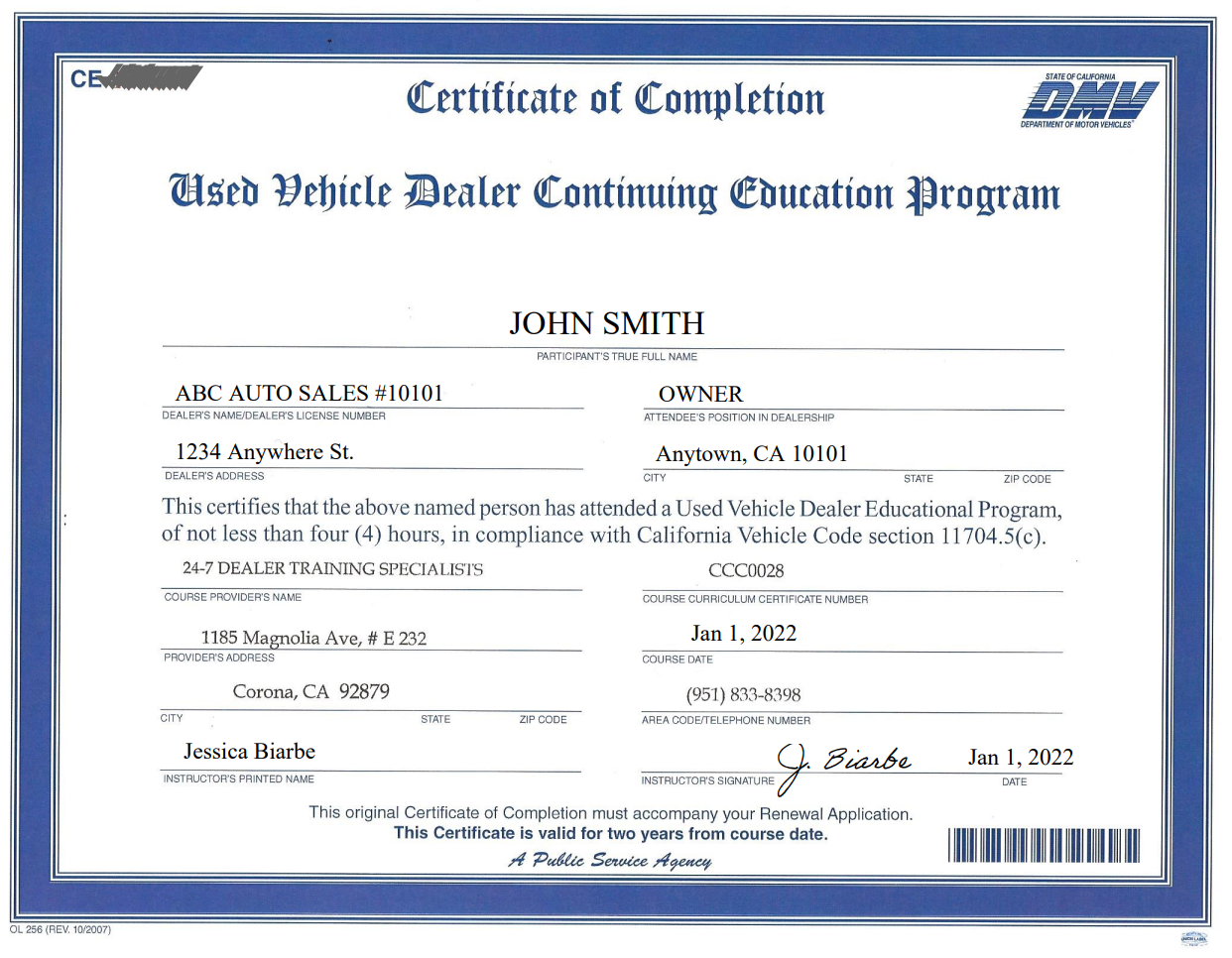
California mandates that all applicants for a retail dealer license complete a 6-hour pre-licensing education program. This course covers various aspects of the automobile business, including laws, ethics, and operational procedures. Upon completion, you will receive a certificate, which is required for your application.
Following the education, you must pass a written examination administered by the DMV. This exam tests your knowledge of the material covered in the pre-licensing course, as well as relevant California laws and regulations pertaining to vehicle sales.
Step 3: Obtain Necessary Bonds and Insurance
- Surety Bond: You will need to secure an Automobile Dealer Bond. This is a type of surety bond that protects consumers from fraudulent or unethical practices by the dealer. The bond amount is typically $50,000 for retail dealers. This bond ensures that if a dealer engages in misconduct, consumers can be compensated.
- Liability Insurance: You are also required to have adequate general liability insurance for your business operations. The specific coverage amounts may vary, so it’s advisable to consult with an insurance provider specializing in auto dealership insurance.
Step 4: Gather Required Documents and Forms
The DMV requires a comprehensive set of documents to process your application. These include:
- Application for Original Occupational License (OL 12): This is the primary application form.
- Pre-License Education Certificate: Proof of completing the required training.
- Examination Score Report: Your passing score from the DMV exam.
- Surety Bond Certificate: Documentation of your secured Automobile Dealer Bond.
- Business Documents: Proof of business registration (e.g., Articles of Incorporation, LLC Operating Agreement).
- Lease Agreement or Proof of Ownership: Documentation for your business location.
- Zoning Approval: Confirmation that your location is zoned for automotive sales.
- Photographs of Business Location: Pictures of your office, sign, and display area.
- Personal Identification: Valid driver’s license or other government-issued ID.
- Fingerprints: You will need to submit fingerprints for a background check. This is typically done via Live Scan.
- Salesperson Licenses: If you plan to hire sales staff, they will also need to obtain salesperson licenses, which have their own application process.
Step 5: Submit Your Application and Pay Fees
Once all documents are in order, you can submit your application package to the DMV. There are various fees associated with obtaining an auto dealer license, including:
- Application fees
- Examination fees
- License plate fees
- Branch office fees (if applicable)
- Resale permit fees
The exact costs can fluctuate, so it’s best to check the latest fee schedule on the DMV website or consult with their licensing department.
Step 6: DMV Inspection and Final Approval
After submitting your application and fees, the DMV will schedule an inspection of your business location. An inspector will visit your premises to verify that it meets all the required standards regarding signage, office space, and general business operations. They will also check for proper display of required consumer information.
If the inspection is successful and all your documentation is accurate and complete, the DMV will issue your auto dealer license. This typically takes several weeks to a few months, depending on the volume of applications and the thoroughness of the review process.
Maintaining Your License and Ongoing Compliance
Obtaining your license is a significant achievement, but it’s just the beginning of your journey as a licensed auto dealer. Ongoing compliance with California regulations is essential to maintain your license and avoid penalties.
Record Keeping and Reporting
Licensed dealers are required to maintain meticulous records of all vehicle sales, purchases, and inventory. This includes buyer’s orders, contracts, titles, and registration information. These records must be kept for a specified period and be readily available for DMV inspection. Regular reporting to the DMV regarding sales and inventory is also often required.
Adhering to Consumer Protection Laws
California has robust consumer protection laws governing vehicle sales. Dealers must:
- Accurately Represent Vehicles: Provide truthful information about the condition, history, and any defects of vehicles being sold.
- Honest Advertising: Ensure all advertisements are accurate and not misleading.
- Proper Disclosure: Fully disclose all fees, charges, and terms of sale, including any extended warranties or service contracts.
- Handle Titles and Registration Correctly: Ensure titles are properly transferred and registration is processed within the mandated timeframes.
Renewing Your License
Your auto dealer license will have an expiration date, and you must renew it periodically. The renewal process typically involves updating your application information, paying renewal fees, and potentially retaking the pre-licensing education course. Staying on top of renewal deadlines is crucial to avoid lapses in your license.
Staying Updated with Regulations
The automotive industry and its regulations can change. It’s imperative for dealers to stay informed about any updates or amendments to California laws affecting dealerships. This can be done by regularly visiting the DMV website, subscribing to industry newsletters, or attending dealer association meetings.
By diligently following these steps and committing to ongoing compliance, you can successfully obtain and maintain your auto dealer license in California, paving the way for a thriving automotive business.
LifeOutOfTheBox is a participant in the Amazon Services LLC Associates Program, an affiliate advertising program designed to provide a means for sites to earn advertising fees by advertising and linking to Amazon.com. Amazon, the Amazon logo, AmazonSupply, and the AmazonSupply logo are trademarks of Amazon.com, Inc. or its affiliates. As an Amazon Associate we earn affiliate commissions from qualifying purchases.