
While often celebrated for its sun-drenched beaches, sprawling national parks, and vibrant cultural tapestry, the Golden State of California also plays a significant role in the landscape of American education. Understanding California’s standing in educational metrics offers crucial insights for families considering relocation, students planning their academic journeys, and anyone interested in the state’s future trajectory. This examination delves into how California fares in various educational rankings, from K-12 to higher education, exploring the nuances that shape its reputation.
K-12 Education: A Complex Picture
When evaluating K-12 education, the sheer scale and diversity of California present a multifaceted challenge. The state boasts an immense public school system serving millions of students across varied socio-economic landscapes, from affluent suburbs to economically challenged urban centers and remote rural communities. Consequently, educational outcomes can differ dramatically across districts and even within individual school boundaries.

Performance Metrics and Averages
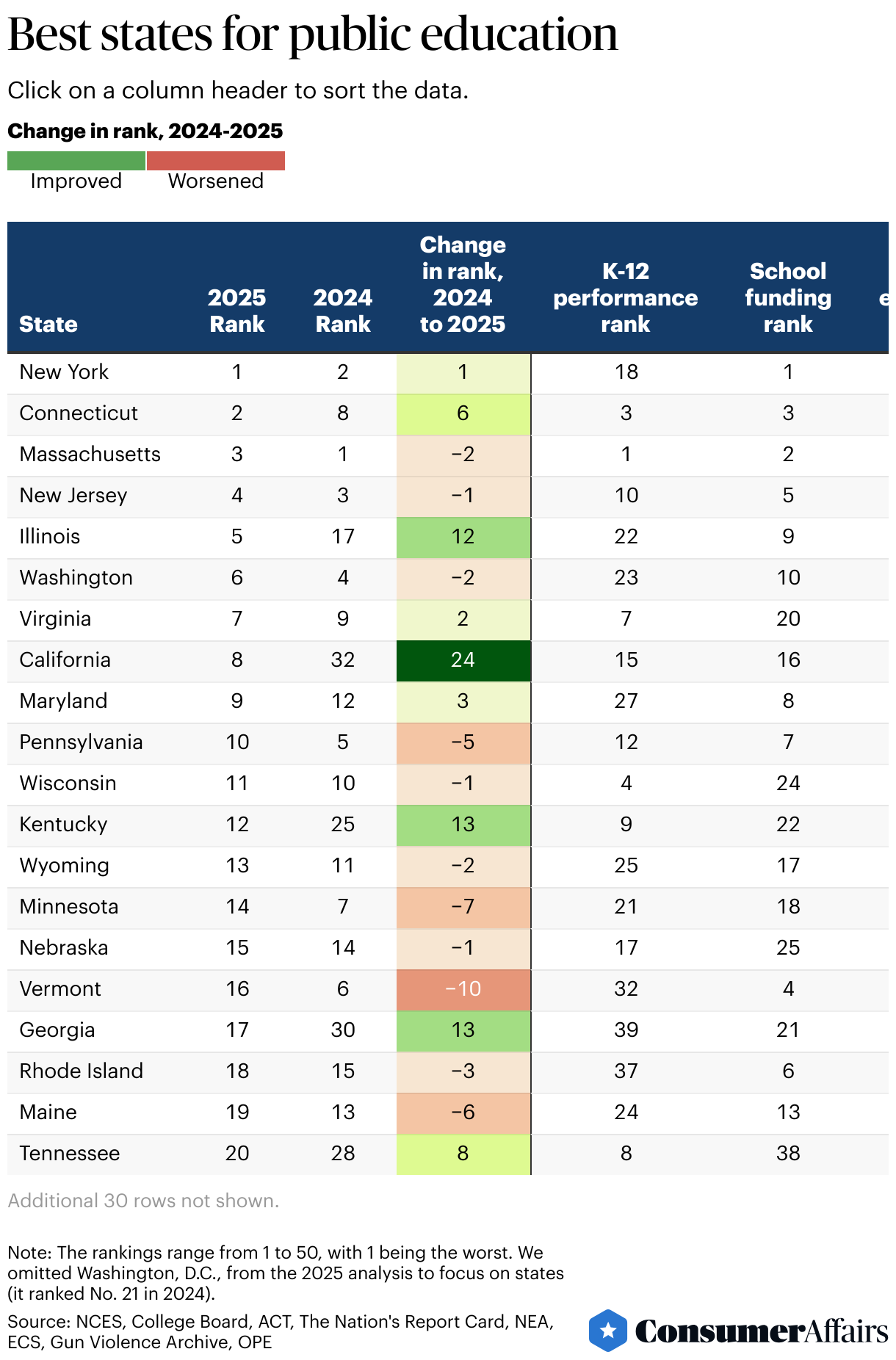
National reports and analyses by organizations such as WalletHub, U.S. News & World Report, and various education policy think tanks often place California in the middle tier when compared to other states. These rankings typically consider factors like student-teacher ratios, graduation rates, standardized test scores, school funding per pupil, and college readiness.
For instance, California’s overall ranking can fluctuate significantly year to year, often hovering between 20th and 30th place nationally. While the state may not consistently rank among the top five or ten, this snapshot often fails to capture the significant strengths and areas of excellence present within the system. High-achieving districts, particularly in areas like San Francisco Bay Area and parts of Southern California, often boast national recognition for academic rigor and student success.
Funding and Resource Disparities
A critical factor influencing California’s K-12 rankings is the issue of school funding. The state’s funding model, which relies heavily on local property taxes, can lead to significant disparities between wealthy and less affluent school districts. This creates an uneven playing field, where students in resource-rich areas often have access to better facilities, more experienced teachers, and a wider array of academic and extracurricular programs.
Despite efforts to equalize funding through initiatives like the Local Control Funding Formula (LCFF), which aims to direct more resources to disadvantaged students, the legacy of funding disparities continues to shape educational outcomes. The challenge for policymakers is to ensure that all students, regardless of their zip code, have access to a high-quality education.
Innovation and Special Programs
Beyond raw scores, California is a hub for educational innovation. Many districts are at the forefront of implementing progressive teaching methodologies, integrating technology, and offering specialized programs. This includes a robust presence of charter schools, which often experiment with different educational models, and magnet schools designed to attract students with specific academic interests, such as STEM (Science, Technology, Engineering, and Mathematics) or the arts.
The state’s commitment to diversity is also reflected in its schools, with many striving to provide culturally responsive curricula and support for English language learners. These aspects, while difficult to quantify in broad rankings, contribute significantly to the educational experience of millions of Californian students.
Higher Education: A Global Powerhouse
In the realm of higher education, California shines with a constellation of world-renowned institutions, making it a global leader in academic research, innovation, and student opportunity. The state’s higher education system is broadly divided into three public segments: the University of California (UC) system, the California State University (CSU) system, and the extensive network of California Community Colleges.
The University of California (UC) System
The University of California system is consistently ranked among the top public universities globally. Campuses like UC Berkeley, UCLA, and UC San Diego are research powerhouses, attracting leading faculty and students from around the world. These institutions are celebrated for their groundbreaking research in fields ranging from technology and medicine to the humanities and social sciences.
The UC system’s reputation for academic excellence, competitive admissions, and significant contributions to scientific advancement places it at the apex of higher education rankings. It serves as a critical engine for innovation and a pipeline for highly skilled professionals in various sectors, particularly the tech industry in Silicon Valley.

The California State University (CSU) System
The California State University system, often referred to as the CSU, is the largest four-year university system in the United States. It comprises 23 campuses across the state, dedicated to providing accessible and high-quality education for Californians. While the UC system is primarily research-focused, the CSU system emphasizes hands-on learning and professional preparation, producing a vast number of graduates who enter the workforce each year.
The CSU system plays a crucial role in addressing the state’s workforce needs, particularly in fields such as teaching, nursing, engineering, and business. Its campuses are often ranked highly for their value and their contribution to upward mobility for students from diverse backgrounds. While not always appearing at the very top of global research rankings, the CSU system’s impact on the California economy and society is immense.
California Community Colleges
The California Community Colleges (CCC) system is the largest community college system in the nation, comprising 116 colleges. It serves as a vital gateway to higher education and workforce training for millions of Californians each year. These institutions offer affordable tuition, flexible scheduling, and a wide range of academic and vocational programs.
Community colleges are instrumental in providing pathways for students to transfer to four-year universities, either within the UC or CSU systems, or to gain immediate employment through specialized career and technical education programs. Their role in democratizing access to education and skills development is invaluable, though often not explicitly captured in traditional university rankings.
Factors Influencing Rankings and Perceptions
Several factors contribute to California’s varied educational rankings and public perception. Understanding these elements provides a more nuanced view than numerical positions alone.
Economic Influence and Industry Ties
California’s status as an economic powerhouse, particularly in technology, entertainment, and biotechnology, has a profound impact on its educational institutions, especially at the university level. The presence of industries in places like Silicon Valley and Los Angeles creates strong symbiotic relationships with universities, fostering research collaborations, internships, and job opportunities for graduates. This economic vitality can boost the reputation and resources of the state’s higher education sector.
Conversely, the economic challenges faced by certain regions can strain K-12 school funding and resources, influencing those rankings.
Diversity and Inclusivity Initiatives
California is celebrated for its diversity, and this is reflected in its educational philosophy and student bodies. Many institutions actively pursue diversity and inclusion initiatives, aiming to create equitable learning environments for students from all backgrounds. While this commitment is a core value, it can sometimes complicate standardized testing outcomes and average performance metrics, as diverse student populations may have varying levels of prior educational exposure and support. However, these efforts are crucial for preparing students for a globalized and diverse world.
Geographic and Demographic Variations
The sheer size and demographic complexity of California mean that educational performance and opportunities can vary significantly by region. Urban centers like Los Angeles and San Francisco often have different educational profiles than more rural areas in the Central Valley or Northern California. This makes broad state-level rankings inherently generalized, as they smooth over a wide spectrum of localized educational realities.
Conclusion: A State of Educational Significance
In conclusion, California’s ranking in education is not a simple one-size-fits-all answer. In K-12 education, the state presents a complex picture marked by both areas of excellence and persistent challenges, largely influenced by funding disparities and demographic diversity. However, the state’s commitment to innovation and special programs offers a promising outlook.
At the higher education level, California stands as a global leader, with its University of California system consistently recognized for research prowess and its California State University system providing vital professional education. The California Community Colleges system further solidifies the state’s commitment to accessible education.
While national rankings provide a benchmark, they only tell part of the story. The true educational strength of California lies in its dynamic, diverse, and expansive educational ecosystem, which continues to shape minds and drive progress across the nation and the world.
LifeOutOfTheBox is a participant in the Amazon Services LLC Associates Program, an affiliate advertising program designed to provide a means for sites to earn advertising fees by advertising and linking to Amazon.com. Amazon, the Amazon logo, AmazonSupply, and the AmazonSupply logo are trademarks of Amazon.com, Inc. or its affiliates. As an Amazon Associate we earn affiliate commissions from qualifying purchases.