
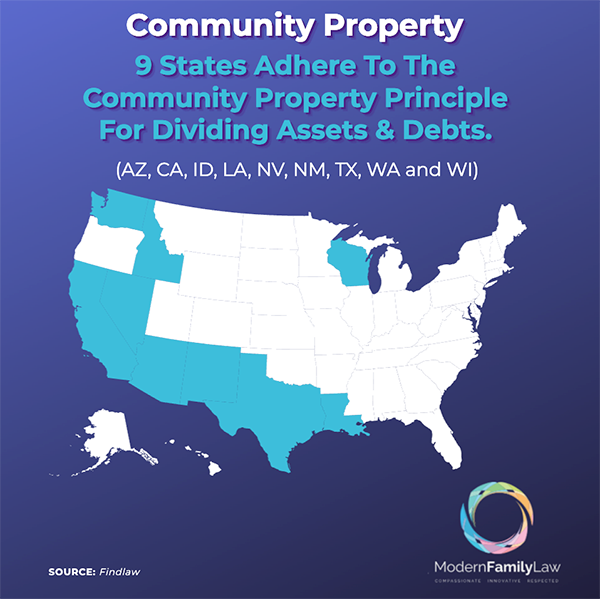
California’s community property laws significantly impact how assets and debts are handled, particularly during marriage, divorce, or upon the death of a spouse. Understanding these principles is crucial for residents navigating financial planning, estate matters, or marital dissolution. This system, rooted in Spanish civil law, presumes that most property acquired during a marriage is owned equally by both spouses. This contrasts with common law states, where property is typically considered separate unless explicitly held jointly.
The Foundation of Community Property in California
The core tenet of California’s community property system is the equal co-ownership of assets and debts acquired during the marriage. This concept extends beyond just monetary wealth; it encompasses a wide array of possessions, income, and financial obligations. The law aims to ensure fairness and equity between spouses, recognizing their contributions to the marital partnership, both financial and non-financial.

Defining Community Property and Separate Property
To grasp the intricacies of community property, it’s essential to distinguish it from separate property.
-
Community Property: Generally, any asset or debt acquired by either spouse or both spouses during the marriage is considered community property. This includes:
- Income earned by either spouse from employment or business.
- Assets purchased with community funds, such as a home, vehicles, or investments.
- Debts incurred by either spouse during the marriage, unless specifically categorized as separate.
- Retirement benefits earned during the marriage.
- Intellectual property created during the marriage.
- Gifts received by both spouses together.
-
Separate Property: Conversely, separate property is owned individually by a spouse and is not subject to division in the same way as community property. Separate property typically includes:
- Assets owned by a spouse before the marriage.
- Assets acquired after legal separation or divorce.
- Gifts received by one spouse individually.
- Inheritances received by one spouse individually.
- Property designated as separate by a valid prenuptial or postnuptial agreement.
The characterization of property as community or separate is critical, especially in divorce proceedings. The court will aim to divide community property equally, while separate property remains with its owner. Disputes often arise regarding commingling, where separate property funds are mixed with community property funds, potentially transforming separate assets into community assets.
The Presumption of Community Property
A key aspect of California law is the presumption that all property acquired during the marriage is community property. This presumption is rebuttable, but it places the burden of proof on the spouse claiming that an asset is separate property. To overcome this presumption, clear and convincing evidence is required. For instance, if a spouse claims an inheritance is separate property, they must demonstrate that the funds were kept separate and were not commingled with marital assets. This presumption is particularly relevant when tracing the source of funds used to acquire assets.
Managing Community Property During Marriage
While the community property system is often discussed in the context of dissolution, its principles are relevant throughout the marriage. Spouses have the right to manage and control their community property, but with certain limitations designed to protect the other spouse’s interest.
Management and Control
Each spouse generally has the right to manage and control community property. This means they can buy, sell, or mortgage community real estate, as well as manage community personal property. However, significant transactions, such as the sale or lease of community real property, often require the consent of both spouses. This is to prevent one spouse from unilaterally disposing of valuable marital assets.
Separate Property Agreements
Spouses can agree to alter the character of their property. A prenuptial agreement, entered into before marriage, or a postnuptial agreement, entered into during marriage, can define what will be considered separate property and what will be community property. These agreements must be in writing and signed by both parties. They are powerful tools for estate planning and for clarifying financial expectations within the marriage. Such agreements can specify how future earnings, existing assets, or even inheritances will be treated.
Commingling and Transmutation
A common pitfall in community property states is the commingling of separate and community property. When separate funds are deposited into a joint account with community funds, or used to purchase assets that are titled as community property, the separate property can lose its character and become community property. This process is known as transmutation. Similarly, if community funds are used to improve or pay down the mortgage on separate property, the community may acquire an interest in that separate property.
Transmutation can also occur through explicit agreement. If spouses agree in writing that separate property will become community property, or vice versa, the character of the property changes accordingly. However, informal understandings or oral agreements are generally not sufficient to effect a transmutation.
Community Property in Divorce and Legal Separation
The most frequent context in which community property laws are applied is during divorce or legal separation proceedings. California adheres to a principle of “no-fault” divorce, meaning neither spouse needs to prove wrongdoing by the other. Instead, the focus shifts to the fair division of marital assets and debts.
Equitable Division of Community Property
California courts strive for an equal division of community property. This means that the net value of the community estate—assets minus debts—is split 50/50 between the spouses. The court will value all community assets and debts and then distribute them in a manner that achieves this equal split. This division doesn’t necessarily mean that each specific asset is divided in half. Instead, one spouse might receive the family home, while the other receives a larger share of the retirement accounts or other assets, as long as the total value is equal.
Factors Influencing Division
While the default is equal division, there are instances where a court might order an unequal division of community property. These exceptions are typically related to situations involving egregious misconduct or circumstances that make an equal split inequitable. Examples include:
- Fraud or Embezzlement: If one spouse has dissipated or wasted community assets through fraud or other dishonest acts, the court may award the other spouse a larger share to compensate for the loss.
- Child Support Obligations: In some cases, particularly where one spouse has a significant earning capacity and the other has been a homemaker, the court might consider these factors when dividing assets.
- Domestic Violence: Courts can order an unequal division in cases of severe domestic violence.
Spousal Support and Child Support
Community property division is separate from spousal support (alimony) and child support. Spousal support is determined based on various factors, including the length of the marriage, the earning capacity of each spouse, and the standard of living during the marriage. Child support is calculated based on statutory guidelines that consider the income of both parents and the needs of the children.
Community Property and Death
California community property laws also dictate how assets are handled when a spouse dies. The surviving spouse generally has a right to their half of the community property.
The Surviving Spouse’s Rights
Upon the death of one spouse, their one-half share of the community property passes according to their will or, if there is no will, through intestate succession laws. The surviving spouse retains their own one-half share. Importantly, if a spouse dies without a will (dies intestate), their separate property will also be distributed according to California’s intestate succession laws.
Estate Planning Considerations
For married couples in California, estate planning is intertwined with community property principles. Understanding how assets will be distributed upon death is crucial for ensuring that wishes are carried out and that the surviving spouse is adequately provided for. Trusts, wills, and other estate planning tools are used to manage the distribution of both community and separate property. For instance, a revocable living trust can be used to hold and manage community property during the grantors’ lives and to facilitate its distribution upon their deaths, often avoiding the complexities of probate.
Probate and Community Property
When a spouse dies, the community property may need to go through probate, which is the legal process of administering an estate. However, in many cases, community property can pass to the surviving spouse without full probate. Certain assets, like those held in joint tenancy or with designated beneficiaries (e.g., life insurance policies, retirement accounts), may pass outside of probate. The handling of community property during probate can be complex, and seeking legal advice from an estate planning attorney is often recommended.
Key Considerations and Best Practices
Navigating California’s community property laws requires diligence and awareness. Whether you are planning for marriage, considering separation, or preparing your estate, understanding these principles is paramount.
Seeking Legal Counsel
Given the complexity of community property laws, consulting with experienced family law attorneys or estate planning attorneys in California is highly advisable. They can provide personalized guidance, help with property characterization, assist in drafting agreements, and represent your interests in divorce or probate proceedings.
Documentation and Record-Keeping
Maintaining clear records of all financial transactions, particularly those involving separate property or significant marital assets, is essential. This includes documentation of prenuptial agreements, inheritances, gifts, and the source of funds used for property acquisitions. Good record-keeping can prevent disputes and simplify the division of property.

Regular Financial Reviews
For married couples, it is beneficial to periodically review their financial situation and discuss how assets and debts are being managed. This open communication can help prevent commingling issues and ensure both spouses are aligned with their financial goals and legal obligations. Understanding how property acquired during the marriage is owned can also inform decisions about investments, purchases, and future planning.
LifeOutOfTheBox is a participant in the Amazon Services LLC Associates Program, an affiliate advertising program designed to provide a means for sites to earn advertising fees by advertising and linking to Amazon.com. Amazon, the Amazon logo, AmazonSupply, and the AmazonSupply logo are trademarks of Amazon.com, Inc. or its affiliates. As an Amazon Associate we earn affiliate commissions from qualifying purchases.