
While often confused with divorce, legal separation in California offers a distinct legal framework for couples seeking to formalize their separation without fully dissolving their marriage. This process allows spouses to establish legal terms for issues such as property division, child custody, and spousal support, while remaining legally married. Understanding the nuances of legal separation is crucial for individuals navigating this complex chapter, and it’s important to distinguish it from simply living apart.
Understanding the Fundamentals of Legal Separation
Legal separation in California is a court-ordered status that provides a legal framework for a married couple to live separately. Unlike divorce, which terminates the marital bond, legal separation maintains the marriage status. This distinction carries significant implications, particularly concerning benefits and personal status.
Key Distinctions from Divorce
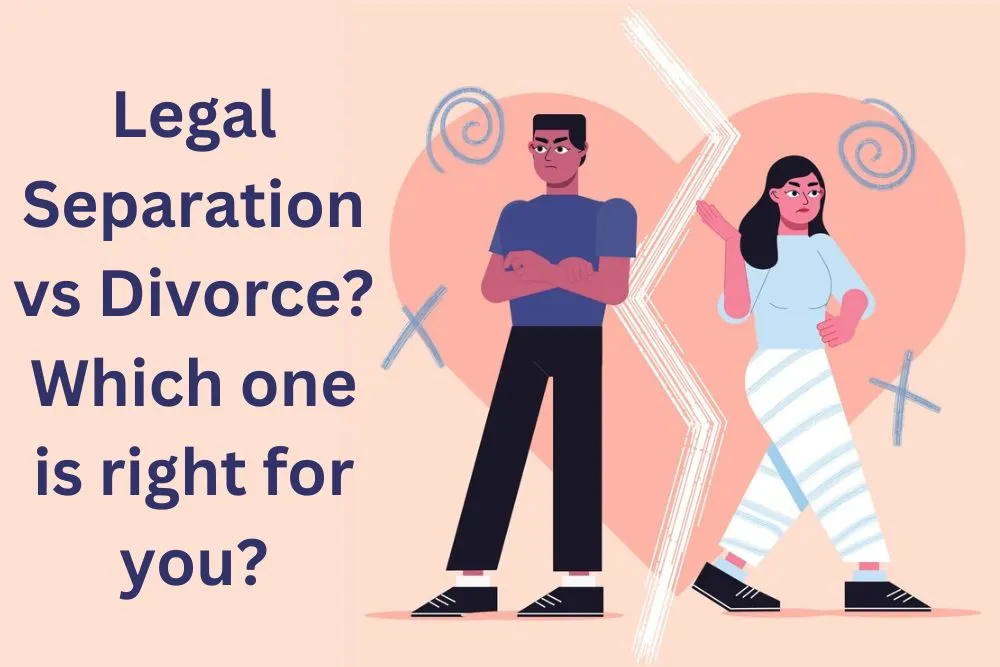
The most fundamental difference between legal separation and divorce lies in the termination of the marriage. When a divorce is finalized, the parties are legally single again. In a legal separation, however, the parties remain married, although their rights and responsibilities are redefined by the court.
- Marital Status: In legal separation, you are still legally married. In divorce, you are legally single.
- Remarriage: Individuals in a legal separation cannot legally remarry. Those who are divorced are free to remarry.
- Benefits: Certain benefits, such as those related to health insurance or social security, may continue to be accessible to a spouse through the other spouse’s employment or status in a legal separation, but typically cease upon divorce.
- Religious or Personal Beliefs: For some individuals, maintaining the legal status of marriage for religious or personal reasons is paramount. Legal separation allows for this while still providing legal clarity.
Grounds for Legal Separation
The grounds for seeking a legal separation in California are the same as those for divorce: “irreconcilable differences.” This means that the marriage has broken down to such an extent that the couple can no longer continue to live together as husband and wife. There is no need to prove fault or wrongdoing on the part of either spouse.
The Legal Separation Process
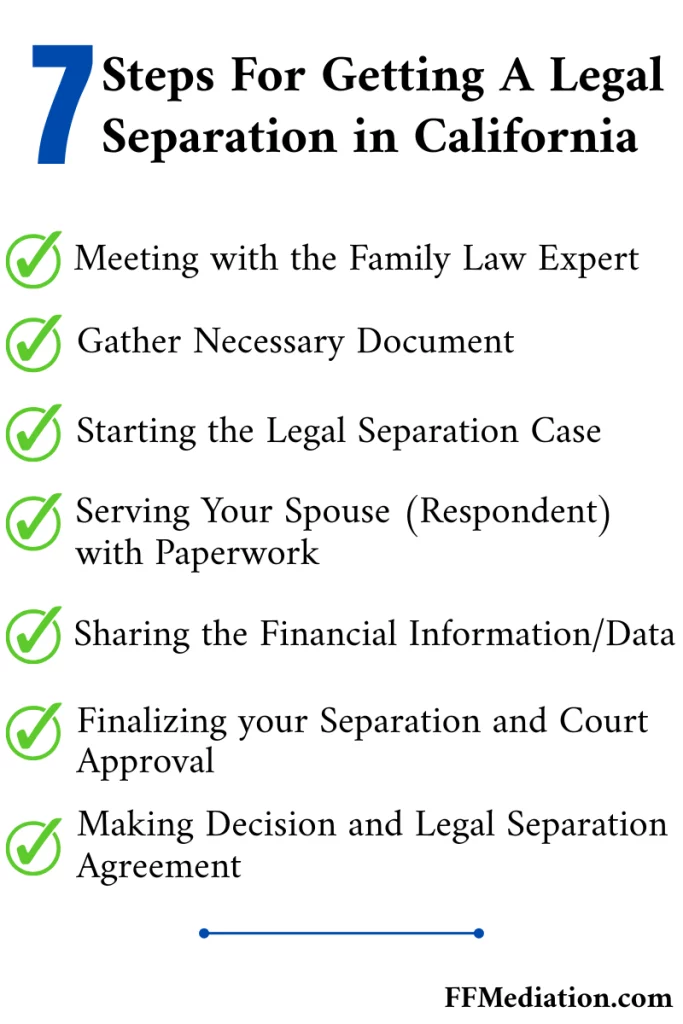
The process for obtaining a legal separation in California mirrors that of a divorce. It typically involves filing a petition with the court, serving the other spouse, and then proceeding through negotiations or court proceedings to resolve issues such as:
- Division of Property and Debts: Like divorce, legal separation requires the equitable division of community property acquired during the marriage. This includes assets like homes, vehicles, bank accounts, and retirement funds, as well as debts incurred by either spouse.
- Child Custody and Visitation: If the couple has minor children, the court will establish orders for legal and physical custody, as well as a visitation schedule. These orders are based on the best interests of the child.
- Child Support: Financial support for the children will be determined based on guidelines that consider parental income and custody arrangements.
- Spousal Support (Alimony): The court may order one spouse to pay spousal support to the other, based on factors such as the length of the marriage, the earning capacity of each spouse, and the standard of living established during the marriage.
Reasons Couples Opt for Legal Separation
While divorce is a more common outcome for couples separating, legal separation serves specific needs for a subset of individuals. The decision often hinges on a combination of financial, personal, and practical considerations.
Financial and Benefit-Related Motivations
One of the primary drivers for choosing legal separation is the desire to retain access to spousal benefits. This is particularly relevant for couples where one spouse relies heavily on the other for health insurance, retirement plan access, or other employment-related benefits.
- Health Insurance: A spouse may remain covered under the other spouse’s employer-sponsored health insurance plan after a legal separation, whereas this coverage typically ceases upon divorce. This can be a critical consideration, especially for individuals with pre-existing medical conditions or those who are unable to secure affordable coverage on their own.
- Retirement and Pension Plans: In some cases, a legally separated spouse may continue to be a beneficiary of their spouse’s retirement or pension plan, or retain rights to a portion of those assets acquired during the marriage, without the full division that often occurs in a divorce.
- Social Security Benefits: There can be nuances related to Social Security benefits for legally separated spouses compared to divorced spouses, though eligibility criteria often depend on the length of the marriage and other factors.
Personal and Religious Considerations
For some individuals, deeply held religious beliefs or personal convictions may make divorce an undesirable or impossible option. Legal separation offers a way to acknowledge the end of the marital relationship and establish separate lives without violating these core principles.
- Religious Objections: Certain religions prohibit divorce, making legal separation the only viable path for couples who wish to live apart and have their separation legally recognized.
- Maintaining Family Unity: In some cultural contexts, divorce can carry a significant stigma. Legal separation might be viewed as a less disruptive option for extended family members or to maintain a semblance of unity, particularly concerning children.
- Avoiding the Finality of Divorce: The emotional finality of divorce can be daunting. Legal separation provides a structured separation that, in some instances, might leave the door open for reconciliation if the couple chooses to pursue it later. However, it is crucial to understand that reconciliation requires a formal resumption of the marital relationship, not merely continued cohabitation.
Practical and Strategic Advantages
Beyond benefits and personal beliefs, legal separation can sometimes offer practical advantages in managing assets or navigating specific life stages.
- Tax Implications: While tax laws are complex and subject to change, there may be instances where legal separation offers different tax filing statuses or implications compared to divorce. Consulting with a tax professional is highly advisable.
- Preserving Inheritance Rights (with caveats): In specific estate planning scenarios, a legal separation might preserve certain inheritance rights that would be automatically extinguished by divorce. This is highly dependent on individual estate plans and legal advice.
- Military Benefits: Specific rules govern how military benefits are handled in cases of divorce versus legal separation, and legal separation may allow for continued access to certain benefits under specific circumstances.
Navigating the Legal Landscape: What to Expect
Embarking on the path of legal separation in California requires a thorough understanding of the legal procedures and the commitment to navigating them effectively. It is not a process to be undertaken lightly, and professional guidance is almost always necessary.
The Petition and Response
The process begins with one spouse, the petitioner, filing a “Petition for Legal Separation” with the court. This document outlines the basic information about the marriage and the requested orders regarding property, children, and support. The petitioner must then formally serve the other spouse, the respondent, with a copy of the petition and a summons.
The respondent then has a set period to file a “Response” to the petition, indicating whether they agree with the requests or wish to propose different terms. If the respondent fails to file a response, the petitioner may be able to proceed with a “default” judgment, where the court grants the requests made in the petition.
Reaching an Agreement or Going to Court
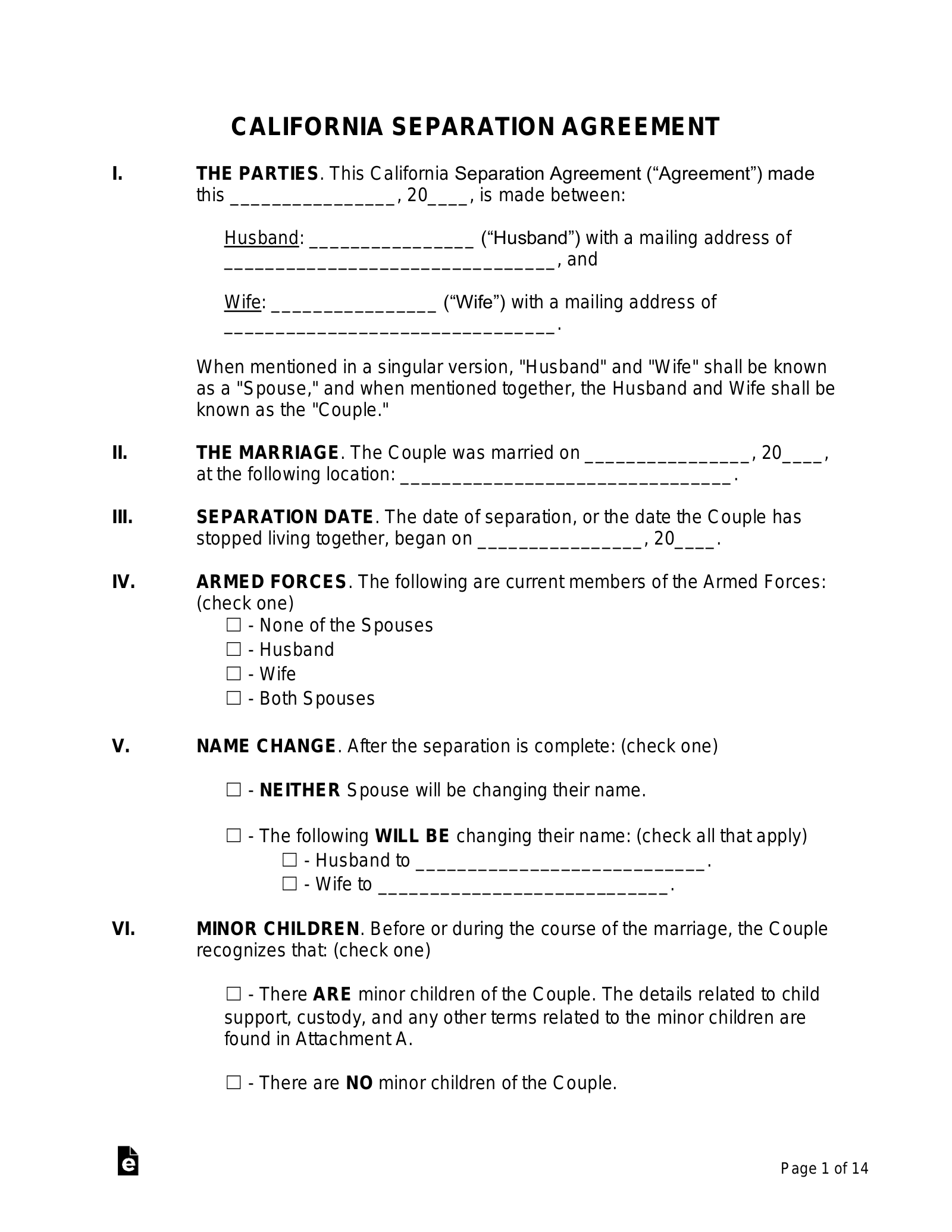
Ideally, couples can negotiate the terms of their legal separation outside of court. This can be achieved through direct negotiation, mediation with a neutral third party, or with the assistance of attorneys. An “Agreement” or “Stipulated Judgment” that outlines all agreed-upon terms is then submitted to the court for approval.
If an agreement cannot be reached, the case will proceed to litigation. This involves court hearings, discovery (exchanging information and evidence), and potentially a trial where a judge will make the final decisions on all outstanding issues. This is typically a more time-consuming and expensive route.
Post-Separation Life and Conversion to Divorce
A legal separation judgment is a final court order that dictates the rights and responsibilities of each party moving forward. However, it is important to understand that a legal separation is not necessarily the end of the legal process if a couple later decides to divorce.
- Conversion to Divorce: In California, a legal separation can be converted into a divorce. This process is generally straightforward, as the terms of the legal separation can often be adopted as the terms of the divorce. The conversion typically requires filing a specific request with the court and waiting for the mandatory six-month waiting period (which begins from the date the respondent was served with the initial dissolution or legal separation petition).
The Importance of Legal Counsel
Given the complexities of family law and the potential long-term implications of legal separation, retaining experienced legal counsel is highly recommended. An attorney can:
- Explain your rights and obligations under California law.
- Help you negotiate favorable terms regarding property, support, and custody.
- Ensure that all necessary legal documents are correctly filed and that your interests are protected.
- Guide you through the court process, whether you are seeking an amicable resolution or facing litigation.
Seeking Professional Guidance
The decision to pursue legal separation is a significant one, fraught with emotional and legal complexities. It is a path that requires careful consideration, a clear understanding of one’s rights and responsibilities, and often, the support of legal professionals.
When to Consider Legal Separation
Consider legal separation if you and your spouse:
- Wish to live separately but remain legally married for financial, religious, or personal reasons.
- Need to establish clear legal terms for child custody, support, and property division.
- Want to access benefits that may be lost upon divorce.
- Are exploring reconciliation but require a structured separation in the interim.
The Role of Attorneys and Mediators
Navigating the legal framework of separation in California is best done with professional assistance. Family law attorneys specializing in divorce and separation can provide invaluable guidance, draft necessary legal documents, and represent your interests in court. For couples seeking a less adversarial approach, mediation services offer a structured environment to discuss and resolve issues with the help of a neutral facilitator. Mediation can often lead to more amicable agreements and reduce the emotional and financial toll of litigation.
Final Thoughts on Legal Separation
Legal separation in California provides a vital legal alternative to divorce for individuals facing marital dissolution. It offers a structured pathway to address the practical and financial realities of separation while preserving the marital status. By understanding its distinctions from divorce, the grounds for seeking it, and the procedural steps involved, individuals can make informed decisions that best suit their unique circumstances. Consulting with a qualified legal professional is the most crucial step in ensuring that this process is navigated with clarity, protection, and a focus on future well-being.
LifeOutOfTheBox is a participant in the Amazon Services LLC Associates Program, an affiliate advertising program designed to provide a means for sites to earn advertising fees by advertising and linking to Amazon.com. Amazon, the Amazon logo, AmazonSupply, and the AmazonSupply logo are trademarks of Amazon.com, Inc. or its affiliates. As an Amazon Associate we earn affiliate commissions from qualifying purchases.