
Navigating the intricacies of professional licensure can be a significant undertaking, especially for those aspiring to practice nursing in a vibrant state like Florida. The National Council Licensure Examination (NCLEX) serves as the standardized gateway to becoming a registered nurse (RN) or a licensed practical nurse (LPN). For aspiring nurses in Florida, understanding the rules and regulations surrounding the NCLEX, including limitations on attempts, is paramount to successful career progression. This guide delves into the specifics of NCLEX retakes within the Sunshine State, offering clarity and strategic insights for candidates.

Understanding NCLEX Eligibility and Retake Policies
The journey to NCLEX eligibility begins with graduating from an approved nursing program. Once educational requirements are met, candidates apply to the Florida Board of Nursing for licensure. It is this board that ultimately oversees the licensing process, including the NCLEX examination.
Initial Application and Authorization to Test (ATT)
Following the submission of a nursing program verification and the successful completion of a criminal background check, the Florida Board of Nursing will grant an Authorization to Test (ATT) if all criteria are met. The ATT is a crucial document that permits a candidate to schedule their NCLEX exam with Pearson VUE, the testing provider. The ATT has a specific validity period, and candidates must schedule and take their exam within this timeframe. Failure to do so may necessitate reapplying and repurchasing the exam.
NCLEX Attempts: The General Framework
The National Council of State Boards of Nursing (NCSBN), the organization that develops and administers the NCLEX, has a general policy regarding the number of times a candidate can attempt the examination. While the NCSBN sets the overarching framework, individual state boards of nursing may have their own specific regulations that build upon these guidelines.
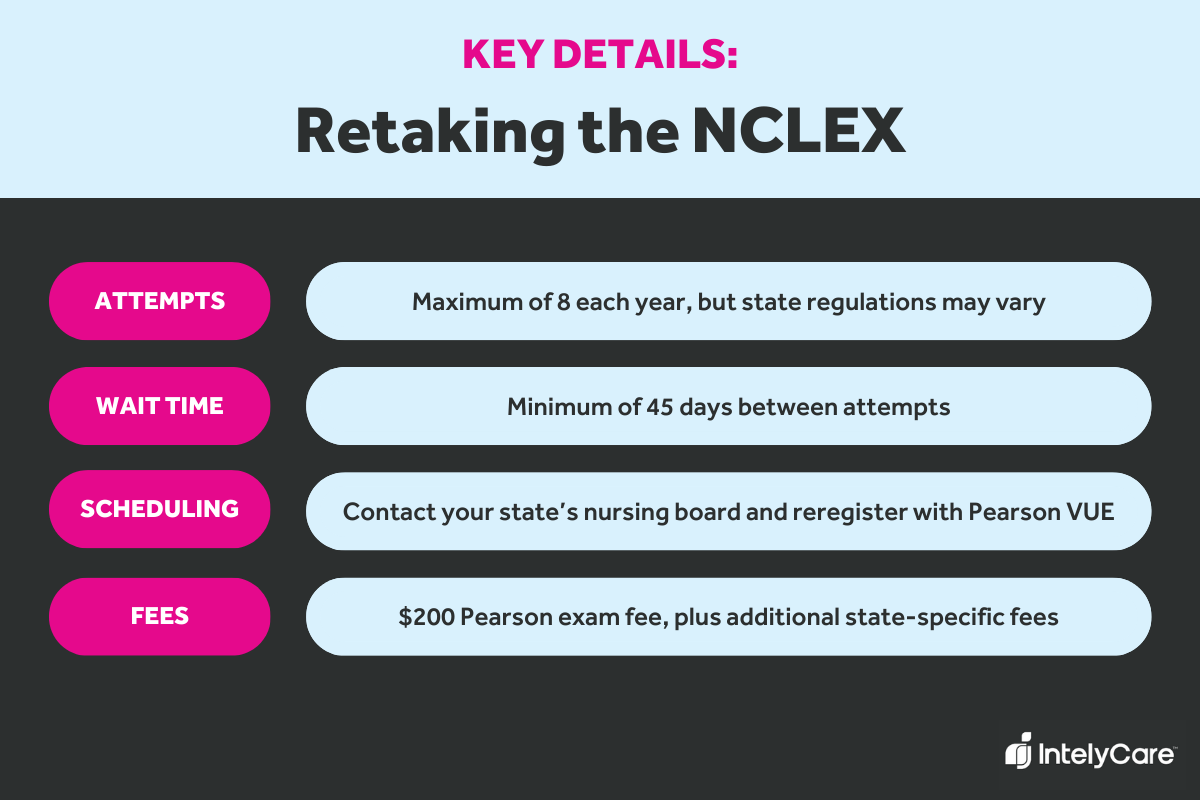
For most jurisdictions, including Florida, there is no inherent limit on the total number of times a candidate can take the NCLEX. However, this is not an unlimited pass. There are stipulations and, crucially, timeframes that govern repeated attempts. The primary consideration is the candidate’s ongoing eligibility and the potential need for remedial action.
Florida’s Specific Approach to NCLEX Retakes
The Florida Board of Nursing follows a generally permissive approach to NCLEX retakes, aiming to support candidates in achieving licensure. However, this permissiveness is balanced with the need to ensure competency.
The First Three Attempts
A candidate in Florida can typically take the NCLEX up to three times without any additional requirements beyond reapplying and retaking the exam. After each attempt, candidates receive a Candidate Performance Report (CPR). This report provides general information about the candidate’s performance in the different content areas assessed by the NCLEX. While it does not offer specific questions or answers, it can guide focused study for subsequent attempts.
Beyond the Third Attempt: Remedial Requirements
It is after the third attempt that the Florida Board of Nursing introduces a significant requirement. If a candidate fails the NCLEX for a fourth time, they are mandated to complete a board-approved remediation or review course. This course is designed to address any identified knowledge or skill gaps that may have contributed to repeated failures.
Selecting an Approved Remediation Course
The selection of a remediation course is not arbitrary. The Florida Board of Nursing maintains a list of approved providers and courses. Candidates must ensure that any course they choose is officially sanctioned by the board to be eligible for credit. These courses typically offer intensive review of NCLEX content, test-taking strategies, and practice simulations designed to mimic the actual exam experience. The duration and format of these courses can vary, but they generally require a significant time commitment.
Reapplying After Remediation
Upon successful completion of an approved remediation course, the candidate must submit proof of completion to the Florida Board of Nursing. Following this, they will be eligible to reapply for the NCLEX and receive a new ATT. The requirement for a remediation course applies each time a candidate fails the NCLEX for a fourth attempt. For instance, if a candidate fails the NCLEX for the fourth, fifth, and sixth time, they would need to complete a remediation course before their fifth attempt, and then again before their seventh attempt, and so on.
The “Five-Year Rule” (Expired Rule, but Important Context)
It’s worth noting that in the past, Florida had a “five-year rule” which could impact candidates. This rule, which has since been repealed, stipulated that if a candidate did not pass the NCLEX within five years of graduating from their nursing program, they would need to complete an additional 120-hour remedial nursing education program. While this rule is no longer in effect, it highlights the evolution of nursing licensure regulations and the board’s commitment to ensuring candidates are up-to-date with current nursing knowledge and practice.
Strategic Preparation for the NCLEX
Understanding the retake policy is only one piece of the puzzle. Success on the NCLEX hinges on thorough preparation and a strategic approach to examination.
Beyond Content Review: Skills and Mindset
While mastering nursing content is fundamental, the NCLEX is also a test of critical thinking and clinical judgment. Candidates are advised to focus not only on memorizing facts but also on applying concepts to various patient scenarios. This includes understanding prioritization, delegation, safety, and the nursing process.
Utilizing Candidate Performance Reports (CPRs)
The CPR received after each unsuccessful attempt is an invaluable tool. While it doesn’t reveal specific questions, it highlights areas of weakness. Aspiring nurses should meticulously review these reports and tailor their study plan to focus on the content areas where they scored below the passing standard. Working with a tutor or study group can be particularly beneficial in addressing these identified gaps.
Practice Questions and Simulation
Familiarity with the NCLEX format and question style is crucial. Numerous resources offer practice questions, online review courses, and adaptive testing simulations. These tools help candidates build stamina, refine their test-taking strategies, and gain confidence. Simulating the actual exam experience – including time constraints and the computer-adaptive nature of the NCLEX – can significantly reduce test anxiety.
Seeking Support and Resources
The path to licensure can be challenging, and seeking support is a sign of strength, not weakness.
Nursing Program Resources
Many nursing programs offer NCLEX review sessions or resources for their graduates. Staying connected with faculty and alumni can provide valuable insights and guidance.
Professional Organizations and Mentors
Engaging with professional nursing organizations or finding a mentor can offer not only career advice but also moral support throughout the licensure process. Experienced nurses often have a wealth of knowledge about navigating licensing hurdles.
Mental and Emotional Well-being
The pressure of passing the NCLEX can take a toll. Prioritizing mental and emotional well-being through stress management techniques, adequate rest, and a supportive network is essential for sustained focus and performance.
Important Considerations for Out-of-State Applicants
While this article focuses on Florida, it’s worth briefly mentioning that nurses licensed in other states who wish to practice in Florida typically apply for licensure by endorsement. The NCLEX pass status is a prerequisite for this process. The retake policies discussed here primarily apply to initial licensure applicants within Florida.
Conclusion: A Path Forward
The question of how many times one can take the NCLEX in Florida is answered with a policy that emphasizes opportunity rather than strict limitation. While there isn’t a definitive cap on the total number of attempts, the requirement for remedial education after the third failure underscores the board’s commitment to ensuring that all licensed nurses possess the necessary competency to provide safe and effective patient care. By understanding these policies, dedicating themselves to rigorous preparation, and leveraging available resources, aspiring nurses in Florida can successfully navigate the NCLEX and embark on their rewarding careers.
LifeOutOfTheBox is a participant in the Amazon Services LLC Associates Program, an affiliate advertising program designed to provide a means for sites to earn advertising fees by advertising and linking to Amazon.com. Amazon, the Amazon logo, AmazonSupply, and the AmazonSupply logo are trademarks of Amazon.com, Inc. or its affiliates. As an Amazon Associate we earn affiliate commissions from qualifying purchases.