
Establishing a Limited Liability Company (LLC) in Florida can be a strategic move for entrepreneurs looking to protect their personal assets while enjoying the flexibility of a pass-through tax structure. This vibrant state, known for its diverse economy and thriving business environment, offers a welcoming landscape for new ventures. Whether you’re a seasoned business owner or embarking on your first entrepreneurial journey, understanding the process is key to a smooth and successful launch. This guide will walk you through the essential steps to set up your Florida LLC, ensuring compliance and setting a strong foundation for your business.
Understanding the Florida LLC Structure
An LLC is a hybrid business structure that combines the pass-through taxation of a partnership or sole proprietorship with the limited liability of a corporation. This means that the business’s profits and losses are typically passed through to the owners’ personal income without being subject to corporate tax rates, while the owners’ personal assets are protected from business debts and lawsuits. Florida law provides a clear framework for forming and operating an LLC, making it an attractive option for many.
Benefits of Forming an LLC in Florida
The advantages of choosing an LLC structure in the Sunshine State are numerous:
- Limited Liability Protection: This is the cornerstone benefit. Your personal assets, such as your home, car, and savings, are generally shielded from business debts, liabilities, and lawsuits. If your LLC incurs debt or faces legal action, only the assets owned by the LLC are at risk.
- Pass-Through Taxation: Unlike C-corporations, LLCs are not taxed as a separate entity at the federal level. Profits and losses are “passed through” to the members’ individual tax returns, avoiding the “double taxation” that can occur with corporations.
- Flexibility in Management: LLCs can be managed by their members or by appointed managers. This flexibility allows you to structure your business operations in a way that best suits your needs and expertise.
- Fewer Formalities: Compared to corporations, LLCs generally have fewer ongoing compliance requirements, such as mandatory annual meetings or extensive record-keeping, although maintaining good records is always recommended.
- Credibility and Professionalism: Operating as an LLC can lend an air of professionalism and legitimacy to your business, which can be beneficial when dealing with clients, suppliers, and financial institutions.
Key Considerations Before Forming Your LLC
Before diving into the paperwork, consider these crucial aspects:
- Business Name: Your LLC name must be unique and comply with Florida’s naming conventions. It must include the words “Limited Liability Company” or an acceptable abbreviation like “LLC” or “L.L.C.” You can check name availability on the Florida Department of State website.
- Registered Agent: Florida requires every LLC to designate a registered agent. This is a person or business entity located within the state that agrees to accept official legal and tax documents on behalf of your LLC. The registered agent must have a physical street address in Florida (not a P.O. Box).
- Operating Agreement: While not legally required by the state, a comprehensive Operating Agreement is highly recommended. This internal document outlines the ownership structure, member responsibilities, profit and loss distribution, and operating procedures of your LLC. It’s a vital tool for preventing disputes among members and clearly defining how the business will be run.
- Business Purpose: Clearly define the purpose of your LLC. While it can be broad, being specific can be helpful for future planning and legal clarity.
- Members and Management: Determine who will be the members (owners) of the LLC and how the management structure will work (member-managed or manager-managed).
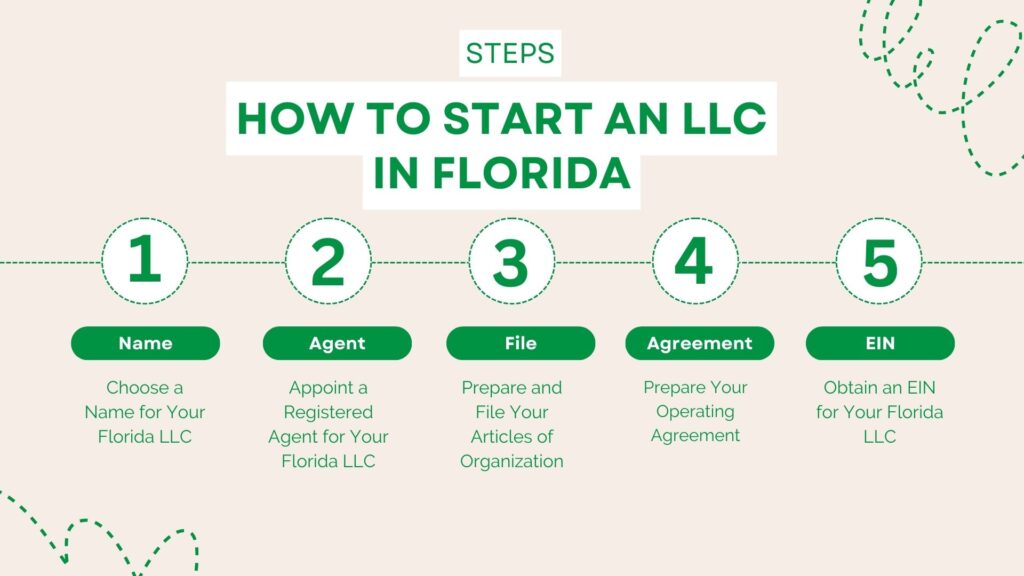
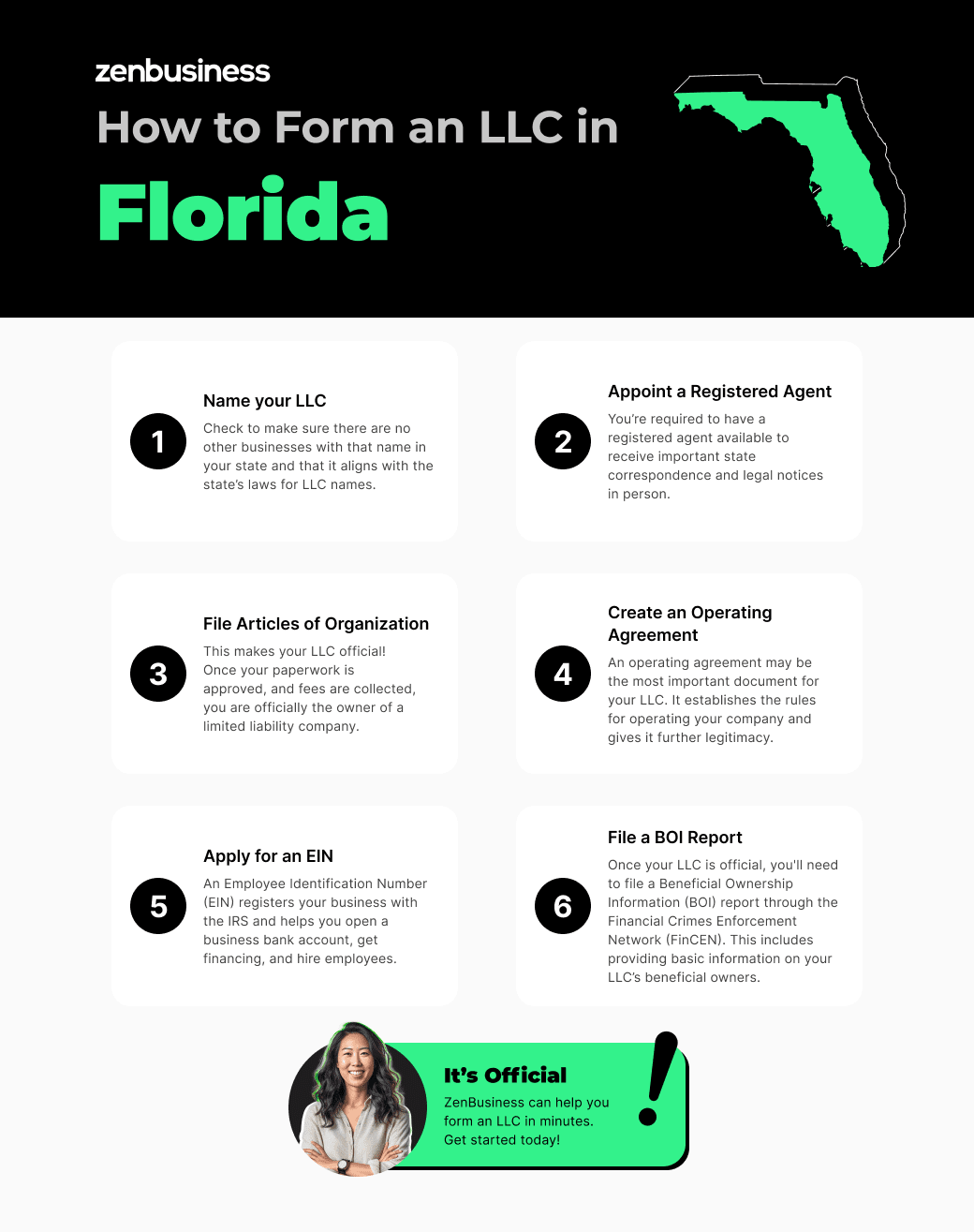
Step-by-Step Guide to Setting Up Your Florida LLC
The process of forming an LLC in Florida is straightforward and can be completed online or by mail.
Step 1: Choose a Business Name and Check Availability
As mentioned, your chosen name must be distinguishable from other business entities registered in Florida.
- Brainstorm Names: Come up with several potential names that are memorable and relevant to your business.
- Search the Florida Department of State Business Database: Visit the Florida Department of State’s Division of Corporations website and use their online search tool to check if your desired name is available. This is a crucial step to avoid rejection of your application.
- Reserve Your Name (Optional): If you’ve found an available name but aren’t ready to file your LLC documents, you can reserve the name for a period by filing an Application for Reservation of Limited Liability Company Name with the Florida Department of State.
Step 2: Designate a Registered Agent
Your registered agent is your LLC’s official point of contact for legal and government correspondence.
- Choose an Agent: You can act as your own registered agent if you are a Florida resident with a physical address in the state. Alternatively, you can appoint another individual or a commercial registered agent service. Commercial services are often preferred for their reliability and availability during business hours.
- Ensure Address Compliance: The registered agent’s address must be a physical street address in Florida, not a P.O. Box.
Step 3: File Articles of Organization
This is the official document that establishes your LLC with the state of Florida.
- Obtain the Form: You can download the Articles of Organization form from the Florida Department of State website or file online through their Sunbiz portal.
- Complete the Information: The Articles of Organization typically require the following information:
- The name of your LLC.
- The name and address of your registered agent.
- The principal office address of your LLC (this can be the same as the registered agent’s address, but it’s not required).
- The name and mailing address of the organizer (the person filing the document).
- The effective date of the LLC (if different from the filing date).
- Filing Fee: There is a filing fee associated with submitting the Articles of Organization. As of the last update, this fee is $125. Always check the Florida Department of State website for the most current fee schedule.
- Submission: Submit the completed Articles of Organization and the filing fee to the Florida Department of State. You can typically do this online, by mail, or in person.
Step 4: Create an Operating Agreement
As mentioned, this document is crucial for the internal governance of your LLC.
- Draft the Agreement: While not filed with the state, it’s essential to create a comprehensive Operating Agreement. It should cover:
- Ownership Structure: Details about member ownership percentages.
- Management: How the LLC will be managed (member-managed or manager-managed) and the roles and responsibilities of managers, if any.
- Contributions: Initial and future capital contributions from members.
- Profit and Loss Distribution: How profits and losses will be allocated among members.
- Membership Changes: Procedures for admitting new members or when a member leaves.
- Dissolution: How the LLC will be dissolved and assets distributed.
- Voting Rights: Rules for member voting on important decisions.
- Member Signatures: All members should sign and date the Operating Agreement. Keep a copy for your records.
Step 5: Obtain an Employer Identification Number (EIN)
An EIN, also known as a Federal Tax Identification Number, is like a Social Security number for your business. You’ll need it if you plan to hire employees, open a business bank account, or file certain tax returns.
- Apply Online: You can obtain an EIN for free directly from the Internal Revenue Service (IRS) website.
- Required Information: You’ll need to provide information about your LLC, including its name, address, and the responsible party.
- Instant Issuance: If you apply online, you will typically receive your EIN immediately.
Step 6: Open a Business Bank Account
Keeping your business finances separate from your personal finances is critical for maintaining liability protection and for accurate accounting.
- Gather Documents: You will likely need your Articles of Organization, your EIN, and your Operating Agreement to open a business bank account.
- Choose a Bank: Research banks that offer business banking services in Florida and compare their fees, services, and account options.
- Deposit Funds: Make an initial deposit to fund your business operations.
Step 7: Understand Ongoing Compliance Requirements
Once your LLC is established, there are ongoing responsibilities to ensure your business remains in good standing.
- Annual Reports: Florida requires LLCs to file an annual report with the Florida Department of State and pay a fee ($150 as of the last update). This report updates the state on your LLC’s information, such as its registered agent and principal address.
- Tax Obligations: Understand your federal, state, and local tax obligations. This includes income tax, sales tax, and any other applicable taxes. Consult with a tax professional to ensure compliance.
- Business Licenses and Permits: Depending on your industry and location, you may need specific business licenses and permits to operate legally. Research requirements at the federal, state, and local levels. For instance, businesses in industries like hospitality or professional services might need special endorsements.
Maintaining Your Florida LLC
The journey doesn’t end after formation. Continuous adherence to state laws and best practices will ensure your LLC remains a robust and protected entity.
The Importance of a Detailed Operating Agreement
While often overlooked, the Operating Agreement serves as the constitution for your LLC. It governs the relationships between members and dictates the operational framework. A well-crafted agreement can prevent disputes over profit distribution, management decisions, and even the departure or addition of members. For example, if you have multiple members investing different amounts, the Operating Agreement clearly defines how profits and losses are shared, preventing potential misunderstandings that could escalate into legal battles. It also provides a roadmap for succession planning, ensuring a smooth transition of ownership if needed.
Annual Filings and Fees
Staying current with the Florida Department of State is paramount. The annual report, which is mandatory for all LLCs, requires a filing fee. Failure to file can result in administrative dissolution of your LLC, meaning the state will essentially terminate your business entity. This can lead to significant complications, including the loss of your limited liability protection and the inability to legally conduct business. Mark your calendars for the annual filing deadline and ensure you submit the report and payment on time.
Tax Compliance and Professional Advice
Navigating the tax landscape can be complex. As an LLC, you have options for how your business is taxed. You can elect to be taxed as a sole proprietorship, partnership, S-corporation, or C-corporation. Each option has different implications for your tax liability. It is highly advisable to consult with a qualified tax advisor or CPA who is knowledgeable about Florida’s tax laws and federal tax regulations. They can help you choose the most advantageous tax structure for your business and ensure you meet all filing deadlines and requirements, thereby avoiding costly penalties and audits.

Business Licenses and Permits
Beyond the state-level formation, many industries require additional licenses and permits at the city, county, or federal level. For example, a restaurant will need health permits, a real estate agency will require state licensing, and a construction company might need contractor licenses. Researching and obtaining all necessary licenses and permits before commencing operations is not only a legal requirement but also crucial for establishing credibility and avoiding fines or shutdown orders. Websites for the City of Miami, Orange County, and other local government entities are excellent resources for this information.
By meticulously following these steps and maintaining ongoing compliance, you can successfully establish and operate a thriving LLC in the dynamic business environment of Florida.
LifeOutOfTheBox is a participant in the Amazon Services LLC Associates Program, an affiliate advertising program designed to provide a means for sites to earn advertising fees by advertising and linking to Amazon.com. Amazon, the Amazon logo, AmazonSupply, and the AmazonSupply logo are trademarks of Amazon.com, Inc. or its affiliates. As an Amazon Associate we earn affiliate commissions from qualifying purchases.