
When planning a trip, choosing the right accommodation can define the entire travel experience. Among the giants of the hospitality industry, Best Western is a name that almost every traveler recognizes. From roadside motels along historic highways to upscale boutique properties in major global capitals, the blue-and-yellow logo has been a staple of the lodging landscape for decades.
However, many travelers often wonder: what hotel chain is Best Western? Is it an independent brand, a franchise, or part of a massive corporate conglomerate? To understand Best Western, one must look beyond the standard franchise model that dominates the hotel industry. Today, under its parent umbrella, BWH Hotels, this global brand operates an incredibly diverse portfolio of properties designed to meet the needs of every type of traveler.
The Unique Structure of Best Western Hotels
To truly understand what kind of hotel chain Best Western is, one must examine its foundational structure. Unlike typical global hospitality brands, Best Western operates on a highly unique business model that has set it apart since its inception.
A Membership Association, Not a Traditional Franchise
For most of its history, Best Western Hotels & Resorts did not operate as a traditional corporate franchise. Instead, it was established as a non-profit membership association. Founded in 1946 by M.K. Guertin, a veteran hotelier from California, the brand began as an informal referral system among independent hotel owners.
In a traditional franchise model, such as those run by Marriott or Hilton, individual property owners pay steep royalty fees based on a percentage of their gross revenue to a parent corporation. In contrast, Best Western’s membership model allowed hotel owners to retain their independence while pooling their resources for marketing, reservation systems, and brand standards. Members paid flat dues and fees to support the cooperative’s operations.
In recent years, the brand transitioned to a more conventional corporate structure under BWH Hotels, headquartered in Phoenix, Arizona. Despite this modernization, the core philosophy remains: individual properties are independently owned and operated, meaning that while they adhere to strict quality standards, each hotel maintains its own unique local character and architectural charm.
The Global Footprint and Brand Evolution
What started as a network of roadside hotels in the United States has evolved into a global powerhouse. Today, BWH Hotels boasts a footprint of over 4,300 hotels in more than 100 countries and territories.
The expansion began in earnest during the 1970s, as the brand entered markets across North America, Europe, and Asia. To cater to a rapidly diversifying travel market, the brand transitioned from a single-brand identity to a multi-tiered hotel ecosystem. This evolution allowed the company to preserve its midscale roots while simultaneously moving into the luxury, boutique, and extended-stay segments.
Understanding the Best Western Brand Portfolio
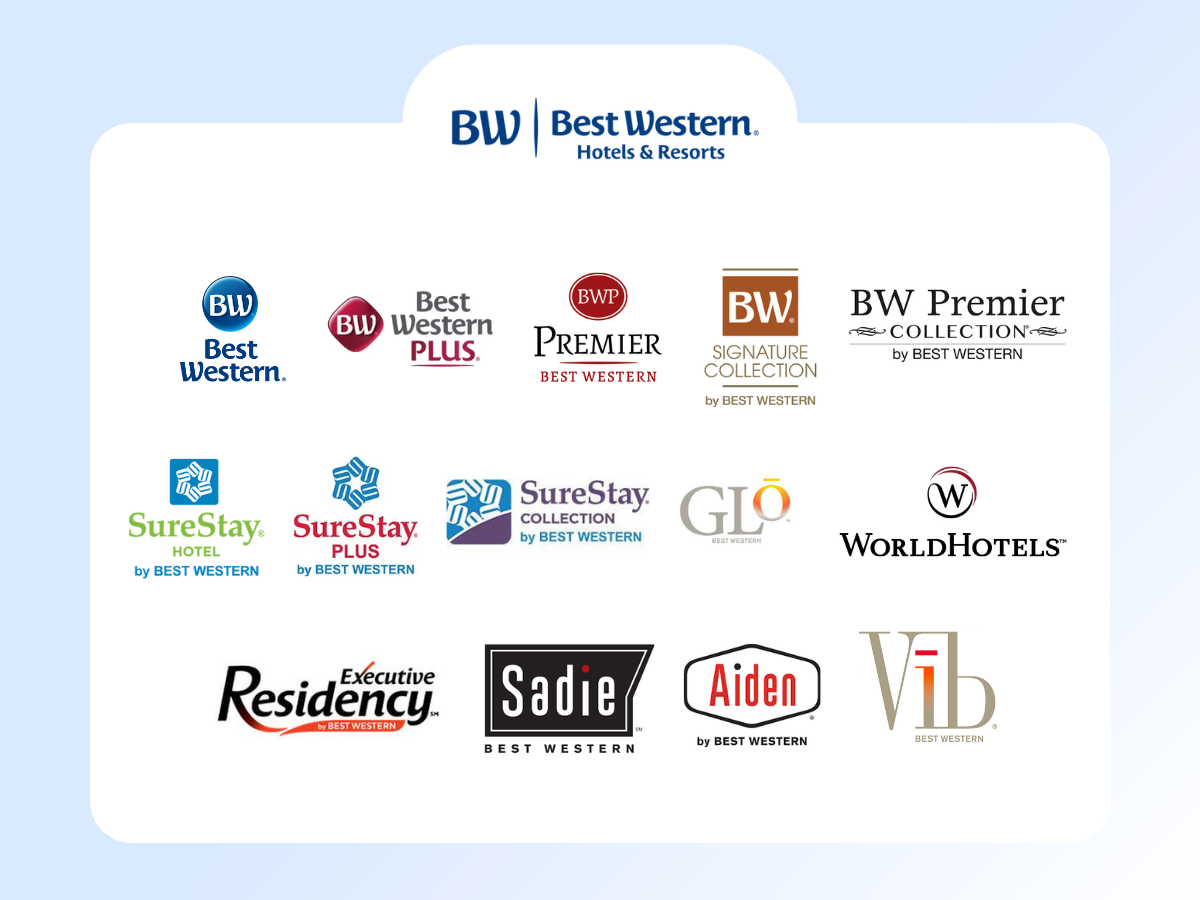
Today, the answer to “What hotel chain is Best Western?” is much more complex than it was twenty years ago. The brand is no longer just a budget-friendly option for road-trippers; it is a multi-tier hospitality giant categorized into distinct collections.
Core and Midscale Brands
The core brands represent the classic identity of the company—reliable, comfortable, and highly accessible.
- Best Western: The classic, foundational brand. These properties offer comfortable accommodations, essential amenities like free high-speed Wi-Fi, and consistent service at a budget-friendly price point. They are highly popular among road travelers, families, and cost-conscious business guests.
- Best Western Plus: Positioned in the upper-midscale category, these hotels offer enhanced style, elevated comfort, and upgraded amenities. Guests can expect spacious work desks, premium bedding, fitness centers, and often an on-site bar or restaurant.
- Best Western Premier: The upscale tier of the core brand. These properties feature sophisticated design, premium bath amenities, outstanding dining options, and personalized service. They are often located in prime city centers or luxury resort destinations.
Lifestyle and Boutique Collections
Recognizing the growing demand for highly designed, experiential lodging, the parent company introduced boutique and lifestyle sub-brands.
- Aiden by Best Western: A trendy, suburban boutique brand designed for travelers seeking a modern, local vibe. Each Aiden property is designed to reflect the unique personality, history, and culture of its surrounding neighborhood.
- Sadie by Best Western: An upscale, cosmopolitan boutique brand. Sadie properties are chic, stylish, and highly tailored to modern urban travelers who value social lobbies, active bar scenes, and tech-forward rooms.
- Vib: A high-density, tech-focused boutique brand. Vib (pronounced “Vibe”) hotels are designed for urban markets, featuring compact, highly functional rooms, vibrant social spaces, and advanced digital connectivity.
- Glo: A boutique brand designed for secondary markets, focusing on modern, sleek architecture, bright colors, and space-saving, minimalist room layouts.

Premium and Luxury Offerings
With the acquisition of the WorldHotels Collection, the brand firmly established its presence in the luxury hotel sector.
- WorldHotels Luxury: A curated collection of independent, iconic hotels and resorts in premier destinations worldwide, offering unparalleled luxury, bespoke service, and historic architecture.
- WorldHotels Elite: Upper-upscale properties known for exceptional style, top-tier wellness facilities, and refined dining.
- WorldHotels Distinctive: Unique, upscale hotels that capture the local flavor of key global cities.
- WorldHotels Crafted: A collection of lifestyle properties that emphasize artistic design, curated experiences, and memorable storytelling.
Extended Stay and Budget Segments
To round out its portfolio, the company also caters to long-term travelers and economy-focused guests.
- Executive Residency by Best Western: An upper-midscale, extended-stay brand offering studios and suites equipped with fully functional kitchenettes, dedicated working zones, and ample living space.
- SureStay Hotel Group: Operating in the economy and lower-midscale sectors, SureStay provides exceptional value for budget travelers without compromising on quality, cleanliness, and friendly customer service.
Key Amenities and Guest Experiences Across the Chain
Because of its unique operational model, the guest experience can vary beautifully from one location to another. However, a set of rigorous global standards ensures that essential comforts are guaranteed across every single sub-brand.
Standardized Quality vs. Local Character
One of the greatest advantages of the brand’s structure is the blend of global consistency and local authenticity. Unlike massive corporate chains where every room in Chicago looks identical to a room in Tokyo, Best Western properties often incorporate local architecture, history, and materials.
A historic boutique hotel under the brand in Paris will retain its classic French charm, while a coastal resort in the Mediterranean will reflect seaside architecture. Despite these aesthetic differences, guests can rely on standard brand promises:
- Complimentary Breakfast: A hallmark of the classic and Plus brands, offering hot, hearty, and convenient morning options.
- Connectivity: High-speed, complimentary Wi-Fi is standard across all tiers, appealing to both leisure and business travelers.
- Modern Fitness Facilities: Most midscale, upscale, and lifestyle properties feature well-equipped gym spaces to help travelers maintain their fitness routines on the go.
The Best Western Rewards Program
For frequent travelers, the loyalty program is a major draw. Best Western Rewards is consistently ranked among the top hotel loyalty programs globally. Its standout feature is that earned points never expire, a rare policy in the travel industry.
Members can redeem points for free room nights at any property worldwide, use them for digital gift cards, or even donate them to global charitable causes. The program features tiered elite status—Gold, Platinum, Diamond, and Diamond Select—which offers perks such as room upgrades, early check-in, late check-out, and bonus points on every stay.
Comparing Best Western to Other Major Hotel Chains
To understand where the brand fits in the broader hospitality market, it helps to compare it to other prominent industry giants like Choice Hotels, Wyndham Hotels & Resorts, and upscale options.
| Feature | Best Western (BWH Hotels) | Choice Hotels | Wyndham Hotels & Resorts |
|---|---|---|---|
| Primary Target Market | Midscale, Boutique, & Luxury | Budget & Midscale | Budget, Midscale, & Resort |
| Ownership Structure | Independently owned / Co-op roots | Traditional Franchise | Traditional Franchise |
| Key Competitors | Courtyard by Marriott, Hampton Inn | Comfort Inn, Quality Inn | Days Inn, Ramada, Tryp |
| Luxury Presence | Strong (via WorldHotels Collection) | Limited | Moderate (via Wyndham Grand) |
| Loyalty Program | Points never expire | Points expire after inactivity | Points expire after inactivity |
While chains like Choice Hotels and Wyndham dominate the budget and economy landscape, Best Western has successfully bridged the gap between economy convenience and upscale lifestyle experiences. By maintaining independent ownership of its hotels, the brand provides a refreshing alternative to the highly standardized, corporate atmospheres of Marriott or Hilton, making it a favorite for travelers who appreciate localized, genuine hospitality.
Whether you are booking a quick overnight stop during a road trip, organizing a corporate conference in London, or planning a luxury getaway, Best Western offers a tailored hospitality experience. It is not just a single hotel chain, but a massive, highly diverse global family of hotels built on a legacy of independence, community, and service.
LifeOutOfTheBox is a participant in the Amazon Services LLC Associates Program, an affiliate advertising program designed to provide a means for sites to earn advertising fees by advertising and linking to Amazon.com. Amazon, the Amazon logo, AmazonSupply, and the AmazonSupply logo are trademarks of Amazon.com, Inc. or its affiliates. As an Amazon Associate we earn affiliate commissions from qualifying purchases.