
When planning a journey across the United States or embarking on an international excursion to Europe, the choice of accommodation is often the most critical decision a traveler faces. While the terms “hotel” and “motel” are frequently used interchangeably in casual conversation, they represent two distinct philosophies of hospitality, architecture, and service. Understanding these differences is essential for optimizing your travel budget, ensuring comfort, and selecting the right environment for your specific needs, whether you are on a business trip in London or a family road trip through California.
Historical Evolution and Linguistic Origins
The distinction between hotels and motels begins with their history and the etymology of the words themselves. The word “hotel” has been part of the English language since the late 17th century, derived from the French “hôtel,” which referred to a French town house or a place providing lodging, meals, and other services. Historically, hotels were designed as grand structures in the hearts of major cities like Paris or New York City, catering to wealthy travelers arriving by train or ship.

The Birth of the Motor Hotel
The “motel,” on the other hand, is a much younger concept, born out of the burgeoning car culture of the early 20th century. The term is a portmanteau of “motor” and “hotel.” As the United States developed its vast network of highways, particularly the iconic Route 66, motorists needed a place to stay that was more permanent than a campsite but more accessible than a downtown hotel.
The world’s first specialized motor hotel, the Milestone Mo-Tel, opened in San Luis Obispo in 1925. This marked the beginning of a revolution in the accommodation industry, shifting the focus from the city center to the roadside. While hotels remained the standard for luxury and urban stays, motels became the backbone of the great American road trip, spreading rapidly through states like Texas and Arizona following World War II.
Cultural Significance and Development
Over the decades, the hotel has evolved into a multi-faceted industry ranging from budget stays to ultra-luxury resorts like the Ritz-Carlton or the Four Seasons. Conversely, the motel became a symbol of efficiency and independence. In countries like Canada and Australia, motels followed a similar trajectory, flanking the long stretches of highway between major metropolitan areas. This historical divergence has led to the architectural and functional differences we see today.
Architectural Design and Layout Differences
One of the most immediate ways to distinguish a motel from a hotel is its physical structure. The design of each is tailored to the expected duration of stay and the primary mode of transportation used by the guests.
Internal Corridors vs. Exterior Access
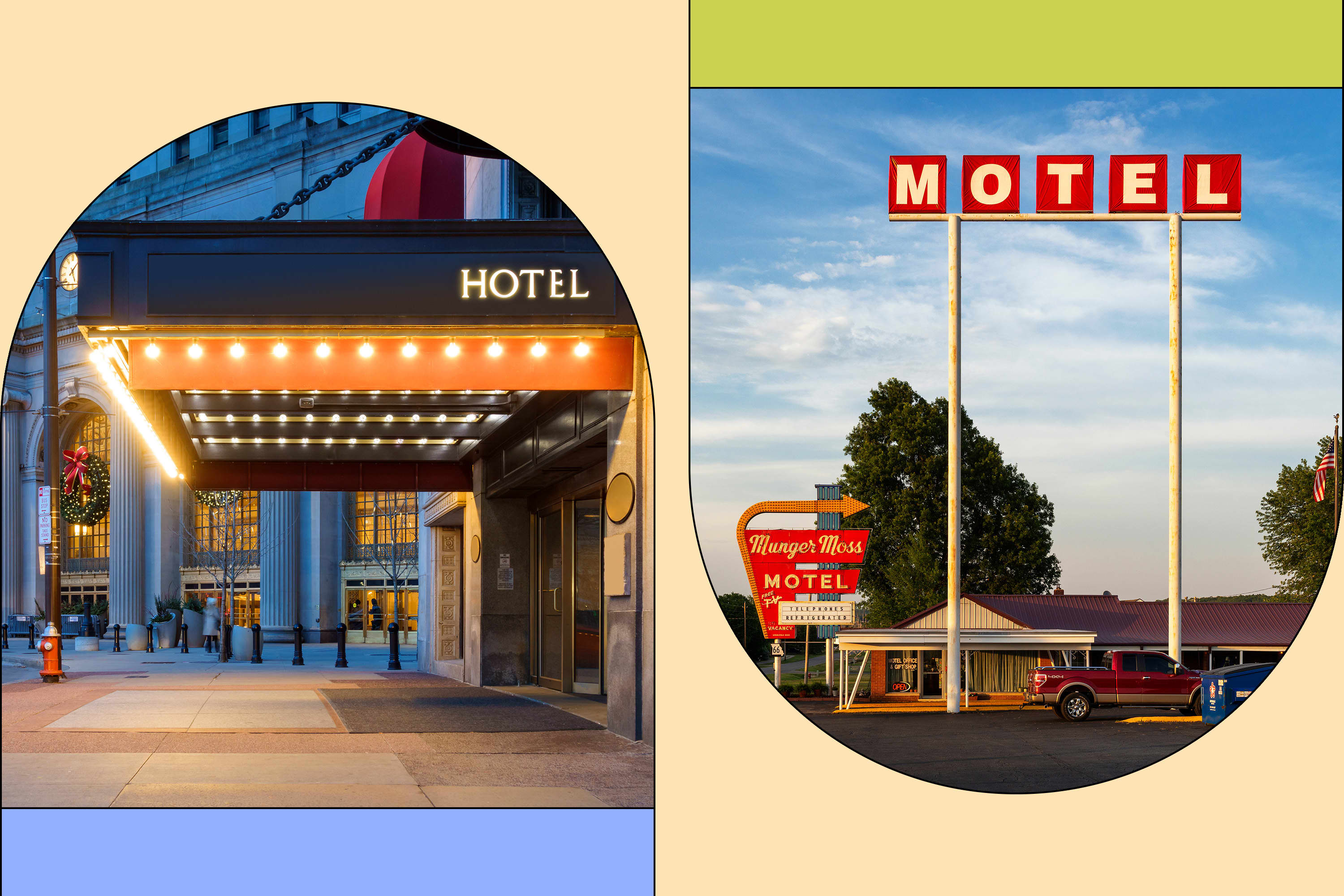
Hotels are typically large, multi-story buildings where all rooms are accessed through internal corridors. To reach your room in a Marriott in Chicago, you usually enter through a main lobby, pass a reception desk, and take an elevator to your floor. This design provides an added layer of security and climate control, as the entire transition from the entrance to the guest room happens within a managed environment.
In contrast, motels are traditionally one or two stories tall and are designed with exterior corridors. In a classic Motel 6 or Super 8 layout, your room door opens directly to the parking lot or an outdoor walkway. This “U” or “L” shaped configuration allows travelers to park their vehicle directly in front of their room door, making it significantly easier to unload luggage for a single-night stay.
Verticality and Real Estate Usage
Because hotels are often located in high-density areas like Manhattan or Tokyo, they utilize vertical space. They are built upward to maximize the number of rooms on expensive plots of land. Motels, however, are usually found where land is more plentiful and less expensive, such as near highway exits in Florida. Their horizontal layout is a hallmark of the suburban and rural landscape, prioritizing easy vehicle ingress and egress over high-occupancy verticality.
Amenities, Services, and Staffing Levels
The level of service and the variety of amenities provided are perhaps the most significant factors that separate these two accommodation types. Hotels are built to be destinations in themselves, whereas motels are designed as functional stops along a journey.
The Full-Service Hotel Experience
When you book a stay at a hotel, especially a mid-range or luxury brand like Hilton or Hyatt, you are paying for an ecosystem of services. These often include:
- Dining: Multiple on-site restaurants, bars, and 24-hour room service.
- Wellness: Fully equipped fitness centers, swimming pools (often indoor), and full-service spas.
- Business Facilities: Meeting rooms, conference halls, and business centers with printing and high-speed internet.
- Concierge Services: Dedicated staff to help with booking tours to the Eiffel Tower or securing reservations at top restaurants in Las Vegas.

The staffing at a hotel is extensive, involving valets, bellhops, housekeepers, maintenance crews, and a large front-desk team. This creates a high-touch environment where the guest’s every need is anticipated.
The Functional Simplicity of Motels
Motels operate on a much leaner model. The amenities are usually limited to the essentials: a bed, a bathroom, a television, and perhaps a small desk. While many modern motels have added features like free Wi-Fi and a basic continental breakfast, they rarely offer on-site restaurants or gyms. The “lobby” is often just a small check-in window or a tiny room with a coffee pot.
Staffing in a motel is minimal. Often, the person checking you in is the same person managing the property or overseeing the morning coffee. This reduced overhead is what allows motels to remain the most cost-effective option for travelers who only need a clean place to sleep before continuing their drive to Yellowstone National Park or the Grand Canyon.
Location Strategy and Accessibility
The location of the property often dictates whether it will be a hotel or a motel. This is tied to the needs of the target demographic and the surrounding infrastructure.
Central Business Districts and Tourist Hubs
Hotels dominate urban centers and major tourist attractions. If you want to stay within walking distance of the Colosseum in Rome or near the financial district in Singapore, you will almost exclusively find hotels. These properties are positioned to cater to tourists who use public transit or taxis and business travelers who need to be close to offices and event spaces. They are often integrated into the city’s culture, featuring architecture that reflects the local history.
Roadside Convenience and Suburban Connectivity
Motels are strategically located along major thoroughfares and highway intersections. They are the preferred choice for those traversing long distances across North America or Asia. A motel is rarely a destination; it is a convenience. You will find them clustered near gas stations and fast-food outlets, providing a “no-frills” solution for someone who has been driving for ten hours and needs immediate rest without the hassle of navigating city traffic or paying for expensive valet parking.
Cost Analysis and Booking Priorities
From a financial perspective, the difference is usually clear, though the lines have blurred slightly with the rise of boutique motels and budget hotel chains like Holiday Inn.
Budget-Friendly Road Trips
Motels are almost always cheaper than hotels. Their lower property taxes (due to location), reduced staffing costs, and lack of expensive amenities allow them to offer highly competitive nightly rates. This makes them the primary choice for students, budget-conscious families, and solo travelers on extended road trips. Booking a motel is often a spontaneous decision made based on “vacancy” signs seen from the road, although online booking has become the norm.
Premium Experiences and Long-Term Stays
Hotels command a higher price point because they offer a broader experience. A guest staying at a Sheraton in San Francisco is paying for the security of the building, the quality of the linens, the variety of the breakfast buffet, and the convenience of the location. For long-term stays, hotels are often preferred because they provide the daily services—like laundry and room cleaning—that make living away from home more manageable.
Furthermore, hotels are better equipped for events. Whether it is a wedding in the Great Smoky Mountains or a tech conference in Silicon Valley, the infrastructure of a hotel is designed to handle large groups, a feat that most motels cannot achieve.
Final Considerations for the Modern Traveler
When deciding between a hotel and a motel, consider the “purpose” of your stay. If your accommodation is simply a place to recharge your batteries during a transit phase, a motel offers unparalleled convenience and value. However, if your lodging is a central part of your travel experience—providing relaxation, social opportunities, and proximity to cultural landmarks—a hotel is the superior choice.
As the travel industry continues to evolve, we see “boutique motels” emerging in places like Portland or Austin, blending the nostalgic, exterior-entry charm of the 1950s with the high-end amenities of a modern hotel. Despite these niche crossovers, the fundamental divide remains: hotels are for the destination, and motels are for the journey. By recognizing these differences, you can better tailor your next trip to ensure that every night spent away from home meets your expectations for comfort, cost, and convenience.
LifeOutOfTheBox is a participant in the Amazon Services LLC Associates Program, an affiliate advertising program designed to provide a means for sites to earn advertising fees by advertising and linking to Amazon.com. Amazon, the Amazon logo, AmazonSupply, and the AmazonSupply logo are trademarks of Amazon.com, Inc. or its affiliates. As an Amazon Associate we earn affiliate commissions from qualifying purchases.