
The Hotel del Coronado, an iconic red-roofed masterpiece standing proudly on the sands of Coronado, California, is more than just a place to stay. Since its opening in 1888, this Victorian wooden structure has served as a beacon of luxury, hosting presidents, celebrities, and travelers from across the globe. Yet, beneath its storied architecture and shimmering seaside views lies a complex tapestry of corporate ownership that has evolved significantly over the last century. Understanding who holds the keys to this National Historic Landmark requires a deep dive into the evolution of hospitality real estate and the strategic maneuvers of global investment firms.

The Corporate Stewardship of a National Landmark
For decades, the ownership of the “Del” was relatively straightforward, often tied to local investors or smaller hospitality groups. However, as the travel industry modernized and the valuation of historic coastal properties skyrocketed, the hotel became a coveted asset for large-scale institutional investors.
Currently, the Hotel del Coronado is part of a complex portfolio managed by Blackstone, a global alternative investment firm. Through its real estate arm, Blackstone acquired the property as part of larger hospitality acquisitions. This transition marked a significant shift in how the hotel is operated, pivoting toward a model that emphasizes high-end guest experiences and major infrastructure investments to preserve the aging structure while modernizing its amenities.
The Role of BRE Hotels & Resorts
Under the broader umbrella of Blackstone, the hotel is effectively managed by BRE Hotels & Resorts. This subsidiary acts as the asset manager, overseeing the day-to-day capital expenditure projects that are vital for a property that has faced the harsh salt air of the Pacific Ocean for over 130 years. The goal for owners like Blackstone is not merely to hold the land, but to ensure that the Hotel del Coronado maintains its status as a premier luxury resort. This requires a delicate balance: satisfying the modern expectations of affluent travelers while adhering to the strict historic preservation guidelines that govern the site.
Operations and the Hilton Connection
While ownership resides with investment firms, the actual brand identity and service standards are dictated by a strategic partnership with a global hospitality giant. The Hotel del Coronado operates under the Curio Collection by Hilton, a brand of the Hilton Worldwide corporation.
Navigating the Brand-Owner Dynamic
This relationship is emblematic of modern luxury travel. The owner (in this case, an investment entity) provides the capital, while the operator (Hilton Worldwide) provides the infrastructure, loyalty programs, and management expertise. For the guest, this means the Hotel del Coronado remains a unique, independent-feeling property while benefiting from the global reach and reservation systems of a massive hospitality conglomerate.
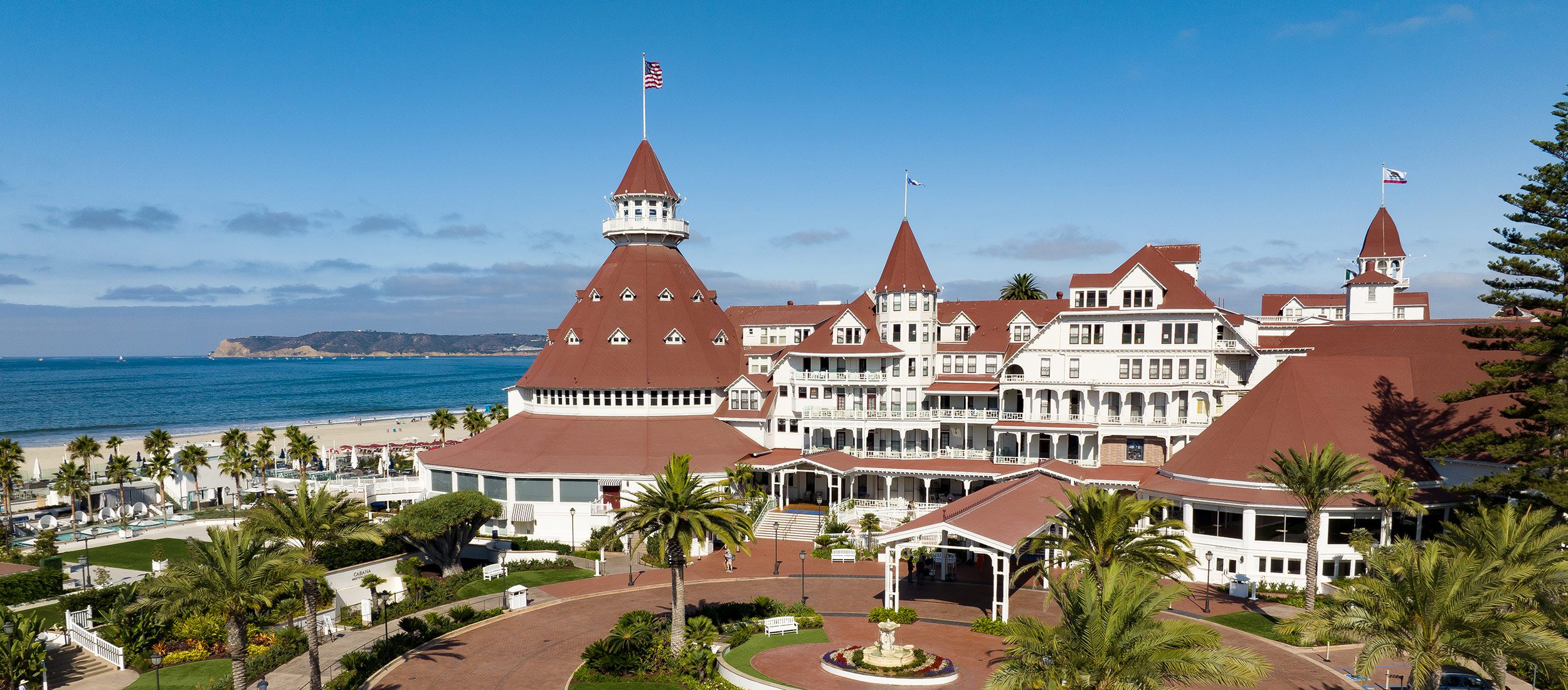
This model allows for extensive renovations, such as the recent multi-million dollar master plan, which added new neighborhoods like The Views and Shore House. Without the backing of major institutional owners, such ambitious upgrades to the Coronado Island landscape would be nearly impossible to execute.
The Evolution of Ownership Through History
To appreciate the current ownership structure, one must understand how the property transitioned from a private enterprise to a corporate asset. In its infancy, the Hotel del Coronado was developed by Elisha Babcock and Hampton L. Story. These two visionary entrepreneurs envisioned a resort that would attract the elite of the 19th century. For many years, the hotel remained under private hands, surviving economic depressions and the shift in travel trends during the mid-20th century.
From Private Hands to Institutional Capital
The shift toward large-scale ownership began in the late 20th century as real estate investment trusts (REITs) and private equity firms began to recognize the intrinsic value of “trophy assets.” Properties like the Hotel del Coronado are considered irreplaceable. They carry a cultural weight that cannot be replicated by building a new resort, no matter how much capital is invested.
During the early 2000s, the hotel went through several high-profile ownership changes, including stints under groups like KSL Capital Partners. Each transition brought new layers of renovation and brand alignment, moving the hotel closer to the sophisticated, multi-faceted resort complex that guests encounter today in San Diego County.
Why Ownership Matters to the Guest
Why should the average traveler care about the corporate ownership of their vacation spot? The answer lies in the quality of the stay. In the case of the Hotel del Coronado, the ownership model has a direct impact on the preservation of history versus the implementation of modern luxury.
Institutional owners are keenly aware that the hotel’s value is derived from its history. If the building were to lose its Victorian charm, its market value would plummet. Therefore, current owners have invested heavily in seismic retrofitting, the restoration of the Crown Room, and the meticulous upkeep of the white-washed wooden siding. The ownership structure, while opaque to the casual visitor, is the invisible engine that keeps this National Historic Landmark operational.

The Future of the Resort
As the hospitality sector in Southern California becomes increasingly competitive, the ownership of the Hotel del Coronado will likely remain a focus of industry analysts. The integration of modern residential-style accommodations like Shore House suggests that owners are looking for ways to maximize revenue per square foot without sacrificing the guest experience.
For the traveler, this means that while the face behind the ownership may change in the ledger books of corporate investment firms, the essence of the Hotel del Coronado remains protected by a long-term commitment to its iconic status. Whether the property eventually transitions to a new fund or continues under the Blackstone banner, it is clear that the Hotel del Coronado will continue to occupy its place at the pinnacle of luxury hospitality in the United States. Its ownership is a reflection of the global nature of modern travel, where a local treasure in Coronado is part of a complex, interconnected world of high-end real estate, driven by the desire to preserve the past while capturing the future of the travel industry.
LifeOutOfTheBox is a participant in the Amazon Services LLC Associates Program, an affiliate advertising program designed to provide a means for sites to earn advertising fees by advertising and linking to Amazon.com. Amazon, the Amazon logo, AmazonSupply, and the AmazonSupply logo are trademarks of Amazon.com, Inc. or its affiliates. As an Amazon Associate we earn affiliate commissions from qualifying purchases.