
The journey between Los Angeles and San Francisco is one of the most frequently traveled corridors in the United States. While many travelers opt for a scenic drive along the iconic Pacific Coast Highway, the most efficient way to bridge the gap between these two coastal giants is by air. Whether you are a business traveler heading to Silicon Valley or a tourist eager to experience the distinct vibes of Southern California and Northern California, understanding the nuances of this short-haul flight is essential for smooth travel planning.
The Flight Duration: What to Expect in the Air
When travelers ask how far Los Angeles is from San Francisco by plane, they are often surprised by just how quickly the journey passes. The actual flight time is remarkably brief, typically ranging from 60 to 90 minutes.

Air Time vs. Total Transit Time
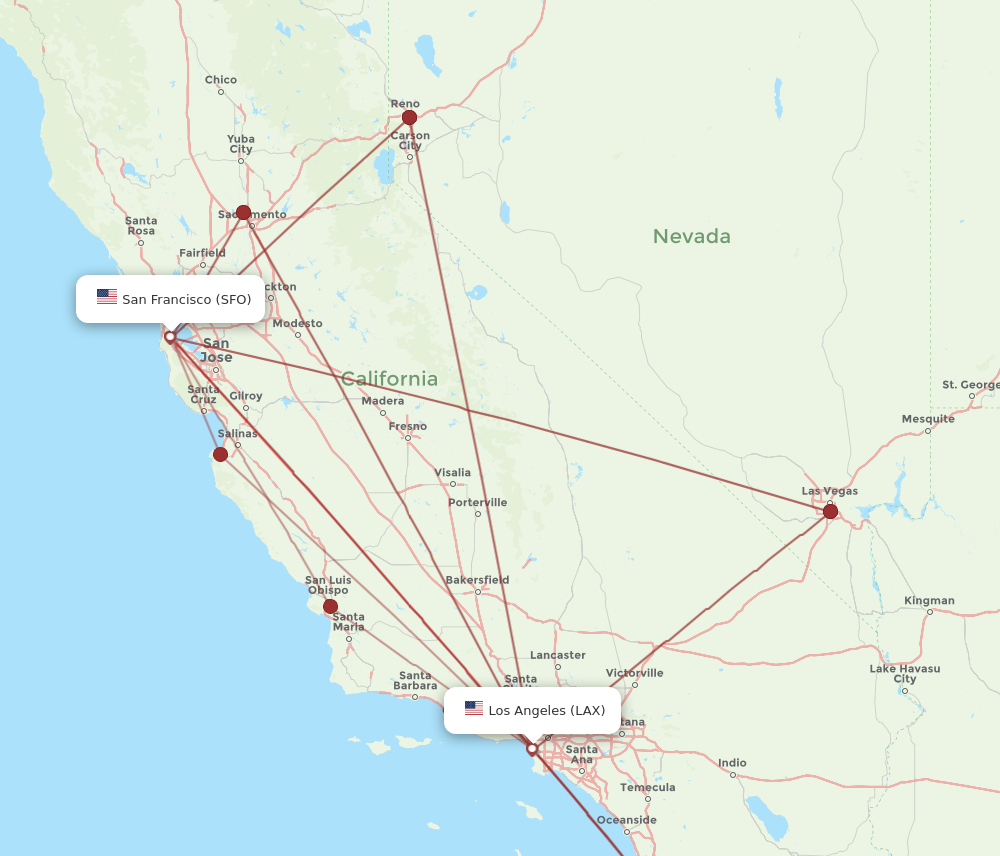
While the wheels-up to wheels-down time is often cited as being around 70 to 75 minutes, it is crucial to distinguish between air time and the total travel experience. The direct distance between Los Angeles International Airport (LAX) and San Francisco International Airport (SFO) is roughly 340 miles.
However, because these airports are among the busiest in the country, taxiing times, air traffic control holds, and flight paths can influence the duration. On a clear day, the flight path takes you parallel to the beautiful California coastline, offering breathtaking views of the Santa Ynez Mountains and the Big Sur region. Even with these variables, the short duration makes this route a staple for commuters and weekend travelers alike.
Choosing the Right Airport Infrastructure
The geography of California means that your choice of departure and arrival airports can significantly impact your total travel time and convenience. While LAX and SFO are the primary hubs, they are not your only options.
Navigating the Southern California Hubs
In Los Angeles, travelers often weigh the pros and cons of the major international terminal against smaller, more regional facilities. Hollywood Burbank Airport and John Wayne Airport in Orange County offer significantly faster security lines and easier navigation than the sprawling complex at Los Angeles International Airport. If you are staying in the northern part of the city or in the San Fernando Valley, Hollywood Burbank Airport is often the superior choice for a flight to Northern California.

Arriving in the Bay Area
On the northern end, while San Francisco International Airport is the most prominent gateway, it is not always the most convenient depending on your final destination. Oakland International Airport provides excellent access to the East Bay, while Norman Y. Mineta San Jose International Airport is the preferred arrival point for those visiting the Santa Clara Valley. Balancing your arrival point with your ground transportation needs is just as important as the flight duration itself.
Travel Tips for a Seamless Corridor Experience
Because the flight between Los Angeles and San Francisco is so common, there are specific travel habits that can help you avoid common pitfalls.
Optimizing Your Booking Strategy
- Mid-Week Advantage: Flights on Tuesdays and Wednesdays are generally less crowded and more affordable than Friday evening or Sunday afternoon flights.
- Carry-On Only: Given the short nature of the flight, checking a bag often consumes more time than the actual journey. Utilizing a carry-on allows you to bypass baggage claim at both San Francisco International Airport and Los Angeles International Airport, shaving at least 30 to 45 minutes off your total transit time.
- Monitor Flight Paths: During the winter months, Northern California can experience fog delays at San Francisco International Airport. If the forecast looks uncertain, booking a flight into Oakland International Airport or Norman Y. Mineta San Jose International Airport can be a strategic insurance policy against delays.
The Business Traveler’s Perspective
For those traveling for work, the “shuttle” style frequency of flights between these two cities is a major benefit. Major carriers operate hourly departures, allowing for significant flexibility. Many frequent travelers prioritize the “shuttle” service because it allows for last-minute changes without the heavy penalties often associated with international travel. If you are flying for business, ensure you have access to airline lounges at Los Angeles International Airport or San Francisco International Airport to maximize your productivity during any unexpected scheduling shifts.
Weighing the Alternatives: Is Flying Always Best?
While the flight is undoubtedly fast, it is worth considering the full door-to-door transit time. When you factor in the commute to the airport, the mandatory security check, boarding time, and the commute from the destination airport into the city center—such as the trip into Downtown Los Angeles or Union Square—the total time investment is closer to four or five hours.
Environmental and Scenic Considerations
For travelers with more time to spare, the train journey via the Amtrak Coast Starlight or the scenic drive along Highway 1 offers an entirely different experience. While the flight is a utilitarian necessity for many, the road provides a cultural immersion that a 35,000-foot view simply cannot match. You get to witness the transition from the arid landscapes of Southern California to the lush, redwood-dense terrain of the northern coast.
Final Verdict on Aerial Transit
However, for pure efficiency, the plane remains the gold standard. The distance between Los Angeles and San Francisco is perfectly bridged by these frequent, short flights. By carefully selecting your departure and arrival terminals, prioritizing carry-on luggage, and remaining flexible with your airline choice, you can transform what could be a stressful travel day into a quick, effortless hop between two of the most influential cities in the United States.
Whether you are seeking the glitz of Hollywood or the innovation of San Francisco, the sky-bridge between these two points remains the most practical way to traverse the beautiful expanse of the West Coast. Keep these logistical details in mind for your next trip, and you will find that the journey becomes as enjoyable as the destination itself.
LifeOutOfTheBox is a participant in the Amazon Services LLC Associates Program, an affiliate advertising program designed to provide a means for sites to earn advertising fees by advertising and linking to Amazon.com. Amazon, the Amazon logo, AmazonSupply, and the AmazonSupply logo are trademarks of Amazon.com, Inc. or its affiliates. As an Amazon Associate we earn affiliate commissions from qualifying purchases.