
The New York Strip steak is a hallmark of high-end culinary culture, frequently served in the finest steakhouses from New York City to Chicago. Often referred to as the “king of steaks” due to its perfect balance of tenderness and robust beefy flavor, mastering this cut at home is a quintessential skill for any food enthusiast. While charcoal grilling is a popular outdoor method, pan-searing provides a superior crust—the Maillard reaction—that is difficult to replicate elsewhere. By utilizing a cast-iron skillet and a few professional techniques, you can transform a premium cut of meat into a dining experience that rivals the atmosphere of a luxury eatery in Las Vegas or London.
Selecting and Preparing Your Prime Cut
The journey to a perfect steak begins long before the heat is applied. When visiting your local butcher or a high-end market like Eataly, selection is the most critical step.
Choosing the Right Meat
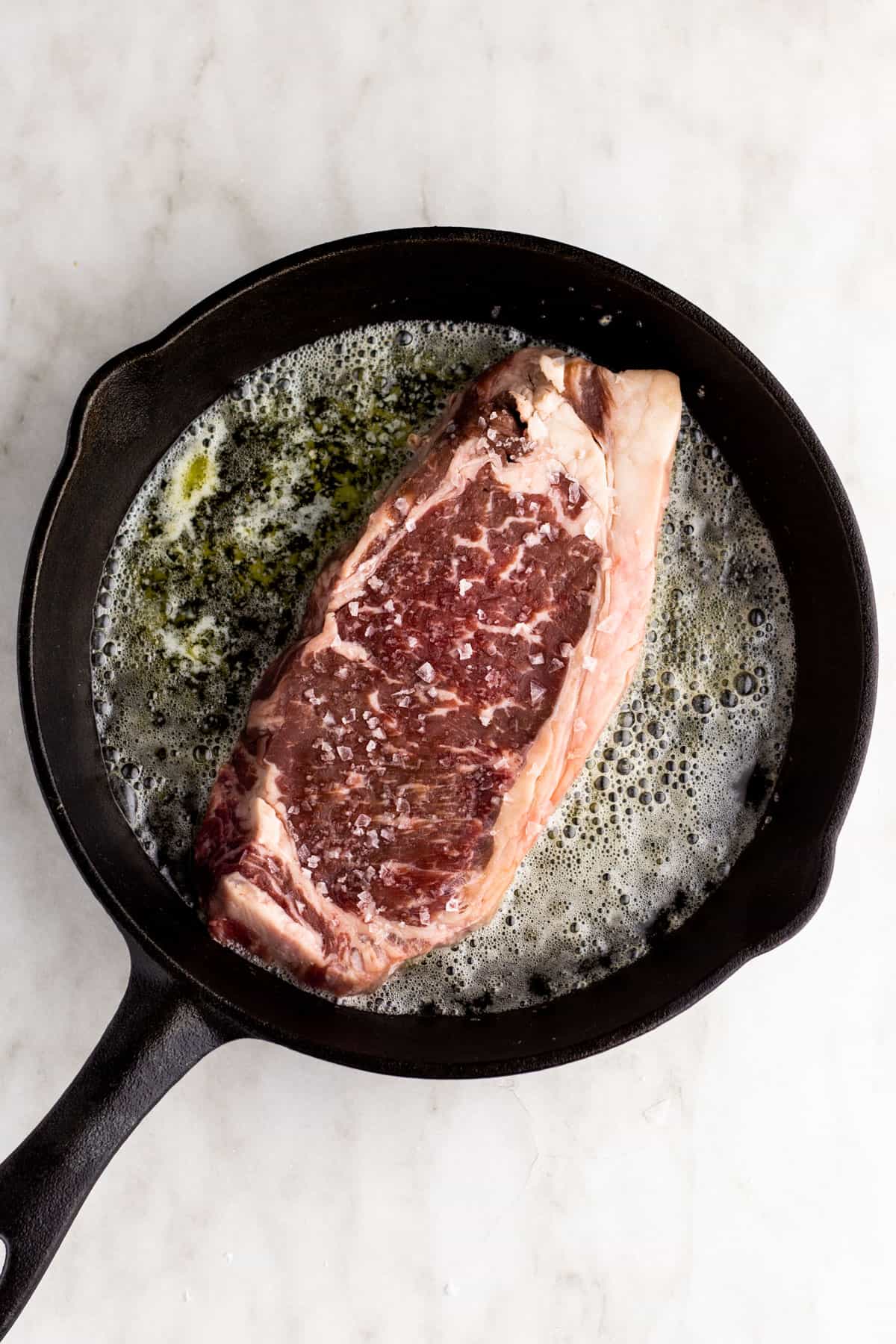
Look for a New York Strip with generous marbling. These tiny flecks of intramuscular fat are what provide the steak with its moisture and flavor as it renders down during the cooking process. A steak that is at least 1.5 inches thick is ideal; thinner steaks often overcook in the middle before a proper crust can be achieved. If you are sourcing your meat from regions famous for cattle, such as Argentina or the high plains of Texas, look for a deep red color and firm, white fat.
The Importance of Tempering and Seasoning
Never place a cold steak directly from the refrigerator into a hot pan. Doing so causes the exterior to toughen and the interior to remain chilled, leading to uneven cooking. Allow your steak to rest on the counter for 30 to 45 minutes, reaching room temperature. Once tempered, pat the meat bone-dry with paper towels. Moisture is the enemy of a good sear; if the surface is wet, the steak will steam rather than brown. Finally, season generously with coarse kosher salt just before the steak hits the pan. If you season too early, the salt will draw moisture out of the meat via osmosis, compromising the final crust.
The Art of the Pan-Sear
To achieve that deep, mahogany-colored crust reminiscent of a dinner at Peter Luger Steak House, you need the right equipment and heat management.
Heating the Vessel
A heavy-duty cast-iron skillet is the industry standard. It retains heat exceptionally well, ensuring that the temperature does not drop significantly when the meat is added. Place your skillet over high heat and allow it to preheat until it is nearly smoking. Add a high-smoke-point oil, such as grapeseed, avocado, or refined coconut oil. Avoid extra virgin olive oil or butter at this stage, as they will burn and turn bitter before the meat has developed a proper crust.

Achieving the Sear
Carefully lay the steak into the skillet, placing it away from you to avoid hot oil splatters. Let the steak sear undisturbed for about two to three minutes. This patience is vital. If you try to flip it too early, the meat will stick to the pan. Once a dark, golden-brown crust has formed, flip it using tongs—avoid using a fork, as piercing the meat allows the juices to escape. Repeat the process on the second side.
Basting and Perfecting the Doneness
Once both sides are seared, it is time to infuse the steak with aromatics and ensure it reaches your desired internal temperature. This stage, known in professional kitchens as “arroser,” adds a layer of complexity that elevates the dish to restaurant quality.
The Aromatic Butter Bath
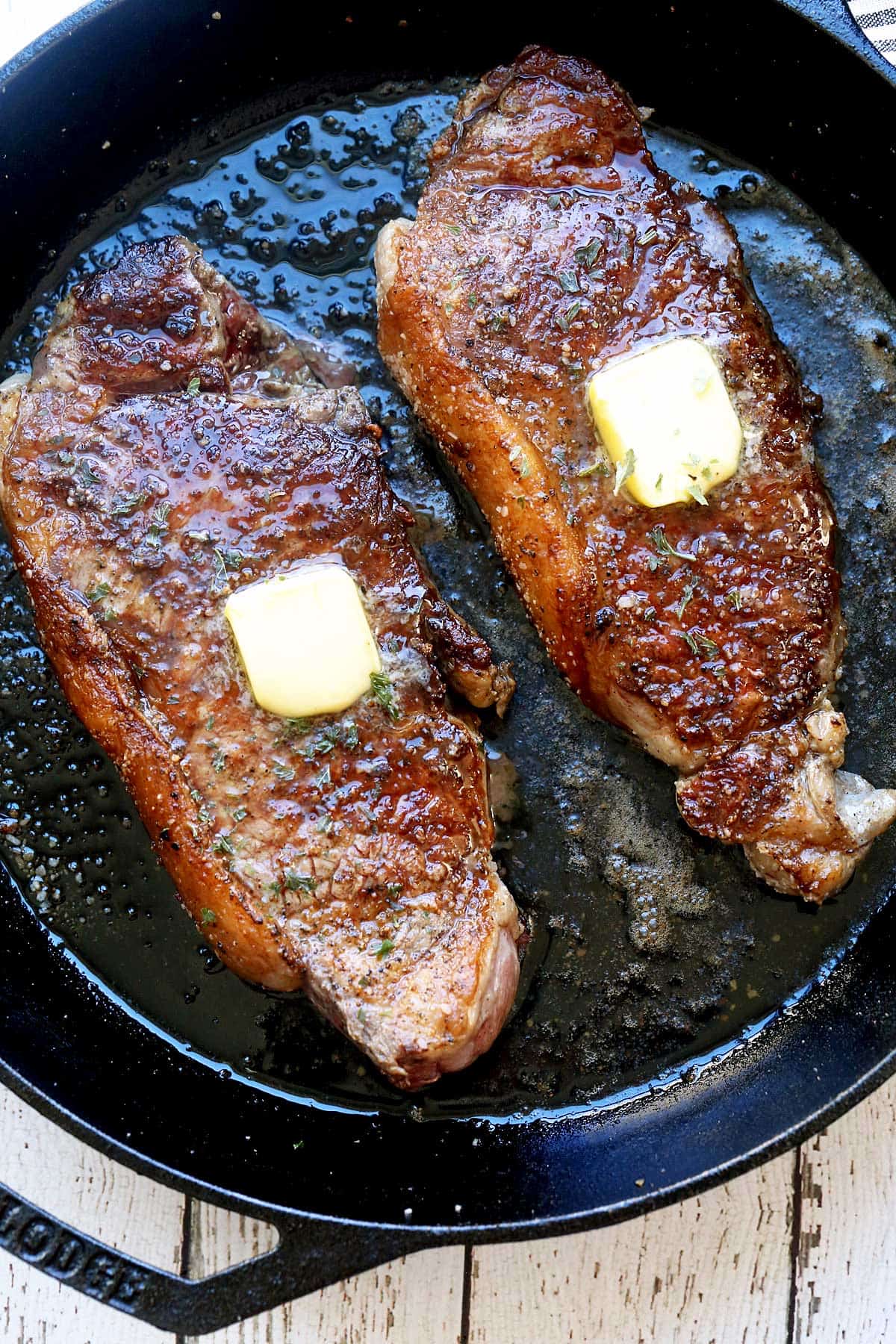
Reduce the heat to medium. Add three tablespoons of unsalted butter to the pan along with two cloves of smashed garlic, a few sprigs of fresh thyme, and a sprig of rosemary. As the butter melts and begins to foam, tilt the pan slightly and use a large spoon to continuously baste the steak with the foaming, herb-infused butter. The butter will carry the flavors of the garlic and herbs directly into the seared surface of the steak, while simultaneously basting the meat in fat, which helps cook it more evenly.
Monitoring Internal Temperature
The most accurate way to check for doneness is to use an instant-read thermometer. For a true steakhouse experience, aim for the following temperatures:
- Rare: 120°F (49°C)
- Medium-Rare: 130°F (54°C) – generally considered the gold standard for New York Strip.
- Medium: 140°F (60°C)
Keep in mind that the temperature will rise by about 5 degrees while the steak rests, so remove it from the pan slightly early.
The Final Resting Period
Many home cooks are tempted to slice into their steak the moment it leaves the skillet, but this is a critical mistake. Resting is a mandatory part of the process, just as essential as the searing itself.
Why Resting Matters
As the steak cooks, the muscle fibers contract and push the juices toward the center of the meat. If you cut into the steak immediately, these juices will run out onto the cutting board, leaving the meat dry and fibrous. By placing the steak on a warm plate or a wire rack and covering it loosely with aluminum foil for 8 to 10 minutes, you allow the internal temperature to stabilize and the fibers to relax. This redistribution of juices ensures that every bite is succulent and tender.
Serving with Style
Once the steak has rested, place it on a wooden carving board. Use a sharp, non-serrated knife to slice the New York Strip against the grain. This shortens the muscle fibers, making each piece significantly more tender to chew. Serve your masterpiece alongside classic accompaniments such as roasted potatoes, creamed spinach, or a simple arugula salad with a sharp vinaigrette.
Whether you are enjoying this meal in the comfort of your own dining room or preparing a celebratory feast during a weekend getaway at a luxury lodge in Montana, the process remains the same. By controlling the heat, respecting the resting time, and using high-quality ingredients, you can consistently produce a steak that holds its own against the most storied culinary institutions in Paris or Tokyo. The beauty of cooking a New York Strip lies in its simplicity; it requires no complex sauces or elaborate prep, just a respect for the ingredient and a mastery of the pan. With practice, you will find that the best steakhouse in town is, in fact, located right in your own kitchen.
LifeOutOfTheBox is a participant in the Amazon Services LLC Associates Program, an affiliate advertising program designed to provide a means for sites to earn advertising fees by advertising and linking to Amazon.com. Amazon, the Amazon logo, AmazonSupply, and the AmazonSupply logo are trademarks of Amazon.com, Inc. or its affiliates. As an Amazon Associate we earn affiliate commissions from qualifying purchases.