
Navigating the legal landscape of family law is often compared to embarking on a complex journey through the heartland of the United States. For parents residing in Oklahoma, the process of establishing joint custody requires a clear understanding of jurisdictional rules and local courthouse procedures. Whether you are settling in the bustling urban centers or the quiet outskirts of the state, the legal path remains rooted in the specific district courts that govern family welfare.
Determining Proper Venue and Jurisdiction
Before initiating any legal action, you must first determine the appropriate district court for filing your petition. In Oklahoma, child custody matters are generally handled in the District Court of the county where the child has resided for at least six months. This residency requirement is a foundational aspect of family law, designed to ensure that the court presiding over the case has a meaningful connection to the child’s daily life and environment.
Understanding Residency Requirements
The six-month rule is not merely a suggestion; it is a jurisdictional mandate. If a child has moved recently from one state to another, or even from one county to another within Oklahoma, the court will look to the “Home State” rule. This legal standard prevents forum shopping and ensures that the court most familiar with the child’s academic, medical, and social circles is the one making determinations regarding custody arrangements.
When Emergency Jurisdiction Applies
There are rare exceptions to the six-month residency rule, particularly in cases involving immediate danger or abandonment. If a child is physically present in a specific county and faces a threat of harm, the court may exercise “emergency jurisdiction” to issue temporary orders. However, these orders are often provisional, designed to protect the child until the permanent jurisdictional issues can be resolved in the proper venue.
Filing Procedures in Oklahoma District Courts
Once the correct county is established, the filing process follows a structured path. While the specific forms may vary slightly between Oklahoma County and Tulsa County, the core requirements remain consistent across the state. The legal procedure is designed to be accessible to those representing themselves, though the complexity of parenting plans often warrants legal guidance.
Gathering Required Documentation
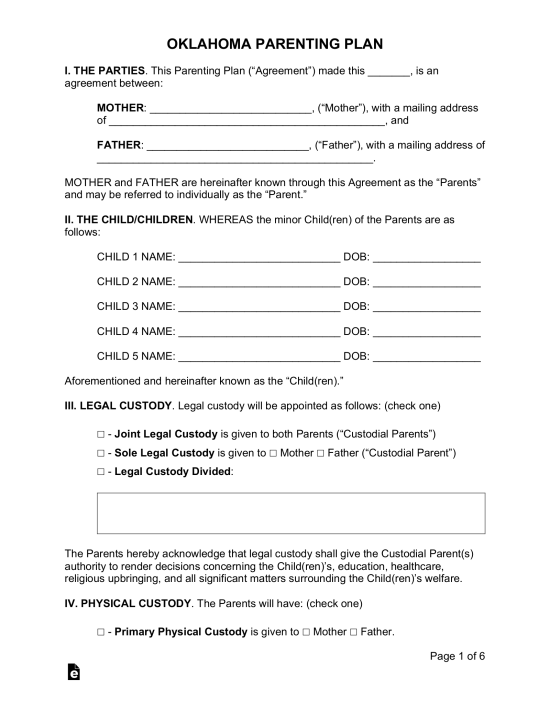
To file for joint custody, you must prepare a “Petition for Dissolution of Marriage” or a “Petition to Establish Custody, Visitation, and Support” if the parties are unmarried. You will also need to include a proposed parenting plan. This document outlines the physical and legal custody arrangements, detailing how decisions regarding education, health care, and religious upbringing will be managed.
The Role of the Court Clerk
The District Court Clerk serves as the primary gateway for your filing. You will submit your original petitions, pay the associated filing fees, and receive a case number. This case number is essential for all future correspondence. In smaller jurisdictions, such as Cleveland County, the clerks are often a vital resource for navigating local rules of procedure. Always ensure you request stamped copies of your filings for your own records.

Mandatory Parent Education Programs
Oklahoma is proactive in minimizing the impact of litigation on children. Almost every district court in the state mandates that parents participate in a “Children Coping with Divorce” or a similar parent education course. This is not optional; failure to complete this requirement can result in the court refusing to hear your motion for joint custody.
Objectives of the Educational Course
These courses are designed to help parents transition from a spousal relationship to a co-parenting relationship. The curriculum focuses on developmental stages, communication techniques, and strategies to shield children from the emotional turmoil of legal disputes. By emphasizing the child’s perspective, these programs aim to foster a collaborative spirit between parents who might otherwise be at odds.
Filing the Certificate of Completion
After attending the seminar, you will receive a certificate. You must file this document with the court clerk. In many cases, the judge will not sign an order approving a joint custody agreement until this certificate is firmly attached to the case file. Keeping track of this requirement early in the process saves time and prevents unnecessary delays in the finalization of your parenting plan.
The Approval Process for Joint Custody
Oklahoma law establishes a strong preference for joint custody when it is deemed to be in the best interest of the child. However, the court does not automatically grant this status. The judge must review the proposed parenting plan to ensure that both parents are capable of participating in the decision-making process and maintaining a stable environment for the child.
Presenting the Parenting Plan to the Judge
Your parenting plan should be comprehensive. It should include provisions for:
- Legal Custody: Who makes the major decisions regarding schooling, medical care, and extra-curricular activities.
- Physical Custody: A specific schedule detailing where the child stays on weekdays, weekends, holidays, and school breaks.
- Dispute Resolution: How parents will communicate and resolve disagreements without returning to court.
If both parents agree on these terms, the court is highly likely to approve the plan. If there is a disagreement, the court may order mediation. Oklahoma has a robust system of private and court-affiliated mediators who assist families in reaching an amicable resolution.
Finalizing the Decree
Once the judge signs the Decree of Custody, the agreement becomes a binding court order. This document is enforceable by law. Should one parent violate the terms, the other may file a motion for contempt of court. It is essential to understand that while joint custody is the legal standard, the court retains the authority to modify the agreement if there is a significant change in circumstances that impacts the well-being of the child.

Seeking Guidance within the State
Whether you are located in Norman, Broken Arrow, or Lawton, resources exist to help you through the process. Utilizing the legal aid services provided by the Oklahoma Bar Association can be an excellent first step if you are feeling overwhelmed by the paperwork or the legal terminology. Remember that the ultimate goal of the Oklahoma court system is to provide a structured, safe, and stable environment for children, ensuring their needs remain the priority throughout the entire legal proceeding. Always check the specific website of your county’s district court for local forms, as they may contain specific formatting preferences or additional filing requirements unique to that jurisdiction.
LifeOutOfTheBox is a participant in the Amazon Services LLC Associates Program, an affiliate advertising program designed to provide a means for sites to earn advertising fees by advertising and linking to Amazon.com. Amazon, the Amazon logo, AmazonSupply, and the AmazonSupply logo are trademarks of Amazon.com, Inc. or its affiliates. As an Amazon Associate we earn affiliate commissions from qualifying purchases.