
The story of the Oregon Country is a sprawling epic of maritime exploration, fur trapping, geopolitical brinkmanship, and the relentless expansion of the United States. What began as a vast, misty wilderness inhabited by diverse Indigenous nations eventually became a focal point of imperial ambition between the world’s leading powers. Understanding how this lush, resource-rich territory came under American sovereignty requires looking beyond simple conquest; it was a complex process of diplomacy, immigration, and shifting international borders.
The Era of Maritime Exploration and Claims
Long before the arrival of overland pioneers, the Pacific Northwest was a mapmaker’s puzzle. Because of its jagged coastline and temperate rainforests, the region remained largely unknown to European powers for centuries.
Early European Presence
The maritime history of the Pacific Northwest began in earnest during the late 18th century. Spanish explorers, such as Juan Perez, were among the first to sail along the coast, establishing tentative claims for the Spanish Empire. Soon after, the British explorer Captain James Cook arrived, seeking the elusive Northwest Passage. However, it was the arrival of Robert Gray, an American merchant captain, that provided the United States with its most potent legal argument for ownership. In 1792, Gray navigated his ship, the Columbia Rediviva, into the mouth of the great river he subsequently named the Columbia River, providing the Americans with a “discovery right” that would hold weight for decades to come.
The Lewis and Clark Expedition
The most significant boost to American claims came with the Lewis and Clark Expedition. Commissioned by President Thomas Jefferson following the Louisiana Purchase, Meriwether Lewis and William Clark trekked across the continent. By reaching the Pacific Ocean in 1805, they provided a physical, documented American footprint in a land that Great Britain also considered its own. This transcontinental journey transformed an abstract claim into a tangible reality, fueling national interest in the territory’s potential for trade and settlement.
The Joint Occupation and the Fur Trade
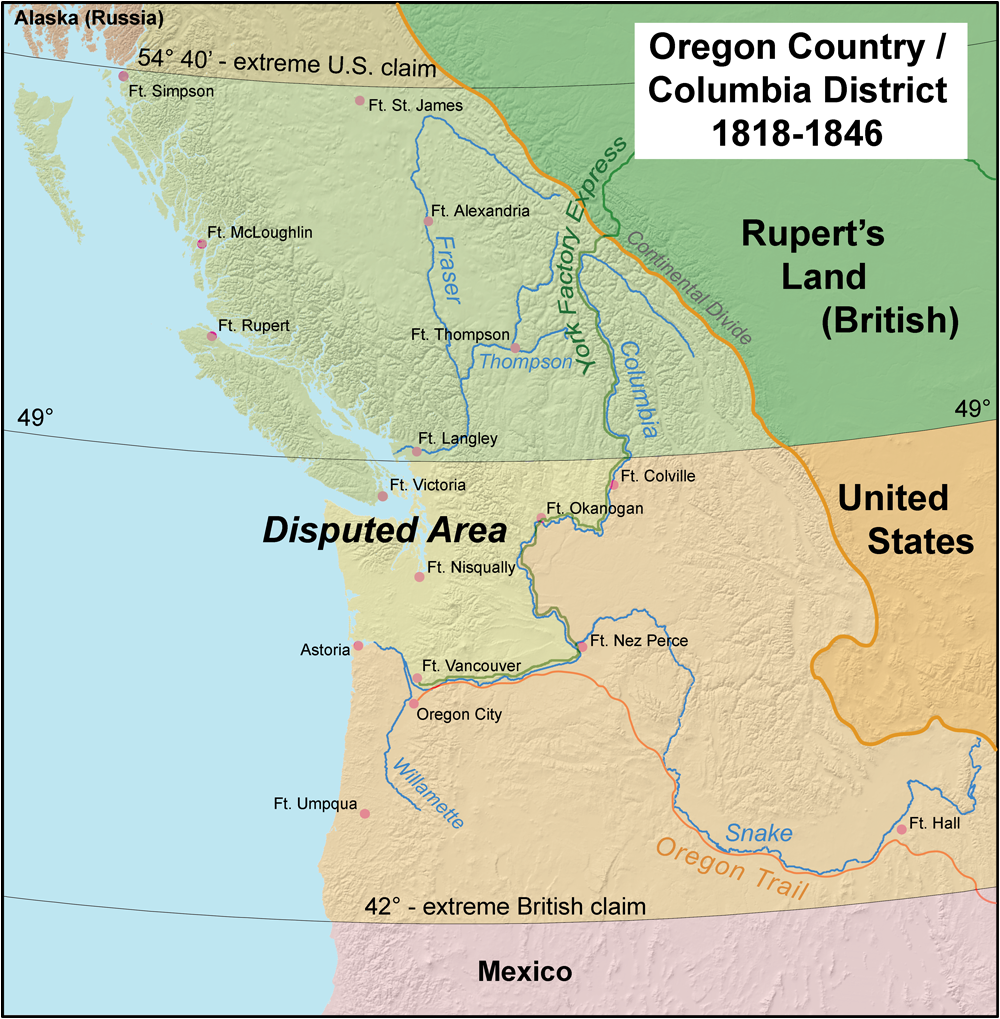
For much of the early 19th century, the Oregon Country was defined by the concept of “joint occupation.” Unable to resolve their conflicting territorial claims, Great Britain and the United States agreed in the Convention of 1818 to share the region.
The Hudson’s Bay Company
While diplomats argued, the Hudson’s Bay Company dominated the landscape. Under the leadership of Dr. John McLoughlin, the company established Fort Vancouver as the administrative and commercial heart of the region. For years, the British influence seemed insurmountable, as the Hudson’s Bay Company controlled the fur trade and maintained excellent relationships with many Indigenous tribes. American trappers and traders, such as those associated with the Pacific Fur Company, struggled to gain a foothold, often being outmatched by the established British supply chains and logistical expertise.

Life in the Wilds
The region was a frontier in every sense of the word. Life for the trappers and early explorers was dangerous, isolated, and profoundly influenced by the local terrain. The Cascade Mountains acted as a formidable barrier to overland travel, and the dense, dark forests of the Willamette Valley were initially viewed by many Europeans as impenetrable. Yet, the reports trickling back east—of fertile soil, mild climates, and abundant timber—began to change the perception of Oregon from a worthless wasteland into a “promised land” for those seeking a new beginning.
The Oregon Trail and Manifest Destiny
In the 1840s, the political climate shifted. The ideology of Manifest Destiny—the belief that the United States was divinely ordained to expand across the continent—began to permeate the American consciousness.
The Great Migration
Thousands of pioneers began packing their lives into covered wagons in Independence, Missouri. The journey along the Oregon Trail was a harrowing six-month ordeal. Families crossed the Great Plains, braved the harsh deserts, and navigated the treacherous Rocky Mountains. By the early 1840s, the influx of American settlers into the Willamette Valley had fundamentally shifted the demographic balance of the region. The Americans were no longer mere visitors; they were residents, farmers, and community-builders who expected the protection and governance of their home nation.
The “Fifty-Four Forty or Fight!” Crisis
As the American population in the territory swelled, political tensions in Washington D.C. reached a boiling point. President James K. Polk campaigned on a platform of aggressive expansion, using the slogan “Fifty-Four Forty or Fight!” to demand the entire territory up to the southern border of Alaska. The threat of war with the British Empire loomed large. However, both nations were hesitant to enter another conflict. Great Britain was preoccupied with other global interests, and the United States was already eyeing the acquisition of territories to the south, such as California.
The Oregon Treaty of 1846
Diplomacy eventually triumphed over the threat of military engagement. The Oregon Treaty was signed in 1846, effectively partitioning the Oregon Country along the 49th parallel.
Defining the Border
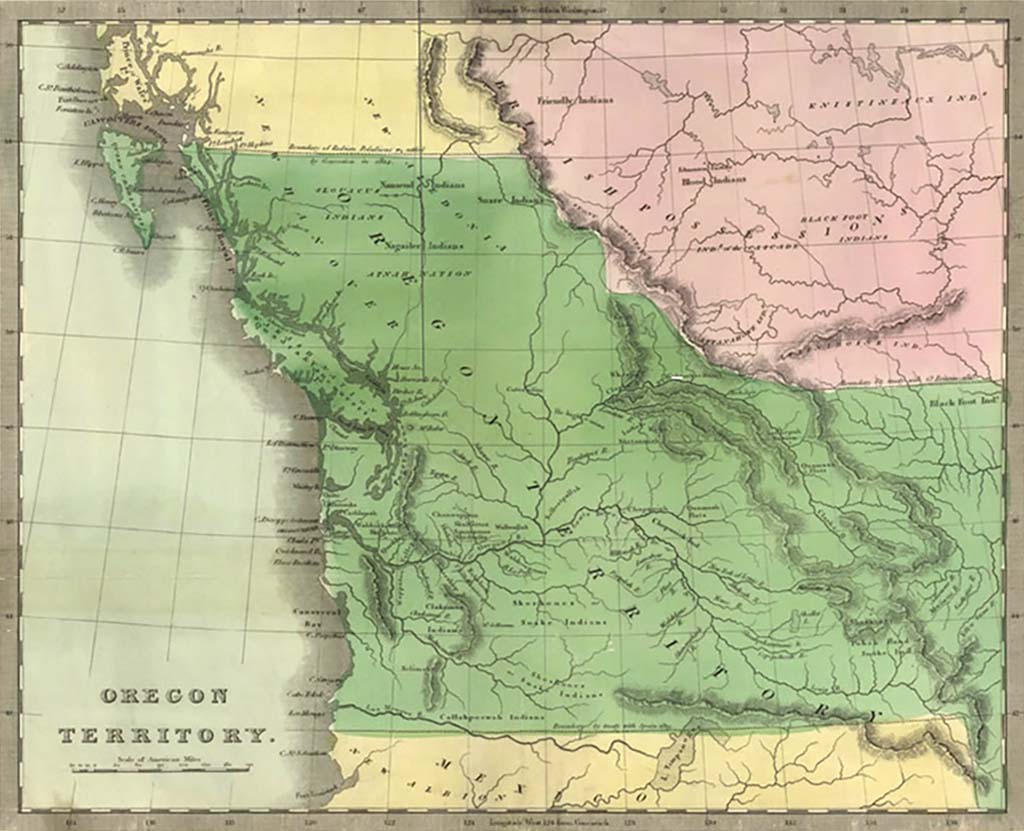
The boundary agreement secured the modern-day states of Oregon, Washington, and Idaho for the United States. It was a pragmatic compromise that allowed Great Britain to retain Vancouver Island and British Columbia, while giving the United States clear title to the south. This settled a decades-long dispute and signaled the end of the era of joint occupation.
From Territory to Statehood
Following the treaty, the Oregon Territory was officially organized in 1848. The transition from a contested borderland to an American territory catalyzed rapid development. Cities such as Portland began to emerge as vital hubs of commerce, drawing settlers who sought access to the timber and agricultural riches of the Pacific Northwest. The process of acquiring Oregon was thus completed not through a single battle or proclamation, but through a multi-generational exertion of influence, travel, and strategic negotiation. Today, the legacy of this acquisition remains visible in the rich cultural heritage and historical landmarks scattered throughout the region, standing as a testament to the pioneers who once followed the Oregon Trail toward the horizon.
LifeOutOfTheBox is a participant in the Amazon Services LLC Associates Program, an affiliate advertising program designed to provide a means for sites to earn advertising fees by advertising and linking to Amazon.com. Amazon, the Amazon logo, AmazonSupply, and the AmazonSupply logo are trademarks of Amazon.com, Inc. or its affiliates. As an Amazon Associate we earn affiliate commissions from qualifying purchases.