
California, often celebrated as a beacon of progressive thought and diverse lifestyles, has played a pivotal role in the broader narrative of LGBTQ+ rights in the United States. Its stunning landscapes, from the vibrant urban sprawl of Los Angeles to the iconic hills of San Francisco and the serene deserts of Palm Springs, have long attracted travelers seeking freedom and acceptance. The legal journey of gay marriage in the Golden State is a testament to this spirit, a complex tapestry woven with legal battles, social movements, and moments of profound celebration and temporary heartbreak. Understanding this history is not just about a legal timeline; it’s about appreciating the resilience of a community and the evolving landscape of a state that continues to champion inclusivity, making it a premier destination for all forms of love and life.

For those planning a trip, considering a move, or simply curious about the cultural fabric of California, knowing this history adds a rich layer to the experience. It highlights why cities across the state have become such welcoming hubs for LGBTQ+ tourism, offering everything from luxury accommodations and boutique hotels to vibrant nightlife and serene wedding venues. The legal status of gay marriage in California has had a profound impact not only on the lives of its residents but also on its identity as a global tourism hotspot, a place where diverse families and individuals can feel truly at home.
The Dawn of a New Era: Early Victories and Sudden Setbacks
The path to marriage equality in California was neither linear nor without its dramatic turns. Before the federal recognition of same-sex marriage across the entire United States, California was at the forefront of the battle, experiencing both exhilarating triumphs and disheartening reversals that captured national attention. This turbulent period cemented the state’s reputation as a crucible for social change, a place where legal precedents were set, and where the fight for equal rights was fiercely waged.
The Golden State’s First Embrace: May to November 2008
The initial breakthrough for marriage equality in California arrived with a landmark decision from the California Supreme Court. On May 15, 2008, in the case In re Marriage Cases, the court ruled that denying same-sex couples the right to marry violated the state’s constitution. This historic decision immediately legalized same-sex marriage, igniting a wave of joy and celebration across the state. Couples who had long waited for this moment rushed to courthouses, eager to formalize their commitments.
The period from May to November 2008 saw an estimated 18,000 same-sex couples tie the knot. Cities like San Francisco, with its historically strong LGBTQ+ community centered around neighborhoods like The Castro, became vibrant hubs of activity. San Francisco City Hall, a magnificent Beaux-Arts building known for its grandeur, became an iconic backdrop for countless weddings, symbolizing the union of love and democratic ideals. Similarly, in Los Angeles and other major urban centers, marriage licenses were issued in record numbers, transforming the lives of thousands and showcasing California’s progressive spirit on a global stage. This brief window of legality spurred a mini-boom in related tourism and accommodation services, as friends and family traveled to witness these momentous occasions. Boutique hotels and luxury resorts across the state saw an uptick in bookings for wedding celebrations and honeymoons, as couples sought beautiful settings to commemorate their newfound legal status.
Proposition 8: A Temporary Reversal and Its Aftermath
However, this euphoria was short-lived. Opponents of same-sex marriage swiftly organized, placing a constitutional amendment on the November 2008 ballot. This initiative, known as Proposition 8, sought to define marriage in the state constitution as exclusively between a man and a woman, thereby overturning the California Supreme Court’s ruling. Despite fervent campaigning by LGBTQ+ advocates and their allies, Proposition 8 narrowly passed, garnering 52.3% of the vote.
The passage of Proposition 8 on November 4, 2008, brought an abrupt halt to same-sex marriages in California. While the approximately 18,000 marriages performed during the five-month window remained legally recognized, no new same-sex marriages could be performed. This outcome was a devastating blow to the LGBTQ+ community and its supporters, sparking widespread protests and renewed activism across the state and the nation. Demonstrations erupted in major cities, with thousands taking to the streets of Los Angeles, San Francisco, and Sacramento to voice their outrage and reaffirm their commitment to equality. The iconic steps of San Francisco City Hall, just months earlier a site of celebration, now became a focal point for demonstrations and vigils, embodying the deep sense of injustice felt by many. This period of uncertainty and legal limbo underscored the ongoing struggle for fundamental rights, transforming California into a central battleground in the national fight for marriage equality.
The Resolute Path to Permanent Recognition: Legal Battles and Social Change
The passage of Proposition 8 did not end the fight for marriage equality in California; instead, it catalyzed a more determined and broad-reaching legal and social movement. Advocates and legal teams immediately challenged the constitutionality of Proposition 8 in federal courts, understanding that the battle for fundamental rights would require persistent effort and an unwavering commitment to justice. This period was marked by intense litigation, public awareness campaigns, and a gradual shift in public opinion, ultimately paving the way for lasting change.
The Federal Challenge: Hollingsworth v. Perry
The most significant legal challenge to Proposition 8 came in the form of Perry v. Schwarzenegger (later Hollingsworth v. Perry), a federal lawsuit filed in 2009. The case was brought by two same-sex couples, Kristin Perry and Sandra Stier, and Paul Katami and Jeff Zarrillo, represented by a bipartisan legal team that included prominent attorneys Theodore B. Olson and David Boies, who had famously opposed each other in Bush v. Gore. Their unique collaboration underscored the belief that marriage equality was a civil rights issue transcending political divides.
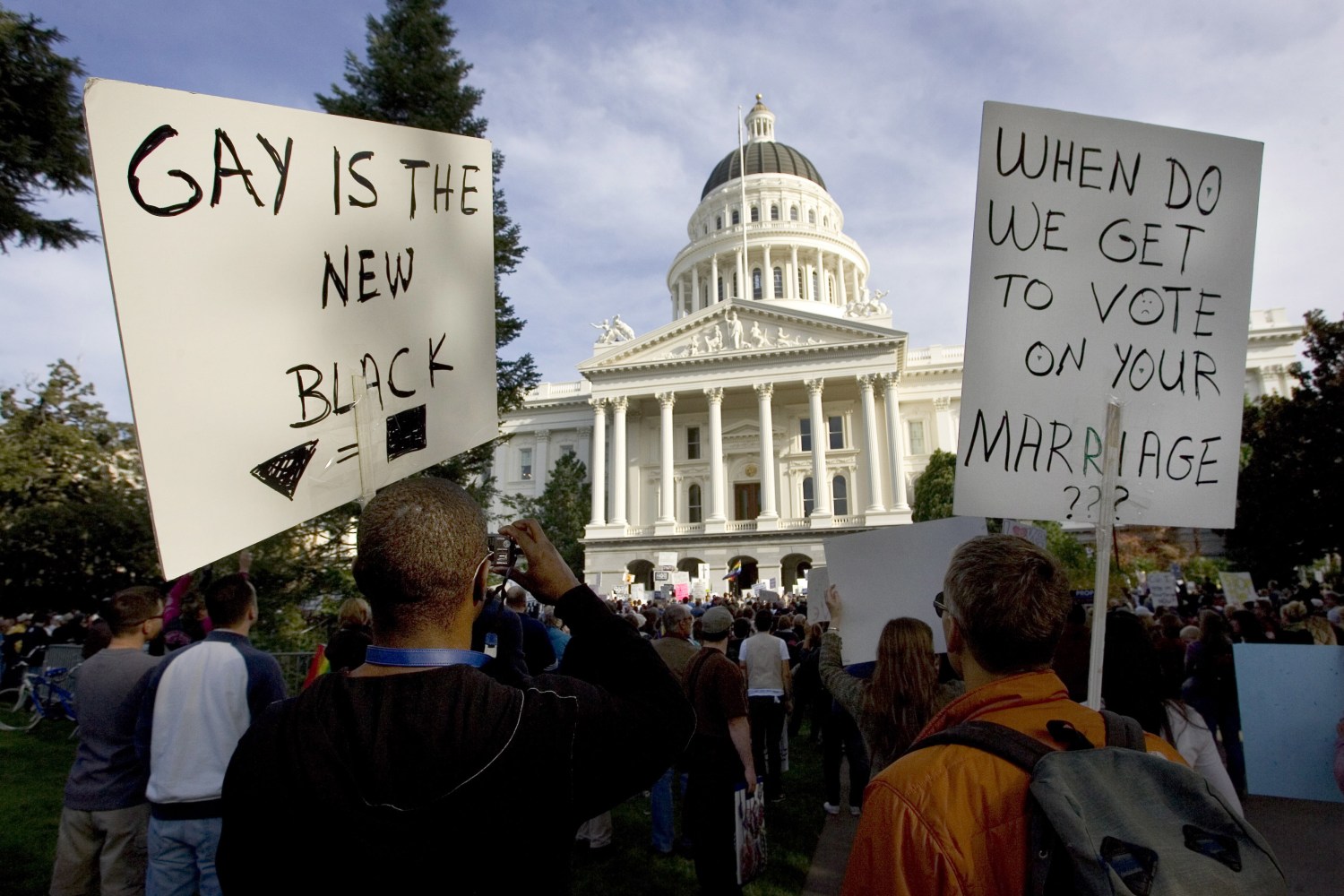
The trial took place in the U.S. District Court for the Northern District of California, attracting significant national attention. In August 2010, District Judge Vaughn R. Walker ruled that Proposition 8 was unconstitutional, violating both the Due Process and Equal Protection Clauses of the Fourteenth Amendment. This ruling was a major victory, but the battle was far from over. The decision was appealed to the Ninth Circuit Court of Appeals, which upheld Judge Walker’s ruling in February 2012. The case then made its way to the highest court in the land, the U.S. Supreme Court. Throughout this protracted legal process, California’s cities, from the state capital of Sacramento to the coastal metropolitan areas, remained centers of activism, with rallies and events drawing attention to the ongoing fight. The legal intricacies of this case captivated the nation, setting the stage for a momentous decision that would impact not just California but potentially the entire country.
The Supreme Court’s Decision and Re-Legalization in 2013
On June 26, 2013, the U.S. Supreme Court delivered a dual punch that reshaped the landscape of marriage equality. In United States v. Windsor, the Court struck down a key part of the Defense of Marriage Act (DOMA), which had denied federal recognition to same-sex marriages. On the same day, regarding Hollingsworth v. Perry, the Court ruled that the proponents of Proposition 8 lacked legal standing to defend the ballot initiative in federal court. This procedural ruling meant that the Ninth Circuit’s decision, which had found Proposition 8 unconstitutional, would stand.
Effectively, this decision restored the right to marry for same-sex couples in California immediately. The federal courts lifted the stay on same-sex marriages, allowing them to resume across the state. The reaction was instantaneous and jubilant. Couples who had been waiting for years, some for decades, once again flocked to courthouses and wedding venues. The iconic San Francisco City Hall once again became a scene of joyous celebration, with couples exchanging vows amidst cheers and tears of relief. California had finally achieved permanent marriage equality, a full two years before the landmark Obergefell v. Hodges ruling that legalized same-sex marriage nationwide in 2015.
This enduring victory cemented California’s status as a true leader in LGBTQ+ rights. The years of legal battles and grassroots advocacy transformed the state’s social fabric, fostering an even more inclusive environment. This history makes California an exceptionally meaningful destination for LGBTQ+ travelers and couples seeking to celebrate their love, reinforcing its reputation as a welcoming haven where diverse lifestyles are not just tolerated but celebrated. The hotels, resorts, and tourism operators across the state quickly adapted, recognizing the significant market of couples looking for romantic getaways, destination weddings, and honeymoon experiences in a state that fully embraced their unions.
California’s Enduring Legacy: A Haven for LGBTQ+ Travel and Lifestyle
With the permanent legalization of gay marriage, California solidified its position as not just a legal pioneer but also a cultural and lifestyle hub for the LGBTQ+ community. This legal triumph has profoundly influenced the state’s tourism industry, its vibrant communities, and its overall ethos of inclusivity, making it an unparalleled destination for travel, accommodation, and diverse lifestyle experiences.
Impact on Travel and Tourism
The journey to marriage equality has made California an even more desirable destination for LGBTQ+ travelers worldwide. The state’s reputation for acceptance, coupled with its stunning natural beauty and world-class attractions, creates an ideal setting for romantic getaways, honeymoons, and destination weddings. Cities across the state have long-established LGBTQ+ friendly neighborhoods and districts that continue to thrive.
- San Francisco: Continues to be a spiritual home for the LGBTQ+ movement, with The Castro district as a vibrant epicenter. Couples can explore its rich history, enjoy lively nightlife, and stay in welcoming accommodations like the Hotel Zeppelin San Francisco in Union Square, offering a perfect blend of style and accessibility to the city’s iconic landmarks, including the Golden Gate Bridge and Alcatraz Island.
- Los Angeles: Offers a diverse array of experiences, from the glamour of Hollywood Walk of Fame to the buzzing scene of West Hollywood. Known affectionately as “WeHo,” West Hollywood is famous for its vibrant nightlife, upscale dining, and luxurious accommodations, such as the trendy design hotels perfect for a chic urban getaway. The The Abbey Food & Bar, a legendary institution in WeHo, exemplifies the city’s welcoming spirit. The Standard, Downtown LA offers a modern, central base for exploring everything from cultural institutions to beaches like Venice Beach and Santa Monica Pier.
- Palm Springs: This desert oasis has been a haven for the LGBTQ+ community for decades, known for its mid-century modern architecture, relaxing resorts, and lively pool parties. It’s a popular choice for romantic escapes, offering everything from intimate boutique hotels to sprawling luxury resorts like The Parker Palm Springs. The city even boasts institutions like The LGBTQ+ Community Center of the Desert, which actively supports the community.
- San Diego: With its beautiful beaches and lively Hillcrest neighborhood, San Diego provides another fantastic option for LGBTQ+ travelers. From luxury stays in Coronado to the bustling Gaslamp Quarter, it caters to a wide range of tastes.
- Beyond the Cities: California’s appeal extends beyond its urban centers. The picturesque vineyards of Napa Valley and Sonoma County offer romantic wine country escapes. The dramatic coastline along the Pacific Coast Highway, particularly the breathtaking stretch through Big Sur, is perfect for adventurous couples. Areas like Santa Barbara and Laguna Beach provide serene coastal retreats with upscale amenities. Even family-friendly destinations like Disneyland Resort in Orange County and Universal Studios Hollywood openly welcome diverse families, reflecting the state’s inclusive spirit. For nature lovers, destinations like Lake Tahoe and Yosemite National Park offer unparalleled beauty and outdoor adventure. Many hotels and resorts throughout these regions, from independent boutique properties to major chains like the Hilton San Francisco Union Square or The Ritz-Carlton, Laguna Niguel, have become adept at catering to same-sex weddings and commitment ceremonies, offering specialized packages and ensuring a welcoming atmosphere for all guests.

A Lifestyle of Inclusivity and Celebration
The legalization of gay marriage in California is more than a legal formality; it’s a reflection of a deeply ingrained lifestyle of inclusivity and celebration. The state regularly hosts some of the largest and most vibrant Pride parades and festivals in the world, particularly in San Francisco and Los Angeles, drawing millions of participants and spectators. These events are not just parades; they are powerful statements of identity, community, and the ongoing pursuit of equality.
California’s progressive policies extend beyond marriage, encompassing anti-discrimination laws in housing, employment, and public accommodations, which further enhance the sense of safety and belonging for LGBTQ+ residents and visitors. This legal framework, combined with a generally liberal social ethos, has fostered a thriving LGBTQ+ culture that enriches the entire state. From cutting-edge art scenes to diverse culinary experiences, and from bustling nightlife to serene wellness retreats, California offers a lifestyle that truly embraces everyone.
For those considering long-term stays or even relocation, California’s welcoming environment and strong community support are significant drawcards. The availability of diverse accommodation options, from luxury apartments in Beverly Hills to charming villas in wine country, caters to every preference. The state’s vibrant cultural scene, its commitment to environmental sustainability, and its reputation as a hub for innovation also contribute to its appeal as a dynamic and progressive place to live and visit.
In conclusion, the story of gay marriage in California is a powerful narrative of struggle, resilience, and ultimate triumph. It underscores the state’s pioneering spirit and its enduring commitment to civil rights. Today, California stands as a proud example of a place where love is truly love, making it an ideal destination for anyone seeking to travel, explore, and live fully, regardless of who they are or who they love. Its rich history of advocacy, combined with its unparalleled natural beauty and diverse attractions, ensures that the Golden State remains a top choice for travelers around the globe.
LifeOutOfTheBox is a participant in the Amazon Services LLC Associates Program, an affiliate advertising program designed to provide a means for sites to earn advertising fees by advertising and linking to Amazon.com. Amazon, the Amazon logo, AmazonSupply, and the AmazonSupply logo are trademarks of Amazon.com, Inc. or its affiliates. As an Amazon Associate we earn affiliate commissions from qualifying purchases.