
Traveling to new destinations often involves understanding not just the local culture and attractions but also the practicalities and legal nuances that might impact your experience. For those planning a trip to Alabama, a common question that arises, particularly for visitors from other regions or countries, is about the state’s “Stop and ID” laws. This query delves into the legal framework governing interactions with law enforcement and the requirements for identifying oneself. As a state rich in history, natural beauty, and vibrant cities, Alabama welcomes millions of tourists annually, and being informed ensures a smoother, more enjoyable visit.

The short answer is that Alabama is generally not considered a “Stop and ID” state in the way some other jurisdictions might be perceived. However, this simple answer requires a more detailed explanation to fully grasp the rights and responsibilities of both visitors and residents when interacting with law enforcement. Understanding the specifics can help travelers navigate their adventures in the Heart of Dixie with confidence, focusing on the incredible experiences rather than potential misunderstandings.
This guide will delve into what “Stop and ID” laws typically entail, how Alabama’s legal framework aligns with or deviates from this concept, and practical advice for travelers to ensure their journey through the state is as pleasant and trouble-free as possible. We’ll also touch on the broader context of travel, tourism, and lifestyle within Alabama, emphasizing that a well-informed traveler is a confident traveler.
Understanding “Stop and ID” Laws in the Context of Travel
The concept of “Stop and ID” laws is frequently misunderstood, often leading to confusion about what is legally required when interacting with police. For travelers, especially those venturing outside their home state or country, these legal distinctions are crucial for a stress-free experience.
What is a “Stop and ID” Law?
At its core, a “Stop and ID” law, as it’s often colloquially understood, refers to statutes that require individuals to identify themselves to a law enforcement officer upon request, even if they are not suspected of a crime. These laws vary significantly from state to state within the United States. Some states have what are called “felony stop and identify” laws, where identification is only required if an officer has reasonable suspicion that the individual has committed, is committing, or is about to commit a felony. Other states might have broader “misdemeanor stop and identify” laws.
However, a critical distinction in U.S. law, rooted in the Fourth Amendment, is that an individual cannot be arrested or detained simply for refusing to identify themselves unless the officer has reasonable suspicion to believe that person has committed, is committing, or is about to commit a crime. The refusal to identify oneself, in most states, is not itself a crime unless the person is already lawfully detained based on reasonable suspicion of other criminal activity. In such a scenario, providing identification can sometimes help clarify the situation and potentially lead to a quicker release if no crime has been committed.
The Fourth Amendment and Your Rights
The Fourth Amendment to the U.S. Constitution protects individuals from unreasonable searches and seizures. This protection extends to personal liberty, meaning that law enforcement officers generally cannot stop and detain you without a legitimate, articulable reason – typically “reasonable suspicion” of criminal activity. A mere hunch or curiosity is not enough.
When an officer does have reasonable suspicion, they can legally stop you for a brief investigatory period, often referred to as a “Terry Stop” (after the Supreme Court case Terry v. Ohio). During this stop, the officer can ask for your identification and questions related to the suspected activity. However, in many states, you are generally not required to answer questions beyond providing your identity (if lawfully detained and suspected of a crime), and you have the right to remain silent, invoking your Fifth Amendment right against self-incrimination.
It’s important to remember that while you have rights, interactions with law enforcement should always be conducted calmly and respectfully. Knowing your rights doesn’t mean being confrontational, but rather being informed about the legal boundaries. For travelers, understanding these basic constitutional protections provides a crucial backdrop for any interaction they might have with police in any state, including Alabama.
Navigating Alabama’s Legal Landscape for Travelers
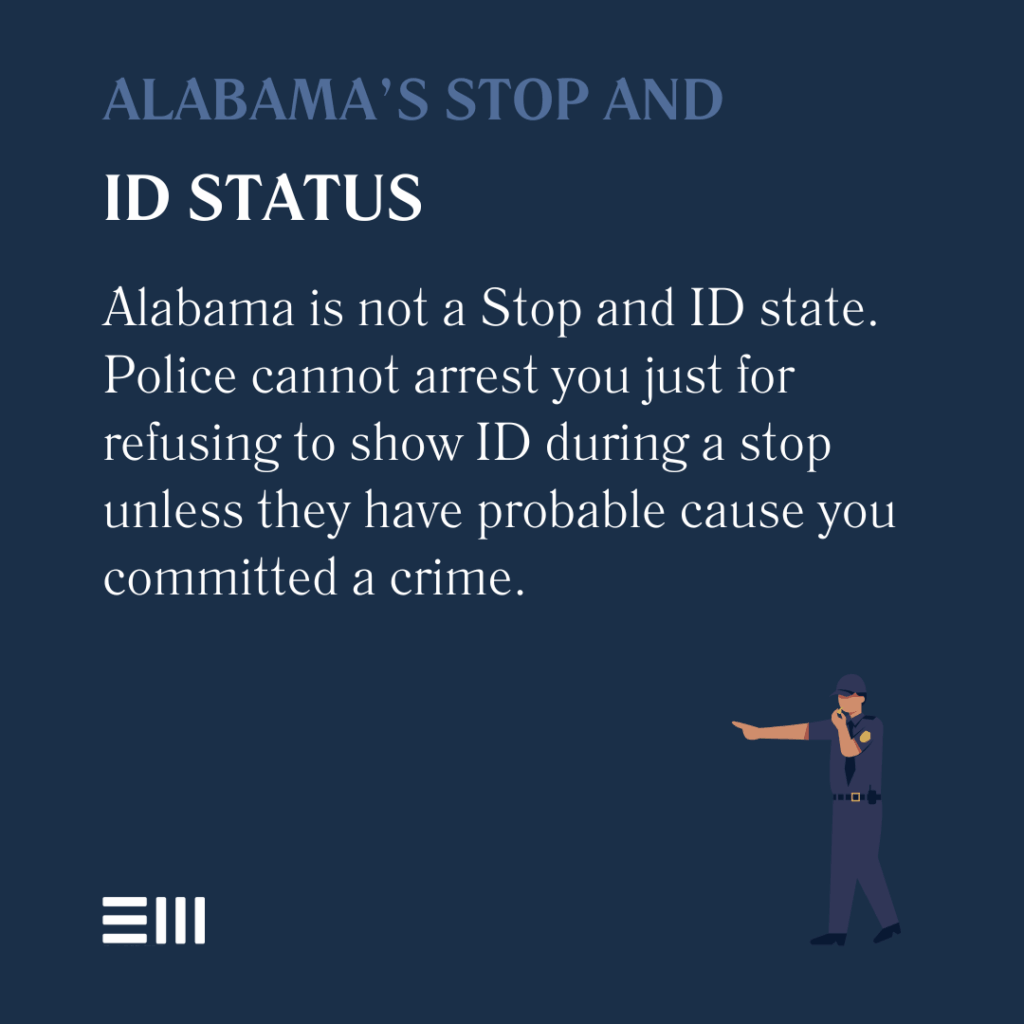
When it comes to “Stop and ID” laws, Alabama stands in line with many other states that do not have a broad statute requiring individuals to identify themselves to police without reasonable suspicion of criminal activity. This distinction is vital for tourists to understand.
Identification Requirements in Alabama
In Alabama, you are generally not required to carry identification at all times, nor are you required to present it to a law enforcement officer merely upon request, without any other basis. This means that if an officer approaches you on the street and simply asks for your ID without reasonable suspicion that you are involved in a crime, you are not legally obligated to provide it.
However, there are specific circumstances where providing identification becomes a legal requirement:
- Traffic Stops: If you are operating a motor vehicle, you are legally required to carry a valid driver’s license and present it to an officer upon request during a lawful traffic stop. This is a universal expectation for drivers across the United States.
- Lawful Arrest: If you are lawfully arrested, you will be required to provide identifying information as part of the booking process.
- Reasonable Suspicion of Criminal Activity: If a law enforcement officer has reasonable suspicion to believe you have committed, are committing, or are about to commit a crime, they can detain you for a brief investigation. During this detention, they may ask for your identification. While Alabama does not have a specific “failure to identify” statute that makes it a crime to refuse identification when lawfully detained (unless you are obstructing justice by providing false information, for example), providing identification can often expedite the situation if you are innocent.
- Specific Licensed Activities: If you are engaging in certain regulated activities, such as purchasing alcohol or tobacco, entering age-restricted venues, or operating specialized equipment, you will be required to show a valid photo ID to verify your age or authorization.
For visitors, the key takeaway is that casual interactions with law enforcement are unlikely to require identification unless there’s a specific legal reason, most commonly related to driving or a reasonable suspicion of an offense.
Common Scenarios for Tourists
Imagine you’re exploring the historic streets of Mobile or enjoying the beaches of Gulf Shores. Here’s how these rules might apply:
- Walking down the street: If an officer simply asks “Can I see your ID?” without any other context or suspicion, you are generally not obligated to provide it. You can politely ask, “Am I being detained?” or “What is the reason for this request?”
- Driving: If you are pulled over for a traffic infraction, you must present your driver’s license, vehicle registration, and proof of insurance. Failure to do so can result in a separate citation.
- Witnessing an event: If you witness an incident and an officer asks for your information as a witness, you are generally not legally obligated to provide it, though cooperating can be helpful to investigations. However, if the officer reasonably suspects you were involved, the rules regarding reasonable suspicion apply.
- In a bar or club: You will almost certainly be asked for ID to verify age, as part of routine business practice.
Understanding these scenarios helps tourists respond appropriately and confidently to police interactions, ensuring their rights are respected while also fostering a cooperative environment.
Best Practices for Travelers
While Alabama doesn’t broadly compel identification, smart travelers always adopt certain practices:
- Carry a Valid Photo ID: Even if not legally required at all times, having your driver’s license, passport, or state-issued ID readily available is always a good idea. It can facilitate routine processes (like check-ins at hotels or age verification) and can quickly resolve misunderstandings with law enforcement if reasonable suspicion does arise.
- Know Your Rights (and Limits): Be aware of your rights under the Fourth and Fifth Amendments. You have the right to remain silent. You have the right to refuse a search of your person or property unless the officer has a warrant, probable cause, or your consent. You also have the right to ask if you are free to leave.
- Stay Calm and Respectful: Regardless of the situation, maintain a calm and respectful demeanor. Confrontational behavior rarely de-escalates a situation and can potentially lead to further complications.
- Don’t Obstruct Justice: While you have rights, you also have responsibilities. Do not provide false identification or obstruct an officer in the performance of their duties.
- Consult Legal Advice: If you find yourself in a complex legal situation, seek advice from a qualified legal professional specializing in Alabama law.
By following these best practices, travelers can enjoy their Alabama adventure with peace of mind, confident in their understanding of local laws and their personal rights.
Beyond Legalities: Enjoying Your Alabama Experience
While understanding the legal framework is important, the true essence of travel lies in experiencing the destination. Alabama, often celebrated as the “Heart of Dixie,” offers an incredible array of experiences that cater to every type of traveler, from history buffs and outdoor enthusiasts to foodies and families.
Top Destinations and Attractions
Alabama is a tapestry of diverse landscapes and rich cultural heritage. Its cities and natural wonders provide countless opportunities for discovery:
- Birmingham: A hub of civil rights history, culinary innovation, and vibrant urban life. Explore the Birmingham Civil Rights Institute, climb Red Mountain Park for panoramic views, or indulge in the city’s burgeoning food scene.
- Montgomery: The state capital and a pivotal site in the Civil Rights Movement. Visit the Rosa Parks Museum, the Dexter Avenue King Memorial Baptist Church, and the National Memorial for Peace and Justice.
- Mobile: Alabama’s oldest city, known for its stunning Mardi Gras celebrations, French colonial architecture, and beautiful bayfront. Stroll through the historic district, visit the USS Alabama Battleship Memorial Park, or admire the Cathedral Basilica of the Immaculate Conception.
- Huntsville: The “Rocket City” is a must-visit for space enthusiasts. Home to the U.S. Space & Rocket Center, it offers an immersive experience into space exploration and the history of rocketry.
- Gulf Coast: The pristine white sands and emerald waters of Gulf Shores, Orange Beach, and Dauphin Island offer ideal settings for relaxation, water sports, and fresh seafood.
- Alabama Civil Rights Trail: A powerful journey through sites of immense historical significance, offering profound insights into a pivotal era in American history.
- Robert Trent Jones Golf Trail: For golf enthusiasts, this collection of championship courses across the state provides an unparalleled golfing experience amidst stunning landscapes.
From the vibrant cityscapes to the tranquil beaches and historic pathways, Alabama presents a diverse palette of attractions, making it an excellent choice for a variety of travel preferences.
Accommodations and Hospitality
Alabama offers a wide range of accommodation options to suit every budget and style. Whether you’re seeking luxury resorts, charming boutique hotels, family-friendly suites, or cozy vacation rentals, you’ll find plenty of choices.
- Luxury Resorts: In areas like the Gulf Coast and larger cities such as Birmingham and Mobile, you can find upscale resorts offering spa services, fine dining, and prime locations.
- Boutique Hotels: Many historic districts, particularly in Montgomery and Mobile, boast charming boutique hotels that provide a unique, personalized stay, often reflecting the local character and architecture.
- Family-Friendly Options: Throughout the state, especially near popular attractions and beaches, there are numerous hotels and vacation rentals designed with families in mind, often featuring pools, kids’ clubs, and spacious suites.
- Budget-Friendly Stays: For budget travelers, a plethora of motels, inns, and guesthouses offer comfortable and affordable lodging without compromising on essential amenities.
The renowned Southern hospitality extends to the accommodation sector, with staff often going the extra mile to ensure guests feel welcome and comfortable. Booking in advance, especially during peak seasons or major events like Mardi Gras in Mobile, is always advisable to secure the best rates and preferred locations.

Embracing Southern Culture and Hospitality
Beyond its landmarks and legal framework, Alabama truly shines through its culture and people. The state embodies the quintessential Southern charm, characterized by friendly locals, a rich culinary tradition, and a deep sense of community.
- Cuisine: Don’t leave Alabama without savoring its iconic dishes. From classic Southern barbecue and fried chicken to fresh Gulf seafood, sweet tea, and pecan pie, the food scene is a testament to comfort and flavor. Explore local diners, farmers’ markets, and upscale restaurants for an authentic taste of the South.
- Music and Arts: Alabama has an incredible musical heritage, being the birthplace of many jazz, blues, country, and rock and roll legends. Visit Muscle Shoals, a legendary recording hub, or catch live music performances in cities across the state.
- Local Festivals and Events: Throughout the year, Alabama hosts numerous festivals celebrating everything from art and music to food and history. These events offer fantastic opportunities to immerse yourself in local traditions and interact with the community.
- Outdoor Adventures: From hiking and fishing in its numerous state parks and national forests to kayaking along scenic rivers and exploring the Appalachian foothills, Alabama offers abundant opportunities for outdoor recreation.
A trip to Alabama is an invitation to discover a state that beautifully blends historical depth with modern appeal, all wrapped in a warm embrace of Southern hospitality. Being informed about legal aspects simply clears the path for a truly enriching and memorable travel experience.
In conclusion, while the question “Is Alabama a Stop and ID state?” has a straightforward answer – no, not in the broad sense – understanding the nuances is key for any responsible traveler. By knowing your rights and the circumstances under which identification might be required, you can confidently navigate your journey. Ultimately, the emphasis should remain on the incredible cultural immersion, historical exploration, and natural beauty that await you in Alabama, making it an unforgettable destination for all who visit.
LifeOutOfTheBox is a participant in the Amazon Services LLC Associates Program, an affiliate advertising program designed to provide a means for sites to earn advertising fees by advertising and linking to Amazon.com. Amazon, the Amazon logo, AmazonSupply, and the AmazonSupply logo are trademarks of Amazon.com, Inc. or its affiliates. As an Amazon Associate we earn affiliate commissions from qualifying purchases.