
Florida, often celebrated as the “Sunshine State,” conjures images of pristine beaches, thrilling theme parks, and vibrant cultural experiences. From the bustling streets of Miami to the enchanting charm of Key West, it stands as a premier global destination for travel and tourism. However, beneath its modern allure lies a rich, complex, and deeply influential history that stretches back centuries before it earned its place on the map of the United States. Understanding when and how Florida was founded is not merely an academic exercise; it’s a journey into the origins of many of its most treasured landmarks, unique traditions, and the very fabric of its identity that continues to attract millions of visitors seeking diverse experiences and accommodations.
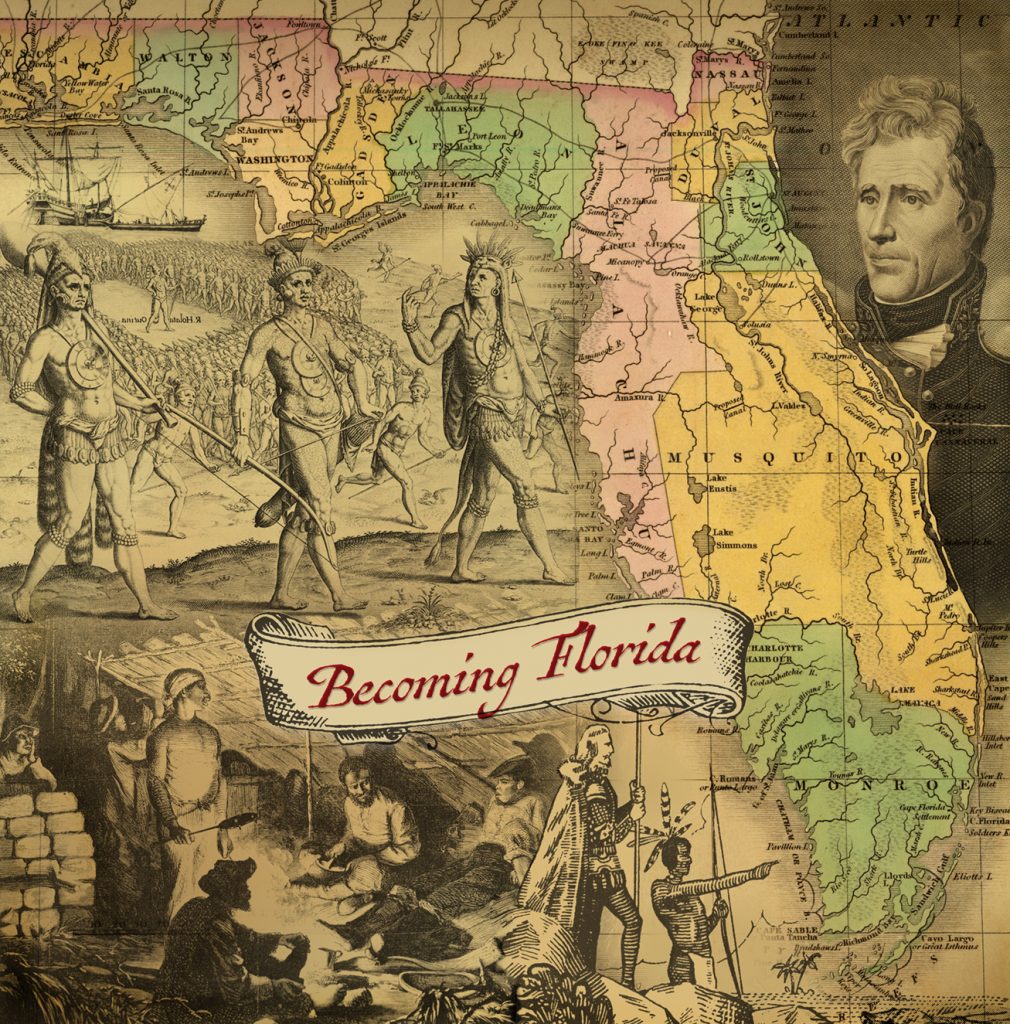
While Florida officially became the 27th U.S. state on March 3, 1845, this date marks merely one pivotal moment in a narrative that began with European discovery in the early 16th century. Its history is a testament to colonial ambitions, shifting allegiances, and the relentless spirit of pioneers, each leaving an indelible mark on the landscape and culture. For travelers, delving into this past enriches every visit, turning a simple vacation into an immersive historical adventure. Whether exploring ancient fortresses, historic hotels, or charming old towns, the story of Florida’s founding is intrinsically linked to its present-day appeal as a world-class destination.
The Dawn of European Discovery: Spanish Exploration and First Settlements
The story of Florida’s founding truly begins with the arrival of Europeans on its shores, forever altering the course of its development and establishing a legacy that permeates its tourism and cultural offerings today.
Ponce de León and the Naming of Florida
The year is 1513, and Juan Ponce de León, a Spanish explorer and conquistador, embarked on a journey that would put a vast peninsula on the European map. According to historical accounts, he landed on what he believed was a large island on April 2, 1513, during the Easter season, a period Spain referred to as “Pascua Florida” (Flowery Easter). Inspired by the vibrant spring flora and the festive season, Ponce de León christened the newly discovered land La Florida. This act of naming marked the official European “discovery” of what would much later become the state of Florida.
Ponce de León’s expedition, often romanticized with his mythical quest for the Fountain of Youth, sought riches and new territories for the Spanish Crown. While he found neither the mythical waters nor abundant gold during his initial foray, his exploration paved the way for subsequent Spanish attempts at colonization. Today, the enduring legend of the Fountain of Youth continues to captivate visitors, particularly in St. Augustine, where archaeological parks commemorate this intriguing chapter of Florida’s past, attracting tourists interested in unique historical experiences and local lore.
St. Augustine: The Oldest Continuously Inhabited European-Established Settlement
Decades after Ponce de León’s initial landing, the geopolitical landscape of the New World grew increasingly contentious. French Huguenots began establishing settlements in Spanish-claimed territory, prompting Spain to assert its dominion more forcefully. This led to the arrival of Pedro Menéndez de Avilés, a Spanish admiral, in 1565. His mission was clear: expel the French and establish a permanent Spanish presence.
On September 8, 1565, Menéndez de Avilés founded St. Augustine, making it the oldest continuously inhabited European-established settlement in the United States. This was not just a strategic military outpost but a nascent town that would endure centuries of challenges, including pirate raids and sieges. The city’s resilience and its strategic importance were underscored by the construction of the formidable Castillo de San Marcos, a massive masonry fort that still stands proudly today as a national monument and a major landmark.
For today’s travelers, St. Augustine is a treasure trove of history, offering an immersive experience into colonial Florida. Its charming cobblestone streets, like St. George Street, are lined with historic buildings, museums, and unique shops, making it a prime destination for tourism focused on local culture and history. Visitors can explore the fort, wander through living history museums, and stay in historic hotels or boutique accommodations that echo the city’s rich past, providing an unparalleled glimpse into Florida’s origins.
A Shifting Dominion: British Rule and Spanish Reassertion
For centuries, Florida remained a colonial frontier, often a pawn in the larger geopolitical games played by European powers. Its strategic location at the southeastern tip of the North American continent made it a coveted territory, leading to periods of shifting control between Spain and Great Britain.
The British Period (1763-1783)
The French and Indian War (also known as the Seven Years’ War) profoundly reshaped the colonial landscape of North America. With the signing of the Treaty of Paris in 1763, Spain ceded Florida to Great Britain in exchange for Havana, Cuba. This marked the beginning of a brief, but significant, 20-year period of British rule over the territory.
The British administration divided the vast territory into two separate colonies: East Florida, with its capital at St. Augustine, and West Florida, headquartered in Pensacola. The British actively encouraged settlement and agricultural development, particularly in areas producing sugar cane, indigo, and timber. They also sought to integrate the region more closely into their imperial trade network. During the American Revolutionary War (1775-1783), Florida remained a loyalist stronghold, providing refuge for those fleeing the rebellious colonies to the north. While the British period was relatively short, it introduced new administrative structures and stimulated economic growth in certain areas, leaving behind a subtle, yet discernible, layer of influence in various historical sites and landmarks.
Return to Spanish Rule (1783-1821)
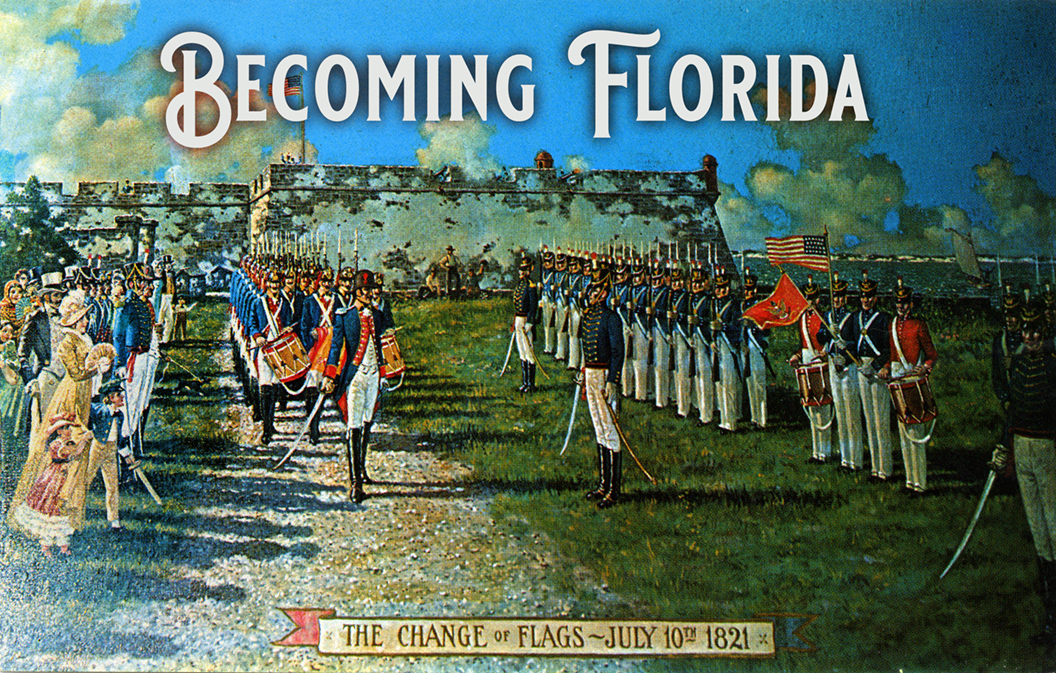
The conclusion of the American Revolutionary War brought another dramatic shift in Florida’s ownership. In the Treaty of Paris in 1783, which recognized the independence of the United States, Great Britain returned Florida to Spain. This second Spanish period (1783-1821) was characterized by instability and a weakening Spanish hold on the territory.
Border disputes with the expanding United States to the north became increasingly frequent, often involving raids and skirmishes. This era also saw significant conflicts with the indigenous Seminole people, known as the Seminole Wars, as American settlers pushed into their ancestral lands. General Andrew Jackson’s unauthorized incursions into Spanish Florida in 1818, ostensibly to pursue Seminole and escaped slave populations, highlighted Spain’s inability to control its distant possession effectively. The internal turmoil and external pressures ultimately set the stage for Florida’s final transfer of sovereignty.
American Territory to Statehood: The Birth of a State
The early 19th century was a period of rapid expansion for the United States, and Florida, with its strategic coastline and fertile lands, was a natural target for American ambitions.
The Florida Territory (1821-1845)
Recognizing its tenuous control and facing mounting pressure from the United States, Spain eventually agreed to cede Florida through the Adams-Onís Treaty of 1819, which was ratified in 1821. This treaty effectively transferred sovereignty of both East Florida and West Florida to the United States for a sum of $5 million (which was used to pay claims of U.S. citizens against Spain). With this acquisition, Florida officially became an organized territory of the United States.
Upon becoming a U.S. territory, the immediate challenge was to establish a unified government. To avoid favoring either the older colonial centers of St. Augustine or Pensacola, a compromise was struck, and in 1824, Tallahassee was designated as the territorial capital. This fledgling capital, situated midway between the two established cities, grew rapidly as a hub of political activity.
The territorial period saw a significant influx of American settlers, primarily from the southern states. They were drawn by the prospect of fertile land for cotton and sugar cane plantations. This migration, however, also intensified conflicts with the indigenous Seminole people. The Second Seminole War (1835-1842) was a brutal and costly conflict, resulting in the forced removal of most Seminole to lands west of the Mississippi River, though a resilient few managed to remain in the Everglades. The territorial era laid the groundwork for statehood, with its population growing and its political and economic structures solidifying, albeit often through difficult and contentious means.
March 3, 1845: Florida Becomes the 27th U.S. State
The culmination of centuries of exploration, colonization, and territorial development arrived on March 3, 1845. On this historic day, Florida was officially admitted into the Union as the 27th state of the United States. Its admission was part of a larger political maneuver to maintain the balance between free and slave states in the U.S. Congress; Florida, a slaveholding territory, was admitted alongside Iowa, which was set to be admitted as a free state the following year.
This moment marked the definitive “founding” of Florida as a sovereign entity within the American federal system. From a struggling colonial outpost, it had transitioned into a recognized state, ready to chart its own course. The challenges were immense, from developing infrastructure across its vast and often wild terrain to navigating the social and economic complexities of the antebellum South. Yet, this official birth heralded a new chapter, one that would eventually see Florida transform from an agricultural frontier into a global tourism powerhouse.
Florida’s Evolution: From Frontier to Tourist Mecca
Post-statehood, Florida began a gradual but ultimately dramatic transformation. The late 19th and early 20th centuries were pivotal, driven by visionary entrepreneurs and the state’s undeniable natural appeal.
Figures like Henry Flagler, a co-founder of Standard Oil, played an instrumental role in shaping modern Florida. His Florida East Coast Railway pushed southward along the Atlantic coast, opening up vast tracts of wilderness for development. Alongside the railway, Flagler constructed opulent hotels, establishing the foundation for Florida’s luxury tourism industry. Iconic establishments such as The Breakers in Palm Beach and the historic Ponce de Leon Hotel (now Flagler College) in St. Augustine attracted wealthy northerners, establishing a pattern of seasonal migration that continues to define Florida’s lifestyle and accommodation offerings.
The mid-20th century brought another seismic shift with the advent of large-scale theme parks. The opening of Walt Disney World Resort in Orlando in 1971 fundamentally altered Florida’s identity, cementing its status as the world’s family vacation capital. Simultaneously, the space race put Florida on the global stage with the Kennedy Space Center, offering a unique blend of scientific wonder and tourist attraction.
Today, Florida is a vibrant tapestry woven from its deep historical roots and its modern, dynamic appeal. Its rich history provides a captivating backdrop for its world-renowned beaches, diverse ecosystems like the Everglades, and bustling cities. From experiencing colonial living in St. Augustine to enjoying luxury resorts in Miami, the story of Florida’s founding is an essential component of its unique allure, drawing millions to explore its many facets and enjoy its countless experiences.
In conclusion, while Florida officially became a state on March 3, 1845, its identity was forged over centuries of pivotal moments, from Ponce de León’s “Pascua Florida” to the founding of St. Augustine, and through periods of Spanish, British, and American territorial rule. This profound historical journey is not just a tale of dates and treaties but a living narrative that continues to enrich every aspect of travel, tourism, and lifestyle that the Sunshine State offers today.
LifeOutOfTheBox is a participant in the Amazon Services LLC Associates Program, an affiliate advertising program designed to provide a means for sites to earn advertising fees by advertising and linking to Amazon.com. Amazon, the Amazon logo, AmazonSupply, and the AmazonSupply logo are trademarks of Amazon.com, Inc. or its affiliates. As an Amazon Associate we earn affiliate commissions from qualifying purchases.