
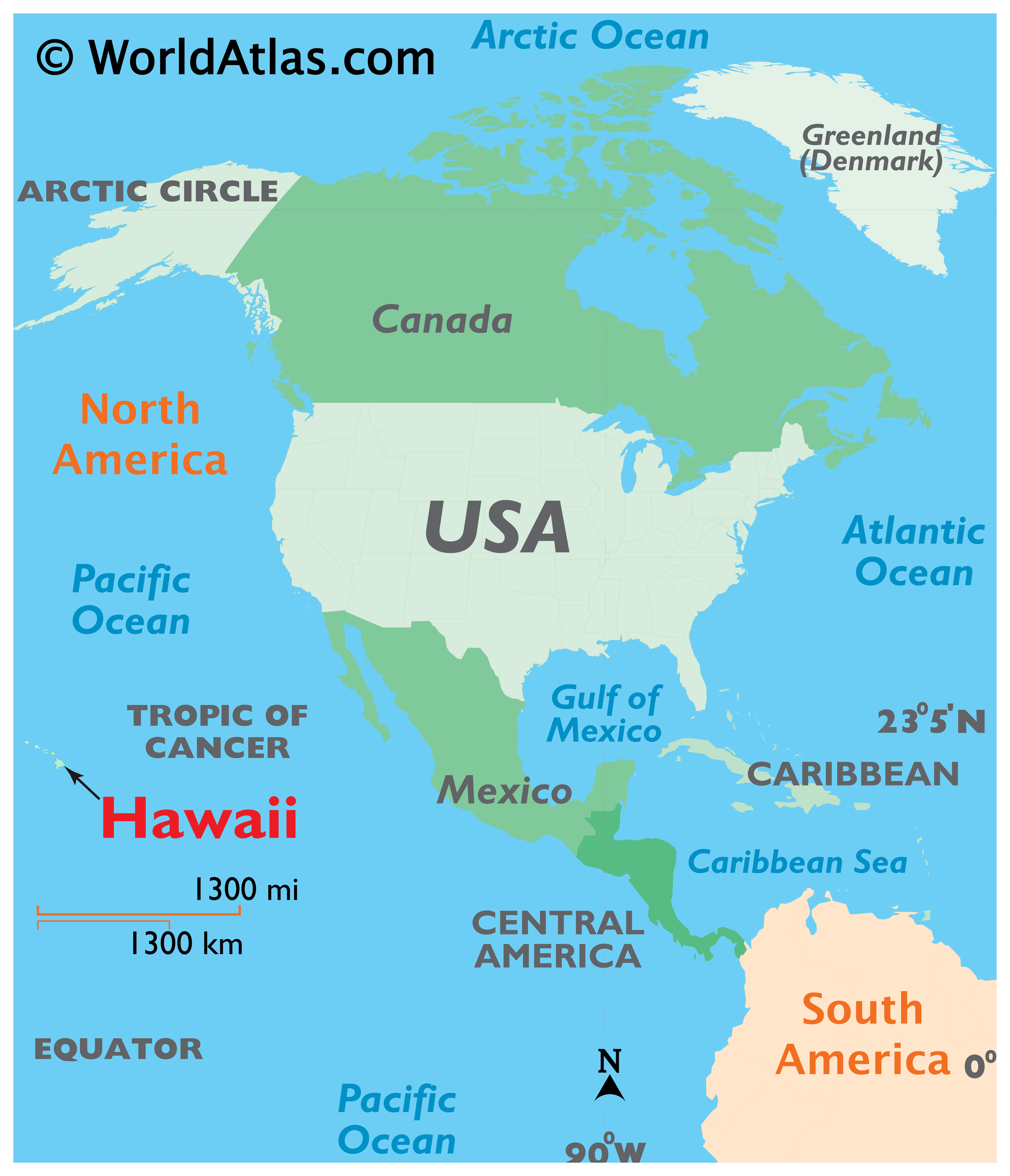
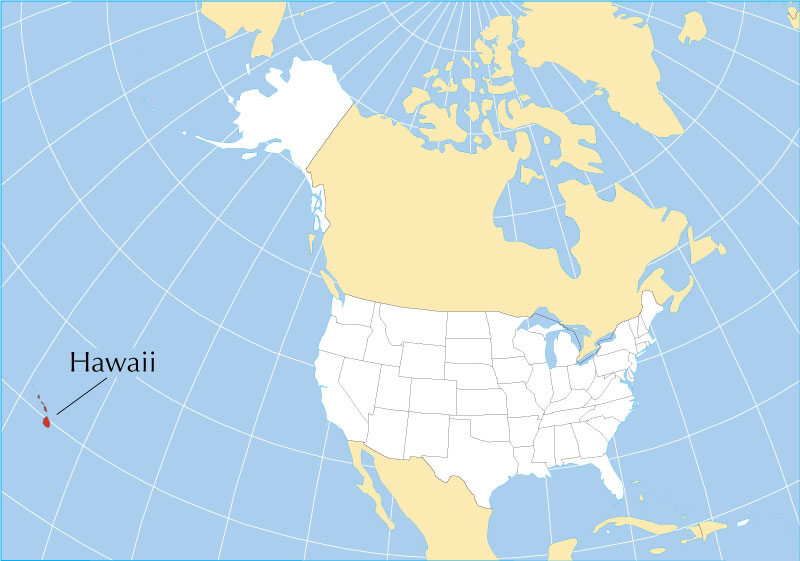
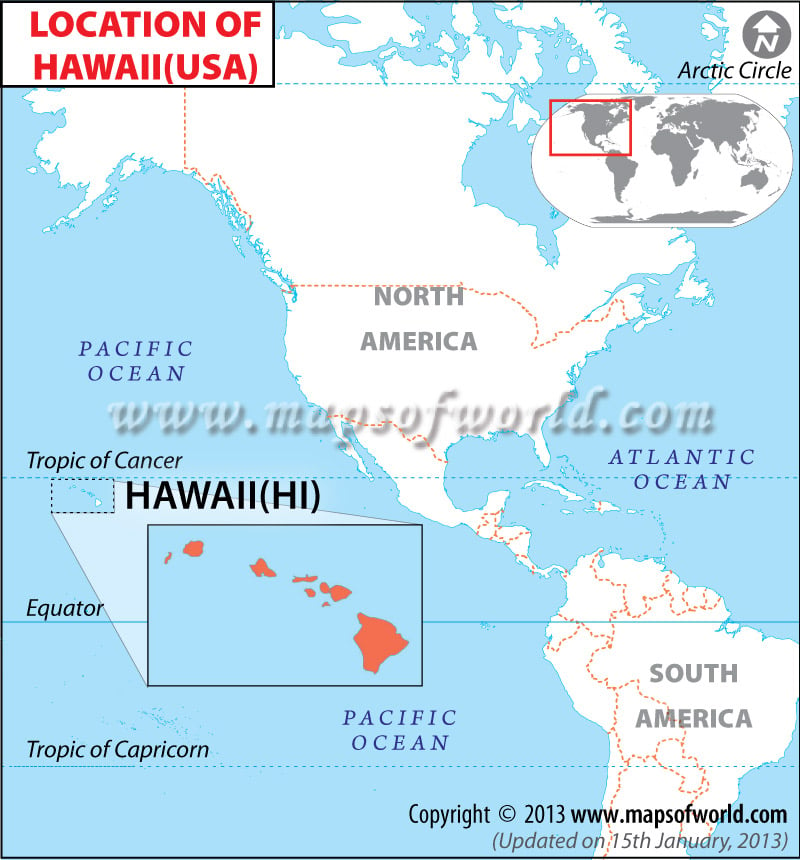
Hawaii, often celebrated as a tropical paradise and a land of aloha, holds a unique geographical position within the United States. Far from the contiguous mainland, this archipelago state is situated entirely in the heart of the central Pacific Ocean. It stands as the only U.S. state not located in North America, the only state composed entirely of islands, and the only state that is geographically within the tropics. Its isolation, while presenting logistical considerations, is precisely what contributes to its distinct natural beauty, vibrant culture, and unparalleled allure as a travel destination. Understanding Hawaii’s location is not merely about pointing to a dot on a map; it’s about appreciating the profound impact its geography has had on its history, ecosystems, and the very essence of the Hawaiian experience for millions of visitors each year.
The Geographical Tapestry: Pinpointing Hawaii’s Place
Hawaii’s unique placement sets it apart from all other U.S. states, influencing everything from its climate to its biodiversity and its historical narrative. Its distance from continental landmasses has fostered a truly unique environment.
The Isolated Gem of the Pacific
To truly grasp “where” Hawaii is, one must look west, far beyond the western coast of the United States. The closest U.S. state to Hawaii is California, yet the distance separating Honolulu from Los Angeles spans approximately 2,500 miles (4,000 kilometers) of open ocean. To put this into perspective, that’s roughly the same distance as flying from New York City to San Francisco across the North American continent. This vast oceanic expanse means that Hawaii is the most isolated major population center on Earth, a fact that has profoundly shaped its unique biodiversity and cultural development.
The Hawaiian Archipelago comprises hundreds of islands spread over 1,500 miles, but eight major islands form the heart of the state. These include Hawaii Island (commonly known as the Big Island), Maui, Oahu, Kauai, Molokai, Lanai, Niihau, and Kahoolawe. Each island is the peak of an enormous submarine volcano, formed over millions of years as the Pacific Plate slowly moved over a stationary volcanic hotspot deep within the Earth’s mantle. This geological process is ongoing, with the Big Island still actively growing due to volcanic eruptions from Kilauea and Mauna Loa. This volcanic origin gifts Hawaii with dramatic landscapes, from black sand beaches and lush rainforests to towering volcanic peaks that scrape the sky, creating a breathtaking tableau found nowhere else.
How Hawaii Became Part of the United States
Hawaii’s journey to becoming the 50th U.S. state is a compelling narrative rooted in discovery, monarchy, economic interests, and geopolitical shifts. Originally settled by Polynesian voyagers between 124 and 1120 AD, the islands were unified under a single kingdom by King Kamehameha I in the early 19th century, establishing the Kingdom of Hawaii. For decades, Hawaii thrived as an independent nation, recognized by major world powers.
However, by the late 19th century, American business interests, particularly those in the sugar and pineapple industries, grew significantly. This economic influence, combined with a desire for strategic naval positioning in the Pacific Ocean, led to increasing pressure for annexation. In 1893, American and European residents, with the support of U.S. Marines, overthrew Queen Liliuokalani, the last monarch of Hawaii. This led to the establishment of the Republic of Hawaii, which then sought annexation by the United States. In 1898, Hawaii was formally annexed as a U.S. territory, and it remained so for over six decades. Finally, on August 21, 1959, following a popular vote by its residents, Hawaii officially achieved statehood, solidifying its unique place as a non-contiguous U.S. state. This history underscores that while geographically distinct, Hawaii is intrinsically woven into the fabric of the American nation.
More Than Just a Dot on the Map: Hawaii’s Allure
Hawaii’s distant yet accessible location is not just a geographical fact; it is the very foundation of its appeal as a premier travel destination, offering a tapestry of experiences from serene relaxation to thrilling adventures.
A Gateway to Unforgettable Travel Experiences
Hawaii’s central Pacific Ocean location blesses it with a near-perfect tropical climate year-round, making it a perennial magnet for travelers seeking sun, surf, and relaxation. The consistent warmth, tempered by refreshing trade winds, creates an ideal environment for a myriad of outdoor activities. From world-class surfing breaks that attract professionals and novices alike to tranquil snorkeling and diving spots teeming with vibrant marine life, the ocean is an integral part of the Hawaiian experience. The islands’ diverse microclimates, ranging from arid volcanic landscapes to lush, perpetually wet rainforests, offer unparalleled opportunities for hiking, exploring dramatic cliffsides, and discovering hidden waterfalls.
The distinct ecosystems born from Hawaii’s isolation have fostered a rich biodiversity found nowhere else on Earth. Visitors can explore native botanical gardens, spot unique bird species, or swim alongside endangered Hawaiian Green Sea Turtles. Each island presents its own distinct personality and array of activities. Oahu, with its bustling capital Honolulu and famous Waikiki Beach, offers a blend of urban sophistication and iconic beach life. Maui is renowned for its luxurious resorts, stunning drives along the Road to Hana, and opportunities for whale watching. The Big Island beckons with active volcanoes and vast, diverse landscapes, while Kauai, the “Garden Isle,” mesmerizes with its dramatic Napali Coast and verdant interior. This incredible variety ensures that every traveler can find their perfect Hawaiian adventure, making the journey across the Pacific truly worthwhile.
Iconic Landmarks and Natural Wonders
The unique geological history and vibrant cultural heritage of Hawaii have bestowed upon it an abundance of iconic landmarks and natural wonders that captivate visitors from across the globe. On Oahu, the volcanic cone of Diamond Head stands majestically over Waikiki Beach, offering panoramic views of the coastline after a rewarding hike. Nearby, Pearl Harbor serves as a poignant reminder of pivotal moments in U.S. history, with the USS Arizona Memorial drawing millions annually to reflect on the past.
Venturing to the Big Island, the raw power of creation is on full display at Hawaii Volcanoes National Park, a UNESCO World Heritage Site where visitors can witness active volcanic activity, walk through lava tubes, and explore solidified lava fields. On Maui, the breathtaking sunrise from the summit of Haleakala within Haleakala National Park is an experience of ethereal beauty, while the lush journey on the Road to Hana unveils countless waterfalls and hidden pools. Kauai’s dramatic Napali Coast, accessible by helicopter, boat, or challenging hike, reveals towering emerald cliffs and secluded beaches that are nothing short of spectacular. These landmarks, deeply intertwined with Hawaii’s natural setting, are not just sights to see, but experiences that connect visitors to the profound beauty and historical significance of the islands.
The Diverse Spectrum of Hawaiian Accommodation
Hawaii’s appeal as a premier destination means it offers a vast and varied spectrum of accommodation options, catering to every style, preference, and budget. From ultra-luxurious, full-service resorts to charming boutique hotels, cozy vacation rentals, and budget-friendly guesthouses, the islands ensure that finding the perfect “home away from home” is part of the exciting travel planning process. On Maui, areas like Wailea and Ka’anapali are famed for their opulent resorts such as the Grand Wailea, A Waldorf Astoria Resort or the Hyatt Regency Maui Resort and Spa, offering world-class amenities including championship golf courses, award-winning spas, and exquisite dining. These establishments often provide direct beach access, multiple pools, and extensive activity programs, making them ideal for families or those seeking an indulgent escape.
For travelers desiring more space or a localized experience, vacation rentals booked through platforms like Airbnb or VRBO are highly popular, particularly on islands like Kauai and the Big Island. These range from private beachfront homes to condominium units with kitchen facilities, offering flexibility and a sense of independence. Charming inns, often found in smaller towns like Paia on Maui or Hanalei on Kauai, provide a more intimate and personalized stay, often highlighting local art and design. Even budget-conscious travelers can find comfortable options, from hostels in Waikiki to smaller guesthouses away from the main tourist hubs, allowing them to experience Hawaii’s magic without breaking the bank. The choice of accommodation often shapes the entire travel experience, making it crucial to consider what kind of ambiance and convenience best suits your Hawaiian adventure.
Planning Your Hawaiian Journey: Practical Tips and Considerations
While Hawaii’s location promises a unique escape, careful planning is essential to maximize your enjoyment and navigate the islands efficiently.
Navigating the Islands: Transportation and Accessibility
Given Hawaii’s island geography, understanding transportation is key to a seamless travel experience. Inter-island travel is primarily facilitated by air, with short flights connecting the major islands. Hawaiian Airlines and Southwest Airlines operate frequent services between Honolulu (Oahu), Kahului (Maui), Kona and Hilo (on the Big Island), and Lihue (Kauai). It’s advisable to book these flights in advance, especially during peak season. Once on an island, rental cars are highly recommended for exploring, offering the freedom to discover hidden beaches, scenic lookouts, and charming local towns at your own pace. While Oahu has a robust public transportation system (TheBus), it’s less comprehensive on other islands.
The journey to Hawaii itself requires careful planning due to its distance from the mainland. Most international and mainland U.S. flights arrive at Daniel K. Inouye International Airport (HNL) in Honolulu, on Oahu. Direct flights are available from many major U.S. cities and some international hubs, but the flight duration is typically 5-6 hours from the West Coast and 9-10 hours from the East Coast. Travelers should account for time zone changes and potential jet lag, especially for longer journeys. Despite the distance, the reward of arriving in this tropical paradise far outweighs the travel time, making every step of the planning process a worthwhile investment in an unforgettable adventure.
Embracing Local Culture and Cuisine
Hawaii’s culture is as vibrant and unique as its landscapes, a rich tapestry woven from indigenous Polynesian traditions and the influences of diverse immigrant communities from Asia, Europe, and the mainland United States. Visitors are encouraged to engage with and respect the local culture, known as “aloha spirit.” This means participating in a traditional luau to experience Hawaiian music, hula dancing, and a feast of local delicacies like kalua pig, poi, and haupia. Exploring local markets, like the KCC Farmers Market on Oahu, offers a chance to sample fresh, locally grown produce and artisanal goods.
The culinary scene in Hawaii is a delightful fusion, reflecting its multi-ethnic heritage. Beyond the luau, must-try foods include fresh poke, a traditional raw fish salad; loco moco, a hearty breakfast dish; and shave ice, a refreshing treat. The farm-to-table movement thrives here, with many restaurants utilizing the abundant fresh seafood and produce. Respecting the land, or “aina,” and its people, “kanaka maoli,” is paramount. Learning a few Hawaiian phrases like “mahalo” (thank you) and “aloha” (hello/goodbye/love) can enhance interactions and show appreciation for the local way of life. By immersing oneself in the culture, travelers gain a deeper understanding and appreciation for what makes Hawaii so special, far beyond its stunning beaches.
Tailoring Your Stay: From Luxury Resorts to Budget-Friendly Options
The diverse range of experiences available in Hawaii means that every trip can be uniquely tailored, regardless of budget or travel style. For those dreaming of a lavish escape, luxury travel is epitomized by resorts such as the Four Seasons Resort Maui at Wailea or The Kahala Hotel & Resort on Oahu, which offer unparalleled service, exquisite dining, and private beach access. These establishments cater to discerning travelers seeking pampering, exclusive amenities, and serene environments for relaxation and rejuvenation.
Conversely, Hawaii is also accessible for budget travel without compromising on the core experience. Savvy travelers can save by opting for vacation rentals or guesthouses, cooking some of their meals, utilizing local food trucks, and focusing on free natural attractions like public beaches and hiking trails. For family trips, many resorts offer kid-friendly pools, supervised activity clubs, and spacious suites, while vacation rentals provide the comforts of home. Business stays are also well-accommodated, particularly in Honolulu, with numerous hotels offering conference facilities and business services. The key is to research and plan according to your priorities, whether it’s an adventurous backpacking journey across islands, a romantic honeymoon in a secluded villa, or a vibrant family vacation filled with activities. Hawaii’s geographical blessing of natural beauty, combined with its well-developed tourism infrastructure, ensures that a memorable experience awaits every visitor, making its distant location a journey well worth taking.
In conclusion, Hawaii’s location within the United States is profoundly unique: a chain of volcanic islands isolated in the central Pacific Ocean, thousands of miles from the mainland. This distinct geography is not merely a fact on a map but the very foundation of its identity as a world-class destination. It dictates the tropical climate, shapes the dramatic landscapes, nurtures its unparalleled biodiversity, and influences its rich, multicultural heritage. For the traveler, this remote yet accessible paradise offers an escape into a realm of breathtaking natural beauty, historical depth, vibrant cultural experiences, and a diverse range of accommodations and activities.
While the journey to this distant state requires planning, the reward is an immersion in an environment unlike any other U.S. destination. From the active volcanoes of the Big Island to the iconic beaches of Oahu, the luxurious resorts of Maui to the lush cliffs of Kauai, Hawaii provides a tapestry of experiences that cater to every kind of explorer. Its location makes it a true gem, an American tropical haven that invites you to discover its warmth, wonder, and the enduring spirit of aloha.
LifeOutOfTheBox is a participant in the Amazon Services LLC Associates Program, an affiliate advertising program designed to provide a means for sites to earn advertising fees by advertising and linking to Amazon.com. Amazon, the Amazon logo, AmazonSupply, and the AmazonSupply logo are trademarks of Amazon.com, Inc. or its affiliates. As an Amazon Associate we earn affiliate commissions from qualifying purchases.