
California, often celebrated as the Golden State, is a land of unparalleled beauty and diverse experiences, from the sun-drenched beaches of Southern California to the majestic forests of its northern reaches. It beckons travelers with iconic landmarks, world-class cuisine, and a vibrant lifestyle that blends innovation with natural splendor. However, beneath this picturesque facade lies a dynamic geological landscape, constantly shaped by powerful forces. The question of “When was the last big earthquake in [California]?” is not merely a scientific inquiry but one that profoundly impacts travel planning, safety protocols for hotels and accommodations, and the very perception of tourism in this remarkable state.
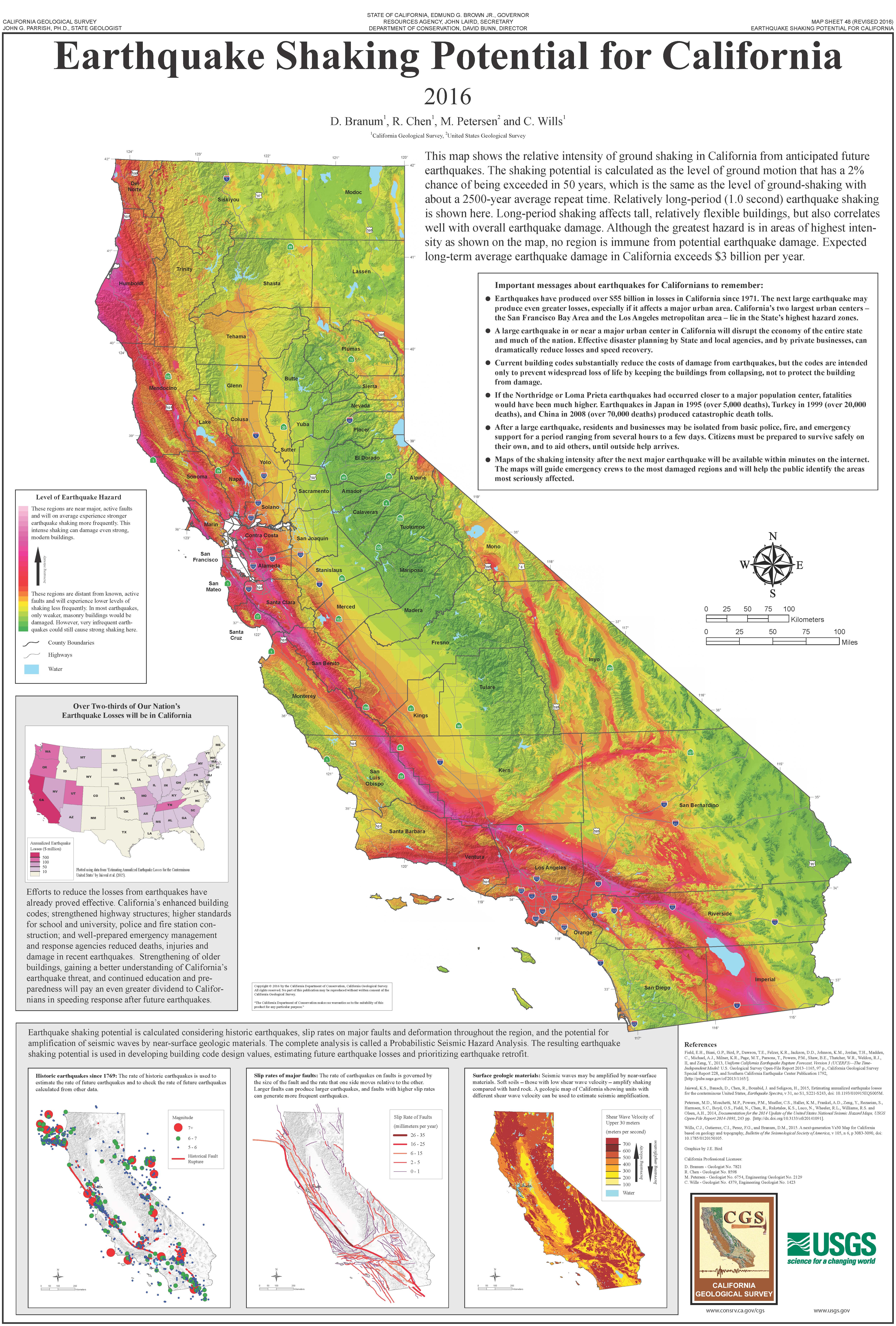
For anyone considering a trip to [California], understanding its seismic activity is part of appreciating its unique character. Earthquakes are a natural, albeit often unsettling, phenomenon intrinsic to the region. While they are a fact of life, the state has developed remarkable resilience, incorporating advanced engineering and preparedness into its infrastructure and lifestyle. This article delves into the specifics of [California]’s recent seismic history, offering insights for travelers and shedding light on how the state mitigates risks, ensuring that your adventure remains safe and memorable. We’ll explore not only the dates and magnitudes but also the broader implications for visitors, from staying in earthquake-resistant hotels to navigating attractions built to withstand nature’s might.
Understanding California’s Seismic Landscape
To truly grasp the answer to our central question, one must first understand the geological forces that define [California]. The state sits at the crossroads of two immense tectonic plates: the Pacific Plate and the North American Plate. These colossal landmasses are not static but are in constant, grinding motion against each other. It’s this colossal, slow-motion dance that gives birth to the earthquakes that periodically ripple through the landscape.
The Ring of Fire and the San Andreas Fault
[California]’s seismic story is fundamentally linked to the Pacific Ring of Fire, a horseshoe-shaped belt around the Pacific Ocean known for its intense seismic and volcanic activity. This zone, stretching from Chile to Japan and Indonesia before reaching [California] and extending northward, accounts for the vast majority of the world’s earthquakes. Within [California], the most famous—and infamous—component of this system is the San Andreas Fault.The [San Andreas Fault] is a continental transform fault that runs for approximately 800 miles (1,300 kilometers) through [California], acting as the primary boundary between the [Pacific Plate] and the [North American Plate]. Along much of its length, the [Pacific Plate] is moving northwest relative to the [North American Plate]. This movement isn’t smooth; rather, it occurs in sudden lurches when built-up stress exceeds the strength of the rocks, releasing massive amounts of energy in the form of an earthquake.
Beyond the [San Andreas Fault] itself, [California] is crisscrossed by hundreds of other active fault lines, including the Hayward Fault in the Bay Area, the Newport-Inglewood Fault in Los Angeles County, and the Garlock Fault in the Mojave Desert. These interconnected systems mean that seismic activity can occur in many parts of the state, not just along the main [San Andreas Fault] line. For travelers, understanding this complex web of activity reinforces the importance of general earthquake preparedness, rather than focusing solely on specific high-risk areas.
Defining a “Big” Earthquake: Magnitude Matters
When we talk about a “big” earthquake, we’re generally referring to its magnitude, a measure of the energy released at the earthquake’s source. The Richter scale, and more commonly today, the moment magnitude scale (Mw), are used for this purpose. While any tremor can be unnerving, a “big” earthquake typically refers to events of magnitude 6.0 or higher.
- Magnitude 5.0-5.9 (Moderate): Can cause minor damage to poorly constructed buildings, often felt widely.
- Magnitude 6.0-6.9 (Strong): Capable of causing significant damage in populated areas, particularly to buildings not designed to withstand seismic forces. This is often the threshold for what people consider a “big” earthquake.
- Magnitude 7.0-7.9 (Major): Causes widespread, serious damage over large areas. This magnitude can be truly devastating.
- Magnitude 8.0+ (Great): Catastrophic damage over very large areas, capable of causing destruction over thousands of square miles.
It’s important to remember that the impact of an earthquake isn’t solely determined by its magnitude. Factors like depth, proximity to populated areas, soil conditions, and building codes also play crucial roles. A shallower, moderate earthquake directly under a city can sometimes cause more localized damage than a deeper, stronger one in a remote area. For the purposes of travel and tourism, we often consider events that cause notable damage, widespread disruption, or fatalities as “big,” regardless of their exact numerical magnitude.
A Tremor Through Time: California’s Significant Earthquakes
[California] has a long and well-documented history of earthquakes, a testament to its dynamic geology. While smaller tremors are a daily occurrence, major events stand out in the state’s memory, shaping its development and resilience.The Great 1906 San Francisco Earthquake
Perhaps the most famous “big” earthquake in [California]’s history is the Great 1906 San Francisco Earthquake. Striking on April 18, 1906, it is estimated to have been a magnitude 7.9 event. The quake itself caused immense destruction, but it was the subsequent fires, fueled by ruptured gas lines and a lack of water due to broken mains, that truly devastated San Francisco. Much of the city was reduced to rubble, and thousands lost their lives. This event led to significant advancements in seismic research, building codes, and emergency preparedness, forever altering how [California] approaches the threat of earthquakes. Today, visitors to [San Francisco] can see the city’s incredible recovery and marvel at iconic structures like the Golden Gate Bridge, designed with seismic resilience in mind, a testament to post-1906 engineering.
Loma Prieta and Northridge: Modern Day Shakes
Moving into more recent history, two major earthquakes left indelible marks on [California] in the latter half of the 20th century:
-
The 1989 Loma Prieta Earthquake: On October 17, 1989, a magnitude 6.9 earthquake struck the San Francisco Bay Area. Centered near Santa Cruz in the Santa Cruz Mountains, it caused significant damage, particularly to structures built on unstable soil, such as the Marina District in [San Francisco] and parts of Oakland. It notably collapsed a section of the Bay Bridge and the Cypress Street Viaduct in [Oakland]. This earthquake famously occurred during the warm-up for a World Series baseball game between the San Francisco Giants and the Oakland Athletics, giving it immediate national attention. For travelers, it highlighted the importance of retrofitting infrastructure and the vulnerability of certain geological areas.
-
The 1994 Northridge Earthquake: Striking [Southern California] on January 17, 1994, this magnitude 6.7 earthquake was centered in the San Fernando Valley near Northridge. Despite being a slightly lower magnitude than [Loma Prieta], its shallow depth and location directly beneath a densely populated urban area, including parts of [Los Angeles], led to extensive damage and numerous fatalities. It caused widespread destruction to freeways, commercial buildings, and apartment complexes, exposing vulnerabilities in construction practices, particularly “soft-story” buildings. The Northridge Earthquake spurred further revisions to building codes, particularly for steel-frame buildings and parking structures, making [Los Angeles] one of the most seismically prepared cities in the world. Visitors to [Los Angeles] today benefit from these stringent regulations, with hotels and attractions designed to rigorous safety standards.
The Ridgecrest Earthquakes: The Most Recent Major Events
The answer to “When was the last big earthquake in [California]?” points us to the Mojave Desert in July 2019. This sequence of events, known as the Ridgecrest Earthquakes, included two significant tremors:
- July 4, 2019: A magnitude 6.4 earthquake struck near the town of Ridgecrest in Kern County. While primarily affecting a relatively sparsely populated area, it was widely felt across [Southern California], including [Los Angeles] and even as far as Las Vegas, Nevada.
- July 5, 2019: Less than 34 hours later, a much stronger magnitude 7.1 earthquake struck in almost the same location. This was the largest earthquake in [Southern California] in nearly two decades.
The [Ridgecrest Earthquakes] caused significant damage in the immediate vicinity, including structural damage to homes and businesses, road closures due to cracking, and numerous water and gas line breaks in [Ridgecrest] and the nearby Naval Air Weapons Station China Lake. While these events were certainly “big” in geological terms and caused considerable local disruption, their impact on major urban centers and popular tourist destinations was minimal. They served as a powerful reminder of [California]’s constant seismic activity, triggering advanced warning systems and allowing scientists to gather invaluable data. For travelers, the quick and effective emergency response showcased [California]’s readiness to handle such events, even if their direct impact on tourism outside of the immediate area was limited.
Navigating the Golden State: Safety for Travelers

While the history of earthquakes in [California] might sound daunting, it’s crucial to understand that the state is incredibly well-prepared. Visiting [California] is overwhelmingly safe, thanks to rigorous building codes, advanced warning systems, and a highly informed public. For travelers, a little knowledge goes a long way in ensuring peace of mind.
Preparing for the Unforeseen: Before You Go
Prior to your trip, a few simple steps can enhance your preparedness:
- Research Your Accommodation: Reputable hotels, resorts, and vacation rentals in [California] are built to modern seismic standards. When booking, consider properties that are newer or have clearly stated their adherence to current safety codes. High-rise hotels in cities like [Los Angeles] and [San Francisco] often feature advanced earthquake-resistant designs.
- Know Your Emergency Plan: Familiarize yourself with the emergency exits and procedures at your hotel or accommodation. Many establishments will have information readily available.
- Stay Informed: Follow local news outlets or official government social media channels for real-time updates during your visit. The MyShake App, developed by the University of California, Berkeley and supported by the state, can provide early warnings for earthquakes, though its effectiveness depends on your proximity to the epicenter.
- Pack Smart: While not directly earthquake-related, having a small, accessible bag with essentials like a phone charger, basic first-aid, and any necessary medications is always a good idea for travel, covering various unforeseen circumstances.
During an Earthquake: Drop, Cover, and Hold On
Should an earthquake occur during your stay, the universally recommended safety action is “Drop, Cover, and Hold On”:
- DROP to the ground immediately. This prevents you from being thrown down by the shaking.
- COVER your head and neck with your arms, and take cover under a sturdy piece of furniture like a strong table or desk. If no shelter is available, drop to the ground next to an interior wall and cover your head and neck.
- HOLD ON to your shelter until the shaking stops. Be prepared to move with your shelter if it shifts.
If you are outdoors, move to an open area away from buildings, trees, streetlights, and power lines. If you are driving, pull over to a clear spot and stop, setting your parking brake. Stay inside the vehicle until the shaking stops. This advice is widely disseminated in [California] and is often visible in public spaces and hotels.
Post-Earthquake: What to Expect and How to React
After the shaking subsides, remain calm and assess your surroundings.
- Check for Injuries: Attend to yourself and others.
- Be Aware of Aftershocks: These smaller tremors can occur minutes, hours, days, or even weeks after a main quake.
- Stay Informed: Listen to battery-operated or hand-crank radios, or use your phone for official emergency broadcasts and updates from authorities.
- Avoid Damaged Areas: Stay clear of cracked sidewalks, damaged buildings, and downed power lines.
- Conserve Resources: If essential services are disrupted, conserve water, food, and battery power.
- Communicate Cautiously: Use text messages or social media to communicate with loved ones rather than phone calls, as cellular networks may be overloaded.
Most importantly, follow the instructions of local emergency services and hotel staff. They are trained to guide you through post-earthquake procedures safely.
Resilient Infrastructure: How California Builds Back Stronger
The series of major earthquakes, from 1906 to [Northridge] and [Ridgecrest], has instilled in [California] a proactive approach to infrastructure. Modern building codes are among the strictest in the world, mandating seismic-resistant designs for new construction, including hotels, office buildings, and residential properties. Many iconic landmarks, such as the [Golden Gate Bridge] and the numerous freeway overpasses, have undergone extensive retrofitting to enhance their ability to withstand major seismic events.
This commitment to resilience extends to utilities and emergency services. Advanced gas shut-off valves, modernized water systems, and sophisticated communication networks are all part of [California]’s strategy. This translates into a safer environment for both residents and the millions of tourists who flock to destinations like Disneyland, Yosemite National Park, and the urban centers of [San Francisco] and [Los Angeles]. The state’s investment in earthquake preparedness is a cornerstone of its tourism appeal, ensuring that even in an earthquake-prone region, visitors can explore with confidence.
Earthquakes and the California Travel Experience
The constant seismic activity in [California] doesn’t just dictate building codes; it also subtly shapes the travel experience, influencing everything from the architecture you see to the resilient spirit of the people you meet. Far from being a deterrent, it has become part of the unique narrative of visiting the [Golden State].
Exploring Earthquake-Resistant Landmarks and Architecture
[California]’s most famous landmarks are often marvels of engineering, designed to gracefully endure the very forces that define the region. Consider the sleek skyscrapers of [Los Angeles] and [San Francisco], many of which incorporate base isolation systems or advanced damping technologies that allow them to sway and absorb seismic energy rather than rigidly resisting it. Historic hotels that predate modern seismic codes have often undergone extensive retrofits, blending heritage with cutting-edge safety features.Even natural landmarks are a testament to seismic activity. The dramatic cliffs of Big Sur, the towering granite formations of [Yosemite National Park], and the stark beauty of Death Valley National Park have all been sculpted over millennia by tectonic forces, making them living geological classrooms. Visiting these sites offers a deeper appreciation for the raw power of nature that has shaped [California]’s stunning topography.
Accommodation Safety: Staying Secure in Seismic Zones
For travelers, the safety of their accommodation is paramount. In [California], hotels, from luxury resorts in Napa Valley to boutique hotels in Santa Monica and family-friendly options near [Disneyland] in Anaheim, are typically built to high standards. New construction adheres to the latest seismic codes, which often include steel reinforcement, shear walls, and flexible foundations. Many older buildings, especially those that cater to tourism, have been extensively retrofitted to enhance their structural integrity against earthquakes.
When choosing a place to stay, look for reputable hotel brands that are known for adhering to safety standards. Don’t hesitate to check reviews or even inquire about a hotel’s earthquake preparedness measures if it brings you peace of mind. Often, hotels will have clear emergency instructions posted in rooms and public areas, detailing what to do in case of an earthquake. This commitment to guest safety is a standard part of the hospitality experience in [California], ensuring that your stay is as secure as it is comfortable.

Embracing Resilience: The California Spirit
Ultimately, the constant presence of seismic activity has fostered a unique spirit of resilience and preparedness among Californians. This isn’t a culture of fear, but rather one of respectful coexistence with nature. This philosophy is evident in the state’s ongoing investment in research, early warning systems, and public education.
For the adventurous traveler, understanding [California]’s seismic story adds another layer of depth to the experience. It highlights the state’s dynamic nature, its engineering ingenuity, and the collective spirit of its communities. Whether you’re exploring the historic missions, hiking in Sequoia National Park, or enjoying the vibrant nightlife of Hollywood, you can do so with the knowledge that [California] has proactively prepared for the tremors that are an intrinsic part of its beautiful and ever-evolving landscape. The last “big” earthquake was a reminder, not a deterrent, a testament to a state that continually adapts, innovates, and welcomes the world, ready for whatever geological shifts may come.
LifeOutOfTheBox is a participant in the Amazon Services LLC Associates Program, an affiliate advertising program designed to provide a means for sites to earn advertising fees by advertising and linking to Amazon.com. Amazon, the Amazon logo, AmazonSupply, and the AmazonSupply logo are trademarks of Amazon.com, Inc. or its affiliates. As an Amazon Associate we earn affiliate commissions from qualifying purchases.