
Embarking on the journey to establish a Limited Liability Company (LLC) in Kansas is a strategic move for entrepreneurs seeking to protect their personal assets while operating a business. This process, while straightforward, requires careful attention to detail and an understanding of the state’s specific requirements. Whether you’re a local Kansas resident or an out-of-state entity looking to expand, navigating the paperwork and understanding the foundational steps is crucial for a successful launch. This guide will walk you through the essential stages, from initial planning to official registration, ensuring your business venture in the Sunflower State is set up for stability and growth.
Understanding the Basics of an LLC in Kansas
Before diving into the procedural aspects, it’s beneficial to grasp what an LLC is and why it’s a popular choice for businesses. An LLC combines the pass-through taxation of a partnership or sole proprietorship with the limited liability of a corporation. This means that the personal assets of the owners (members) are generally protected from business debts and lawsuits.
The Advantages of an LLC
The allure of forming an LLC in Kansas stems from several key advantages:
- Limited Liability Protection: This is the cornerstone of an LLC. If your business incurs debt or faces legal action, your personal assets, such as your home, car, or savings, are typically shielded. This separation is a significant benefit for business owners.
- Pass-Through Taxation: Unlike traditional corporations that are taxed on their profits and then again when profits are distributed to shareholders, LLCs generally avoid “double taxation.” Profits and losses are passed through to the members and reported on their individual tax returns. This can often lead to a simpler and more favorable tax situation.
- Flexibility in Management: LLCs can be managed by their members (member-managed) or by appointed managers (manager-managed). This flexibility allows business owners to tailor the management structure to their specific needs and the complexity of their operations.
- Fewer Formalities: Compared to corporations, LLCs generally have fewer ongoing operational formalities, such as mandatory annual meetings or complex record-keeping requirements, making them easier to maintain.
Key Considerations Before Forming Your LLC
While the benefits are compelling, thorough preparation is vital. Consider these points before you begin the formal application process:
- Business Name: Your LLC name must be unique and distinguishable from other registered business names in Kansas. It must also include an “LLC” designator (e.g., “LLC,” “L.L.C.,” or “Limited Liability Company”). You can check for name availability on the Kansas Secretary of State website.
- Registered Agent: Every LLC in Kansas must designate a registered agent. This is a person or company located within the state who is officially designated to receive legal documents and official correspondence on behalf of the LLC. The registered agent must have a physical street address in Kansas (a P.O. box is not sufficient).
- Operating Agreement: While not legally required by the state of Kansas, an Operating Agreement is a crucial internal document. It outlines the ownership structure, member responsibilities, profit and loss distribution, and procedures for managing the LLC. It can prevent disputes among members and provide clarity on operational matters.
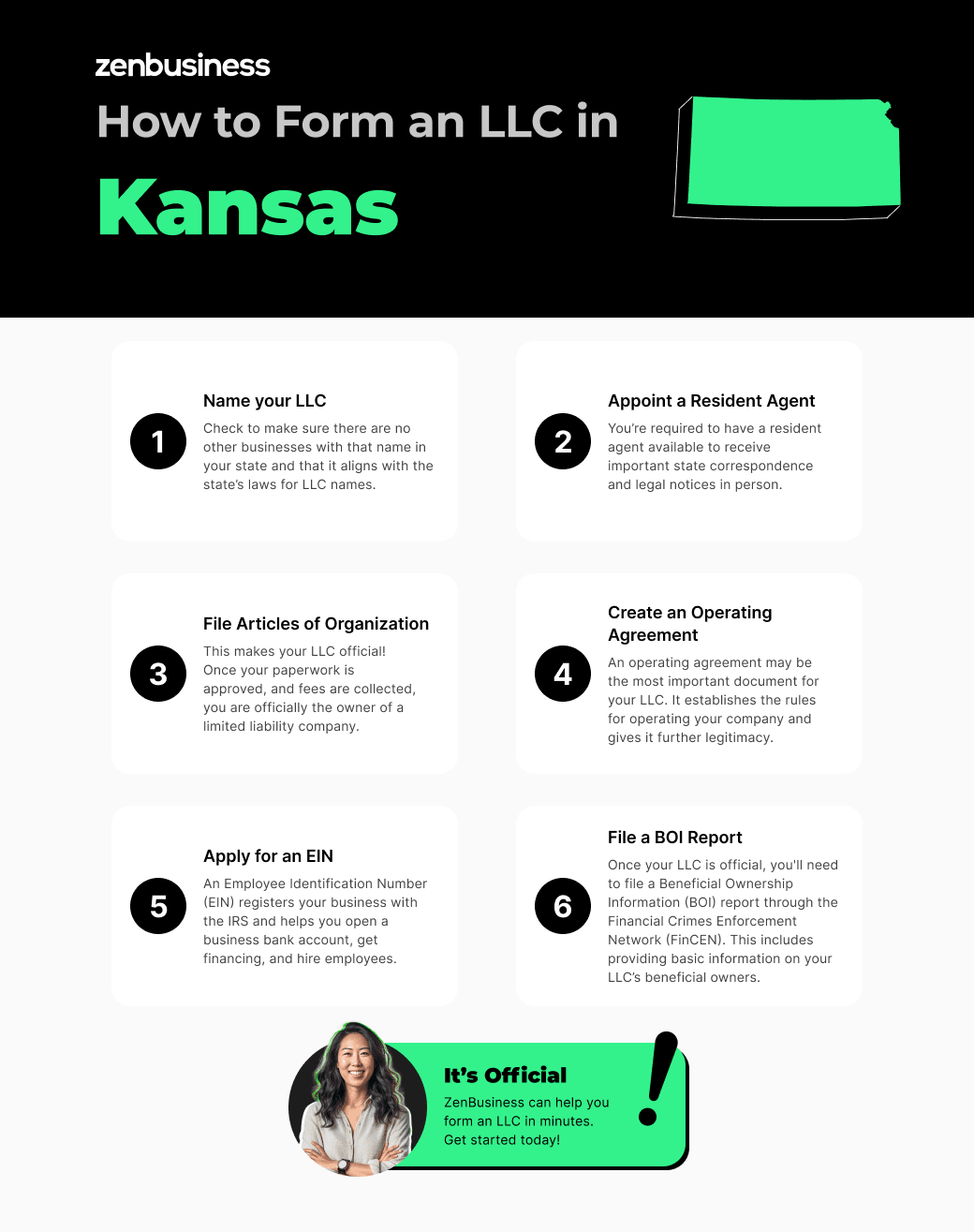
The Step-by-Step Process for Registering Your LLC in Kansas
Forming an LLC in Kansas involves a series of defined steps, primarily handled through the Kansas Secretary of State.
Step 1: Choose and Reserve Your Business Name
As mentioned, your business name must be unique. Begin by brainstorming several options and then conduct a thorough search on the Kansas Secretary of State’s website to ensure your preferred name is available. You can search the business entity database to check for conflicts. If you have a name you love but aren’t ready to file immediately, you can file an application to reserve the name for a period, though this is an additional step and cost. Most entrepreneurs proceed directly to filing once they’ve confirmed availability.
Step 2: Appoint a Registered Agent
You must designate a registered agent who meets Kansas requirements. This can be an individual resident of Kansas with a physical street address or a business entity authorized to act as a registered agent. Many entrepreneurs choose to use a commercial registered agent service, which can provide a reliable address and ensure that important documents are never missed, especially if they are frequently traveling or don’t have a fixed business address in the state.
Step 3: File the Articles of Organization
This is the core document that officially creates your LLC. The Articles of Organization (sometimes called a Certificate of Formation) must be filed with the Kansas Secretary of State. The document typically requires the following information:

- Name of the LLC: The exact name as chosen and verified for availability.
- Name and Address of the Registered Agent: The name and physical street address of your designated registered agent in Kansas.
- Principal Office Address: The main physical address of your business operations.
- Management Structure: Whether the LLC will be member-managed or manager-managed.
- Name and Address of Organizer: The individual or entity filing the Articles of Organization.
There is a filing fee associated with submitting the Articles of Organization, which can be paid online via credit card or by mail with a check or money order.
Step 4: Create an Operating Agreement
While not a public filing requirement, drafting an Operating Agreement is a critical internal step. This document serves as the internal rulebook for your LLC. It should detail:
- Member Contributions: How much capital each member is contributing.
- Profit and Loss Distribution: How profits and losses will be allocated among members.
- Member Rights and Responsibilities: Clearly defining the roles and expectations for each member.
- Management and Voting Rights: Outlining decision-making processes and voting power.
- Procedures for Adding or Removing Members: Establishing protocols for membership changes.
- Dissolution Procedures: How the LLC will be dissolved if necessary.
A well-drafted Operating Agreement can prevent future conflicts and ensure smooth operations, even if you are the sole member of the LLC.
Step 5: Obtain an EIN (Employer Identification Number)
If your LLC plans to hire employees, operate as a corporation for tax purposes, or open a business bank account, you will need an Employer Identification Number (EIN) from the Internal Revenue Service (IRS). This number is like a Social Security number for your business. Applying for an EIN is free and can be done online through the IRS website.
Post-Formation Essentials for Your Kansas LLC
Once your LLC is officially registered with the state of Kansas, there are a few more crucial steps to ensure your business remains compliant and operates smoothly.
Opening a Business Bank Account
It is highly recommended to open a dedicated business bank account for your LLC. This is essential for maintaining the separation between your personal and business finances, which is fundamental to the liability protection an LLC provides. Mixing personal and business funds can “pierce the corporate veil,” making your personal assets vulnerable. You’ll typically need your filed Articles of Organization and your EIN to open an account. Many banks offer business checking and savings accounts tailored to LLCs.
Understanding State and Federal Tax Obligations
Your LLC will have tax obligations at both the federal and state levels.
- Federal Taxes: As mentioned, most LLCs are taxed as pass-through entities. This means profits and losses are reported on the personal tax returns of the members. However, you have the option to elect to be taxed as a corporation (either an S-corp or a C-corp), which might be beneficial depending on your specific financial situation and business goals. Consult with a tax professional to determine the best tax classification for your LLC.
- Kansas State Taxes: In Kansas, LLCs are subject to various state taxes, including income tax and sales tax, if applicable. You’ll need to register with the Kansas Department of Revenue to obtain any necessary licenses or permits and to comply with state tax filing requirements.

Annual Reports and Business Licenses
To maintain your LLC’s good standing with the state of Kansas, you’ll need to file an annual report. The Kansas Secretary of State requires this report to be filed annually by April 15th. This report updates the state on your business’s information, such as its registered agent and principal office address. Failure to file the annual report can result in administrative dissolution of your LLC.
Additionally, depending on your industry and the nature of your business, you may need to obtain specific federal, state, or local licenses and permits to operate legally. Research the requirements for your specific business activities in Kansas and your local municipality. For example, a restaurant in Wichita will have different licensing needs than an online consulting service operating from home.
By carefully following these steps and understanding the ongoing compliance requirements, you can successfully establish and maintain a robust LLC in Kansas, setting a strong foundation for your entrepreneurial endeavors.
LifeOutOfTheBox is a participant in the Amazon Services LLC Associates Program, an affiliate advertising program designed to provide a means for sites to earn advertising fees by advertising and linking to Amazon.com. Amazon, the Amazon logo, AmazonSupply, and the AmazonSupply logo are trademarks of Amazon.com, Inc. or its affiliates. As an Amazon Associate we earn affiliate commissions from qualifying purchases.