
The question echoes in the minds of many, particularly those who have been captivated by the chilling narratives that often weave through the tapestry of American folklore and popular culture. The name “Derry, Maine” conjures images of eerie small towns, hidden secrets, and perhaps even supernatural occurrences. But beyond the realm of fiction, does this seemingly iconic location actually exist on the map of the United States? This article delves into the truth behind “Derry, Maine,” exploring its fictional origins, its cultural impact, and whether any real-world inspirations might have contributed to its mystique.

The Fictional Genesis of Derry, Maine
The primary reason “Derry, Maine” resonates with so many is its prominent role in the literary universe of Stephen King, the undisputed master of modern horror. King, a proud resident of Maine for much of his life, has often used the state as a backdrop for his terrifying tales. In his fictional world, Derry is a recurring setting, appearing in some of his most celebrated and unsettling novels.
Stephen King’s Literary Landscape
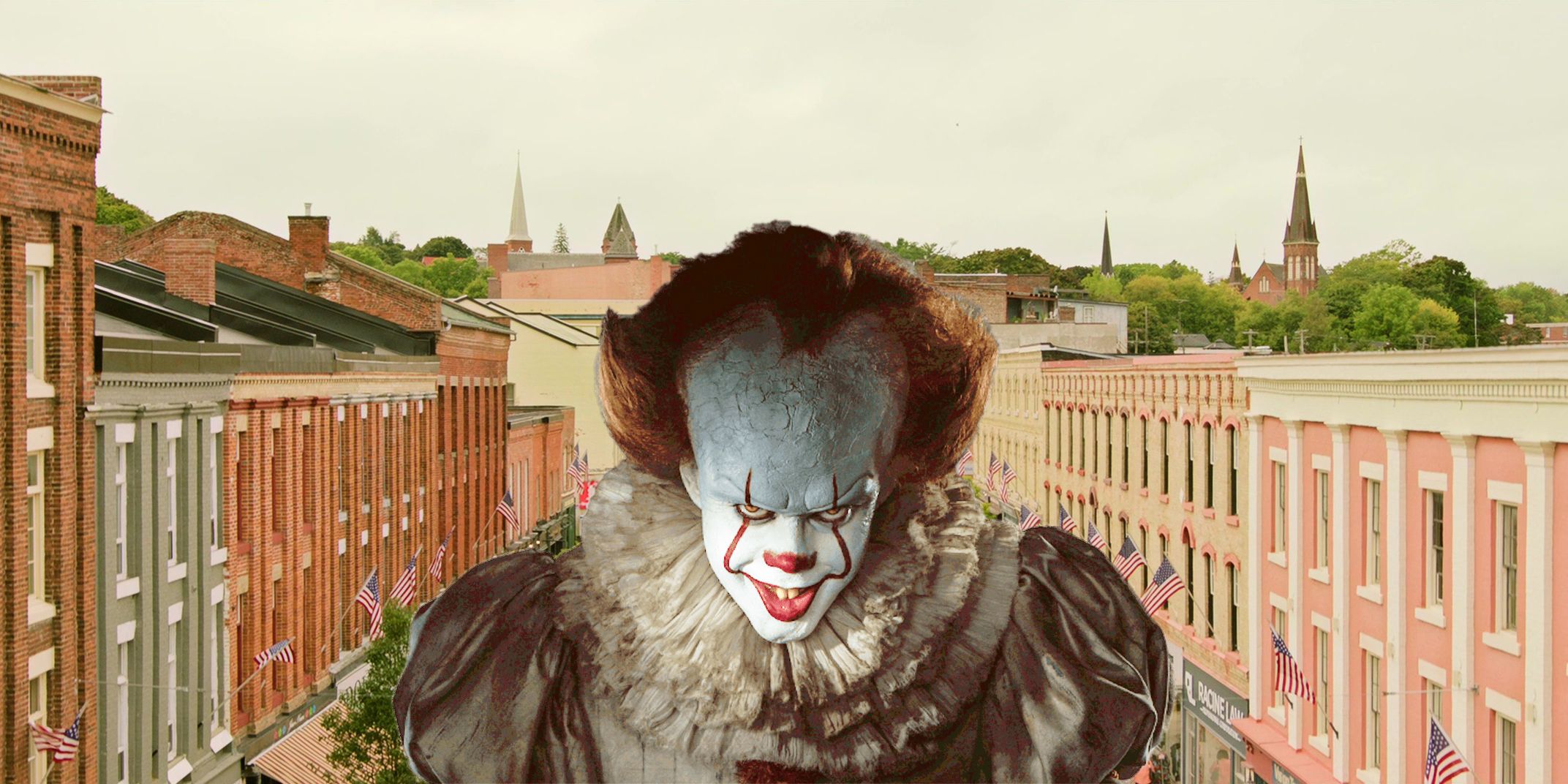
The first major appearance of Derry, Maine, was in King’s 1986 masterpiece, It. This sprawling epic of childhood trauma, friendship, and cosmic evil centers around a group of seven friends who band together to fight a malevolent entity that takes the form of a clown known as Pennywise. The town of Derry serves as the primary battleground for their extraordinary struggle, a place where innocence is corrupted and the shadows of the past hold a tangible, terrifying power.
Beyond It, Derry has also featured in other King novels, subtly or overtly influencing the narrative. ‘Salem’s Lot, another seminal work of King’s, is set in the fictional town of Jerusalem’s Lot, but the atmosphere of a seemingly idyllic New England town harboring dark secrets is a common thread that often connects to the spirit of Derry. Similarly, the short story collection Four Past Midnight includes “The Sun Dog,” which is set in a fictional version of Castle Rock, another of King’s invented towns, but the overarching sense of a community haunted by unseen forces is a hallmark of his Maine settings, with Derry being the most prominent. The novel Insomnia also features Derry as a significant location, exploring themes of life, death, and the supernatural within its seemingly ordinary streets. The continuity and interconnectedness of King’s fictional towns create a rich tapestry that allows readers to feel a sense of familiarity and dread as they revisit these places, even if they are purely products of imagination.
King’s descriptions of Derry are meticulously crafted, painting a picture of a quintessential New England town. It’s a place with a history, a sense of community, and unfortunately, a dark underbelly. The town’s geographical features are often described with a visceral realism – the K ollut River, the vast underground sewer system, the iconic library – all contributing to the illusion of a tangible place. This detailed world-building is a hallmark of King’s writing, making his fictional settings feel as real, if not more so, than many actual locations. He imbues Derry with a personality, a character of its own, that is deeply intertwined with the horrors that unfold within its borders. The town itself becomes a character, complicit in its own darkness, or perhaps a victim of it, depending on the interpretation.
The Search for Real-World Inspiration
Given the vividness of King’s portrayals, it’s natural for readers to wonder if there’s a real Derry, Maine, or if the author drew inspiration from specific locations. While Stephen King has acknowledged that he often draws inspiration from his surroundings and general observations of New England life, there isn’t one single, precise geographical location that directly corresponds to his fictional Derry.
Stephen King’s Maine and its Influence
Stephen King grew up in Durham, Maine, and lived in various towns across Maine, including Bangor, for many years. The state’s unique character – its small-town atmosphere, its often harsh weather, its history, and its sense of isolation – has profoundly influenced his writing. Many of the towns in his novels share a similar feel, reflecting a generalized image of Maine life. It’s this essence, this atmospheric quality of Maine, that he bottles and pours into his fictional creations.

King himself has often spoken about how the general landscape and the “feel” of New England towns contribute to the atmosphere of his stories. He’s not typically recreating a one-to-one replica of a place but rather distilling the essence of many places into a singular, fictional entity. The idea is to create a space that feels authentic, even if it’s not a carbon copy of a real location. This allows him the creative freedom to craft narratives without being bound by the limitations of existing geography or history.
The Power of Collective Imagination
The power of King’s storytelling lies in its ability to tap into universal fears and anxieties, and his fictional towns, like Derry, become vessels for these emotions. Because Derry feels so real in his novels, readers project their own understanding of small-town life, with its inherent positives and potential negatives, onto it. This collective imagination helps to solidify Derry’s place in the cultural consciousness, even if it remains an invention. It becomes a symbol of the uncanny hidden beneath the mundane, a place where the ordinary can quickly and terrifyingly transform into the extraordinary.
Furthermore, the success of King’s books has led to adaptations in film and television. The 1990 miniseries It and the critically acclaimed 2017 and 2019 films It and It Chapter Two brought Derry to life visually for millions. While these adaptations often film in various locations, they strive to capture the essence of King’s description, further cementing the image of Derry in the public’s mind as a place that could exist. The visual representations, though often shot in different cities and towns across Canada and the United States, contribute to the enduring mystique. For example, the exterior shots of Derry High School in the films were often filmed in Vancouver, Canada, while other scenes might have been shot in various locales across Ontario, Canada, or within the United States. These productions effectively create a composite “Derry” that feels both familiar and chillingly alien.
Derry, Maine: A Tourist Attraction of the Mind
While you won’t find a physical town named Derry, Maine, on any map, its existence is undeniable in the realm of popular culture. It has become a destination for the imagination, a landmark visited by countless readers and viewers.
Exploring King’s Literary Tourism
The impact of Stephen King’s work on tourism in Maine is significant. Towns and landmarks that have served as inspiration or settings for his stories often experience increased visitor interest. While Derry itself is fictional, the general atmosphere of the small towns throughout Maine that King captures in his writing can be experienced firsthand. Tourists interested in King’s literary world often visit Bangor, where he resided for many years and where his home is a popular attraction. The Stephen King House on West Broadway in Bangor is a notable landmark for fans, even though it is a private residence.
Fans often seek out the “feel” of King’s fictional towns by exploring real Maine communities. They might drive through picturesque villages, visit local diners reminiscent of those described in his novels, and absorb the quiet, sometimes brooding, charm of New England. The appeal lies in experiencing the tangible reality that King imbues with such imaginative power. It’s about connecting with the author’s inspiration and the tangible environment that shaped his chilling visions.
The Legacy of a Fictional Town
The enduring legacy of Derry, Maine, lies in its ability to serve as a powerful symbol. It represents the duality of small-town America – the perceived safety and charm that can mask underlying darkness and unease. It speaks to the fears of childhood innocence lost, the lingering effects of trauma, and the terrifying possibilities that lurk just beneath the surface of everyday life.
Ultimately, whether Derry, Maine, is a real place is a question with a nuanced answer. Geographically, it is not. However, in the hearts and minds of millions, it is a vividly realized location, a testament to the power of storytelling and the enduring impact of Stephen King‘s imagination. It exists as a potent cultural landmark, a place that continues to fascinate and frighten, proving that sometimes, the most powerful places are the ones we create. The allure of Derry is not in its physical coordinates, but in its profound ability to evoke a visceral response, to stir our deepest fears and our most cherished memories of courage and friendship. It is a testament to the power of narrative to create worlds that feel as real, if not more so, than our own.
LifeOutOfTheBox is a participant in the Amazon Services LLC Associates Program, an affiliate advertising program designed to provide a means for sites to earn advertising fees by advertising and linking to Amazon.com. Amazon, the Amazon logo, AmazonSupply, and the AmazonSupply logo are trademarks of Amazon.com, Inc. or its affiliates. As an Amazon Associate we earn affiliate commissions from qualifying purchases.