
The allure of New York during winter is undeniable. While summer boasts vibrant street festivals and autumn paints the city in fiery hues, there’s a unique magic that descends with the first snowfall. The iconic skyline, often seen in photographs dusted with white, transforms into a breathtaking panorama. For travelers and locals alike, the question of “Will it snow?” often becomes a focal point, influencing travel plans, activity choices, and the overall New York experience. This exploration delves into the likelihood of snow in the Empire State, examining the factors that influence its winter weather and how you can best prepare for a snowy adventure in the city that never sleeps.

Winter in New York can be a symphony of crisp air, twinkling lights, and, if you’re lucky, a gentle blanket of snow. This meteorological phenomenon is not just a picturesque backdrop; it fundamentally alters the city’s character, turning familiar landmarks into winter wonderlands and creating a distinctively festive atmosphere. From the bustling streets of Manhattan to the charming neighborhoods of the other boroughs, a snowfall can usher in a sense of quiet beauty and evoke a feeling of pure enchantment. Understanding when and why snow falls in New York is key to maximizing your enjoyment of this magical season.
Understanding New York’s Winter Climate
New York City, situated in the northeastern United States, experiences a temperate climate characterized by four distinct seasons. Winter, typically running from December through February, is the coldest period, with average temperatures frequently dipping below freezing. The city’s coastal location plays a significant role in moderating its temperatures compared to inland areas at similar latitudes, but it also makes it susceptible to the influence of weather systems moving off the Atlantic Ocean.
The frequency and intensity of snowfall in New York are highly variable year to year. Some winters are mild with minimal snow, while others can bring substantial accumulations, leading to school closures and transportation disruptions. The average annual snowfall for New York City is around 25 inches, but this figure can be greatly exceeded or fall short in any given season. The interplay of cold air masses from the north and moisture-laden systems from the south is the primary driver of snowfall events.
Factors Influencing Snowfall
Several meteorological factors converge to create snowy conditions in New York:
-
Nor’easters: These powerful coastal storms are a significant source of heavy snowfall for the northeastern United States. They derive their name from the direction of the winds that blow them, originating from the northeast. Nor’easters typically form when cold air from Canada meets warm, moist air from the Atlantic Ocean. When temperatures in New York are below freezing, these storms can unleash blizzard-like conditions, bringing substantial snow, strong winds, and reduced visibility. The exact track and intensity of a Nor’easter are crucial in determining how much snow New York City receives. A slight shift in the storm’s path can mean the difference between a dusting and a significant winter storm.
-
Arctic Air Masses: During the winter months, frigid air masses can frequently sweep down from Canada into the northeastern United States. When these cold, dry air masses encounter moisture, either from a lingering weather system or one developing offshore, they can produce snow. These events are often characterized by lighter, fluffier snow and can occur even when a full-blown Nor’easter isn’t present.
-
Lake Effect Snow: While New York City itself is not directly influenced by the Great Lakes’ lake effect snow phenomenon, upstate New York certainly is. Occasionally, exceptionally cold air moving across the relatively warmer waters of the Great Lakes can pick up moisture and deposit significant snow in areas to the east and southeast of the lakes. If the weather patterns are just right, this moisture can sometimes contribute to snow events further south, including in the city, though it’s less common than Nor’easter-driven snow.
-
Temperature: Perhaps the most critical factor for snowfall is temperature. For snow to fall and accumulate, the atmospheric temperature must be at or below freezing (32°F or 0°C) from the cloud base all the way to the ground. Even if precipitation begins as rain, a sudden drop in temperature can cause it to switch to snow. Conversely, if temperatures hover just above freezing, precipitation may fall as sleet or freezing rain, which can be equally disruptive.
When to Expect Snow in New York
The heart of winter in New York generally spans from December to February, and this is when the highest probability of snowfall occurs. However, the city can experience snow as early as November and as late as April.
Peak Snowfall Months
-
January is statistically the snowiest month for New York City, with an average snowfall of approximately 9.4 inches. The deep cold of mid-winter, combined with the increased likelihood of storm systems, makes January a prime candidate for significant snow events.
-
February often follows closely behind January in terms of snowfall, with an average of around 7.9 inches. While the days begin to lengthen, the cold air remains entrenched, and the potential for late-season Nor’easters or significant cold snaps persists.
-
December can be a mixed bag. While the month marks the official start of winter, early December can sometimes be milder. However, as the month progresses, the chances of snow increase, and holiday travelers often hope for a white Christmas, though it’s not a frequent occurrence. The average snowfall for December is around 5.1 inches.
Shoulder Season Snowfall
-
November: While less common, early-season snowfalls can occur in November. These are often lighter and may not accumulate significantly, but they serve as an early indicator of the winter to come. When snow does fall in November, it can be quite impactful due to less established winter infrastructure and the surprise factor.
-
March and April: As spring approaches, the probability of snow decreases, but it’s not impossible. March still holds a reasonable chance for snow, with an average of about 4.5 inches. These late-season snowfalls can sometimes be heavy and disruptive, especially in early March. Snow in April is much rarer, with an average of only about 0.8 inches, and is often seen as a final, fleeting farewell from winter.
Planning Your Snowy New York Adventure
If you’re planning a trip to New York with the hope of experiencing a winter wonderland, timing is everything. While it’s impossible to guarantee snow, targeting the prime winter months offers the best odds.
What to Pack for a Snowy Visit
Should you find yourself in New York during a snowfall, proper preparation is key to enjoying the city comfortably.
-
Warm Layers: The most crucial items are thermal base layers, insulating mid-layers (like fleece or down), and a waterproof and windproof outer shell. New York winters can be biting, and layering allows you to adjust your clothing as you move between indoor and outdoor environments.
-
Waterproof Footwear: Insulated, waterproof boots are essential for walking through snow and slush. Look for boots with good traction to prevent slips on icy surfaces. Remember to pack warm, wool or thermal socks.
-
Headwear and Handwear: A warm hat that covers your ears and waterproof gloves or mittens are non-negotiable. Frostnip and frostbite are real concerns in frigid temperatures.
-
Scarves and Neck Gaiters: These protect your face and neck from the wind and cold.
-
Lip Balm and Moisturizer: Cold, dry air can wreak havoc on your skin.
Activities for a Snowy New York
A snowfall transforms New York into an even more enchanting destination, offering a unique set of activities:
-
Ice Skating: Iconic outdoor rinks like the one at Rockefeller Center with the Christmas Tree or the rink at Bryant Park offer a quintessential New York winter experience, made even more magical with a dusting of snow.
-
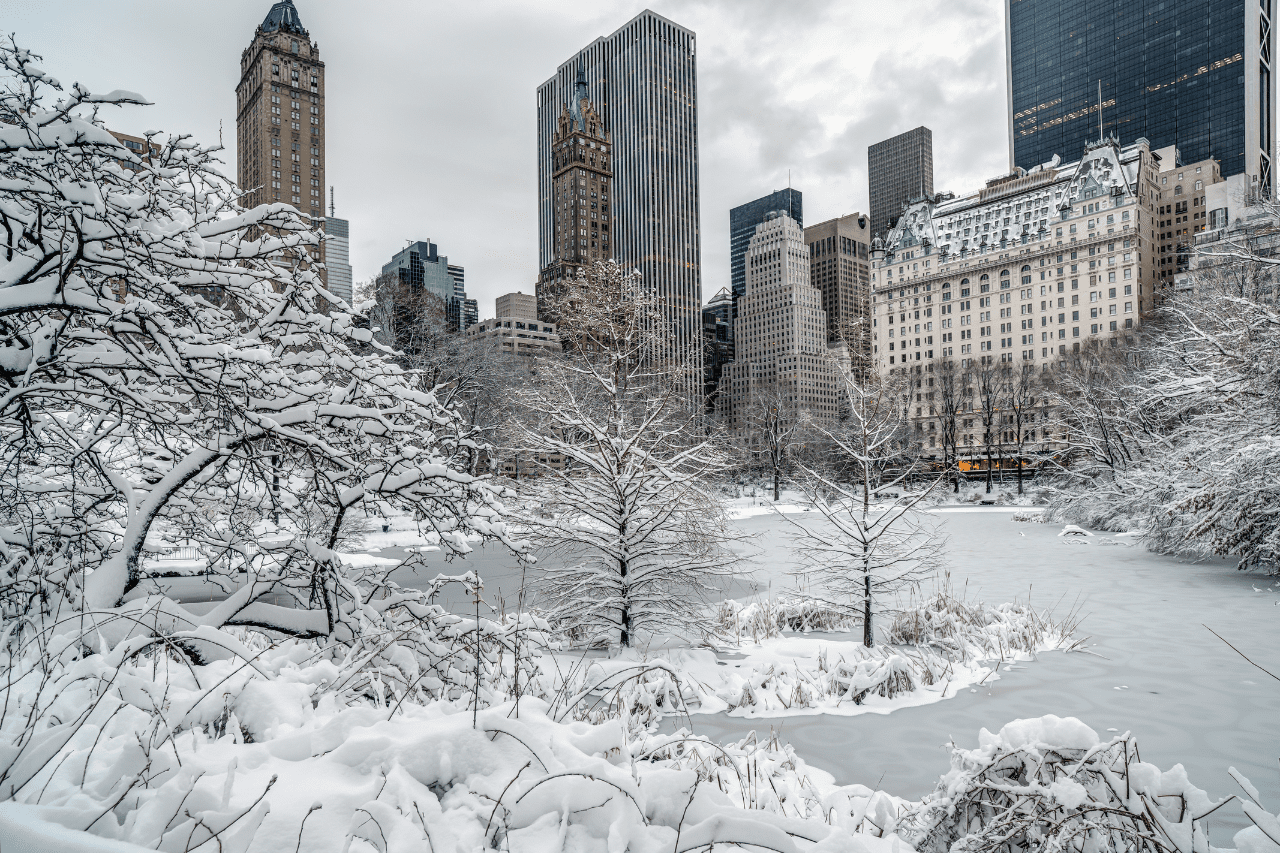
Central Park: Stroll through Central Park, where the snow muffles the city’s sounds, creating a serene escape. Enjoy the frozen ponds, the bare trees dusted with white, and the iconic sights like Bethesda Terrace and Strawberry Fields.
-
Museum Hopping: When the weather outside is frightful, New York’s world-class museums offer a warm and stimulating retreat. The Metropolitan Museum of Art, the American Museum of Natural History, and the Museum of Modern Art (MoMA) are excellent choices.
-
Cozy Cafes and Restaurants: Duck into a warm cafe for a hot chocolate or a hearty meal. New York boasts an incredible culinary scene, and a snowy day is the perfect excuse to explore its diverse offerings, from classic diners to Michelin-starred establishments.
-
Broadway Shows: Experience the magic of Broadway in the warmth of a theater. A matinee or evening show is a perfect way to spend a cold winter’s day.
-
Window Shopping and Holiday Markets: If your visit coincides with the holiday season, the festive decorations and charming holiday markets like the one at Union Square add to the winter charm, even with snow falling.

Accommodation and Travel Considerations
If snow is in the forecast, it’s wise to be prepared for potential travel disruptions.
-
Accommodation: Booking your hotel in advance is always recommended, but especially during peak winter season or when snow is anticipated. Hotels in New York range from luxury suites at the Plaza Hotel to budget-friendly options and serviced apartments for longer stays. Consider accommodations with good heating and easy access to public transportation. Many hotels offer amenities like indoor pools, gyms, and on-site dining, which are excellent bonuses during cold weather.
-
Transportation: New York City’s public transportation system, including the New York City Subway and buses, is generally resilient in snowy conditions. However, delays and service changes can occur during severe weather. Taxis and ride-sharing services will be in high demand. If you are traveling to New York by air, check flight statuses with airlines like Delta or American Airlines and monitor airport conditions at JFK Airport or LGA Airport as snowstorms can cause delays and cancellations. Driving in New York during a snowstorm can be challenging, and parking can be difficult.
-
Flexibility: Maintaining a flexible itinerary is key. While you might have planned to visit an outdoor landmark, a sudden snowstorm might necessitate a change of plans to an indoor activity. Embrace the unexpected; a snowy day in New York can lead to some of the most memorable moments of your trip.
In conclusion, while the question “Is it going to snow in New York?” cannot be answered with absolute certainty far in advance, understanding the city’s climate patterns and the factors that influence snowfall can help you prepare for a potentially magical winter visit. Embrace the possibility of snow, pack accordingly, and be ready to experience the unique beauty and charm that only a winter wonderland in New York can offer.
LifeOutOfTheBox is a participant in the Amazon Services LLC Associates Program, an affiliate advertising program designed to provide a means for sites to earn advertising fees by advertising and linking to Amazon.com. Amazon, the Amazon logo, AmazonSupply, and the AmazonSupply logo are trademarks of Amazon.com, Inc. or its affiliates. As an Amazon Associate we earn affiliate commissions from qualifying purchases.