
The story of Texas is one of resilience, revolution, and a fiercely independent spirit, culminating in its unique path to becoming a part of the United States. For travelers exploring the vast landscapes and vibrant cities of the Lone Star State today, understanding this rich history isn’t just an academic exercise; it’s a journey into the heart of Texan identity, shaping everything from its iconic landmarks and local culture to its distinctive cuisine and lifestyle. From the historic battlefields where freedom was forged to the bustling modern metropolises, Texas’s statehood narrative is deeply embedded in the travel experience, offering countless opportunities for discovery.
So, when exactly did Texas join the Union? The definitive date is December 29, 1845. However, this simple answer belies a complex and dramatic saga that spanned decades, involving multiple nations, revolutionary fervor, and intense political debate. To truly appreciate the significance of this date, one must delve into the events that led up to it, a journey that itself reveals an extraordinary tapestry for any history-loving traveler.
From Colonial Outpost to Independent Republic: The Genesis of Texan Identity
The roots of Texas’s quest for statehood stretch back long before the 19th century, into its colonial past. Initially, Texas was a sparsely populated frontier region of New Spain. Spanish missionaries and soldiers established outposts like the famed Mission San Antonio de Valero (now known as The Alamo) in 1718, aiming to convert native populations and solidify Spanish claims against French encroachment. These early missions, many of which can still be visited as part of the San Antonio Missions National Historical Park today, offer a fascinating glimpse into this formative era. Travelers to San Antonio can explore the ancient stone churches and living quarters, walking in the footsteps of those who first settled this land.
With Mexico’s successful independence from Spain in 1821, Texas became a part of the new Mexican nation. Eager to populate its northern frontier and prevent further American encroachment, Mexico opened its lands to Anglo-American colonization through an empresario system. The most prominent of these empresarios was Stephen F. Austin, who led the “Old Three Hundred” families to settle along the Brazos River. This influx of American settlers, accustomed to a different political and legal system, soon led to cultural and political friction with the Mexican government.
The Spark of Revolution: Famous Battles and Enduring Landmarks
Tensions escalated throughout the 1830s, fueled by disputes over slavery, land rights, and the Mexican government’s increasing centralization of power under General Antonio López de Santa Anna. The spark for revolution ignited on October 2, 1835, in the town of Gonzales, where a skirmish over a cannon gave rise to the iconic “Come and Take It” flag. Today, visitors to Gonzales can explore museums and historical markers commemorating this pivotal moment, part of a broader historical trail that weaves through the heart of Texas.
The ensuing Texas Revolution was marked by legendary bravery and immense sacrifice. The Alamo in San Antonio stands as the most famous symbol of this struggle. In March 1836, a small group of Texan defenders, including folk heroes like Davy Crockett and Jim Bowie, held out for 13 days against thousands of Mexican troops before being overrun. While a military defeat, the fall of The Alamo became a rallying cry: “Remember the Alamo!” A few weeks later, a similar tragedy unfolded at Goliad, where hundreds of Texan prisoners were executed, further fueling the resolve for independence.
For travelers, a visit to The Alamo is an essential experience, offering profound insights into the courage and sacrifice that defined this era. The site, situated in downtown San Antonio, is surrounded by a vibrant cultural district, complete with top-tier hotels, delicious Tex-Mex restaurants, and the famous River Walk, making it a perfect hub for historical exploration combined with modern amenities and entertainment. Beyond The Alamo, the sites of Goliad and Gonzales offer quieter, reflective experiences, allowing visitors to connect with the raw history of the revolution.
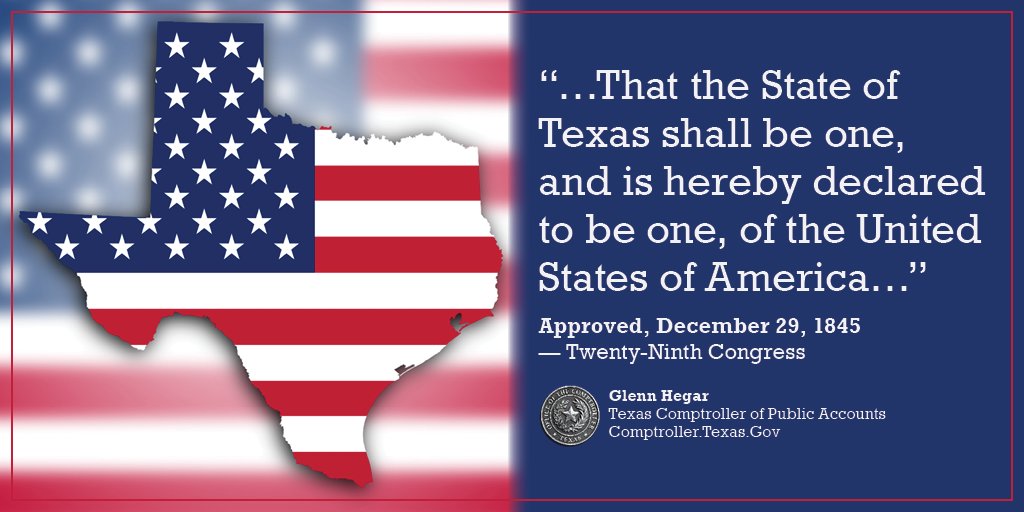
The decisive victory came on April 21, 1836, at the Battle of San Jacinto, near present-day Houston. Under the command of General Sam Houston, the Texan army surprised Santa Anna‘s forces, securing a swift and decisive victory that guaranteed Texas’s independence. Today, the San Jacinto Battleground State Historic Site is marked by a towering monument, taller than the Washington Monument, which offers panoramic views of the battlefield and the surrounding area. It’s a must-visit for anyone interested in military history and a testament to the birth of a nation.
The Republic of Texas: A Decade of Independence (1836-1845)
Following its independence, Texas existed as an independent nation, the Republic of Texas, for nearly a decade. This period, from 1836 to 1845, was a time of both promise and profound challenges. Sam Houston was elected its first president, and the new republic grappled with establishing a stable government, managing finances, fending off renewed threats from Mexico, and dealing with various Native American tribes.
The capital of the republic moved several times, from Columbia to Houston, and finally to Austin. Each of these cities carries the echoes of the republic years. In Houston, for instance, Sam Houston Park preserves several historic homes, some dating back to the republic era, offering a charming insight into the early architecture and lifestyle of the burgeoning state. Austin, with its designation as the permanent capital by Mirabeau B. Lamar, the second president, solidified its role as the political heart of Texas, a legacy evident in its magnificent Texas State Capitol building, a striking landmark that draws visitors year-round. While the current Capitol was built later, its presence in Austin is a direct continuation of decisions made during the republic.
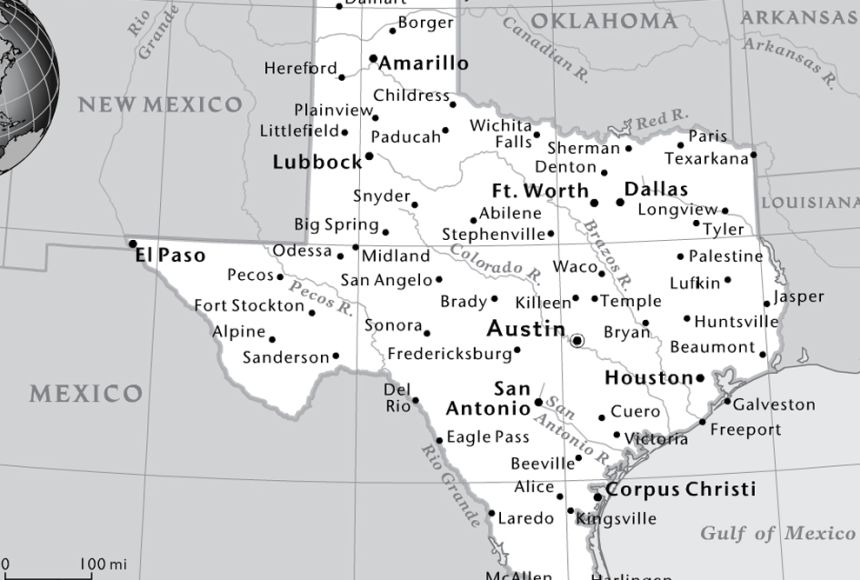
Life during the republic was tough, but also shaped the rugged individualism and entrepreneurial spirit often associated with Texans. Settlers faced dangers from skirmishes with Mexican forces along the Rio Grande, as well as challenges from the frontier environment. Despite these difficulties, the republic period laid the groundwork for the future state, establishing legal frameworks, land policies, and a distinct cultural identity that blended Southern American traditions with lingering Spanish and Mexican influences. This fusion is still a cornerstone of Texan culture, manifest in its music, art, and famously, its Tex-Mex cuisine – a must-try for any food-focused traveler.
The Annexation Debate and The Road to Statehood: December 29, 1845
From its inception, the idea of annexation by the United States was a dominant topic in the Republic of Texas. Many Texans, predominantly American immigrants, strongly desired to join the Union. However, the path to statehood was fraught with political complications within the United States.
The primary obstacle was the issue of slavery. Texas was a slaveholding territory, and its admission as a slave state would upset the delicate balance of power between free and slave states in the U.S. Congress. Northern abolitionists strongly opposed annexation, fearing it would expand the institution of slavery. Additionally, the U.S. government was wary of provoking a war with Mexico, which still considered Texas a rebellious province.
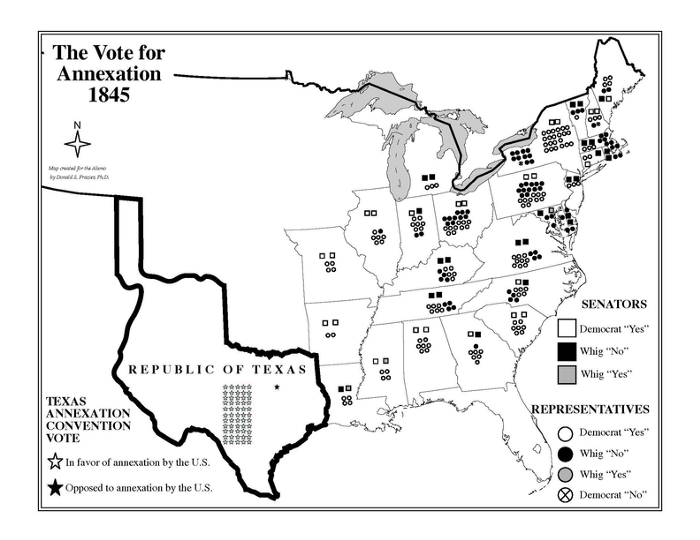
Despite these challenges, the appeal of American expansionism, particularly the concept of Manifest Destiny, gained momentum. Key figures in U.S. politics, such as President James K. Polk, championed annexation. After years of negotiation and debate, a joint resolution for the annexation of Texas was passed by the U.S. Congress.
On December 29, 1845, President Polk officially signed the resolution, making Texas the 28th state of the United States. This act formally concluded the independent existence of the Republic of Texas and ushered in a new era. The event, while celebrated by many in Texas and the United States, had immediate and far-reaching consequences. As anticipated, it precipitated the Mexican-American War (1846-1848), which ultimately resulted in Mexico ceding vast territories, including California, New Mexico, and Arizona, to the United States.
For travelers interested in understanding the broader context of this period, a visit to the Bullock Texas State History Museum in Austin is highly recommended. Its comprehensive exhibits, including artifacts from the republic and statehood eras, provide an immersive experience into the political, social, and economic forces that shaped Texas’s destiny.
Experiencing Texas Today: A Legacy of History and Hospitality
Today, the legacy of Texas’s journey to statehood is deeply woven into the fabric of the state, offering a unique blend of history, culture, and modern lifestyle that appeals to a diverse range of travelers. From the historic battlegrounds to the bustling cities, every corner of Texas tells a part of this incredible story.
Travel Destinations and Cultural Experiences
- San Antonio: Beyond The Alamo and the missions, the city’s Spanish colonial heritage is palpable in its architecture, vibrant River Walk, and renowned Tex-Mex culinary scene. It’s a destination where history blends seamlessly with a lively, romantic atmosphere.
- Houston: As one of the largest cities in the United States, Houston is a hub of international culture, space exploration (the NASA Johnson Space Center), and world-class museums. Yet, its historic districts and proximity to the San Jacinto Battleground remind visitors of its crucial role in the republic era.
- Austin: The state capital, Austin is famous for its “Keep Austin Weird” mantra, live music scene, and outdoor activities. However, a tour of the Texas State Capitol and the nearby Bullock Texas State History Museum offers an in-depth exploration of its political and historical significance.
- Dallas and Fort Worth: These twin cities showcase different facets of Texas. Fort Worth embraces its “Cowtown” heritage with the Stockyards National Historic District, complete with daily cattle drives, while Dallas represents modern Texas with its impressive skyline, arts districts, and luxury shopping. Both cities are excellent bases for exploring the state’s diverse offerings.
Accommodation and Lifestyle
Whether you’re planning a budget-friendly road trip or a luxurious getaway, Texas offers an array of accommodation options to suit every traveler. From historic boutique hotels in Fredericksburg’s wine country or Galveston’s Strand Historic District, to expansive resorts with world-class amenities in Dallas or Houston, visitors can choose their ideal stay. Many cities also offer charming bed and breakfasts, vacation rentals, and campsites near natural attractions like Big Bend National Park or the Padre Island National Seashore.
The Texan lifestyle, deeply influenced by its history, is a blend of rugged independence, Southern hospitality, and a distinct cultural pride. This is reflected in its famous BBQ, robust live music scenes, rodeos, and countless festivals celebrating everything from German heritage in the Hill Country to the vibrant Tejano culture along the border. Travelers can immerse themselves in this unique lifestyle by visiting a honky-tonk in Gruene, exploring the historic vineyards of Grapevine, or simply enjoying a sunset over the Gulf Coast.
The journey of Texas from a distant Spanish province to an independent republic and finally to the 28th state of the United States is a captivating saga. The date, December 29, 1845, marks a pivotal moment, but the spirit of independence and the echoes of its revolutionary past continue to define the state. For any traveler, exploring Texas is more than just visiting a destination; it’s an opportunity to connect with a history that shaped not only a state but also a significant part of the American narrative. So pack your bags, and prepare to discover the enduring legacy of the Lone Star State.
LifeOutOfTheBox is a participant in the Amazon Services LLC Associates Program, an affiliate advertising program designed to provide a means for sites to earn advertising fees by advertising and linking to Amazon.com. Amazon, the Amazon logo, AmazonSupply, and the AmazonSupply logo are trademarks of Amazon.com, Inc. or its affiliates. As an Amazon Associate we earn affiliate commissions from qualifying purchases.