
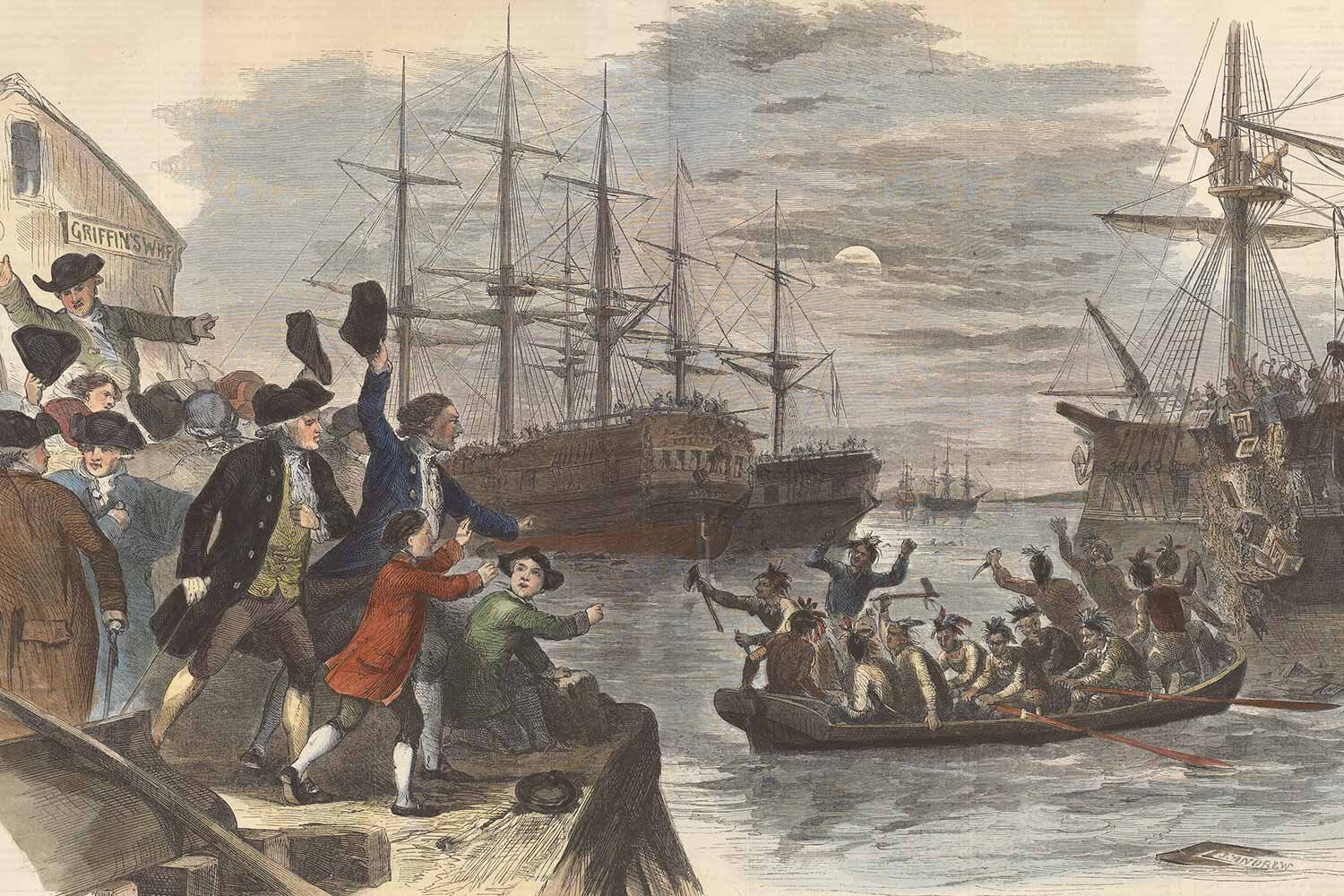
The chilly evening of December 16, 1773, witnessed an act of defiance in Boston Harbor that would reverberate across the Atlantic and permanently alter the trajectory of Colonial America. Disguised as Mohawk warriors, a group of American Patriots, members of the Sons of Liberty, boarded three British ships – the Dartmouth, Eleanor, and Beaver – and systematically dumped 342 chests of tea, valued at approximately £10,000 (a colossal sum at the time), into the frigid waters. This audacious act, known as the Boston Tea Party, was a direct protest against the Tea Act of 1773, which granted the struggling East India Company a monopoly on tea sales in the colonies and imposed a duty that the colonists considered taxation without representation.
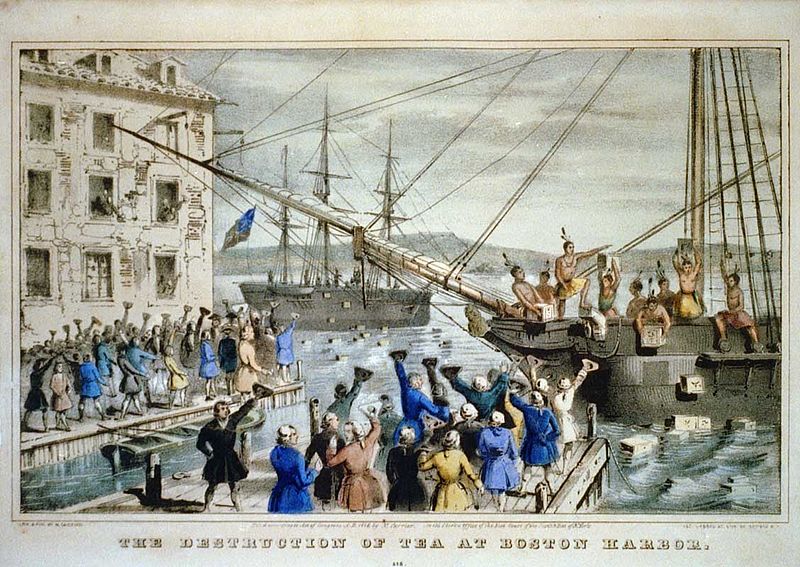
The news of this blatant destruction of property reached Britain in early 1774 and ignited a firestorm of outrage within the government and among the public. Far from inspiring sympathy or understanding, the Boston Tea Party was viewed as an unforgivable act of rebellion, an affront to parliamentary authority, and a direct challenge to the supremacy of the Crown. The British response was swift, severe, and ultimately, catastrophic for Anglo-American relations, setting in motion a chain of events that would culminate in the American Revolution.
Parliament’s Fury and the Demand for Retribution
Upon receiving dispatches detailing the events in Boston, the mood in London was one of profound indignation. The destruction of such a significant quantity of tea, belonging to the East India Company (a vital component of the British imperial economy), was not merely a protest against taxation; it was seen as an assault on private property and the very fabric of mercantilist trade. King George III himself declared, “The die is now cast. The colonies must either submit or triumph.” His Prime Minister, Lord North, shared this sentiment, asserting that the events in Massachusetts demanded a firm and unequivocal response to reassert parliamentary sovereignty.
The prevailing view in Parliament was that Massachusetts, and Boston in particular, had become a hotbed of sedition. Many British politicians believed that a strong show of force and punitive measures were necessary to restore order, demonstrate imperial power, and deter other colonies from similar acts of defiance. There was little inclination to understand the grievances of the colonists or to negotiate. Instead, the focus was squarely on punishment and subjugation.
The Principle of Parliamentary Supremacy
At the heart of the British government’s reaction was the deeply held conviction of parliamentary supremacy. For Britain, the colonies existed to serve the interests of the mother country, and Parliament held the unquestionable right to legislate for and tax all its subjects, wherever they resided within the empire. The colonists’ cry of “no taxation without representation” was dismissed as an invalid claim, as they were deemed to be “virtually represented” in Parliament through the broader interests of the British people.
The Boston Tea Party was perceived not just as a criminal act, but as a dangerous challenge to this fundamental constitutional principle. If such defiance were allowed to go unpunished, it would set a perilous precedent, undermining imperial authority throughout North America and potentially elsewhere. The severity of the British response was, therefore, an attempt to unequivocally reassert that absolute authority.
The Intolerable Acts: A Package of Punitive Measures
In response to the Boston Tea Party, Parliament passed a series of five punitive laws in 1774, which the colonists famously dubbed the “Intolerable Acts.” In Britain, they were known as the Coercive Acts, signaling their intent to compel submission. These acts were specifically designed to punish Massachusetts, isolate Boston, and serve as a warning to other American colonies.
The Boston Port Act (March 31, 1774)
This was the first and arguably most damaging of the Intolerable Acts. The Boston Port Act effectively closed Boston Harbor to all shipping traffic until the colonists paid for the destroyed tea and for the duties owed to the Crown. This move was intended to cripple Boston’s economy, starve its inhabitants into submission, and force them to concede to British authority. The closure of the port had devastating economic consequences for merchants, dockworkers, and the entire populace, yet it also galvanized resistance.
The Massachusetts Government Act (May 20, 1774)

This act was a direct assault on colonial self-governance. The Massachusetts Government Act unilaterally revoked the 1691 provincial charter of Massachusetts, severely curtailing the colony’s ability to govern itself. It mandated that members of the upper house of the legislature (the Governor’s Council) would no longer be elected by the assembly but appointed by the King. Furthermore, town meetings, a cornerstone of democratic participation in New England, were severely restricted, requiring the governor’s permission and limiting their agenda. This act aimed to dismantle the political infrastructure that fostered colonial dissent.
The Administration of Justice Act (May 20, 1774)
Known by the colonists as the “Murder Act,” the Administration of Justice Act allowed British officials accused of capital crimes in Massachusetts to be tried in Great Britain or in other colonies. The stated intention was to ensure a fair trial, as British officials believed they could not receive impartial justice in the hostile environment of Massachusetts. However, colonists viewed this as a means for British officials to escape accountability for their actions against Americans, particularly in incidents like the Boston Massacre.
The Quartering Act (June 2, 1774)
While a previous Quartering Act had been in force, the 1774 version expanded its scope. It mandated that colonial authorities must provide housing for British troops, including in private homes if barracks were unavailable. This was a significant imposition, as it forced colonists to house and provision soldiers they viewed as an occupying force, further exacerbating tensions and fueling resentment against British military presence.
The Quebec Act (June 22, 1774)
Although technically separate and not directly a response to the Boston Tea Party, the Quebec Act was passed at roughly the same time as the other four Coercive Acts and was grouped with them by the colonists as part of the “Intolerable Acts.” This act extended the territory of Quebec south into the Ohio River Valley, land that had been claimed by several American colonies. It also granted religious freedom to French Catholics and restored French civil law. While intended to maintain loyalty in Canada, colonists saw it as another example of Britain undermining their land claims and establishing an autocratic, non-representative government on their borders, which they feared could serve as a precedent for their own future.
Escalation and the Path to Revolution
Far from isolating Massachusetts and forcing submission, the British response—the “Intolerable Acts”—had the unintended consequence of uniting the American colonies. What Britain intended as a punitive measure against a rebellious colony was perceived across Colonial America as an attack on fundamental English liberties that could easily be extended to any colony. The closure of Boston Harbor, in particular, elicited widespread sympathy and practical support, with other colonies sending aid to the beleaguered city.
The First Continental Congress
In response to the “Intolerable Acts,” delegates from twelve of the thirteen colonies (Georgia was the exception) convened in Philadelphia in September 1774 for the First Continental Congress. This landmark gathering represented an unprecedented step towards colonial unity. The Congress denounced the Intolerable Acts as unconstitutional, passed resolutions calling for boycotts of British goods (the Continental Association), and sent a petition of grievances to King George III. Crucially, they also agreed to reconvene if their demands were not met, signaling a commitment to ongoing resistance.
The Road to Armed Conflict
The British government, however, viewed the First Continental Congress and its resolutions as further acts of defiance. They remained unyielding, convinced that the colonists would eventually back down under military pressure. General Thomas Gage, the military governor of Massachusetts, was tasked with enforcing the Intolerable Acts and disarming the colonial militias.
This escalating confrontation culminated on April 19, 1775, with the battles of Lexington and Concord. British troops, attempting to seize colonial military supplies in Concord, encountered armed colonial militia at Lexington, leading to the “shot heard ’round the world” and the outbreak of open hostilities. The British Response to the Boston Tea Party, intended to suppress rebellion, instead ignited a full-scale war for independence.
In hindsight, the British Response to the Boston Tea Party stands as a monumental miscalculation. Driven by a desire to reassert absolute authority and punish perceived insubordination, Parliament implemented measures that were not only counterproductive but fundamentally pushed the American colonies toward unity and ultimately, revolution. The “Intolerable Acts” transformed a colonial grievance into a shared struggle for liberty, paving the way for the creation of the United States and forever altering the landscape of global power. The Boston Tea Party and its British aftermath remain one of history’s most compelling landmarks of imperial overreach and the birth of a nation.
LifeOutOfTheBox is a participant in the Amazon Services LLC Associates Program, an affiliate advertising program designed to provide a means for sites to earn advertising fees by advertising and linking to Amazon.com. Amazon, the Amazon logo, AmazonSupply, and the AmazonSupply logo are trademarks of Amazon.com, Inc. or its affiliates. As an Amazon Associate we earn affiliate commissions from qualifying purchases.